For over half a century, Slavomir Rawicz’s 1956 memoir, The Long Walk, has stood as a monumental pillar of 20th-century adventure literature. The narrative, which chronicles an epic 6,500-kilometer escape from a Siberian gulag to British India, has captivated millions of readers, translated into 25 languages, and remains a staple of travel writing. However, beneath the stirring prose lies a long-standing historical controversy: archival evidence suggests the harrowing journey is not a memoir, but a sophisticated fabrication.
The Anatomy of the Narrative
The plot of The Long Walk is defined by its scale and suffering. According to Rawicz, in 1941, he and a small group of fellow prisoners fled Camp 303, located south of Yakutsk. The group, which reportedly included a woman and an American known only as “Mr. Smith,” allegedly traversed the Siberian wilderness, the Gobi Desert, and the Himalayan mountain range before reaching safety in British India in 1942.
The book details extreme physical deprivation, including weeks spent traversing the Gobi without a water source and an encounter with two creatures the authors identified as Abominable Snowmen. These claims, while compelling in a literary sense, have long drawn skepticism from geographers and historians familiar with the regions described. Critics point to the absence of descriptions regarding the relentless, gale-force winds of the Tibetan Plateau—a defining climatic feature of the region—as a primary indicator that the author had never set foot in the areas he described.
Chronology of the Controversy
The suspicion surrounding the legitimacy of the book reached a turning point in 2006, when a BBC investigation unearthed Soviet records that contradicted Rawicz’s account. The archival evidence indicated that Rawicz had been released from a Soviet labor camp in 1942 as part of a general amnesty for Polish citizens following the Sikorski-Mayski Agreement. Instead of embarking on an arduous, year-long trek to India, records show he was transported to the Middle East, where he joined the Polish Army.
The timeline of events is as follows:
- 1939–1940: Rawicz is arrested by Soviet forces and imprisoned.
- 1941: The alleged escape from Camp 303 occurs, according to the book.
- 1942: Rawicz is officially released under the general amnesty and joins the Polish military.
- 1956: The Long Walk is published, ghostwritten by journalist Ronald Downing.
- 2006: The BBC uncovers official documents confirming the amnesty and Rawicz’s military service, debunking the escape narrative.
- 2009: Witold Glinski claims that the walk occurred, but identifies himself as the leader of the party, a claim that failed to withstand historical scrutiny.
The Disputed Claims of Witold Glinski
In 2009, the narrative shifted when a Polish war veteran named Witold Glinski stepped forward. Glinski claimed that he was the actual architect of the escape described in the book. Journalist John Dyson, who interviewed Glinski for Reader’s Digest, initially supported the veteran’s story. However, historians quickly identified significant discrepancies.
Glinski’s account failed to align with established timelines regarding his age and military status. Furthermore, no corroborating evidence was provided to support the claim that a group had actually made such a journey. Critics argued that Glinski, like Rawicz, may have been attempting to claim a "legendary" status for himself, or perhaps simply misremembering events from a chaotic wartime period. Despite his insistence, the scientific and historical community largely rejected his narrative due to the lack of documentation or verification.
Contextualizing the Soviet Gulag System
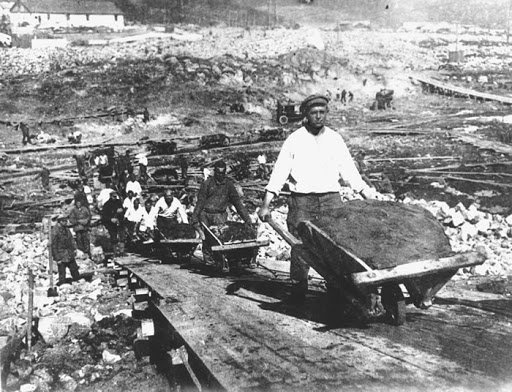
To understand the gravity of the claims made in The Long Walk, one must consider the reality of the Soviet labor camp system. The Gulag was a vast network of forced labor camps that held millions of people under conditions of extreme malnutrition, forced labor, and systematic abuse. The survival rate for those in remote Siberian camps like the one Rawicz claimed to have escaped was remarkably low.
If an escape of the magnitude described in the book had occurred, it would have been an unprecedented feat of human endurance. The logistics of surviving a 6,500km journey across some of the most inhospitable terrain on Earth without local knowledge or supplies are, according to modern survival experts, nearly impossible. The fact that the story emerged during the height of the Cold War, when Western audiences were eager for narratives that highlighted the cruelty of the Soviet regime, likely contributed to the book’s uncritical reception.
Implications of the Hoax
The enduring legacy of The Long Walk serves as a case study in the power of narrative over factual history. While the book has been exposed as a work of fiction, its cultural impact remains significant. It prompted decades of interest in the experiences of Polish prisoners in the Soviet Union and sparked public awareness of the conditions in the Gulag.
However, the implications of the hoax for the historical record are profound. By presenting a fictionalized account as a factual memoir, the authors blurred the lines between historical testimony and creative writing. This creates a difficult challenge for historians: when a story becomes more famous than the truth it purports to represent, correcting the record often fails to reach the same audience that consumed the original myth.
Analysis of the "Mr. Smith" Archetype
One of the most persistent elements of the book is the inclusion of the mysterious "Mr. Smith." This character, an American engineer who allegedly helped guide the group, serves as a narrative anchor for the book. Despite years of searching by historians and researchers, no record of a Mr. Smith matching the description has ever been found in the relevant Soviet, British, or American archives.
The absence of this individual is, for many researchers, the "smoking gun." In a narrative of such historical gravity, the total disappearance of one of the key participants from the historical record is statistically improbable. The character of Mr. Smith functions more as a plot device—a surrogate for the Western reader—than as a tangible historical entity.
Conclusion: Fiction as Legacy
Slavomir Rawicz died in 2004, maintaining until his final days that his account was true. His family has continued to defend his legacy, suggesting that while the details might be embellished, the core of the experience remains a reflection of the suffering endured by millions.
Ultimately, The Long Walk remains a masterwork of adventure fiction. It succeeds in capturing the desperation and the spirit of survival that defined the lives of those trapped in the Soviet system. Yet, as a historical document, it has been thoroughly discredited. It serves as a stark reminder that even the most gripping "true" stories require the scrutiny of the archive to be held as historical truth. The story of the long walk is indeed a big lie, but it is one that continues to challenge our understanding of how we preserve the memory of the past—and how easily we are persuaded by the stories we wish were true.