Mastering the Rails: A Comprehensive Guide to Navigating Japan’s World-Class Railway System

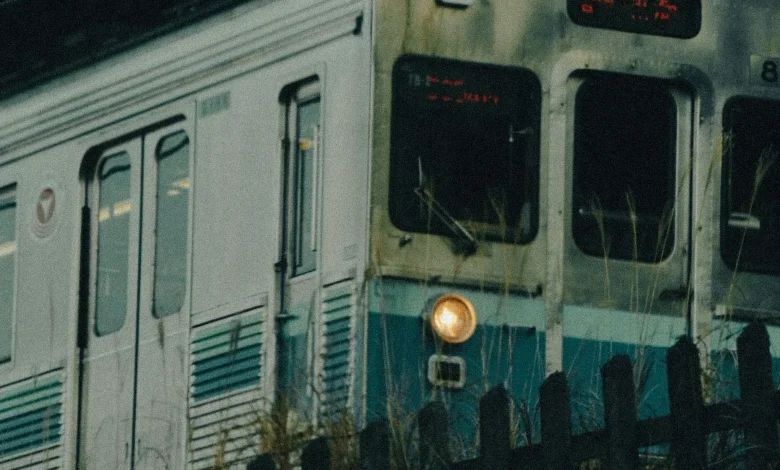
The Japanese railway network stands as a global benchmark for public infrastructure, defined by its surgical precision, expansive reach, and integration into the nation’s socio-economic fabric. For the millions of international visitors who arrive in Japan annually, the rail system is not merely a mode of transport but the primary artery through which the country is experienced. From the high-speed Shinkansen (bullet trains) that connect major metropolises like Tokyo and Osaka to the narrow-gauge local lines that wind through the Japanese Alps, the network offers a level of reliability that is rarely matched in the Western world. Understanding the nuances of this system—from ticketing logistics to the unwritten codes of passenger conduct—is essential for any traveler seeking to navigate the archipelago with efficiency and cultural sensitivity.
The Architectural Scale of Japanese Rail
Japan’s rail infrastructure is managed by a combination of the Japan Railways (JR) Group—a collection of seven primary companies that emerged from the 1987 privatization of the national carrier—and dozens of private railway operators. Together, they manage over 27,000 kilometers of track. According to data from the Ministry of Land, Infrastructure, Transport and Tourism (MLIT), Japan’s railways carry more than 22 billion passengers annually. To put this in perspective, the Shinkansen alone has transported over 10 billion passengers since its inception in 1964 without a single passenger fatality due to derailment or collision, despite Japan’s high seismic activity.
The system’s punctuality is legendary. The average delay for a Shinkansen train is typically measured in seconds, often cited as being less than one minute over the course of an entire year of operation. This efficiency is supported by a rigorous maintenance schedule and a culture of "Safety First" (Anzen Dai-ichi) that permeates the workforce. For travelers, this means that departure times are literal; a train scheduled for 10:00 will begin moving at precisely 10:00 and zero seconds.

A Chronology of Innovation: From Steam to Maglev
The history of Japanese rail is a timeline of rapid modernization. The first line opened in 1872, connecting Shimbashi in Tokyo to Yokohama, using British technology. However, the defining moment for the industry came on October 1, 1964, with the inauguration of the Tokaido Shinkansen. Launched just days before the Tokyo Olympics, the "bullet train" symbolized Japan’s post-war recovery and its emergence as a technological superpower.
The 1980s saw the privatization of the Japanese National Railways (JNR), which led to the creation of the JR Group. This move was designed to increase competition and reduce government debt, resulting in the highly diversified services seen today. Looking toward the future, Japan is currently developing the Chuo Shinkansen, a Maglev (magnetic levitation) line expected to connect Tokyo and Nagoya in approximately 40 minutes at speeds exceeding 500 km/h. This project represents the next chapter in a century-long commitment to reducing travel time and increasing national connectivity.
Navigating the Ticketing Ecosystem
For the international visitor, the ticketing process has undergone significant changes in recent years, most notably regarding the Japan Rail (JR) Pass. In October 2023, the cost of the nationwide JR Pass increased by approximately 70%, a move that forced many travelers to re-evaluate the cost-effectiveness of the pass versus purchasing individual tickets.
The JR Pass and Regional Alternatives
The JR Pass remains a powerful tool for those planning extensive long-distance travel within a 7, 14, or 21-day window. It covers almost all JR-operated trains, including the Shinkansen (with the exception of the "Nozomi" and "Mizuho" services, unless an additional supplement is paid). However, transport analysts suggest that travelers staying within a specific area—such as the Kansai region or Hokkaido—should look into regional passes, which are often significantly cheaper and tailored to local sightseeing routes.

IC Cards: The Suica and Pasmo Framework
For local travel within cities like Tokyo, Osaka, and Kyoto, the Integrated Circuit (IC) card is indispensable. These rechargeable smart cards (Suica, Pasmo, Icoca) allow for "tap-and-go" entry at ticket gates. While a global semiconductor shortage in 2023 and 2024 limited the availability of physical cards for new users, mobile integration via Apple Wallet and Google Pay has become the preferred method for tech-savvy visitors. These cards are not limited to trains; they are accepted at vending machines, convenience stores, and many buses.
The Paper Ticket and Fare Adjustment
Traditional paper tickets are still purchased at multi-lingual vending machines. Travelers must identify their destination on the large maps located above the machines to determine the fare. A common fail-safe in Japan is the "Fare Adjustment" machine located near the exit gates. If a passenger realizes they have purchased the wrong ticket or traveled further than intended, they can insert their ticket into these machines to pay the difference before exiting.
Understanding Train Categories
The Japanese rail system utilizes a hierarchical classification of trains based on speed and the number of stops:
- Local (Kakueki-teisha): Stops at every station. These are the slowest but are essential for reaching residential neighborhoods and rural villages.
- Rapid (Kaisoku): Skips some minor stations but costs the same as a local train.
- Express (Kyuko): Skips more stations than a Rapid train. Some operators require an additional "Express Fee."
- Limited Express (Tokkyu): The fastest option on conventional lines, stopping only at major stations. These always require an additional surcharge and often feature more comfortable seating.
- Shinkansen: The pinnacle of the network, operating on separate, dedicated tracks.
The Social Contract: Etiquette and Cultural Norms
The efficiency of Japan’s rail network is predicated on a strict social contract among passengers. Public transport is viewed as a shared space where the comfort of the collective takes precedence over individual convenience.

The Rule of Silence
Talking on mobile phones is strictly prohibited on trains. Passengers are expected to set their devices to "manner mode" (silent). While quiet conversation is permitted, it is generally frowned upon to speak loudly, particularly during rush hour. This creates a remarkably tranquil environment, even on trains packed with hundreds of commuters.
Orderly Boarding
Platforms are marked with indicators showing exactly where train doors will open. Passengers form neat queues behind these lines. It is considered a major social faux pas to "cut" the line or to board before departing passengers have fully exited the carriage.
The Ekiben Culture
On long-distance trains like the Shinkansen, eating is not only permitted but celebrated through "Ekiben"—station bento boxes. These meals are often regional specialties, allowing travelers to taste the local cuisine of the prefecture they are passing through. However, eating on local commuter trains is generally avoided as space is limited and it may disturb other passengers.
Women-Only Carriages
To address concerns regarding passenger safety and harassment during peak hours, many major lines offer women-only carriages. These are clearly marked with pink signs on the platform and the train cars themselves, typically operating during the morning and evening rush.

Economic and Environmental Impact
The railway system is a cornerstone of Japan’s environmental strategy. According to the JR Group’s sustainability reports, the Shinkansen produces approximately 90% less CO2 emissions per seat than a commercial aircraft traveling the same distance. This makes rail travel the most sustainable option for domestic transit in Japan.
Economically, the rail network facilitates "compact city" development. Stations in Japan act as massive commercial hubs, housing department stores, hotels, and office complexes. The "Ekinaka" (inside the station) retail model ensures that railway companies can diversify their revenue streams, which in turn helps subsidize less profitable rural lines that are vital for the aging populations in the countryside.
Implications for Future Travel
As Japan continues to grapple with a shrinking and aging population, the rail industry is turning toward automation and AI. JR East has begun testing autonomous Shinkansen units, and many stations are being outfitted with "smart" gates that use facial recognition or palm-scanning technology.
For the international community, the continued modernization of the Japanese rail network serves as a model for urban planning and climate-conscious infrastructure. While the initial learning curve for a first-time visitor may be steep, the system is designed with logic and consistency. By mastering the ticketing systems and adhering to local etiquette, travelers gain access to a level of mobility that is unparalleled, allowing for a deeper and more efficient exploration of Japan’s diverse landscape.

The Japanese rail experience is more than a logistical necessity; it is a window into the values of Japanese society: punctuality, respect for public space, and a relentless pursuit of technological perfection. Whether one is hurtling toward Kyoto at 300 km/h or taking a slow local train through the cedar forests of Wakayama, the journey on the rails is as much a part of the Japanese story as the destinations themselves.