The French Alps, a region celebrated for its pristine slopes and challenging terrain, became the site of a miraculous survival story this week after 39-year-old Emeric Ossatte endured a harrowing ordeal deep within a glacial crevasse. The Grenoble resident, an experienced ski tourer, was navigating the treacherous Savoie sector near the Italian border when a chain of catastrophic events turned a solitary excursion into a life-or-death struggle. The incident highlights the inherent risks of backcountry navigation, the critical importance of safety protocols, and the remarkable efficiency of France’s specialized mountain rescue units.
The Chronology of an Alpine Crisis
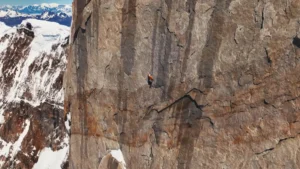
The sequence of events began earlier this week when Ossatte ventured into a steep couloir. Recognizing the physical demands of the ascent, he removed his skis, opting to continue on foot using boots and crampons. This transition proved fatal to his progress; while he was traversing the incline, an avalanche was triggered, sweeping him off his feet and depositing him into the depths of a hidden crevasse.
The impact of the fall resulted in severe trauma, specifically the fractures of both legs, rendering him unable to climb out. Despite the severity of his injuries, Ossatte exhibited significant presence of mind in the immediate aftermath. He discarded his backpack and crawled approximately 100 meters through the subterranean ice corridor, desperately searching for an exit point. Finding the walls of the crevasse too vertical to scale and lacking cellular reception to call for help, he was forced to hunker down. He managed to locate an air pocket within the ice, where he spent a grueling night exposed to sub-zero temperatures.
Back home, his failure to check in as scheduled prompted his family to notify authorities, initiating a massive emergency response. The CRS Savoie mountain-rescue unit arrived at the scene shortly thereafter. While they identified the slide path, the darkness and the volatile stability of the snowpack necessitated a temporary suspension of search efforts during the night to protect the lives of the rescuers.
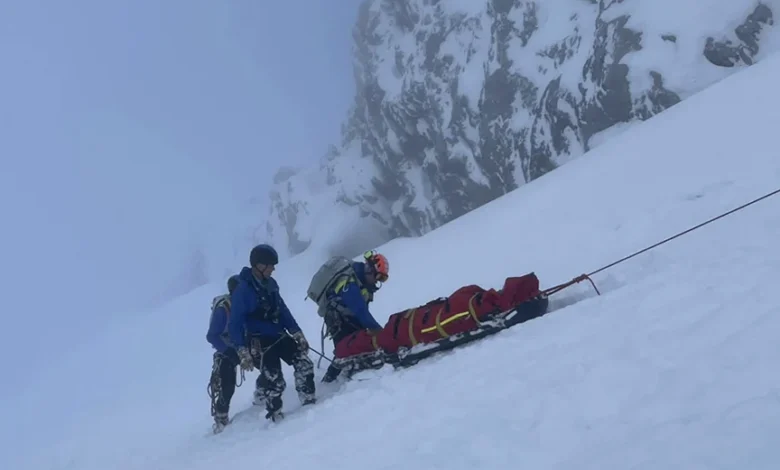
At dawn, the operation scaled up significantly. A task force consisting of 28 ground rescuers, search-and-rescue canines, and three helicopters mobilized to the coordinates. After five hours of meticulous digging and probing of the snow, the team heard faint calls for help. Following his extraction, Ossatte was stabilized by an on-site physician and airlifted to a hospital for emergency surgery.
The Anatomy of the Rescue Operation
The rescue of Emeric Ossatte was a masterclass in coordinated alpine emergency response. Major Yoann Haberey of the CRS Savoie mountain-rescue team, who oversaw the operation, described the outcome as profoundly unexpected. "He was really lucky," Haberey stated during a post-rescue debrief. "We knew he was under there, but we didn’t think we would find him alive."
The survival of a victim for nearly 36 hours in such conditions is statistically rare. Mountain rescue professionals generally categorize such incidents into two phases: the "golden hour" for initial survival and the subsequent window for preventing hypothermia. The fact that Ossatte survived the night is attributed to his ability to find a protected air pocket, which prevented him from being crushed by shifting snow or suffocating, as well as his physical resilience in the face of traumatic fractures.
The deployment of 28 personnel underscores the scale of the resource commitment required for such operations. In the French Alps, rescue operations are often a collaborative effort between the CRS (Compagnies Républicaines de Sécurité) and the PGHM (Peloton de Gendarmerie de Haute Montagne). These units are equipped with specialized gear, including avalanche transceivers, rebreather equipment, and high-altitude flight capabilities, which allow them to operate in environments where standard emergency services cannot reach.
Safety Protocols and the Risks of Solo Touring
The incident involving Ossatte serves as a stark reminder of the dangers associated with solo ski touring in high-alpine environments. While the sport has seen a surge in popularity, the lack of a secondary party to provide aid or relay an emergency signal remains a significant factor in accident outcomes.
According to data from the Association Nationale pour l’Étude de la Neige et des Avalanches (ANENA), the majority of avalanche fatalities occur when victims are caught in the slide and buried. However, when victims survive the initial impact, their ability to self-rescue is frequently hampered by equipment loss or physical impairment. Ossatte was not carrying a beacon or a satellite communication device, two items that are increasingly considered standard for backcountry travel. Had he been equipped with a personal locator beacon (PLB) or a satellite messenger, the delay between his accident and the arrival of rescuers would have been significantly compressed.
The Savoie region, where the incident occurred, is characterized by its complex topography, where glaciers and steep couloirs often hide crevasses beneath deceptively smooth snow bridges. Even experienced mountaineers can be caught off guard by the changing structural integrity of these bridges, especially during early-season fluctuations in temperature and snowfall.
Analysis of Implications for Backcountry Safety
Industry experts and mountain guides suggest that this incident will likely reignite the conversation surrounding mandatory safety gear and the education of solo backcountry travelers. The "buddy system" remains the most effective safety tool in the Alps; had Ossatte been accompanied by another skier, the companion would have been able to trigger the alarm immediately, potentially saving the victim from a night of exposure and the long-term health risks associated with untreated trauma.
Furthermore, the economic impact of such rescue operations is non-trivial. While France provides mountain rescue services as a public good, the mobilization of three helicopters and nearly 30 specialized professionals represents a substantial expenditure of taxpayer funds. Consequently, there is a recurring debate regarding the implementation of insurance mandates for high-risk backcountry activities, intended to offset the costs of large-scale search and rescue missions.
From a medical perspective, the severity of double-leg fractures combined with the physiological stress of prolonged exposure to cold creates a complex clinical challenge. Surgeons are tasked not only with the mechanical repair of the bone fractures but also with managing the systemic effects of potential frostbite and rhabdomyolysis—a condition where muscle tissue breaks down due to prolonged trauma and pressure.
Conclusion: A Narrow Margin for Error
Emeric Ossatte’s survival is a testament to the resilience of the human spirit and the high level of professionalism maintained by French mountain rescue services. As he continues his recovery, his story will undoubtedly be used in training seminars and safety briefings as a case study for the risks inherent in winter alpine travel.
The incident underscores a fundamental truth about mountain exploration: the environment is inherently indifferent to the experience level of those traversing it. Whether it is the instability of a snow bridge, the unpredictability of an avalanche, or the physical limitation of a broken limb, the margin for error in the high mountains is razor-thin. For those who seek the solitude of the backcountry, the lesson of this week’s events is clear: preparedness is not merely a suggestion, but a prerequisite for survival. As the winter season progresses, authorities in the Savoie region continue to urge all skiers and mountaineers to check avalanche bulletins, communicate their itineraries clearly, and invest in the essential communication technology that could be the difference between a successful rescue and a far more tragic outcome.