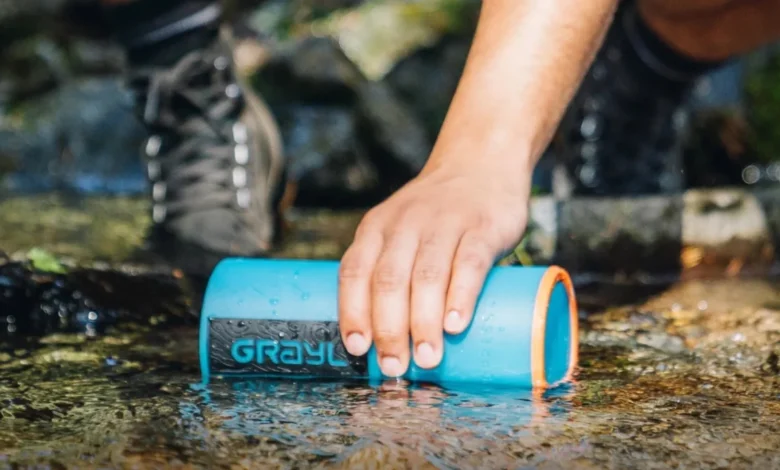
The backcountry water filtration market has long been dominated by lightweight hollow-fiber squeeze filters, UV sterilizers, and chemical treatments, each carrying distinct operational limitations. For backpackers, thru-hikers, and international travelers navigating remote regions with compromised water infrastructures, finding a device that balances safety, ease of use, and durability remains a top priority. Enter the Grayl GeoPress Water Filter and Purifier Bottle, a heavy-duty press system designed to tackle some of the world’s most challenging water sources.
Unlike traditional backpacking filters that target only protozoa and bacteria, the GeoPress operates on a purifier level, engineered to eliminate viruses, microplastics, heavy metals, and various chemical contaminants. Updated and evaluated as a premier choice for rigorous outdoor expeditions, the device offers advanced protection against pathogens like norovirus—a notorious affliction on long-distance trails such as the Appalachian Trail—while introducing practical improvements over earlier iterations. However, these advanced safety capabilities come with specific design trade-offs, most notably a heavier physical footprint compared to ultra-lightweight competitors.
Understanding the Technology: Filtration Versus Purification
To fully grasp the utility of the Grayl GeoPress, one must understand the fundamental difference between standard water filters and water purifiers. Most conventional backcountry filters utilize hollow-fiber membrane technology with pore sizes typically ranging from 0.1 to 0.2 microns. While these membranes are exceptionally effective at straining out bacteria (such as E. coli and Salmonella) and protozoa (such as Giardia and Cryptosporidium), they are physically incapable of blocking viruses. Viruses, including rotavirus, hepatitis A, and norovirus, are significantly smaller than bacteria, often measuring between 0.02 and 0.08 microns.
To neutralize viruses without relying on chemical drops like chlorine dioxide or iodine, the Grayl GeoPress employs an electroadsorptive media mechanism. As the user presses the inner module down into the outer cup, water is forced through multiple layers of proprietary filter media. This media creates a complex matrix of positive electrical charges that trap and neutralize microscopic pathogens, including viruses, alongside bacteria and protozoa.
Furthermore, the system integrates a bed of powdered activated carbon. This carbon layer is critical for adsorbing hazardous chemicals, volatile organic compounds (VOCs), pesticides, herbicides, heavy metals (such as lead and arsenic), and microplastics, while simultaneously improving taste and eliminating unpleasant odors often found in stagnant or agricultural runoff water.
Operational Design and Usability
The mechanical operation of the GeoPress relies on a press-and-filter mechanism rather than suction or gravity. The system consists of a 24-ounce outer refill cup, an inner press press-cartridge module, and a top cap featuring a spout with a simple twist-to-open design.
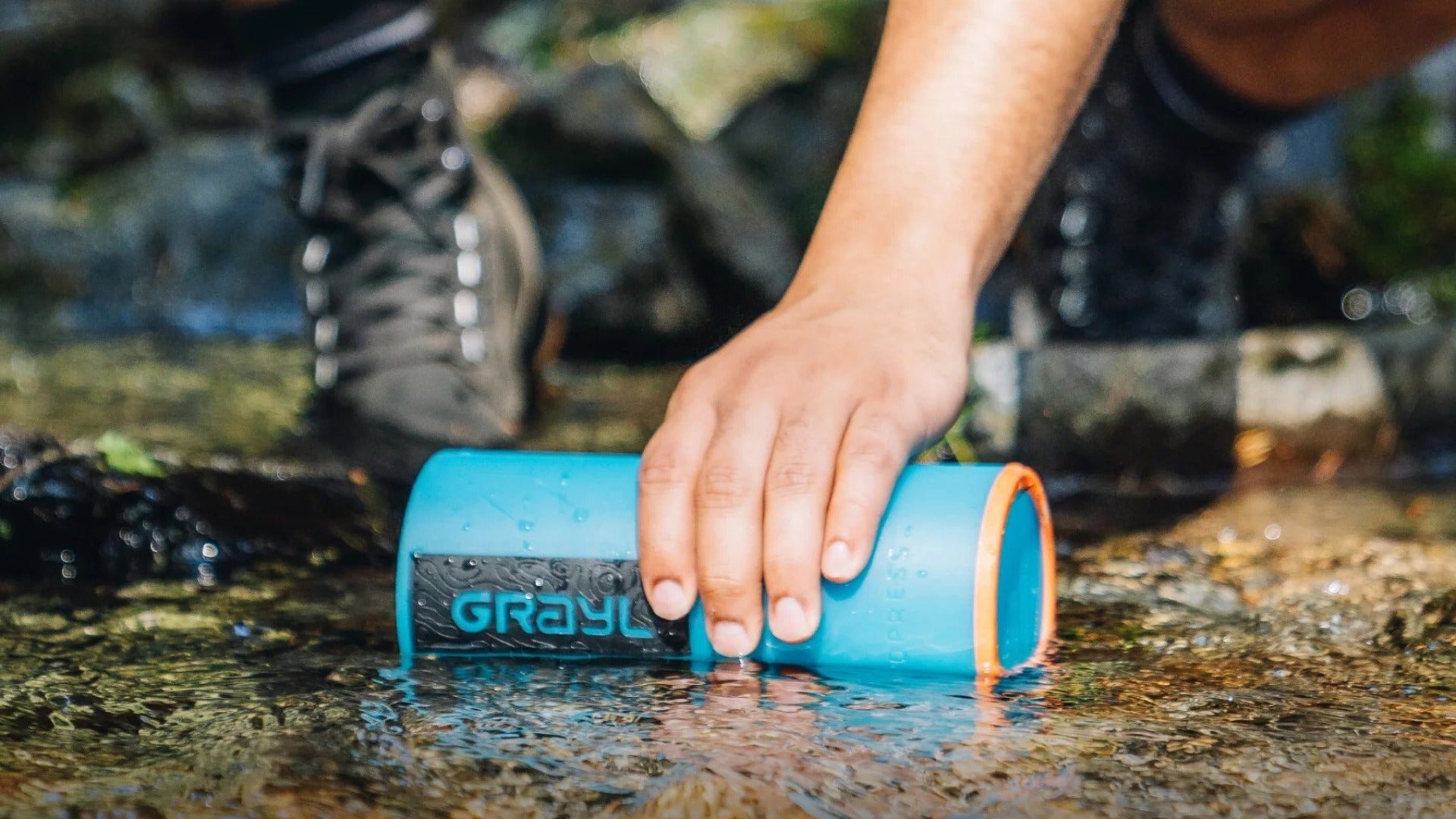
To use the device, an adventurer fills the outer cup from a natural water source—be it a turbid river, a shallow stream, or a murky puddle. The inner press is then inserted into the outer cup, and the user applies steady downward body weight. In roughly eight seconds, the 24-ounce capacity of water is fully processed, moving from the outer chamber through the filter media and into the inner clean-water reservoir, ready for consumption.
Manufacturers and field testers have noted significant ergonomic refinements in the GeoPress compared to its predecessor, the Grayl Ultralight. Earlier iterations frequently drew criticism from users who experienced hand fatigue or discomfort when pushing the filter through dense media, particularly when the filter cartridge neared the end of its lifespan and accumulated sediment. The GeoPress addresses this by integrating a soft, ergonomic top pad on the handle. This modification distributes pressure more evenly across the palms, allowing hikers to leverage their body weight comfortably and securely, even in cold or wet conditions where grip strength may be compromised.
Durability in Extreme Environments: The Freezing Challenge
One of the most persistent operational hazards for backcountry water filters is accidental freezing. Hollow-fiber filters, such as the widely popular Sawyer Squeeze or Katadyn BeFree, are notoriously fragile when exposed to sub-freezing temperatures. When water trapped inside microscopic hollow fibers freezes, it expands, rupturing the delicate membrane walls. Once compromised, a hollow-fiber filter can no longer guarantee the safe exclusion of bacteria and protozoa, rendering the unit unsafe and forcing hikers to keep their filters inside sleeping bags at night to preserve body heat.
The Grayl GeoPress approaches cold-weather durability differently. Thanks to its solid-state cartridge structure and robust materials, the GeoPress is rated to survive freezing temperatures up to two separate times without compromising its structural integrity or filtration efficacy. This durability metric provides an essential margin of safety for alpine mountaineers, late-autumn backpackers, and winter campers who frequently contend with unexpected overnight hard freezes.
Nevertheless, users are still advised to avoid intentionally freezing the cartridge repeatedly, as prolonged or extreme ice expansion can eventually degrade the internal media layers.
Weight, Bulk, and Portability Trade-offs
While the Grayl GeoPress excels in purification breadth and structural resilience, these benefits introduce a notable compromise: weight.
Weighing in at nearly a pound (approximately 15.5 ounces or 440 grams) when dry, the GeoPress is substantially heavier than lightweight alternatives. For ultralight backpackers who meticulously weigh every ounce of gear in their packs, the GeoPress represents a heavy investment. By comparison, popular hollow-fiber squeeze filters often weigh less than three ounces, and small chemical tablet treatments weigh mere fractions of an ounce.
Beyond its static weight, the GeoPress is dimensionally bulky. With a height of 10.4 inches and a diameter of 3.4 inches at its widest point, storing the bottle inside the side pockets of a standard backpacking pack can be cumbersome. It occupies significant internal volume if packed inside the main compartment. Consequently, the target demographic for the GeoPress tends to lean toward international travelers, overlanders, basecamp coordinators, and hikers traversing regions with high viral contamination risks or heavily silted water sources, where the security of a purifier outweighs the desire for ultralight minimalism.
Maintenance, Lifespan, and Cost Analysis
Maintaining the Grayl GeoPress is relatively straightforward, but users must factor in the recurring cost and lifespan of the replaceable filter cartridges. Each standard GeoPress replacement cartridge is rated for approximately 350 cycles (about 65 gallons or 250 liters of water).
As the filter is used over time, the microscopic pores and adsorptive sites gradually become clogged with sediment, silt, and organic matter. When the filter reaches the end of its operational lifespan, the "press time" increases dramatically—often exceeding 25 to 30 seconds per cycle. Once the press time reaches approximately 25 seconds, or after it has been used for three years since first exposure to water, the manufacturer recommends replacing the cartridge.
The cost per liter of filtered water using the GeoPress is higher than that of gravity-fed hollow-fiber systems or chemical treatments, largely due to the proprietary nature of the replacement cartridges. However, users argue that this financial investment is offset by the device’s versatility. By eliminating the need to carry separate chemical treatments for viral protection or boil water on a fuel stove, the GeoPress streamlines camp chores and resource management in the field.
Broader Industry Implications and Public Health Context
The availability and popularity of robust consumer purifiers like the Grayl GeoPress reflect a shifting paradigm in outdoor recreation and global travel. As climate change, industrial expansion, and increased backcountry traffic contribute to higher rates of water source contamination, traditional reliance on basic bacterial filtration is increasingly viewed as insufficient by public health advocates.
Outbreaks of waterborne pathogens—such as norovirus on heavily trafficked thoroughfares like the Appalachian Trail—highlight the vulnerability of outdoor communities to viral transmission. Because norovirus is highly contagious and resistant to standard low-level disinfection methods, conventional hollow-fiber filters leave hikers exposed if the virus is introduced into water sources via human waste runoff or contaminated gear. Devices capable of true purification fill a critical niche, offering hospital-grade safety metrics within a portable consumer format.
Furthermore, growing awareness of microplastic pollution in remote watersheds—including high-altitude alpine lakes previously thought to be pristine—has driven consumer demand for filtration media capable of capturing sub-micron particles. By addressing viruses, chemicals, heavy metals, and microplastics simultaneously, the GeoPress aligns with modern ecological realities where natural water sources are rarely untouched by human activity.
Conclusion
The Grayl GeoPress Water Filter and Purifier Bottle remains a specialized yet exceptionally capable tool for outdoor enthusiasts facing complex water safety challenges. Its ability to neutralize viruses, filter microplastics, adsorb heavy metals, and withstand accidental freezing sets it apart from standard hollow-fiber competitors.
While its weight and bulk will likely deter strict ultralight backpackers, those prioritizing absolute safety, durability in freezing conditions, and convenience in heavily contaminated environments will find the GeoPress to be a reliable and resilient backcountry companion. As environmental pressures on natural water sources continue to evolve, high-performance purification systems will undoubtedly play an increasingly vital role in safe outdoor exploration and global travel.
Related posts: