Auroville: An Experimental Utopia at a Crossroads, Grappling with Vision, Governance, and Green Future

Journalist and photographer Nicola Zolin embarked on a recent visit to southeastern India, finding himself immersed in the unique tapestry of Auroville—an experimental, international township established in the late 1960s. His journey, commencing on a reflective New Year’s Eve, quickly peeled back the layers of this famed "City of Dawn," revealing not just its serene, spiritual facade but also the profound internal conflicts challenging its very foundation as a utopian ideal. Arriving amidst hundreds of flickering candles and silent meditators, Zolin was greeted by an old friend whose prophetic certainty foreshadowed the unfolding narrative: "It’s wonderful you arrived tonight." The initial glow of spiritual warmth, however, was soon tempered by a stark reality voiced around a driftwood bonfire on a wild stretch of beach: "This place is actually falling apart." This blunt assessment, delivered by a thin, cross-legged young man amidst a gathering of diverse travelers, immediately pierced the veil of optimism, setting the stage for an exploration into Auroville’s complex present.

The Genesis of a Universal City: A Vision Forged in Unity
Auroville’s origins are rooted in a profoundly ambitious vision to create a universal township where humanity could live in peace, harmony, and progressive evolution, transcending national boundaries, religions, politics, and private ownership. Conceived by Mirra Alfassa, known as "the Mother," a French-born spiritual teacher and collaborator of integral yogi Sri Aurobindo, the project was officially inaugurated on February 28, 1968. The ceremonial pouring of soil from 124 nations and 23 Indian states into a lotus-shaped urn at the site of the Matrimandir symbolized this aspiration for global unity. The Mother articulated the core principle: "For in this ideal place, money would no longer be the sovereign lord; individual worth would have a far greater importance than that of material wealth and social standing."
Sri Aurobindo’s philosophy, particularly his concept of Integral Yoga, laid the intellectual groundwork for Auroville. He envisioned a higher evolution of human consciousness, moving beyond the limitations of the mind and ego towards a "supramental" existence. The Mother sought to translate this spiritual philosophy into a tangible, living experiment—a "laboratory of consciousness" where individuals from all walks of life could collectively strive for human unity and spiritual transformation. Supported by UNESCO and the Government of India, Auroville was designed by French architect Roger Anger, whose "Galaxy Plan" envisioned a central Matrimandir (the Soul of Auroville) surrounded by various zones: Residential, Industrial, Cultural, International, and a sprawling Green Belt. The ultimate goal was to accommodate a population of 50,000 residents, a stark contrast to its current approximately 3,500 inhabitants.
Ecological Transformation and Early Ideals

The early pioneers of Auroville faced a daunting task. The land, a barren plateau ravaged by erosion and deforestation, was described by one early resident as "dry, almost lunar." Frederick Schulze Buxloh, one of Auroville’s last surviving pioneers, recounted his journey to India in 1959, driven by a restless spirit and philosophical inquiry. Meeting the Mother profoundly shifted his perspective, dissolving his arrogance and igniting a "fire inside." Buxloh, along with other "idealistic wanderers, hippies, and spiritual seekers," arrived with minimal resources but immense dedication. They set about transforming the desolate landscape through intensive reforestation efforts, planting hundreds of trees daily.
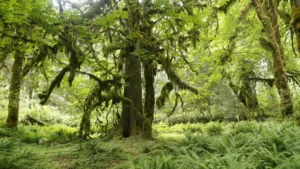
Natasha Storey, a resident of the "Evergreen" community, testifies to the success of these early ecological endeavors. "At the beginning, people planted hundreds of trees every day," she explains. "Water was scarce, so we built rainwater harvesting tanks, earthen dams, and groundwater recharge systems. Seeing water return to the wells felt like witnessing a process of healing. We live with the forest, not separated from it." This monumental effort led to the creation of the Green Belt, a significant ecological achievement that now serves as a vital lung and biodiversity hotspot for the region. The Mother’s emphasis on "work, even manual work, as something indispensable for the inner discovery," resonated deeply with these early residents, fostering a culture of collective effort in farming, cooking, and teaching.

The physical embodiment of Auroville’s spiritual core is the Matrimandir, a colossal golden sphere at the township’s center. Construction began in 1971 and continued for decades. It is surrounded by 12 themed gardens dedicated to ideals like peace, harmony, and light, and houses a serene white marble meditation chamber with a crystal globe suspended from its roof—a focal point for silent concentration and inner work. These architectural and ecological achievements stand as testaments to the early residents’ dedication to the founding vision.
The Current Crossroads: Development vs. Conservation

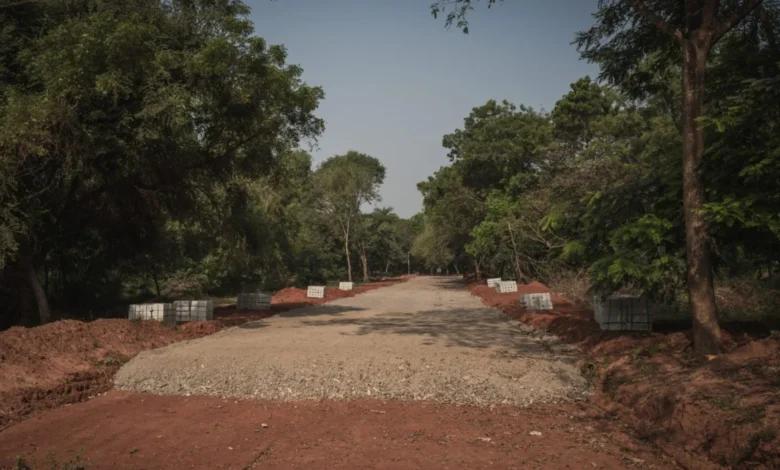
The idyllic image of Auroville, however, has recently been overshadowed by a significant internal conflict, casting a long shadow over its utopian aspirations. In December 2021, bulldozers forcibly entered Auroville’s forested areas, igniting a fierce debate between residents and the Auroville Foundation’s Governing Board. The objective was to clear land for a new radial road, intended to align with the original "Galaxy Plan" and facilitate the expansion of the city towards its envisioned population of 50,000.
This development, however, bypassed the established decision-making bodies of the community, particularly the Residents’ Assembly. Natasha Storey vividly recalls the confrontation: "I stood in front of the bulldozers asking that the decisions of the residents’ assembly be respected. But the process had clearly been bypassed." The swift and unilateral nature of the demolitions, which continued over several days, deeply unsettled many residents who viewed it as a direct affront to Auroville’s participatory governance model and its hard-won ecological gains.

The green light for this construction reportedly came from Dr. Jayanti Ravi, a public servant appointed as the new Secretary to the Governing Board of the Auroville Foundation earlier that year. This action triggered a crisis, highlighting a growing tension between the desire for planned development and the community’s commitment to ecological preservation and self-governance.
Governance and Autonomy: A Deepening Divide

Auroville’s unique governance structure was enshrined in the Auroville Foundation Act of 1988, an Act of the Indian Parliament. This act established three primary bodies intended to work collaboratively: the Residents’ Assembly (comprising all residents aged 18 and above), the Governing Board (appointed for a four-year term by the Central Government of India), and the International Advisory Council (eminent scholars and elders from across the globe, also appointed by the Indian Government). This framework was designed to balance local autonomy with governmental oversight, ensuring Auroville’s development aligned with its founding charter.
However, the events of December 2021 and subsequent actions have led to widespread concerns about the centralization of power and the erosion of the Residents’ Assembly’s authority. Whispers of dissent within the Auroville Foundation offices reveal an environment where officials are hesitant to speak openly. "We don’t have the right to talk about these matters," a European official confided to Zolin, visibly unsettled. "We can’t say anything against the Foundation."

Further allegations point to increasing control over internal communications, including unexplained changes to email accounts and administrative access being stripped. Perhaps most alarmingly, residents report growing influence over the visa application process. While Auroville has a special visa category, requiring a recommendation letter from the Auroville Foundation Secretary, there are accounts of these letters being withheld. Even Frederick Schulze Buxloh, the pioneering spirit who built Auroville’s first house, has reportedly faced denial of his visa renewal, a situation that underscores the severity of the governance challenges. These developments suggest a significant departure from the collaborative and decentralized spirit envisioned by the Mother.
Perspectives on Progress and Preservation

The community’s monthly newspaper, Auroville Today, serves as a barometer for the ongoing debate, featuring appeals for reconciliation alongside warnings against polarization. Supporters of the new radial road and the broader expansion argue that these developments are not deviations but rather necessary steps to fulfill the Mother’s original urban vision for a community of 50,000 residents. They contend that adhering to the "Galaxy Plan" is crucial for Auroville’s long-term viability and its ability to serve as a model for future humanity, requiring infrastructure that can support a larger population. From this perspective, the bulldozing of trees, while regrettable, is a pragmatic necessity for achieving the grander, foundational purpose.
Conversely, a significant portion of the residents, particularly those involved in environmental stewardship and community governance, vehemently oppose these actions. Their arguments center on several key points:

- Ecological Damage: The destruction of the Green Belt, painstakingly cultivated over decades, contradicts Auroville’s commitment to sustainable living and its role as an ecological experiment.
- Bypassing Democratic Processes: The unilateral decision-making by the Governing Board and its appointed Secretary undermines the Residents’ Assembly, which is meant to be the living soul of Auroville’s self-governance.
- Redefining Utopia: Many argue that the Mother’s vision was not merely about a number of residents but about a quality of life and consciousness. Expanding without genuine community consensus and ecological sensitivity risks creating a conventional city rather than a unique spiritual and ecological experiment.
- Preservation of Character: The "experimental homes, meditation spaces, workshops, farms, and dusty pathways" represent the organic evolution of Auroville. Imposing a rigid, large-scale urban plan without adaptation to current realities and environmental considerations threatens this unique character.
The tension between these perspectives reflects a fundamental struggle: how to reconcile a dynamic, evolving community with a foundational, decades-old master plan, especially when the implementation appears to disregard established democratic norms and environmental ethics.
Reflecting on Utopia: Challenges and Evolution

Auroville, in its current state, stands as a powerful symbol of the inherent difficulties in nurturing an ambitious utopian vision. The conflict over development and governance forces a re-evaluation of its core principles. Is human unity achievable when internal divisions run so deep? Can a "laboratory of consciousness" truly evolve when its self-governance mechanisms are seemingly overridden?
Frederick Schulze Buxloh, with the wisdom of a life dedicated to Auroville, offers a nuanced perspective: "Every crisis can be useful. These are precisely the moments that accelerate evolution. We learned not to possess anything and to understand a form of love that is not possession but unity. Here I learned to let everything go." His words suggest that the current turmoil, while painful, might be a crucible for deeper understanding and a renewed commitment to core values. Flipping through the archival photobook AUROVILLE 1968-2018, Buxloh muses, "Today I see Auroville differently. Maybe the time has come to carry this experience beyond Auroville itself. Many other utopian places like this one are emerging all around the world. The experience of what we have done here will never be lost."

Nicola Zolin’s journey through Auroville resonates with this sentiment. The township, despite its internal struggles, remains a potent emblem of how a new humanity could potentially live together. The current situation, however, starkly highlights the practical challenges in sustaining such an ambitious vision amidst evolving governance, external pressures, and differing interpretations of foundational ideals. Yet, Zolin observes, there is a growing number of people finding the courage to live in alignment with their beliefs, creating smaller, localized projects that become "foyers of an emerging world." Auroville’s ongoing experiment, therefore, continues to offer invaluable lessons, not just in building an ideal city, but in the continuous, often arduous, process of human and societal evolution. The question remains whether its original spirit of unity and progressive consciousness can prevail over the forces of division and rigid adherence to a past blueprint.
Adventure.com strives to be a low-emissions travel publication. We are powered by, but editorially independent of, Intrepid Travel, the world’s largest travel B Corp, who help ensure Adventure.com maintains high standards of sustainability in our work and activities. You can visit our sustainability page or read our Contributor Impact Guidelines for more information.

About the Author
Nicola Zolin is a photojournalist and writer, interested in the social and environmental transformations at the borders of Europe, Middle East and Asia. His stories deal with the idea of freedom and liberation from society’s structures.