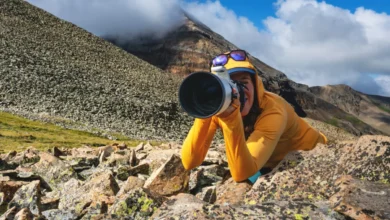
The modern outdoor enthusiast faces a paradoxical dilemma: the very devices designed to connect us to the world often disrupt our connection to nature. In an era dominated by hyper-connectivity, continuous notifications, and the omnipresent digital tether of the smartphone, a growing counter-movement has emerged among hikers, backpackers, and campers seeking genuine solitude. Inspired by a broader cultural shift—particularly popular among younger demographics—outdoor adventurers are increasingly ditching their advanced pocket computers in favor of stripped-down communication devices, most notably retro-style flip phones.
Yet, this digital detox introduces a significant compromise, primarily regarding visual documentation. While flip phones successfully eliminate the distractions of doomscrolling and constant email checks, their integrated cameras are notoriously inadequate, capturing grainy, poorly lit, and washed-out images that fail to do justice to majestic landscapes. To bridge this gap without compromising their commitment to a smartphone-free wilderness experience, outdoor testers have turned to ultra-lightweight, novelty digital devices. Among these, the thumb-sized Life Camera S168—a 21-gram gadget retailing for approximately $30—has emerged as a compelling, albeit polarizing, piece of experimental gear. This evaluation explores whether such micro-cameras represent a legitimate technological solution for minimalists or merely an ephemeral novelty.
The Rise of the Digital Detox in the Great Outdoors
The psychological toll of constant smartphone access has been a subject of mounting academic and cultural discussion over the past decade. For many outdoor practitioners, spending a weekend in the backcountry is viewed as an essential therapeutic antidote to the pressures of modern digital life. However, transitioning away from smartphones entirely presents logistical hurdles. Modern smartphones have effectively absorbed multiple essential tools: high-definition cameras, GPS navigators, emergency communication devices, and comprehensive field guides.
To navigate this transition, a segment of the hiking community has adopted minimalist feature phones. These devices retain critical safety functionalities—such as voice calls, text messaging, and emergency 911 access—while stripping away resource-intensive social media platforms and web browsers. Some models even incorporate rudimentary MP3 playback for evening downtime and basic mapping applications. Nevertheless, navigation purists consistently emphasize the necessity of retaining analog backups, such as topographic paper maps and magnetic compasses, while acknowledging that digital mapping apps on feature phones remain largely unreliable in remote environments.
The primary casualty of this minimalist migration is photography. Capturing memories of alpine vistas, dense forests, and wildlife encounters has long been a core component of the hiking tradition. Feature phone cameras, typically saddled with low-megapixel sensors, fixed-focus lenses, and abysmal low-performance in variable lighting conditions, routinely produce unusable imagery. Consequently, hikers often find themselves carrying their primary smartphones packed away simply to serve as dedicated cameras, a practice that undermines the psychological benefits of leaving the device behind.
Enter the Micro-Camera: Anatomy and Market Positioning
To resolve the camera conundrum without reintroducing smartphone distractions, the market has recently seen an influx of ultra-compact digital cameras. These devices capitalize on a wave of nostalgia, mirroring the aesthetic and functional simplicity of early-2000s consumer digicams and single-use film cameras popularized at summer camps decades ago. Competitors like the Kodak Charmera have paved the way, but alternative models like the Life Camera S168 have captured the attention of gear testers due to their diminutive physical footprint and ultra-lightweight design.
Weighing a mere 21 grams and fitting comfortably under a thumb, the Life Camera S168 is engineered for maximum portability. It attaches easily to a backpack zipper, a keychain, or a lanyard, ensuring it remains accessible without occupying valuable pocket space or adding noticeable weight to ultralight backpacking setups. Priced at approximately $30, the device positions itself as an accessible, low-stakes alternative to expensive mirrorless systems or fragile action cameras.
Initial field tests and online reviews indicate that the S168 outperforms many standard feature phone cameras, delivering an aesthetic reminiscent of vintage digital photography. While its resolution and dynamic range cannot compete with contemporary flagship smartphones, it offers a distinct visual character defined by soft focus, muted colors, and a characteristic retro grain.
Chronology of the Field Test and Practical Performance
The assessment of the Life Camera S168 followed a structured testing protocol designed to evaluate its utility under real-world backcountry conditions.
- Phase One (Pre-Trip Planning): The tester transitioned from a daily-driver smartphone to a minimalist flip phone to establish a baseline of reduced digital distraction over a multi-week period.
- Phase Two (Initial Trail Integration): The flip phone was utilized exclusively for emergency communication and basic audio playback during evening camp routines, while navigation relied on traditional paper maps and compasses.
- Phase Three (Hardware Deployment): The Life Camera S168 was attached to the exterior of a hiking pack using a standard lanyard, allowing for rapid deployment during active movement along mountain trails.
- Phase Four (Post-Trip Evaluation): Image and video files captured by the S168 were cataloged and reviewed against standard photographic benchmarks to determine the camera’s viability for permanent inclusion in an ultralight kit.
Throughout the field evaluation, the camera demonstrated notable operational strengths alongside predictable limitations. Its featherlight construction meant it went virtually unnoticed during steep ascents, eliminating the neck strain often associated with carrying heavy DSLR or mirrorless bodies. Operation was intentionally simplified, featuring minimal controls that allowed for quick point-and-shoot framing without the distraction of complex menus or touchscreens.
However, performance was heavily contingent on environmental conditions. In bright, direct sunlight, the S168 produced adequate, character-rich snapshots that effectively documented the journey. Conversely, performance degraded rapidly in low-light scenarios, heavy forest cover, or high-contrast settings where the sensor struggled to balance bright skies and shadowed terrain. Video footage exhibited similar traits: shaky due to the lack of optical image stabilization and limited in resolution, yet sufficient for capturing brief, nostalgic motion clips of camp life.
Data Analysis: Weight, Cost, and Utility Metrics
When evaluating outdoor equipment, minimalist backpackers rely heavily on metrics of weight, cost, and functional versatility. The Life Camera S168 presents a compelling statistical profile within these parameters:
| Metric | Life Camera S168 | Contemporary Flagship Smartphone | Traditional Mirrorless Camera |
|---|---|---|---|
| Weight | 21 grams | ~200 – 240 grams | ~500 – 800+ grams (with lens) |
| Retail Cost | ~$30 USD | ~$800 – $1,300+ USD | ~$1,000 – $3,000+ USD |
| Distraction Potential | Zero (No internet, apps, or notifications) | Extreme (24-hour connectivity) | Low to Moderate (Depending on connectivity) |
| Image Resolution | Basic / Retro Aesthetic | Ultra-High Definition (4K/8K video, 50+ MP) | Professional Grade |
| Durability / Risk | Low financial loss if damaged | High financial and logistical risk | High financial and logistical risk |
The quantitative comparison underscores the specific niche the S168 occupies. For standard hikers who routinely carry a smartphone, purchasing a dedicated 21-gram camera is statistically redundant. A modern smartphone possesses superior processing power, higher resolution, advanced stabilization, and greater versatility across all lighting conditions. For this majority demographic, the S168 functions purely as an entertaining novelty or a stylistic gimmick.
Conversely, for the subset of outdoor enthusiasts who deliberately isolate themselves from digital communication networks, the mathematical equation shifts. Carrying a 21-gram device that requires no cellular data plan, consumes negligible power, and introduces no temptation to check work emails or social media offers a high psychological return on investment. The minimal financial exposure ($30) also means that dropping the camera on rocky terrain or exposing it to sudden alpine rainstorms carries virtually no anxiety compared to damaging a thousand-dollar handset.
Industry Perspectives and Expert Reactions
Outdoor gear analysts and consumer psychologists have offered varied interpretations of the micro-camera trend. Industry observers note that the resurgence of low-fi photography tools reflects a broader cultural fatigue with algorithmic perfection. In an age where smartphone photography is heavily manipulated by artificial intelligence, HDR stacking, and computational enhancement, many consumers actively crave imperfection, authenticity, and tangible media.
"The embrace of devices like the S168 or disposable film cameras on the trail is not fundamentally about technical superiority," notes a consumer trends researcher specializing in outdoor recreation. "It is an emotional safeguard. People want to document their experiences without surrendering to the digital ecosystem that dictates how we store, share, and consume memories. Grainy, imperfect photos serve as a more honest artifact of a remote experience because they mirror the fallibility of human memory."
At the same time, traditional gear purists sound a note of caution, warning consumers not to romanticize sub-par hardware excessively. Critics point out that electronic waste associated with cheap, mass-produced miniature electronics remains an environmental concern, and consumers should evaluate whether a dedicated single-use or micro-digital camera is genuinely superior to simply using an older, disused smartphone with its cellular antenna disabled.
Broader Implications for Outdoor Recreation
The emergence of ultra-lightweight novelty cameras highlights a maturing conversation within the outdoor community regarding technology integration and ethics. As GPS watches, satellite messengers, drone cameras, and smartphones become standard backcountry accessories, the boundary between civilized connectivity and wilderness solitude has grown increasingly porous.
Initiatives by national parks and wilderness management agencies increasingly emphasize "Leave No Trace" principles that extend beyond physical refuse to include the psychological and auditory pollution of modern technology in natural spaces. While micro-cameras do not generate the auditory disruptions associated with portable speakers or the privacy concerns of recreational drones, their adoption signifies a conscious choice by hikers to reclaim autonomy over their attention spans.
Ultimately, whether the Life Camera S168 or similar devices represent a game-changer or a passing gimmick depends entirely on the philosophical framework of the individual adventurer. For those tethered to their devices, it is an unnecessary redundancy. But for the dedicated digital minimalist seeking an unobtrusive, low-cost method to capture the raw, unfiltered atmosphere of a backcountry trek without re-opening the digital Pandora’s box of smartphone connectivity, the tiny 21-gram gadget successfully delivers on its modest promise.