Embracing the Great Outdoors: Dylan Efron and Danielle Fishel Launch Sierra in the Sierras to Make Adventure Accessible for Everyone

The modern narrative surrounding outdoor recreation is frequently dominated by extreme feats of endurance, highly technical equipment, and an underlying cultural pressure to go harder, faster, and stronger. For many individuals who self-identify as indoor enthusiasts, these high barriers to entry can make hiking, bouldering, and wilderness exploration feel intimidating rather than inviting. A new digital content series titled Sierra in the Sierras aims to dismantle these preconceived notions. Premiering its inaugural episode, the series pairs Emmy-winning producer Dylan Efron with actress and television personality Danielle Fishel to demonstrate that outdoor adventure is accessible to all individuals, regardless of their athletic background or prior wilderness experience.
Main Facts and Collaborative Vision
Produced in partnership with outdoor gear retailer Sierra and editorial guidance from the experts at Outside, Sierra in the Sierras focuses on demystifying outdoor activities. The first episode follows Dylan Efron and Danielle Fishel—affectionately described by herself as an "indoor person"—as they venture into the breathtaking landscapes of the Sierra Nevada near Lake Tahoe. Rather than focusing on grueling summits or elite athletic performance, the series champions the concept of being "athletish." This inclusive term is designed to welcome casual walkers, weekend hikers, and absolute beginners into nature without the intimidation factor often associated with high-alpine sports.
By leveraging accessible pricing on top-tier outdoor brands, Sierra seeks to solve one of the most common deterrents to outdoor recreation: the prohibitive cost of specialized gear and apparel. Industry data frequently highlights that financial investment in proper clothing, footwear, and equipment is a primary hurdle for prospective adventurers. By providing quality gear at discounted price points, the brand initiative lowers this threshold, allowing participants to experiment with new hobbies such as hiking, bouldering, and slacklining without a heavy upfront financial commitment.
Chronology of the Lake Tahoe Expedition
The production of the series involved a carefully planned itinerary designed to gradually build Danielle Fishel’s confidence in an outdoor setting. The journey began with foundational education regarding outdoor comfort, emphasizing the critical role that proper layering, moisture-wicking fabrics, and supportive footwear play in shaping an enjoyable wilderness experience. According to the production timeline, the cast and crew spent several days navigating the varied terrain surrounding Lake Tahoe, utilizing natural landmarks as both a scenic backdrop and a practical training ground.

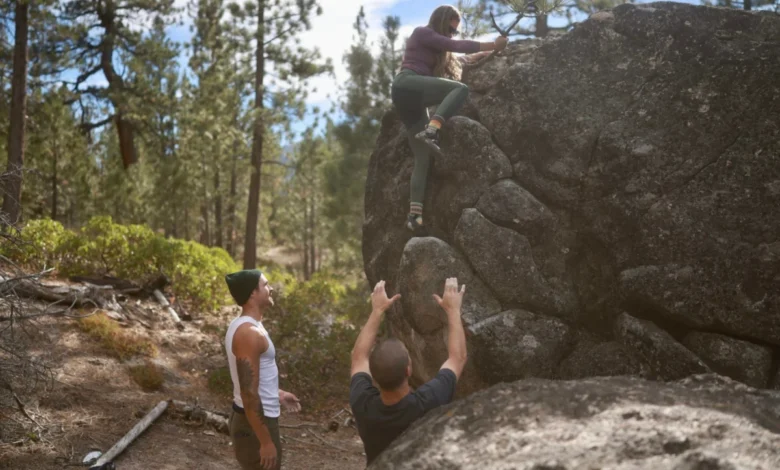
As the expedition progressed, the activities escalated under the careful supervision of expert guides. In a pivotal scene of the premiere episode, Dylan Efron enlisted Outside’s Climbing Editor, Anthony Walsh, to introduce Fishel to the fundamentals of bouldering. This introductory rock-climbing discipline was chosen for its low equipment requirements and scalable difficulty level. Following the bouldering session, the participants transitioned to slacklining—a balancing sport that tests core stability and focus—before culminating in a supervised highlining experience. This progressive structure illustrated a vital outdoor learning principle: starting with manageable, low-stakes activities helps mitigate anxiety and builds physical competence over time.
Supporting Data and Market Context
The launch of Sierra in the Sierras arrives at a time when participation in outdoor recreation continues to experience steady growth across the United States. According to reports from the Outdoor Industry Association (OIA), participation in hiking, camping, and running saw significant spikes over the past decade, driven in part by a broader societal shift toward health, wellness, and mental restoration through nature. However, demographic studies consistently show a persistent gap between individuals who express a desire to explore the outdoors and those who actively participate, with lack of knowledge, gear costs, and intimidation cited as primary deterrents.
Furthermore, retail market research indicates that off-price and value-oriented outdoor retail sectors are expanding rapidly. Consumers increasingly seek durable, trusted-brand equipment without paying premium specialty-shop prices. By aligning its retail philosophy with an educational media format, Sierra is tapping into a vast, underserved market of consumers who want to engage in active lifestyles on their own terms. Digital navigation tools highlighted in the series, such as Trailforks and Gaia GPS, further reflect this shift, empowering novice explorers with user-friendly technology to locate accessible trails and green spaces within their immediate geographic footprints.
Statements and Industry Reactions
While the series adopts a lighthearted and approachable tone, industry analysts view it as a sophisticated marketing and educational campaign with broader cultural implications. Representatives from participating outdoor organizations have emphasized that the future of conservation and outdoor advocacy depends heavily on expanding access and welcoming diverse participant profiles.
"The traditional gatekeeping of the outdoors—the idea that you need the most expensive gear and elite physical conditioning to belong on a trail—is rapidly fading," notes a specialty outdoor retail analyst. "Programs that normalize being a beginner and celebrate lower-intensity outdoor engagement are vital for the long-term health of both the outdoor industry and public lands."

Participants themselves have echoed these sentiments, highlighting the psychological benefits of removing performance-based expectations from outdoor recreation. During the filming of the premiere episode, Fishel reflected on her initial apprehension regarding outdoor sports, noting that having a supportive peer group and expert instruction transformed a potential source of stress into an empowering learning experience. This peer-driven model underscores a central thesis of the series: everything is easier, and significantly more enjoyable, when shared with others who are willing to learn alongside you.
Broader Impact and Implications
Beyond the entertainment value of watching public figures navigate new physical challenges, Sierra in the Sierras carries broader implications for how communities interact with their local environments. The series actively challenges the notion that true adventure requires traveling to remote wilderness destinations or national parks. By directing viewers to utilize digital mapping applications and explore natural playgrounds in their immediate neighborhoods, the initiative promotes localized recreation.
This localized approach not only reduces the carbon footprint associated with long-distance adventure travel but also fosters a deeper community connection to local municipal parks, regional open spaces, and urban greenways. As urbanization continues to expand, maintaining a psychological and physical connection to nature remains critical for public health and environmental stewardship.
Ultimately, the core message of the initiative resonates as an inclusive counter-narrative to modern hustle culture. While societal pressures frequently demand maximum output and competitive excellence in every aspect of life, the outdoors offers a restorative space where individuals can set their own pace. Whether an individual aspires to summit a technical peak or simply take a leisurely afternoon stroll through a neighborhood park, the foundational philosophy remains unchanged: the outdoors belongs to everyone, and there is no singular correct way to experience it.
Related posts: