Own a Piece of Paradise: Two Untouched Fiji Islands Head to Auction With a $1.7 Million Reserve

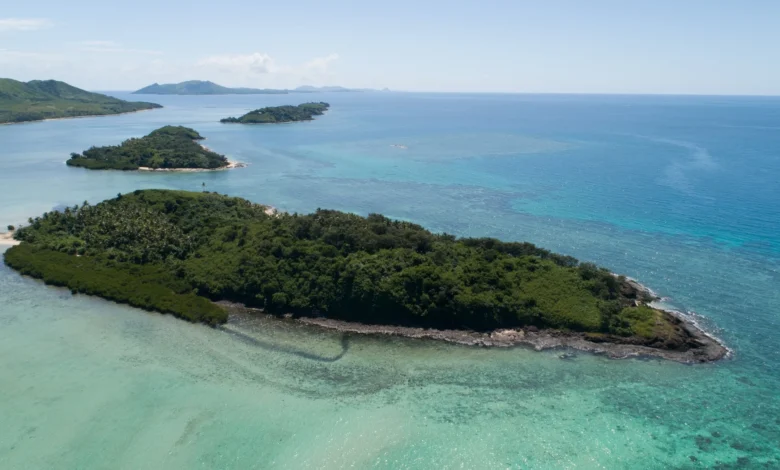
The dream of owning a private sanctuary in the South Pacific has long occupied the pinnacle of real estate aspirations, yet the opportunity to acquire not one, but two contiguous islands remains an exceptionally rare occurrence in the global market. Nanuyasesara and Nanuyabuli, a pair of undeveloped islands situated within Fiji’s picturesque Yasawa Group, are set to return to the auction block. Previously listed with a valuation of $4.512 million, the islands are now positioned for a strategic sale, carrying a reserve price of $1.7 million—a significant adjustment that signals the sellers’ intent to finalize a transaction.
Managed by Paramount Realty USA in collaboration with listing agent Cara Milgate of Intero Real Estate Services, the auction represents a unique intersection of luxury property speculation and blank-slate development. Unlike traditional luxury real estate, which often involves the acquisition of pre-built estates, this offering provides the buyer with 24.5 acres of raw, pristine land that has been untouched by the standard architectural footprints of modern tourism.
Geographical Context and Accessibility
The Yasawa Group, a chain of volcanic islands characterized by dramatic peaks and turquoise lagoons, is one of the most sought-after archipelagos in the South Pacific. Nanuyasesara and Nanuyabuli sit just off the southern coast of Naviti Island, a location that offers a balance between seclusion and accessibility.
Logistically, the islands are positioned approximately 2.5 hours by boat from the Nadi area, the primary gateway to Fiji. For those requiring more efficient travel, the islands can be reached via seaplane or helicopter in roughly 30 minutes. This proximity to the international transit hub of Nadi is a critical factor for prospective buyers who intend to develop the property into a high-end private residence or a boutique commercial enterprise, as it facilitates the transport of construction materials, labor, and eventually, guests.
The Evolution of the Offering
The path to this current auction reflects the shifting dynamics of the international private island market. The islands were initially marketed at a premium price point of $4.512 million, reflecting the high-water mark for Fiji’s prime real estate during a period of intense global interest in isolated, pandemic-era luxury properties.

As market conditions have stabilized, the decision to pivot to a reserve-style auction suggests a desire to establish a fair market value based on current demand. Listing agent Richard Snowsill, who has been closely involved with the property’s trajectory, noted that the current ownership is moving to liquidate the asset to secure capital for other undisclosed development projects. This transition marks the end of a long-standing holding period and provides a fresh opportunity for investors who may have been priced out of the initial listing.
Legal Framework and Land Tenure in Fiji
Prospective buyers must navigate the specific regulatory environment governing Fijian land. The islands are held under a 99-year Special Use-Tourism Development Lease. This tenure structure is common for major commercial or high-end residential developments in the region, providing long-term security of possession while binding the owner to the development standards mandated by the Fijian government.
While the specific conditions of this lease are not public, the designation as "Special Use-Tourism" implies that the land is specifically zoned for hospitality or resort-related infrastructure. Any developer looking to move beyond a private family compound into the realm of commercial tourism will be required to comply with the Ministry of Tourism’s guidelines, environmental impact assessments, and local building codes. These regulations are designed to protect the fragile marine and terrestrial ecosystems that define the Yasawa Group, ensuring that any future development remains sustainable.
The Economics of Island Development
The challenge—and the allure—of the Nanuyasesara and Nanuyabuli acquisition lies in the "blank canvas" nature of the terrain. With no existing villas, utility grids, or hospitality infrastructure, the buyer is essentially purchasing the land value, not the improvements.
Industry estimates provided by local consultants indicate that building on such an island requires a substantial capital commitment beyond the purchase price. Preliminary estimates suggest that constructing a modest, high-quality residence ranges between $5,000 and $8,000 per square meter. This figure accounts for the logistical hurdles of moving machinery, fuel, and specialized labor to an undeveloped islet. However, these figures are baseline estimates and do not encompass the "all-in" costs of establishing independent utility systems, such as desalination plants, solar power arrays, and waste management infrastructure, all of which are essential for autonomous island living.
Perspectives from the Market
Misha Haghani, CEO of Paramount Realty USA, has characterized the sale as an exercise in "transcending typical valuation metrics." In his view, the absence of existing structures is not a deficit, but rather a rare asset. "An asset like two untouched islands in Fiji transcends typical valuation metrics," Haghani stated. The sentiment is that modern buyers, particularly high-net-worth individuals, are increasingly seeking to imprint their personal vision onto a property rather than inheriting the design choices of a predecessor.

This philosophy aligns with a broader trend in the ultra-luxury sector, where "bespoke" has replaced "turn-key" as the primary status symbol. The ability to design a self-sustaining eco-resort or a private, off-grid retreat in a region as iconic as Fiji offers a level of prestige that conventional real estate cannot match.
Broader Implications and Strategic Analysis
The auction of these two islands serves as a barometer for the health of the South Pacific luxury market. Fiji has long maintained a competitive edge in the global market due to its stable political environment, clear land-lease laws, and consistent tourism appeal.
However, the auction also highlights the risks associated with raw land development. The buyer must be prepared for a multi-year project involving complex logistics and regulatory compliance. The "world is their oyster" narrative often ignores the reality of managing a remote property, including the maintenance of maritime vessels, the procurement of supplies, and the challenges of environmental stewardship in a changing climate.
Furthermore, the secondary market for private islands is notoriously illiquid. Unlike urban residential real estate, which has high transaction volumes, private islands represent a niche asset class that requires patience and deep financial reserves. The reduction in the reserve price to $1.7 million serves as a pragmatic acknowledgment of these realities, likely designed to attract a wider pool of sophisticated investors who understand the "hidden" costs of island development.
Conclusion
As the auction date approaches, the focus remains on who will take the mantle of steward for these two pieces of the Yasawa Group. Whether the successful bidder chooses to develop a low-impact private sanctuary, a sustainable boutique resort, or maintains the islands in their current, pristine state, the acquisition represents a rare entry point into one of the most exclusive real estate segments in the world.
For the right owner, the combination of 24.5 acres of white-sand beaches, proximity to the Nadi transit hub, and a significant reduction in the starting price point creates a compelling investment case. As the market for private retreats continues to evolve, Nanuyasesara and Nanuyabuli stand as a testament to the enduring appeal of the South Pacific—and the ultimate ambition of crafting one’s own private paradise from the ground up.