The East Broad Top Railroad: A Journey Through Time on America’s Most Intact 19th-Century Industrial Marvel

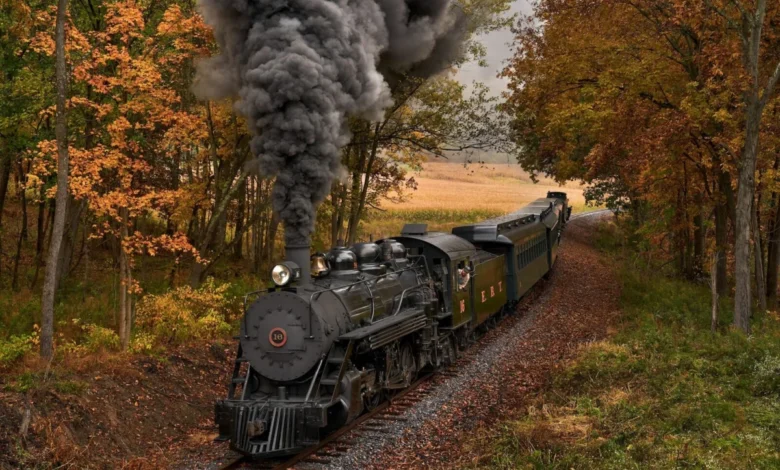
The East Broad Top Railroad (EBT), a National Historic Landmark, stands as a vibrant testament to America’s industrial past, offering a unique opportunity to experience a bygone era aboard authentic coal-fired steam locomotives. While its operations span nearly the entire year, from a "Winter Spectacular" in February to festive holiday trains in December, the railroad truly shines during the autumn months, transforming the scenic Aughwick Valley of Central Pennsylvania into a canvas of vibrant fall colors. This unique narrow-gauge line, which ceased freight operations in 1956 only to be miraculously preserved and later revitalized, represents an unparalleled historical asset, attracting visitors from across the globe keen to immerse themselves in a living museum of 19th-century American industry and railroading.
A Legacy Forged in Coal: The Early Years (1872-1956)
The story of the East Broad Top Railroad begins in 1872, when construction commenced on this ambitious project designed to tap into the rich coal reserves of Huntingdon County, Pennsylvania. Unlike most railroads that adopted the "standard gauge" of 4 feet, 8.5 inches, the EBT was built as a "three-foot gauge" line. This narrow gauge choice was a common engineering solution in rugged, mountainous terrain, offering advantages such as reduced construction costs due to less earthmoving, tighter curve radii, and lighter infrastructure requirements. For the EBT, traversing the challenging topography of the Allegheny Mountains and connecting the coal mines of Robertsdale and Alvan to the standard gauge Pennsylvania Railroad interchange at Mount Union, this decision proved crucial for economic viability.
For over eight decades, the EBT served as the lifeblood of the region, primarily hauling "Rockhill Coal" from the mines to market. Its primary function was freight service, but it also carried passengers, mail, and express, connecting isolated communities and fostering economic growth in an otherwise remote area. The railroad’s workshops in Orbisonia became a hub of innovation and self-sufficiency, capable of manufacturing and repairing virtually every piece of equipment, from locomotives and freight cars to passenger coaches. This self-reliance contributed significantly to the railroad’s unique operational integrity and the preservation of its original equipment.
However, as with many coal-dependent industries, the mid-20th century brought significant challenges. Changing energy demands, increased competition from trucking, and the decline of the local coal industry led to a steady decrease in freight traffic. On April 1, 1956, after 84 years of continuous operation, the East Broad Top Railroad abruptly ceased all common carrier freight and passenger service. What happened next, however, was not the typical story of abandonment and dismantling.
The "Miracle" of Preservation: A Time Capsule Unearthed
When the last trains ran in 1956, the crews simply went home, leaving virtually everything in place. Locomotives were parked in the roundhouse, tools lay on workbenches in the machine shop, and records were filed in the office. This unprecedented, almost spontaneous, preservation created a perfectly intact industrial complex frozen in time. The Smithsonian Institution would later describe it as "one of the most intact 19th-century industrial sites in the country," a recognition that underscored its extraordinary historical value.
This accidental preservation was followed by a more deliberate effort. In 1964, just eight years after its operational cessation, the East Broad Top Railroad was designated a National Historic Landmark by the U.S. Department of the Interior. This prestigious designation recognized its national significance as a rare and exceptionally preserved example of a narrow-gauge common carrier railroad and its associated industrial infrastructure. The significance of this decision cannot be overstated; it effectively saved the entire complex from the scrapyard, preserving not just the rolling stock but the entire operational ecosystem of a bygone industrial era.
For decades following its shutdown, the railroad remained largely dormant, though parts of it saw occasional tourist operations under the ownership of the Kovalchick family, who purchased the property in 1964. These limited excursions, primarily on a short section of track, kept the spirit of the EBT alive for many years, but the full restoration of the entire line and its comprehensive complex remained a monumental undertaking.
The true revitalization began in 2020 when the non-profit East Broad Top Railroad Preservation Association (now the EBT Foundation) acquired the railroad. Through a massive, multi-year fundraising and restoration effort involving countless volunteers, skilled craftspeople, and significant financial contributions, the EBT was meticulously brought back to life. This monumental undertaking culminated in the resumption of regular heritage operations in 2021, marking a triumphant return for a railroad once thought lost to history. Today, it proudly stands as the only surviving three-foot-gauge common carrier railroad east of the Rocky Mountains, a title that further emphasizes its unique position in American railroading history.
Engineering Marvels and Historic Authenticity
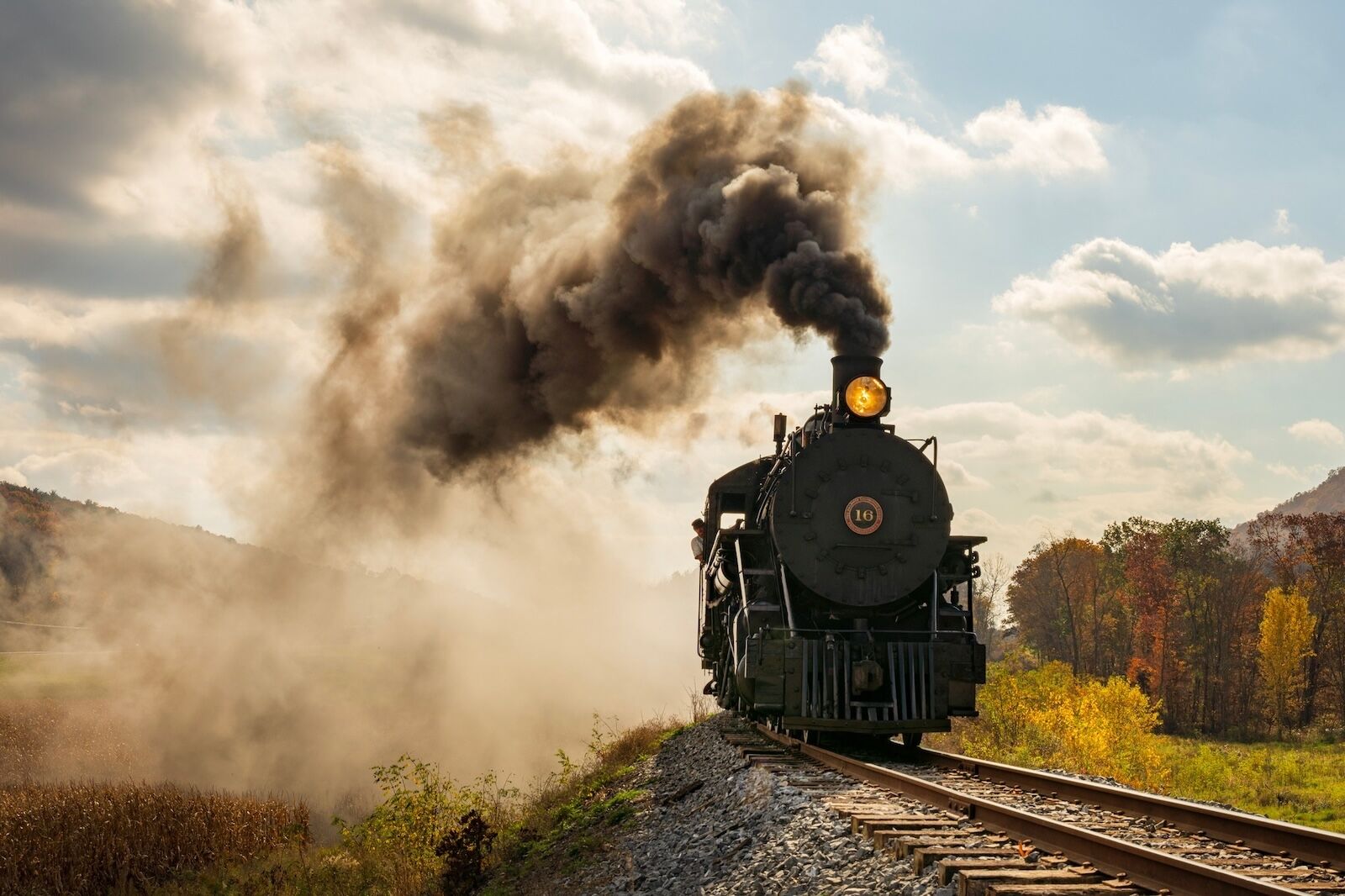
The East Broad Top offers more than just a scenic ride; it provides an immersive educational experience into the engineering and operational realities of the late 19th and early 20th centuries. The choice of a three-foot gauge, while initially driven by economic necessity for mountain terrain, now presents a distinctive visual and experiential element for visitors. Standard gauge railroads, prevalent across North America, measure 4 feet, 8.5 inches between the rails. The EBT’s narrower track creates a sense of intimacy and often allows for more winding routes through the landscape, a subtle yet profound difference in the rail travel experience.
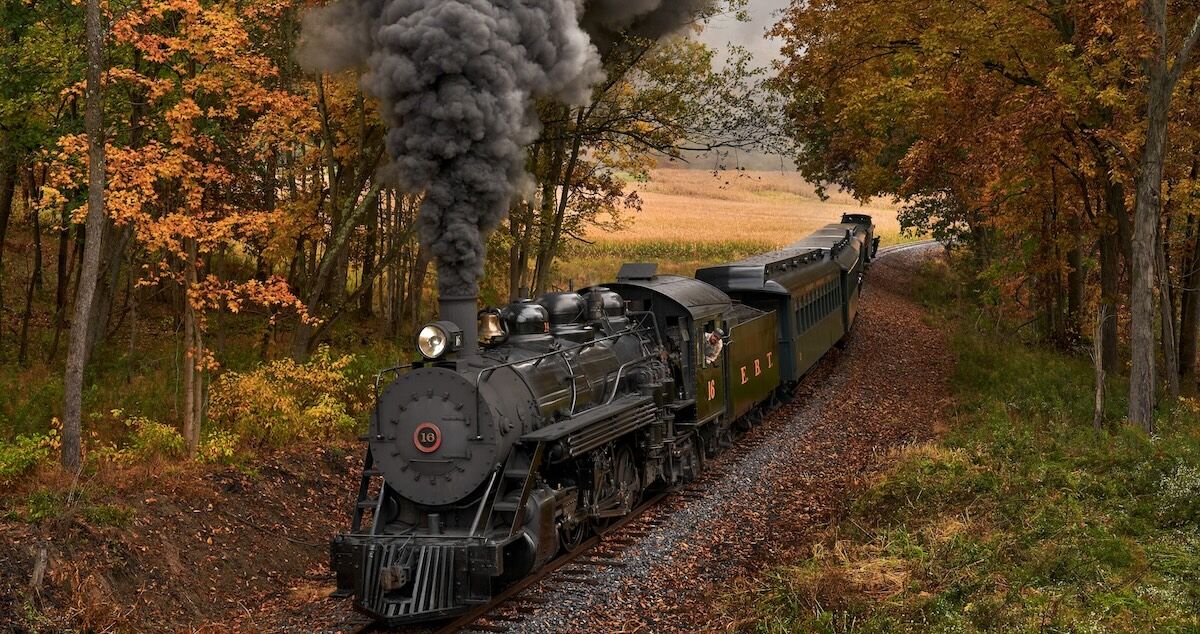
Central to the EBT’s authenticity are its century-old, coal-fired steam locomotives. These powerful machines are not merely static displays but fully functional engines, meticulously maintained to their original operating specifications. The sight and sound of a steam locomotive — the rhythmic chuffing, the hiss of steam, the clang of the bell, and the evocative smell of coal smoke and hot oil — transport passengers directly into the past. Operating these complex machines requires specialized knowledge and skills, making the EBT a living classroom for steam locomotive mechanics and operations. The EBT currently operates several of its original Baldwin-built narrow-gauge steam locomotives, each a testament to early 20th-century American industrial prowess.
Beyond the tracks and rolling stock, the Orbisonia complex itself is a marvel. The guided tours offer unparalleled access to structures like the roundhouse, where locomotives have been serviced and stored since the early 1900s. Visitors can see the massive turntable used to reorient engines and learn about the daily routines of a bustling rail yard. Perhaps most impressive is the largest belt-driven machine shop in the United States. This shop, powered by a single steam engine driving a complex system of overhead belts and pulleys, once operated dozens of lathes, drills, and presses simultaneously. It exemplifies the ingenuity and self-sufficiency of industrial operations before the advent of individual electric motors, providing a tangible link to a pivotal era of technological development. Experts frequently laud the EBT’s shop complex as a peerless example of pre-World War I industrial technology, making it an invaluable resource for historians and engineers alike.
Experiencing Fall: Signature Excursions and Scenic Wonders
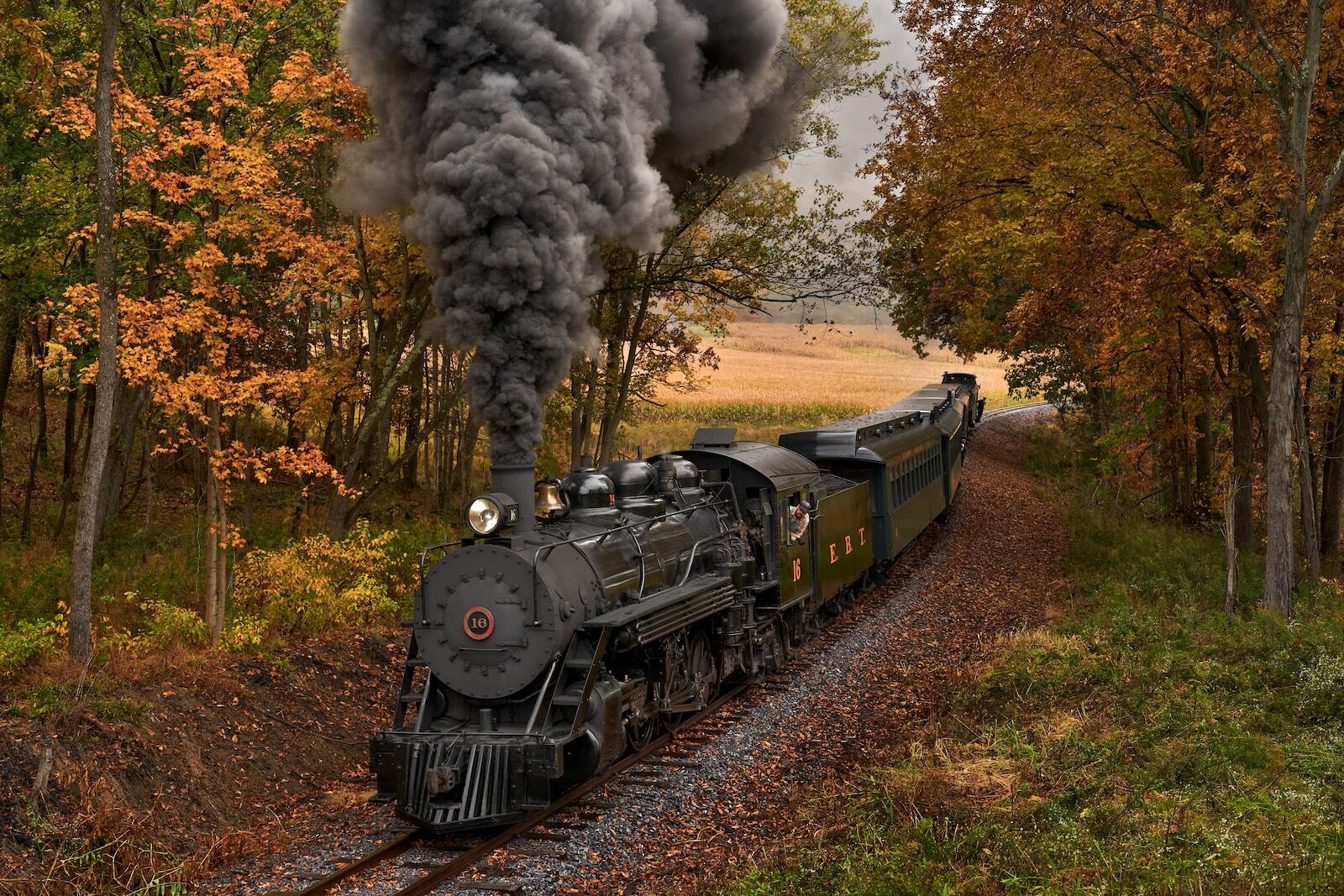
While the EBT offers excursions year-round, autumn is undoubtedly its most celebrated season. From early September through October 31, the Aughwick Valley transforms into a riot of crimson, gold, and orange, providing a spectacular backdrop for steam train travel. During this peak period, trains depart from the historic Orbisonia Station every Friday, Saturday, and Sunday at 10:30 AM, 12 PM, and 1:30 PM, with an additional 3 PM departure on select dates, all pulled by the iconic coal-fired steam locomotives.
The signature fall experience is the Northbound Colgate Grove Excursion. This nine-mile, one-hour roundtrip journey meanders through the picturesque farmlands and dense forests of the Aughwick Valley. The route offers breathtaking views of the autumn foliage, with the steam locomotive’s whistle echoing through the colorful landscape. For those wishing to fully immerse themselves in the seasonal splendor, an optional 1.5-hour picnic layover is available at Colgate Grove, the halfway point. Here, passengers can disembark, enjoy a picnic amidst the vibrant fall colors, and catch a later train back to Orbisonia. This extended stop allows for a more leisurely appreciation of the natural beauty and the tranquility of the valley.
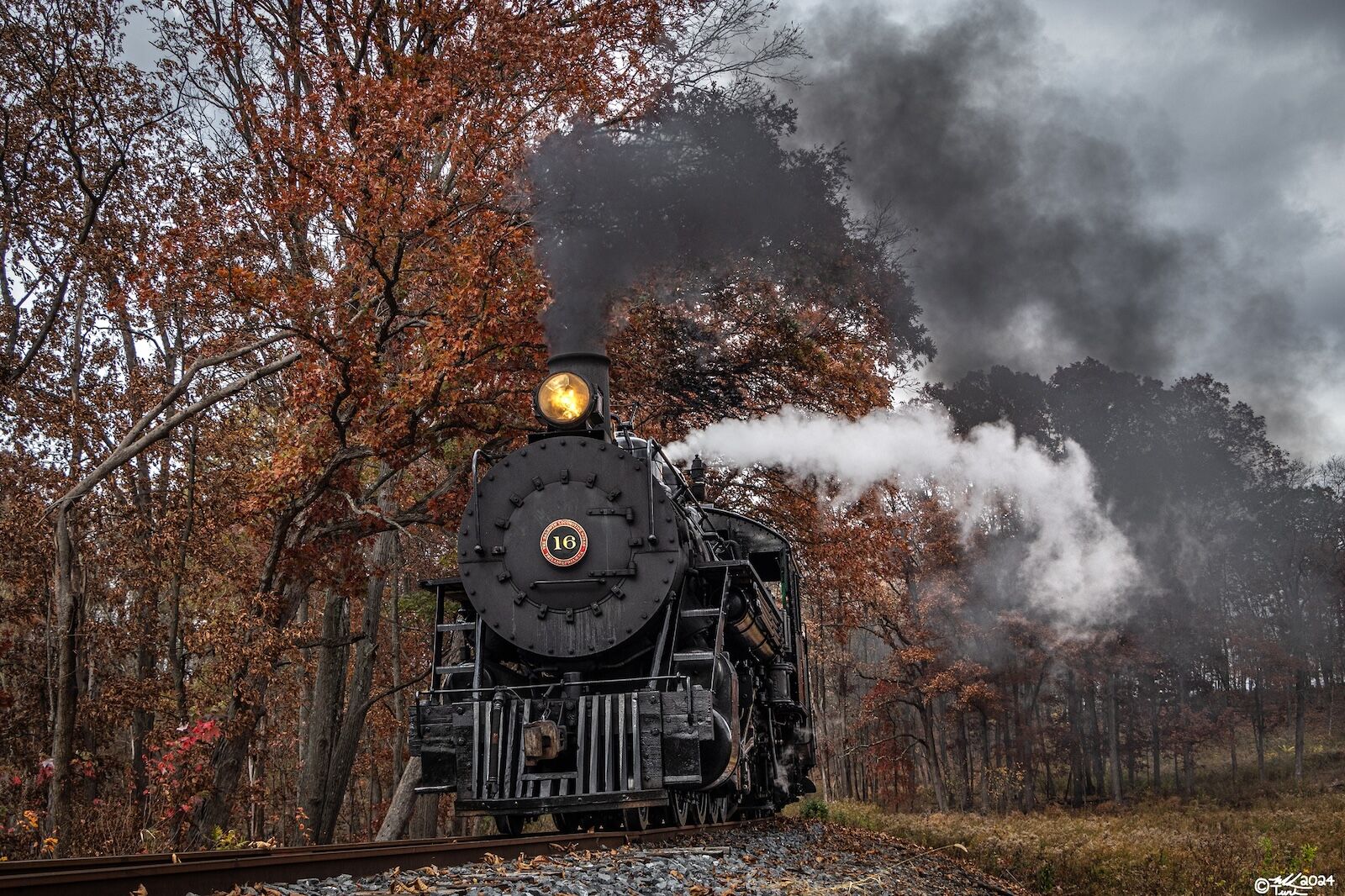
For those seeking to explore more of the EBT’s recently restored lines, the Southbound Pogue Excursion offers a unique opportunity. This roundtrip, also departing from Orbisonia Station but heading in the opposite direction, covers a stretch of track that had not carried passengers for nearly seven decades prior to the railroad’s revival. Unlike the northbound trip, there is no layover stop at the end; the train reverses near the community of Pogue. The primary appeal of this excursion lies in traversing this historically significant segment of the line, offering a glimpse into areas long untouched by passenger service. Due to its special nature, the southbound trip operates on select dates only, with specific dates often announced annually, such as the mentioned September 12 and October 3 for a future season, encouraging visitors to plan well in advance. A combo package for both routes offers a $10 per person saving, providing an incentive for a comprehensive EBT experience.
Choosing Your Journey: Diverse Seating Classes
The East Broad Top caters to a variety of preferences with four distinct service classes, each offering a unique perspective and level of immersion in the journey.
- Enclosed Cars: These traditional passenger coaches feature padded seats and windows that open, allowing passengers to enjoy the sights and sounds of the journey in comfort while protected from the elements.
- Open-Air Cars: Ideal for photographers and those who prefer an unobstructed view, these cars feature outward-facing bench seats and a sunshade, offering a direct connection to the passing scenery and the sensory experience of the steam train.
- Historic Caboose: For a more intimate and unique experience, a limited number of seats are available in the historic caboose. Riding at the very end of the train, passengers in the caboose get a distinct vantage point and a sense of being part of the train’s operation.
- Cinder Car: This is arguably the most authentic and adventurous option. The roofless, open-sided cinder car is designed for those who don’t mind a "little soot with their scenery." Passengers here experience the raw power and sensory elements of a steam locomotive up close, including the smell of coal smoke and the occasional cinder (glasses of some kind are highly recommended). This class offers an unparalleled, immersive experience for rail enthusiasts.
Pricing for these experiences is structured to be accessible: Coach, open-air, and cinder car seats cost $25 for adults and $15 for children ages two to 12. The historic caboose, offering a premium experience, is priced at $30 for adults and $20 for children. Children under two years of age ride free if they sit on an adult’s lap. The EBT is also committed to accessibility, ensuring that every train has at least one ADA-accessible car, reflecting modern considerations for historic preservation.
Beyond the Ride: Immersive Tours and Family Adventures
For visitors whose fascination extends beyond the train ride itself, the East Broad Top offers comprehensive guided tours of its railroad depot complex. These tours provide an in-depth look at the industrial heart of the railroad, including the aforementioned roundhouse and the largest belt-driven machine shop in the United States. Led by knowledgeable guides, these tours delve into the history, technology, and daily life of the railroad, showcasing the immense effort required to keep the EBT operational throughout its history. Budgeting approximately three hours for a combined train ride and facility tour is recommended to fully appreciate the scope of this historic site.
Families seeking a festive, fall-themed experience will delight in the Pumpkin Patch Express. This special event, typically running on select dates in October (e.g., October 10, 11, 17, 18, 24, 25, and 31 for a future season), offers departures throughout the day at 10 AM, 11:30 AM, 1 PM, and 2:30 PM. The roughly 2.5-hour tour includes a scenic train ride to Colgate Grove, where families disembark for 90 minutes of engaging activities. These include traditional hay bale wagon rides, mini-golf, a bounce house, pumpkin decorating stations, and spirited costume contests. Each child’s ticket includes a pumpkin to take home, and adults can purchase their own to join in the fun. The Pumpkin Patch Express offers an excellent blend of historical rail travel and seasonal family entertainment, making it a popular attraction. Tickets are priced at $28 for adults and $22 for children in coach or open-air cars, or $32 and $26 for the caboose, reflecting its premium nature.
To ensure a seamless experience, advance online reservations are strongly recommended, especially during peak fall foliage season and for special events like the Pumpkin Patch Express. It’s important to note that tickets are typically not emailed, so visitors are advised to check in at the Orbisonia Station 30 minutes ahead of their scheduled departure time to collect their physical tickets and prepare for their journey.
The Broader Impact: Heritage, Tourism, and Education
The East Broad Top Railroad’s revival and continued operation have significant broader implications. Economically, it has become a major tourism driver for Huntingdon County and Central Pennsylvania. The influx of visitors supports local businesses, from restaurants and lodging to artisan shops, contributing to regional economic vitality. "The EBT is more than just a railroad; it’s an economic engine for our community, bringing visitors from around the world to experience a piece of living history," remarked a local tourism official, underscoring its importance.
As a living museum, the EBT serves an invaluable educational purpose. It provides tangible lessons in industrial history, mechanical engineering, and American heritage that cannot be replicated in a classroom. Students and enthusiasts alike can witness firsthand the technology that powered a nation, understand the challenges of operating such machinery, and appreciate the craftsmanship of a bygone era. The ongoing restoration work also acts as a training ground for a new generation of preservationists, ensuring that the skills required to maintain these century-old artifacts are passed down.
Maintaining a historic railroad presents unique challenges, from the sourcing of specialized parts for steam locomotives to the extensive infrastructure upkeep required for tracks, bridges, and buildings. The EBT Foundation faces the constant task of balancing historical authenticity with modern safety standards and visitor expectations. However, the dedication of its staff, volunteers, and supporters ensures that this national treasure continues to operate, offering a unique blend of nostalgia, education, and breathtaking scenery. The East Broad Top stands as a powerful symbol of successful heritage preservation, demonstrating that with vision and commitment, the past can indeed be brought to life for future generations to cherish and learn from.