Mackinac Island: A Timeless Michigan Jewel Sustaining a Car-Free Legacy in Lake Huron.

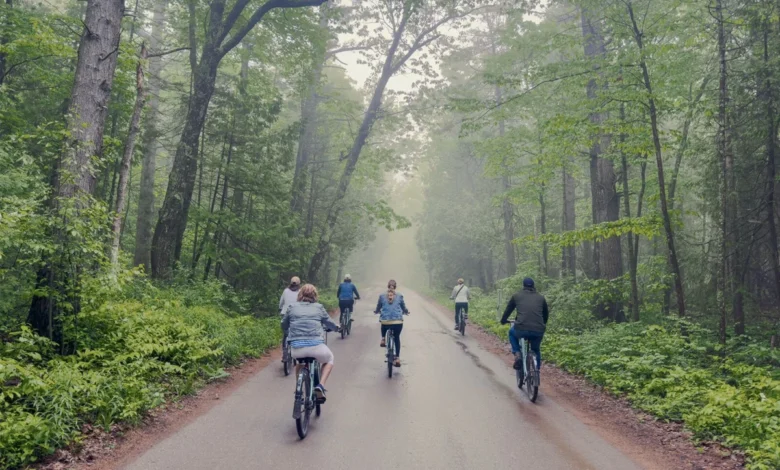
Nestled in Lake Huron, between Michigan’s Upper and Lower Peninsulas, Mackinac Island stands as a remarkable testament to preserved history and a unique way of life. Stretching approximately eight miles around its scenic shoreline, this iconic destination has famously banned cars since 1898, a decision originally made after horse-drawn carriage drivers voiced concerns about motor vehicles scaring their horses. This pioneering environmental and cultural choice has since defined the island’s character, making biking, walking, and horse-drawn carriages the exclusive modes of transportation for its approximately 500 year-round residents and over one million annual visitors. The island’s commitment to its car-free status provides a rare glimpse into a bygone era, distinguishing it as a National Historic Landmark in its entirety.
The prime season for experiencing Mackinac Island’s charm extends from May through October. June marks the onset of the peak summer season, a period when the island transitions from its quieter winter months to a bustling hub of activity. During this time, the island bursts into vibrant life with white and purple lilacs blooming across the downtown area, coinciding with the annual Mackinac Island Lilac Festival. This festival, typically held in June, celebrates the island’s abundant lilac varieties, many of which are heirloom species, drawing visitors to enjoy parades, live music, and cultural events. Local insights frequently highlight early summer, during the lilac bloom, or later in the fall when the autumn foliage reaches its peak, as the most picturesque times to visit.
A Journey Through Mackinac’s Rich History and Unique Culture
Mackinac Island’s history is deeply intertwined with its present-day allure. Established as the country’s second national park in 1875, Mackinac National Park was later decommissioned in 1895 and subsequently turned over to the state, becoming Michigan’s first state park. This early dedication to preservation laid the groundwork for the island’s current status, with over 80 percent of its land now protected as Mackinac Island State Park. The island also played a pivotal role in early American history, notably as a strategic military outpost during the War of 1812, with sites like Fort Mackinac and British Landing standing as reminders of its past.
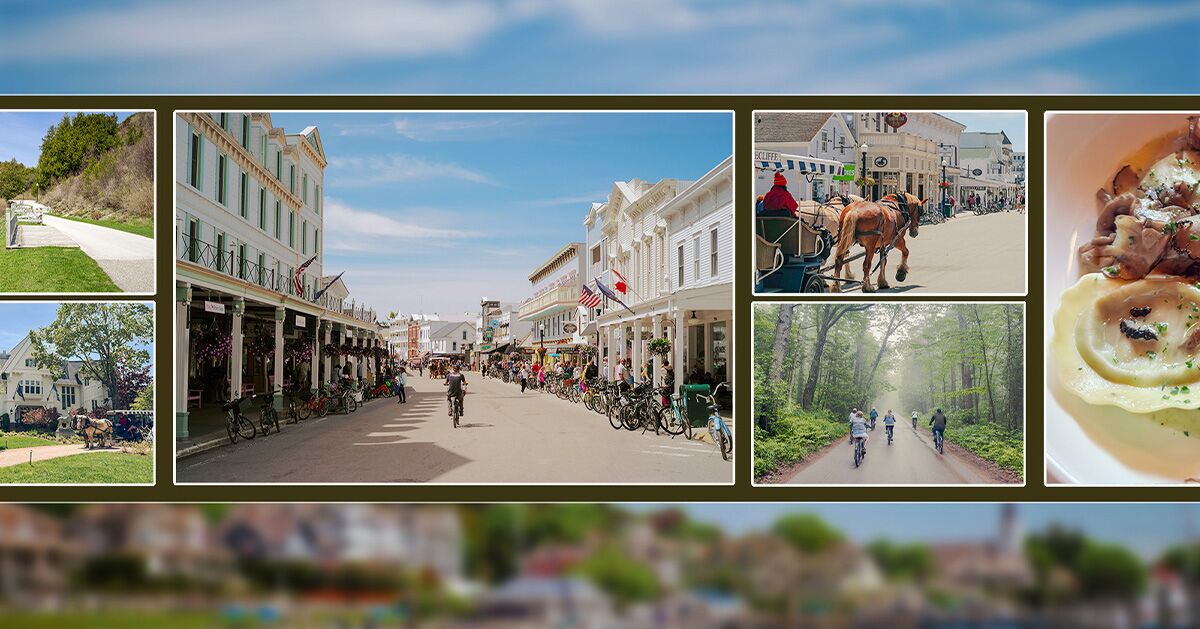
The enduring car ban, enforced for over 125 years, is more than a historical footnote; it is the cornerstone of Mackinac’s identity. This policy not only preserves the island’s tranquil atmosphere but also supports a unique economy centered around horse-drawn logistics and pedestrian-friendly commerce. This deliberate choice sets Mackinac apart from virtually every other tourist destination, forcing a slower pace of life that encourages deeper engagement with its natural beauty and historical sites.
Exploring the Island’s Myriad Attractions
A visit to Mackinac Island typically begins on Main Street, the bustling heart of its commercial district. This vibrant thoroughfare is lined with an array of family-owned and -operated shops, many with legacies spanning generations. Among these is Doud’s Market, recognized as the oldest continuously operated family-run grocery store in the United States, where it is not uncommon to observe locals transporting their provisions home in wagons hitched to the backs of bicycles, a visual representation of the island’s unique transportation system. For those seeking local treasures, Little Luxuries offers an assortment of beauty products, handcrafted goods, and distinctive souvenirs. Many of the island’s tour and experience bookings are also managed through these Main Street establishments.
Mary Jane Barnwell, proprietor of The Island Bookstore on Main Street since 1989, emphasizes the importance of understanding the island’s history. To facilitate this, Barnwell and her husband, Mark, developed Mackinac Jane’s Audio Tours, a series of self-guided walking and cycling tours available through the VoiceMap app. These tours are narrated by long-term island residents, offering authentic perspectives as they guide visitors past landmarks such as East Bluff, known for its historic summer cottages; British Landing, a significant War of 1812 site and rocky beach; and various filming locations from the beloved 1980 film Somewhere in Time.
Active Exploration: Biking and Hiking
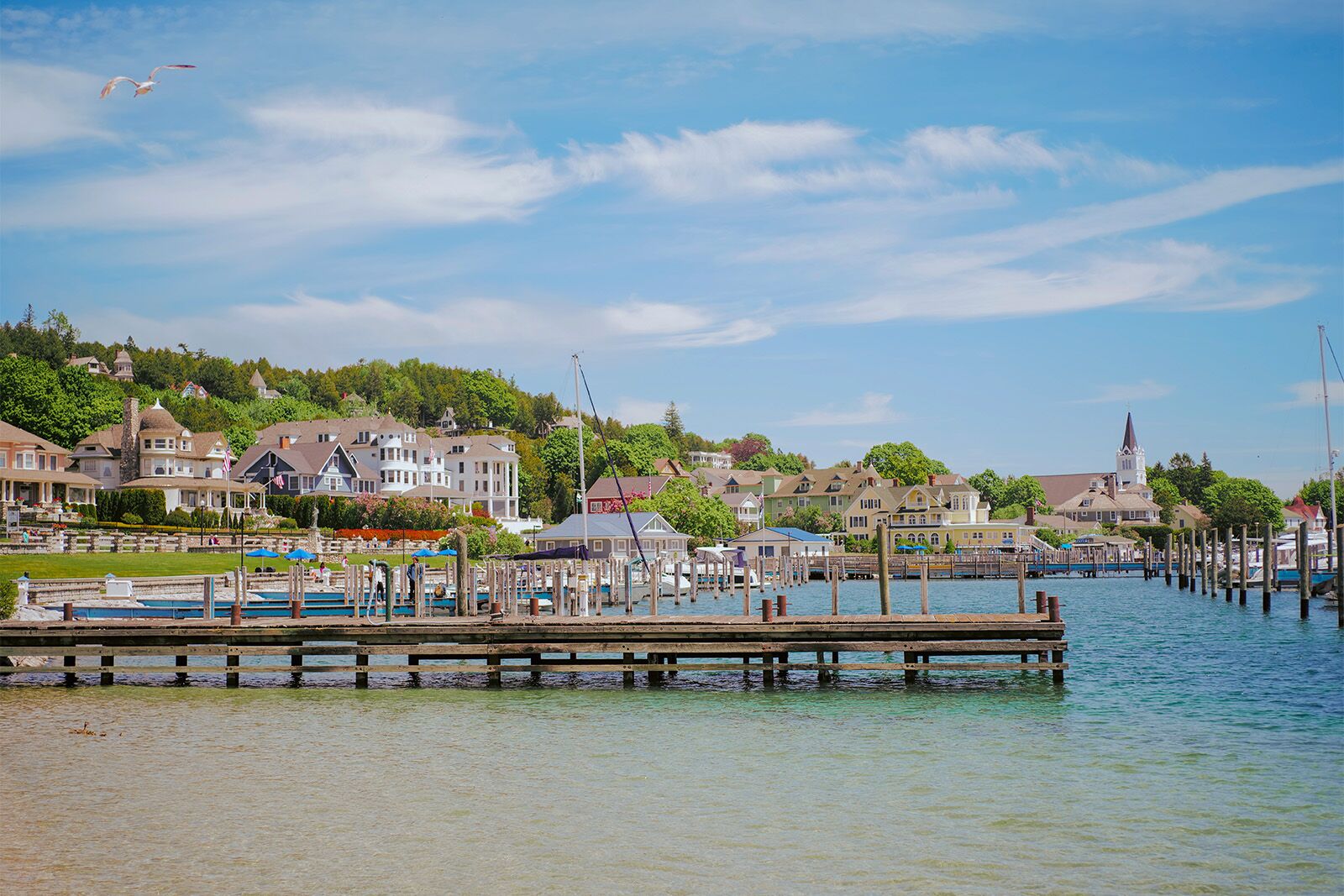
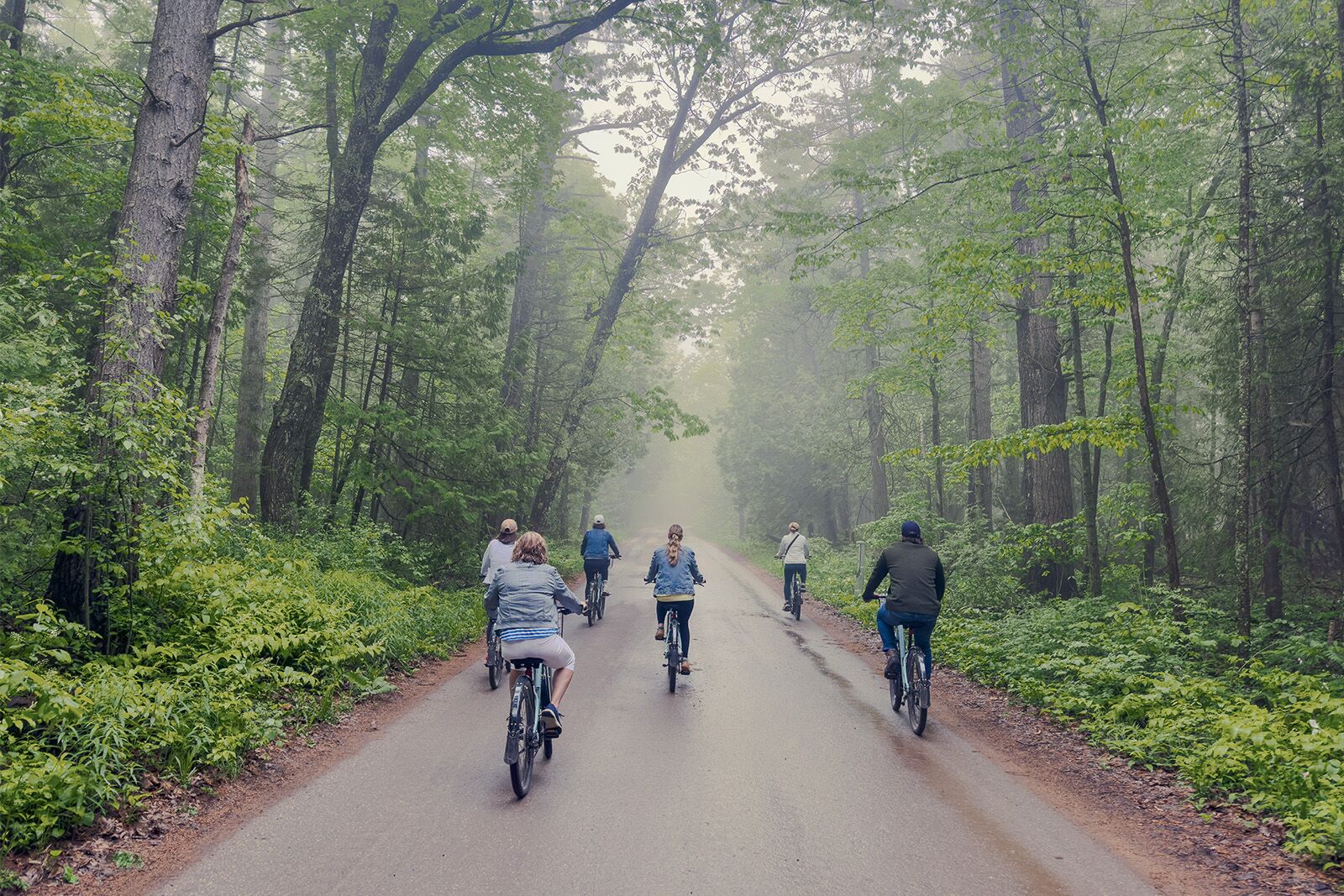
Biking stands as one of the most popular and accessible methods of navigating Mackinac Island. Numerous bike rental shops, including Mackinac Island Bike Shop and Mackinac Wheels, are conveniently located on Main Street. The iconic car-free eight-mile loop around the island via Lake Shore Boulevard offers unparalleled scenic views of Lake Huron. Along this route, visitors can pause at notable geological formations such as Arch Rock, a striking limestone archway on the eastern shoreline. A climb of 207 steps leads to this natural wonder, rewarding hikers with panoramic vistas of the lake and its remarkably clear waters, providing exceptional photo opportunities.
Beyond the shoreline loop, Mackinac Island State Park provides an extensive network of over 70 miles of trails. These pathways wind through dense evergreen tunnels and vibrant wildflower patches, particularly in spring and early summer. The park is home to several significant geological landmarks, including Fort Holmes, the island’s highest point, offering commanding views of the Straits of Mackinac and the majestic Mackinac Bridge. Another remarkable formation is Sugar Loaf, a dramatic limestone stack that rises 75 feet from the forest floor. For architectural enthusiasts, the West Bluff Trail offers charming views of the island’s Victorian homes, while the Croghan Water Trail, situated on the island’s remote side, is a prime location for wildlife spotting.
Unique Island Experiences: Cruises and Carriages
For a different perspective of the island and its surrounding waters, Sip n’ Sail Cruises come highly recommended by many Mackinac Islanders. The operator deploys two vessels: the 55-foot, glass-bottomed Robin E and the larger 81-foot Isle Royale Queen III. The diverse cruise options include the Michigan Craft Beer Cruise, the Sip n’ Sail Sunset Cruise, and the Bloody Mary & Mimosa Bridge Tour, which offers unique views of the Mackinac Bridge, a five-mile suspension bridge connecting Michigan’s peninsulas where Lake Michigan converges with Lake Huron. Visitors planning spring cruises should be mindful of potential weather-related cancellations.
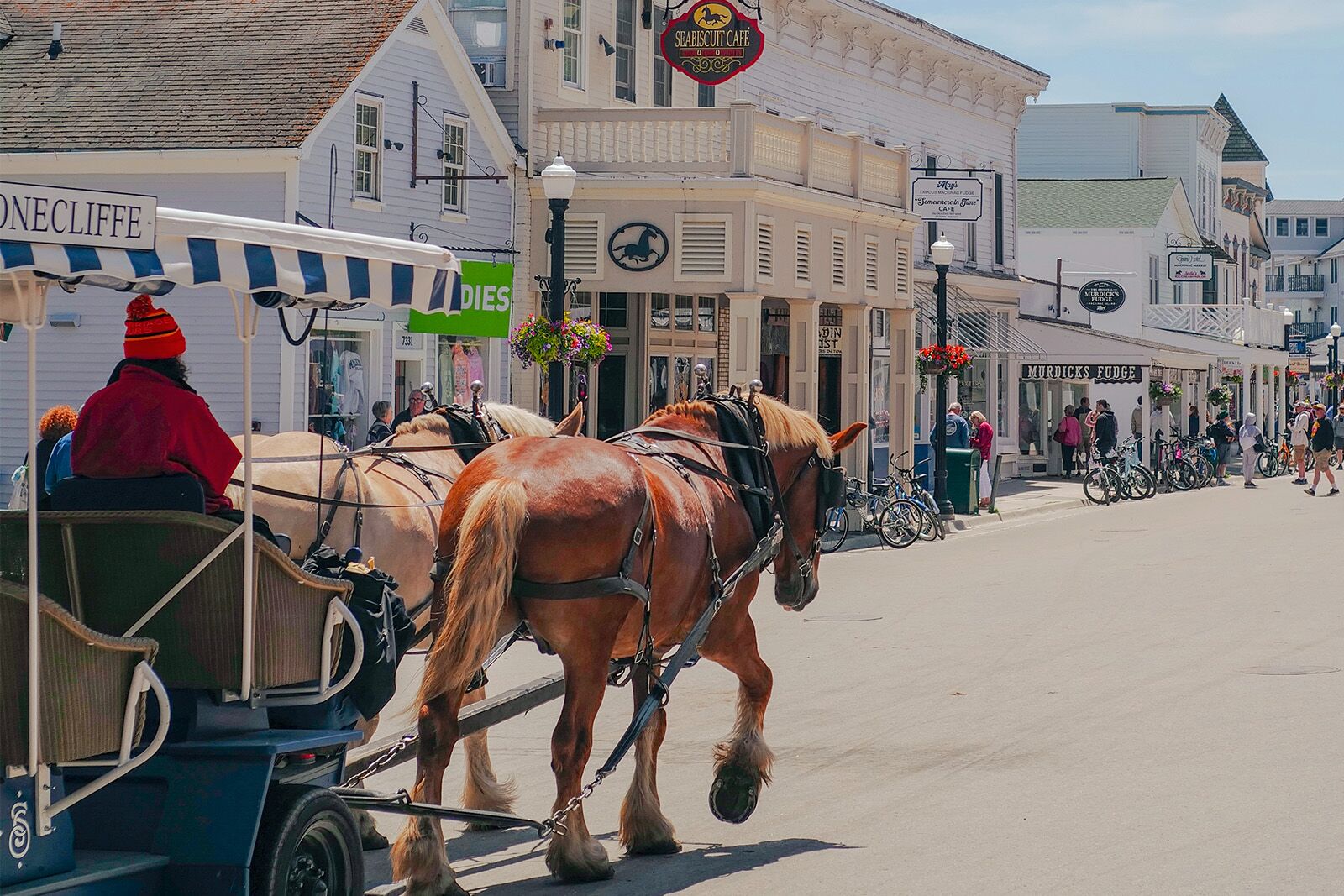
The most distinctive and historically significant mode of transport on Mackinac Island is the horse-drawn carriage. Mackinac Island Carriage Tours, in operation since 1869, offers a comprehensive 1.5- to 2-hour guided loop around the island. This tour includes stops at key attractions such as Arch Rock, Surrey Hill (which houses a carriage museum, a butterfly conservatory, and a blacksmith shop), and the iconic Grand Hotel, the island’s largest and most storied resort. Beyond public tours, the company also operates a 24-hour horse-drawn taxi service, available by dispatch (cash only), providing accessible transportation across the island for all visitors. Private carriages can be arranged for customized routes, and for a more immersive experience, guests can learn to drive a buggy themselves at Jack’s Livery Stable.
A Sweet Tradition: Mackinac Fudge
Mackinac Island has earned the moniker "Fudge Capital of the World," a tradition that elevates the sweet treat beyond mere confectionary to a cherished island experience. This legacy began in 1887 with the Murdick family, who opened the island’s first candy shop. Fudge quickly became a quintessential souvenir, inspiring numerous other families to establish their own fudge recipes and businesses. Among the most renowned establishments are Murdick’s Fudge and Joann’s Fudge. A visit to these shops often includes the captivating sight of confectioners meticulously folding fudge across cool marble slabs. This traditional technique is crucial for achieving the fudge’s characteristic melt-in-your-mouth texture, preventing a grainy finish. The island’s fudge industry is a significant economic driver, attracting tourists eager to sample and purchase this iconic treat.
Culinary Delights and Accommodations
Mackinac Island’s dining scene offers a blend of historical charm and contemporary flavors. The Mackinac Island Cookie Company, operated by Kate Conlon and her family, has gained widespread recognition for its "homemade cookies the size of your head." With its second location opening on the island’s Arnold Transit Dock in 2025, the company has cultivated a strong online following, with tourists often pausing their carriage rides for a photo with Conlon and to sample their acclaimed oatmeal cookies.
Watercolor Café, a vibrant Main Street establishment, is celebrated for its "Poppies," a fresh-baked interpretation of Pop-Tarts. This teal-colored breakfast and lunch spot offers window seating with water views, a comprehensive coffee menu, smoothies, and boba tea. Its menu features customizable oatmeal, breakfast burritos, a diverse toast selection, sandwiches, wraps, and salads. Uniquely, the café also hosts daily art classes and open studio hours, providing art supplies for guests to paint after food service concludes.
For fine dining, The Straits at the Inn at Stonecliffe offers a sophisticated experience for breakfast and dinner. The restaurant prides itself on a farm-to-table approach, sourcing many ingredients directly from the property or regional farms. Notable dishes include fresh white fish, spring gnocchi, and the chef’s recommended cotton candy walleye. The experience is complemented by opportunities for a nightcap in an Adirondack chair by a firepit on the back lawn.
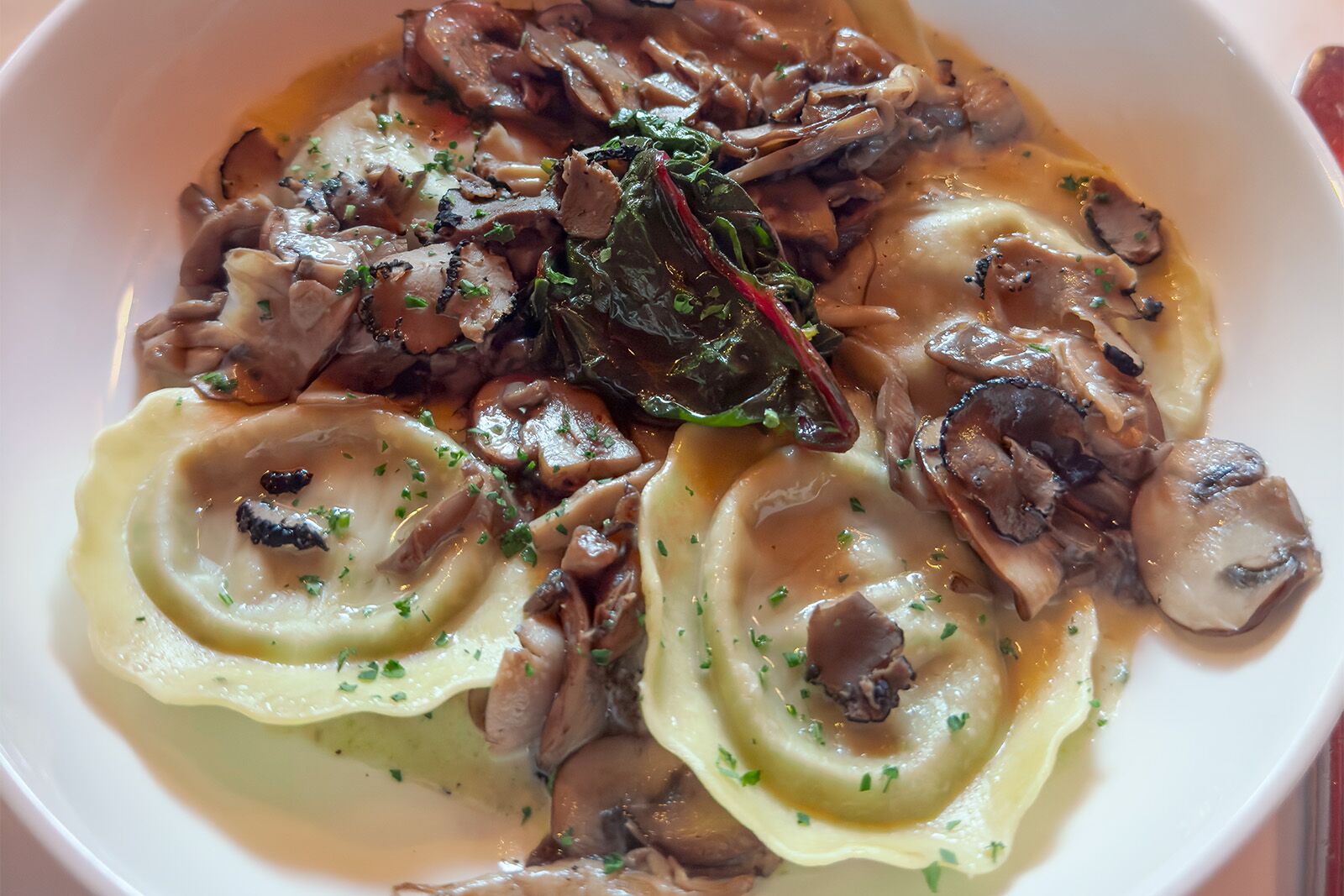
Woods Restaurant, a Bavarian-style dining room affiliated with the Grand Hotel, is considered a premier culinary destination, accessible by carriage, bike, or a leisurely walk through the woods. The menu features exquisite dishes such as wild boar meatballs, green goddess salad, and wild mushroom ravioli, served in a setting known for superb, unpretentious service. While the dress code is casual, dinner reservations are highly recommended.
Pink Pony, a fixture of Mackinac Island since the early 1900s, evolved from a café within the Chippewa Hotel to a popular cocktail lounge in the 1930s. Situated directly on the waterfront, its back deck offers prime seating for observing sailboats and ferries in the harbor. The restaurant serves breakfast, lunch, and dinner, with cocktails often adorned with a collectible pink pony duck. The patty melt, featuring sirloin, caramelized onions, mushrooms, and toasted rye bread with sweet potato fries, is a highly regarded menu item.
Accommodation on Mackinac Island ranges from historic grand hotels to charming inns. The Inn at Stonecliffe, operating from a 1904 Tudor mansion, underwent a significant $40 million renovation in 2024. It now offers 16 rooms in the mansion, 32 in an adjacent summer house, and new private cottages ideal for families or those seeking privacy. These cottages feature comfortable sofas, full kitchens, and access to the inn’s amenities, including a gym, sauna, pool, lawn games, an open garden, and cozy firepits. The Inn at Stonecliffe distinguishes itself as a Humanitarian Hotel, dedicating all net profits to community betterment and employing asylum-seekers. An exclusive raspberry chocolate fudge, crafted by the Mackinac Island Cookie Company solely for the inn’s gift shop, is a coveted local secret.
The Grand Hotel, built in 1887 and a National Historic Landmark, is famed for being a filming location for Somewhere in Time and boasting the world’s longest front porch, a magnificent 660-foot expanse lined with rocking chairs. With approximately 400 individually decorated rooms and suites, the hotel operates seasonally from May to October. Non-guests can access the porch and grounds for a fee, and gardens provide pleasant walking paths to downtown. A strict dress code is enforced in main areas and the dining room after 6:30 PM, requiring a coat and tie for men and a dress or pantsuit for women. Reservations are essential, particularly during peak season.
Hotel Iroquois, originally a private residence built in 1902 and converted into a hotel two years later, offers 46 comfortable rooms and complimentary breakfast. Its prime waterfront location in the heart of downtown, coupled with a private pier that facilitates waterfront dinner service at its Carriage House restaurant, makes it a highly desirable stay. Given its historic architecture, the hotel does not feature an elevator.
Accessing the Car-Free Paradise
Reaching Mackinac Island is an integral part of the adventure. Visitors typically fly into Pellston Regional Airport (PLN), which offers daily Delta flights from Detroit and a seasonal summer route from Chicago via United. From PLN, two primary options lead to the island. The first involves a 20- to 30-minute shuttle or taxi ride to Mackinaw City, followed by a short ferry ride that disembarks directly in downtown Mackinac Island. Alternatively, for a truly memorable entrance, Fresh Air Aviation provides brief private plane flights from PLN to Mackinac Island’s airstrip. This short flight offers spectacular aerial views of the island, with the added luxury of arranging a horse-drawn carriage to meet guests directly on the tarmac for transport to their hotel.
Mackinac Island’s steadfast dedication to its car-free policy has not only preserved its historical ambiance but has also cultivated a unique visitor experience that emphasizes natural beauty, community, and a slower pace of life. This commitment, coupled with its rich history and diverse attractions, ensures its continued status as a cherished destination in the Great Lakes region.