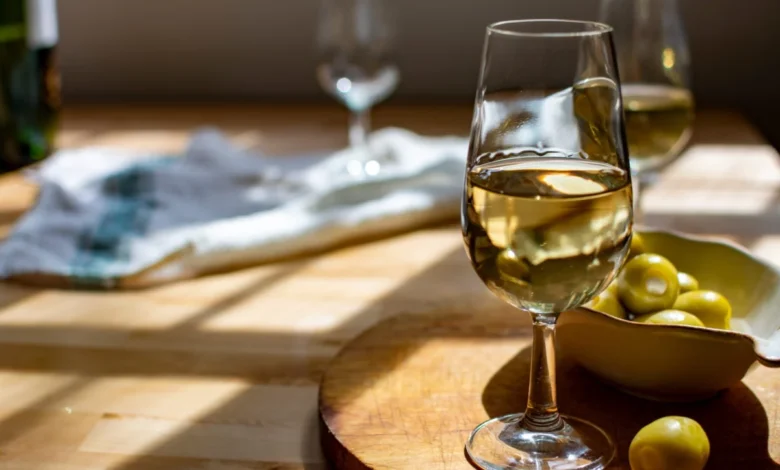
Forget rosé – the sophisticated palate is turning towards a well-chilled Palomino this summer, a varietal increasingly celebrated for its vibrant, sapid, and profoundly thirst-quenching qualities, even when enjoyed as a still white wine. While long recognized as the backbone of Spain’s iconic sherry, Palomino is now emerging as a star in its own right, captivating winemakers and discerning drinkers across the globe. Its remarkable ability to thrive in arid, sun-drenched environments, yielding grapes that produce fresh, saline, and elegantly balanced wines, positions it as the ultimate antidote to rising summer temperatures.
Traditionally associated with the fortified wines of Jerez in Andalusia, where it flourishes under intense heat, Palomino’s inherent hardiness has become a focal point for a new generation of winemakers. These artisans, hailing from Spain, South Africa, and California, are championing low-yielding, old-vine plantings to craft exquisite unfortified Palomino wines that showcase the grape’s true potential. This burgeoning movement signifies a significant shift in perceptions, elevating Palomino from a supporting player to a leading protagonist in the world of fine wine.
The Resurgence of Palomino: A Global Phenomenon
The recent spotlight on Palomino is not a fleeting trend but a testament to the grape’s intrinsic qualities and the dedication of winemakers committed to unlocking its potential. These pioneers are meticulously tending to ancient vines, often in challenging terroirs, to produce wines that are both expressive of their origins and remarkably versatile. This resurgence is underpinned by a growing appreciation for indigenous grape varieties and a desire for wines that offer a genuine connection to the land.
The narrative of Palomino’s ascent is unfolding across diverse viticultural landscapes. From the rugged, arid expanses of South Africa to the volcanic soils of the Canary Islands and the historic vineyards of California, the story is one of resilience, tradition, and innovation. These winemakers are not merely producing wine; they are reviving forgotten plots, honoring generational knowledge, and demonstrating that the humble Palomino grape possesses the capacity for greatness.

Spotlight on Three Exceptional Palomino Wines
Holism Palomino 2022, Piekenierskloof, South Africa
Deep within the remote Piekenierskloof region, a two-hour journey north of Cape Town, lies Swartberg Wingerde, the realization of winemaker Rudiger Gretschel’s lifelong ambition. This rugged landscape, a sanctuary for baboons and fynbos, is where Gretschel, renowned for his work with iconic South African wines like Chocolate Block, Boekenhootskloof, Cap Classique, and Reyneke, has dedicated himself to the resurrection of ancient vineyards. The finest of these venerable vines yield the single-varietal Holism Palomino, a wine that embodies the spirit of its untamed environment.
Gretschel’s connection to this wild terrain is deeply personal. "I grew up in the Namibian desert," he shares, "so the wildness of Piekenierskloof just speaks to me. It has always been my dream to own a vineyard here – I like this idea of hardy things thriving in the heat." This philosophy is evident in the Holism Palomino’s character. The oldest Palomino vines on the property were planted in 1966 and have never known irrigation. Even under the intense summer sun, the deep sandy soils can become almost too hot to touch. However, the moderating influence of cool Atlantic breezes prevents the grapes from becoming overripe, lending the wines a crucial "lift and lightness," as Gretschel describes, enabling the creation of something "quite delicate."
The Holism Palomino 2022 exhibits an almost sake-like refinement and invigorating freshness. It offers a delightful interplay of thirst-quenching notes of nashi pear, green grape, and delicate white flowers, all supported by a remarkably user-friendly alcohol content of just 11 percent. "What else can you stick in the ground, not water for 60 years and get fruit from like this?" Gretschel muses, referring to the extraordinary resilience and productivity of these old vines. "It’s a miracle." This sentiment underscores the profound respect winemakers like Gretschel have for the natural world and the ancient viticultural practices that have sustained these vines for decades.
Suertes del Marqués Vidonia 2023, Tenerife, Spain

In the Canary Islands, Palomino is the most extensively planted grape variety, known locally as Listán Blanco. The volcanic archipelago, particularly Tenerife, has become a hotspot for exceptional examples of this grape. Among the most esteemed producers is Suertes del Marqués, a family-owned estate situated on the island’s northern slopes. Their vineyards, bordered by palm trees, descend from the foothills of Mount Teide towards the sea. A significant aspect of Tenerife’s viticultural heritage is the prevalence of ungrafted vines, a consequence of the island’s fortunate escape from the phylloxera epidemic that ravaged European vineyards in the 19th century. This historical anomaly lends an added layer of appeal to these wines for oenological purists.
The unique climate of Tenerife’s north coast—characterized by cloud cover, humidity, and fertile volcanic soils—imparts a distinctive mineral tension and a subtle hint of smoke to the wines, differentiating them from those grown in sunnier climes. Yet, these wines also boast a vibrant fruit profile, often featuring notes of apple, pear, and white almond, with occasional hints of more tropical pineapple. "I like precision, elegance," states Jonatan García Lima, the estate’s boss and winemaker, encapsulating his stylistic approach.
Suertes del Marqués’ signature cuvée, Vidonia, incorporates a degree of textural complexity derived from oak aging. However, since 2018, this integration has been executed with a lighter touch, allowing the inherent varietal characteristics to shine. At the winery’s 20th-anniversary celebrations, a tasting of 14 vintages of Vidonia revealed the 2018, 2021, and 2023 as particular standouts. These vintages masterfully balance immediate charm and drinkability with the potential for impressive long-term aging, demonstrating the profound aging capacity of well-crafted Palomino from this unique terroir. The island’s history, shaped by volcanic activity and isolation, has created a viticultural microclimate that fosters the production of wines with exceptional character and longevity.
Scythian Wine Co., The Scythians White 2023, California, US
Rajat Parr, a prominent figure in California’s new-wave wine scene, has set his sights firmly on Palomino with his latest venture, Scythian Wine Co. Co-founded with Abe Schoener of The Scholium Project, this project focuses on "historically significant" old vineyards in California, specifically in Cucamonga, east of Los Angeles, and Temecula, north of San Diego. These ancient sites, many of which are over a century old, have been meticulously managed, often using dry-farming techniques and minimal intervention. While the portfolio includes red varietals such as Zinfandel, Mission, and Grenache, Palomino stands as the sole white grape.

Parr’s deep appreciation for these venerable vines is palpable. "For me it comes back to the Lopez Vineyard, a very special place planted in 1912, dry farmed and never sprayed, where the vines have had over a century to find their own equilibrium with that ground," he explains. He highlights the unique qualities Palomino reveals when grown in such historic, undisturbed settings. "Palomino isn’t a grape people expect much from outside of Jerez, but from a site like this it shows a saline quality and a precision that I find hard to get from almost anything else – there’s a tension to the fruit, an almost electric salinity, that speaks directly to the age of the vines and the honesty of how they’re farmed."
Parr describes his approach to working with these old vines as more akin to stewardship than active winemaking. "Working with it feels less like winemaking and more like listening; the grape doesn’t ask for much, it just asks you to get out of the way." This philosophy translates into a wine that is both intellectually stimulating and intensely satisfying. The Scythians White 2023, with a week of skin contact, achieves remarkable grip and complexity. It presents a compelling fusion of citrus notes, yeasty savoriness, and an invigorating grapefruit zest, offering a powerful expression of Palomino’s potential in the New World. Visitors to California can experience these wines firsthand and sample them at Parr’s tasting rooms in Cambria.
Broader Implications for the Wine Industry
The rise of unfortified Palomino wines signals a broader trend within the wine industry: the rediscovery and re-evaluation of overlooked grape varietals and ancient vineyard sites. As climate change continues to influence viticulture, the inherent resilience of grapes like Palomino, which can thrive in warmer, drier conditions, becomes increasingly valuable. This shift not only diversifies the wine landscape but also offers consumers new and exciting options that challenge traditional perceptions.
The success of producers like Holism, Suertes del Marqués, and Scythian Wine Co. serves as a compelling case study for the potential of these "heritage" grapes. Their ability to produce wines of exceptional quality and character from old, often dry-farmed vines, highlights the importance of preserving these historic vineyards and the unique ecosystems they represent. This movement is not merely about nostalgia; it is about understanding the deep historical roots of viticulture and leveraging that knowledge to create wines that are both timeless and contemporary.
The economic implications are also significant. By elevating Palomino to a premium varietal, winemakers are creating new markets and opportunities, particularly in regions where these grapes have historically been overlooked or relegated to bulk wine production. This can lead to increased investment in vineyard restoration, sustainable farming practices, and the development of specialized winemaking techniques. Furthermore, the narrative surrounding these wines—their history, their terroir, and the passion of the people behind them—resonates with a growing consumer base seeking authenticity and connection in their wine choices.

As the summer season progresses, the increasing availability and critical acclaim for these unfortified Palomino wines suggest that they are poised to become a staple on wine lists and in cellars worldwide. Their unique combination of freshness, salinity, and nuanced complexity makes them an ideal pairing for a wide range of summer fare, from light seafood dishes to grilled vegetables and vibrant salads. The journey of Palomino from the shadowed cellars of Jerez to the forefront of global wine appreciation is a compelling testament to the enduring power of tradition, innovation, and the remarkable diversity of the vine.
Related posts: