White House Reignites Controversy with Second Major Reduction to Bears Ears National Monument

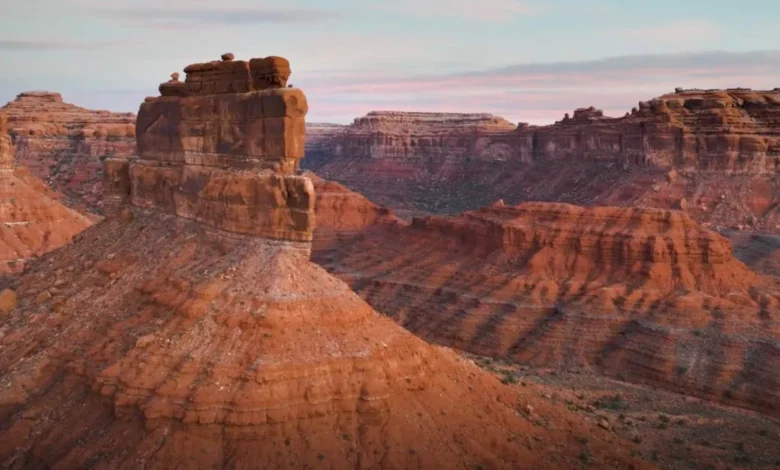
For the second time in less than a decade, the White House is attempting to significantly shrink Bears Ears National Monument. Following its initial reduction in 2017, which was subsequently reversed, the Trump administration announced on July 12, 2026, its intent to cut the monument’s size by a staggering 91 percent. This move immediately plunged the spectacular and embattled Utah landscape back into the heart of a contentious debate over land conservation, tribal sovereignty, and resource extraction, prompting swift condemnation and promises of renewed legal challenges. The decision, coming just five years after President Joe Biden restored the monument to its original boundaries, signals a dramatic shift in federal land policy and raises profound questions about the long-term stability of protected areas across the United States.
A Monument Under Siege: The Latest Chapter in a Decade-Long Battle
The updated proclamation, issued on July 12, 2026, by the Trump administration, targets Bears Ears National Monument, an area in southeastern Utah renowned for its rich cultural heritage, vast archaeological sites, and unique ecological diversity. This action marks the administration’s second attempt to redraw the monument’s boundaries, a move that parallels the 2017 reduction which saw the monument’s size cut from 1.35 million acres to just over 200,000 acres. That earlier reduction sparked widespread outrage and was promptly challenged in court by a coalition of tribal nations and conservation groups. Upon entering office in 2021, President Joe Biden, through executive action, restored Bears Ears to its full original 1.35-million-acre expanse, citing the importance of the landscape to Indigenous communities and its immense scientific value. The current executive order seeks to revert the monument to a similarly diminished size, effectively stripping protections from approximately 1.2 million acres of culturally and ecologically sensitive land.
The monument’s designation in 2016 by President Barack Obama was a landmark achievement, the culmination of decades of advocacy by a coalition of five sovereign tribal nations: the Navajo Nation, Hopi Tribe, Ute Mountain Ute Tribe, Ute Indian Tribe of the Uintah and Ouray Reservation, and Zuni Tribe. For these tribes, Bears Ears (known as "Hoon’Naqvut," "Shash Jáa," "Kwiyagatu Nukavachi," "Ansh An Lashokdi," and "Nonweap") is not merely a collection of scenic vistas but a sacred landscape, an ancestral homeland brimming with archaeological sites, burial grounds, and places of spiritual significance. The original designation recognized this deep connection by establishing the Bears Ears Commission, a groundbreaking co-management body that included representatives from the five tribes, giving them an unprecedented voice in the monument’s stewardship.
Chronology of Contention: A Timeline of Bears Ears
The history of Bears Ears as a national monument is one marked by recurrent political upheaval and passionate advocacy:
- 1906: The Antiquities Act: Signed into law by President Theodore Roosevelt, this act grants the President the authority to declare national monuments from federal lands to protect "historic landmarks, historic and prehistoric structures, and other objects of historic or scientific interest." The act does not explicitly grant or deny the power to reduce or revoke monuments.
- Early 20th Century – Mid-2010s: Resource Exploitation and Growing Calls for Protection: The Bears Ears region saw periods of uranium mining and oil and gas exploration, leading to environmental degradation. Simultaneously, archaeologists documented thousands of priceless cultural sites, and tribal nations increasingly voiced concerns about looting, vandalism, and the need for greater protection of their ancestral lands.
- 2010: Utah Navajo Commission Calls for Protection: The Navajo Commission on Utah Diné Affairs passes a resolution supporting federal protection for the Bears Ears region.
- 2015: Inter-Tribal Coalition Forms: The Bears Ears Inter-Tribal Coalition is officially formed, uniting the Navajo Nation, Hopi Tribe, Ute Mountain Ute Tribe, Ute Indian Tribe of the Uintah and Ouray Reservation, and Zuni Tribe in their call for a national monument.
- December 28, 2016: Obama Designates Bears Ears National Monument: President Barack Obama establishes Bears Ears National Monument, covering 1.35 million acres, and creates the Bears Ears Commission for tribal co-management.
- April 26, 2017: Trump Orders Review of Monuments: President Donald Trump issues an executive order instructing the Department of the Interior to review all national monuments designated since 1996, singling out Bears Ears and Grand Staircase-Escalante for potential reductions.
- December 4, 2017: Trump Shrinks Bears Ears and Grand Staircase-Escalante: President Trump announces a 91% reduction of Bears Ears (to 201,876 acres) and a nearly 50% reduction of Grand Staircase-Escalante. Multiple lawsuits are filed immediately by tribal nations, environmental groups, and outdoor industry companies.
- January 20, 2021: Biden Takes Office: President Joe Biden assumes the presidency, having campaigned on a promise to restore the monuments.
- October 8, 2021: Biden Restores Bears Ears and Grand Staircase-Escalante: President Biden issues proclamations restoring both monuments to their original 2016 and 1996 boundaries, citing the need to protect cultural sites and address climate change. The ongoing lawsuits are rendered moot.
- July 12, 2026: Trump Administration Announces Second Reduction: The Trump administration issues a new executive order, again seeking to reduce Bears Ears National Monument by 91 percent, igniting a fresh wave of controversy and legal threats.
The Scope of the Cuts: Losing Irreplaceable Treasures
The proposed 91 percent reduction, amounting to approximately 1.2 million acres, is a colossal loss, roughly equivalent in size to Grand Canyon National Park. This vast area encompasses some of the most ecologically diverse and archaeologically significant landscapes in the American Southwest. Among the critical sites now slated to be removed from monument protection are:
- Grand Gulch: A world-renowned backpacking destination, Grand Gulch is a canyon system famous for its well-preserved Ancestral Puebloan cliff dwellings, rock art, and artifacts dating back thousands of years. It represents an irreplaceable outdoor museum of human history.
- Cedar Mesa: Home to one of the densest concentrations of Ancestral Puebloan architecture in the United States, Cedar Mesa is an expansive plateau riddled with canyons, mesas, and cultural sites. It offers an unparalleled glimpse into the lives of ancient peoples.
- Cheesebox Canyon: A spectacular slot canyon, known for its dramatic narrow passages and unique geological formations, offering exceptional recreational opportunities and significant hydrological features.
- Valley of the Gods: A broad, scenic valley characterized by iconic sandstone monoliths and buttes, often compared to a smaller, more intimate Monument Valley. Its beauty draws photographers and explorers, and it holds deep cultural significance for local tribes.
These areas are not merely scenic; they are crucial habitats for diverse wildlife, including desert bighorn sheep, mule deer, and numerous bird species. They also contain vital water sources in an arid region, making their ecological integrity paramount. Removing federal monument protection could expose these sensitive landscapes to increased risk of looting, vandalism, and industrial development, imperiling both natural resources and priceless cultural heritage.
The Shadow of Resource Extraction: Mining’s Persistent Lure
A primary motivation behind the repeated efforts to shrink Bears Ears National Monument centers on the potential for resource extraction. The 2026 executive order explicitly cites the presence of "critical minerals such as silver, copper, molybdenum, lead, uranium, vanadium, and zinc" as a driving factor for diminishing the monument’s size. This echoes the Trump administration’s rationale in 2017, highlighting a consistent emphasis on unlocking these lands for economic exploitation.
The region has a deeply fraught history with uranium mining. During the Cold War era, from the 1940s to the 1980s, southeastern Utah was a hub for uranium extraction. While this industry provided jobs, it also left a devastating legacy of environmental contamination and public health crises. Monticello, one of the towns closest to Bears Ears, housed a uranium mill from 1943 to 1960. Decades later, residents of Monticello and surrounding areas experienced heightened rates of various cancers and other serious health issues, a direct consequence of exposure to radioactive materials. Similarly, the Atlas Mill in Moab processed uranium, ultimately going bankrupt in 1998 and leaving taxpayers to shoulder the immense costs of environmental cleanup, which continues to this day. The memory of these "mixed blessings" — temporary economic boom followed by lasting human and environmental costs — fuels significant local concern about any renewed push for mineral extraction in the region. Critics argue that prioritizing short-term mining profits over long-term ecological and public health consequences is a grave miscalculation.
Undermining Co-Management: A Shift in Governance
Beyond the physical reduction of its boundaries, the 2026 executive order fundamentally alters the governance structure of Bears Ears National Monument, effectively dismantling the groundbreaking tribal co-management model established in 2016. The original Bears Ears Commission, composed of representatives from the five tribes, was designed to provide direct, meaningful input into federal policy and management decisions for the monument, recognizing the tribes’ deep ancestral ties and traditional ecological knowledge. This commission was hailed as a new paradigm for Indigenous involvement in public land management.
The new order replaces this model with an expanded 15-person advisory committee. While five tribal representatives will still be included, they will be significantly outnumbered by four members from local and county governments (many of whom have historically opposed the monument’s protections) and six individuals directly appointed by the governor of Utah. These gubernatorial appointments are explicitly intended to include representatives from groups such as cattle ranchers, private landowners, and off-road vehicle operators. Given that many local governments and the state of Utah have consistently advocated for reducing or eliminating Bears Ears’ protections, this restructuring is widely seen as a deliberate attempt to dilute tribal influence and shift management priorities away from conservation and cultural preservation towards resource development and broader recreational access. This change is poised to fundamentally alter how decisions are made regarding cultural resource protection, land use, and visitor management within the monument’s diminished boundaries.
Navigating Divided Opinions: The Complexities of Local Sentiment
The debate over Bears Ears is often framed as a conflict between federal overreach and local opposition. However, "local opinion" is far more nuanced and divided than often portrayed. While the governments of some nearby towns, such as Bluff, Blanding, and Monticello, and often San Juan County itself, have historically opposed the monument’s designation and advocated for its reduction, this does not represent a monolithic local voice.
Crucially, the five tribal nations—whose ancestral lands directly abut or encompass portions of the monument—are undeniably "locals" with profound historical and spiritual connections to Bears Ears. These tribal governments have consistently and vociferously supported the monument’s original designation and fought tirelessly for its restoration. Their unified stance underscores the critical importance of the area for cultural continuity, religious practices, and the preservation of irreplaceable heritage.
Furthermore, the political landscape of San Juan County, where Bears Ears is primarily located, has seen significant shifts. In 2018, a landmark voting rights lawsuit led to the redrawing of electoral districts and the subsequent election of the county’s first-ever Navajo-majority commission. This new commission reversed previous county policy, issuing resolutions in support of the monument and actively calling on President Biden to restore its original size. This internal shift demonstrates that even within the immediate vicinity, opinion is not uniform and can evolve with demographic and political changes.
Moving slightly further afield, Grand County, the county immediately to the north, which includes the outdoor recreation hub of Moab, has consistently supported Bears Ears. Grand County’s economy is heavily reliant on outdoor tourism and recreation, and protected public lands like Bears Ears are vital to its economic prosperity. This highlights how different local economies and demographics can lead to vastly different perspectives on federal land designations.
Beyond local boundaries, statewide polling in Utah indicates broader support for the monument. A poll commissioned by an environmental nonprofit in 2025 found that 71 percent of Utah voters supported keeping Bears Ears as a national monument. This significant margin suggests a notable disconnect between the actions of the state’s political leadership and the sentiments of its general populace, indicating that opposition to Bears Ears is not as widespread as some political narratives suggest.
The Inevitable Legal Showdown: A Test of Presidential Power
Following the 2017 reductions, a broad coalition of plaintiffs—including the five tribal nations, prominent environmental nonprofits such as Earthjustice and the Southern Utah Wilderness Alliance (SUWA), and outdoor retail giant Patagonia—immediately filed lawsuits. These cases argued that the Antiquities Act of 1906 grants presidents the power to create national monuments but not to shrink or rescind them. While those lawsuits were rendered moot by President Biden’s restoration, many of the original litigants have already indicated their intention to re-enter the legal fray. Earthjustice and SUWA have confirmed to Backpacker magazine their plans to sue, and the tribal coalition is expected to follow suit.
The core of the legal battle will once again hinge on the interpretation of the Antiquities Act. Legal experts acknowledge that a plain reading of the statute seems to support the argument that presidential authority extends only to designation, not diminishment. However, courts have historically shown deference to presidential power in matters of land management. This creates an unpredictable legal landscape, making it unclear which way these new suits will ultimately go. The litigation could potentially reach the U.S. Supreme Court, setting a precedent that would have far-reaching implications for the stability and protection of national monuments across the country. A ruling in favor of presidential power to shrink monuments could embolden future administrations to undo protections for other significant landscapes, while a ruling affirming the permanence of designations could solidify the national monument system against political whims.
Broader Implications: A Precedent for Public Lands
The repeated assault on Bears Ears National Monument carries implications far beyond the red rock canyons of Utah. It represents a significant challenge to the integrity of the entire national monument system and the broader framework of public land conservation in the United States.
- Uncertainty for Protected Areas: If presidential administrations can repeatedly reverse or diminish monument designations, it introduces immense instability and uncertainty for conservation efforts nationwide. It could create a "yo-yo" effect where protected status shifts with each change in administration, making long-term planning for conservation and cultural resource management virtually impossible.
- Erosion of Tribal Sovereignty: The removal of the tribal co-management structure and the dilution of tribal influence in the advisory committee is a setback for tribal sovereignty and the ongoing efforts to foster more equitable relationships between the federal government and Indigenous nations. It undermines the principle that Indigenous voices should be central to the management of their ancestral lands.
- Economic Impact: While proponents argue for economic benefits from mining, the outdoor recreation industry, which thrives on protected public lands, contributes significantly to local and national economies. The uncertainty surrounding Bears Ears could deter tourism and investment in the region, potentially harming local businesses that rely on the monument’s appeal.
- Precedent for Future Administrations: The outcome of this new round of legal challenges will establish a crucial precedent for the limits of presidential power under the Antiquities Act. It will determine whether national monuments are enduring protections for America’s natural and cultural heritage or merely temporary designations subject to political shifts.
As the legal battles commence, the fate of Bears Ears National Monument, and by extension, the future of America’s public lands and the principle of tribal co-management, hangs in the balance. The ongoing saga serves as a stark reminder of the persistent tensions between conservation, resource extraction, and political will in shaping the nation’s most cherished landscapes.