The Unicycling Odyssey: Shakhriyer Azizov’s 6,000-Kilometer Journey Across Continents

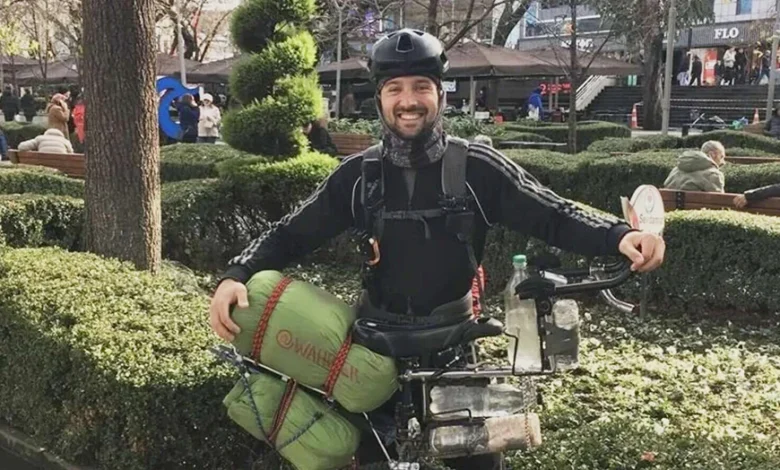
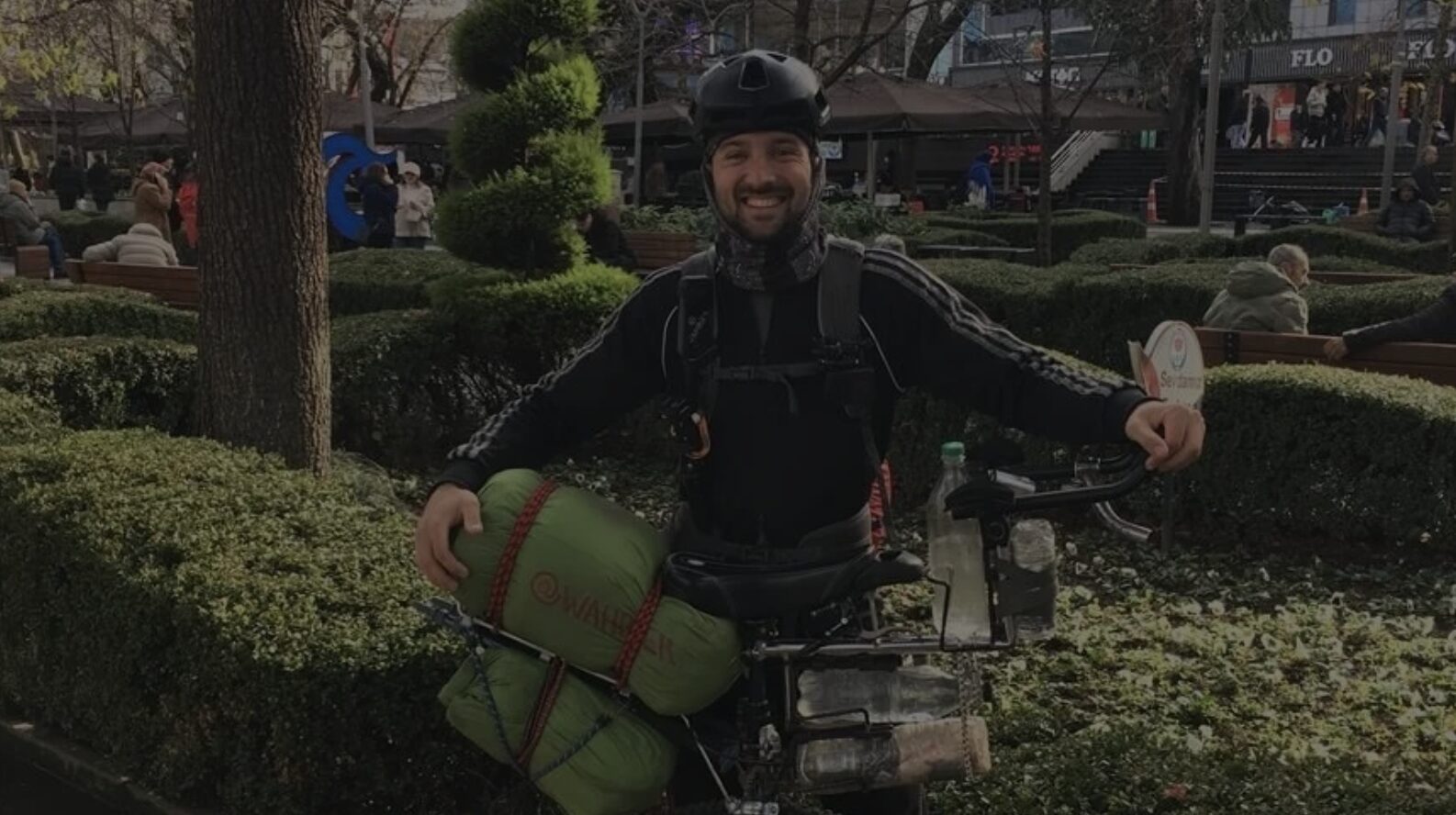
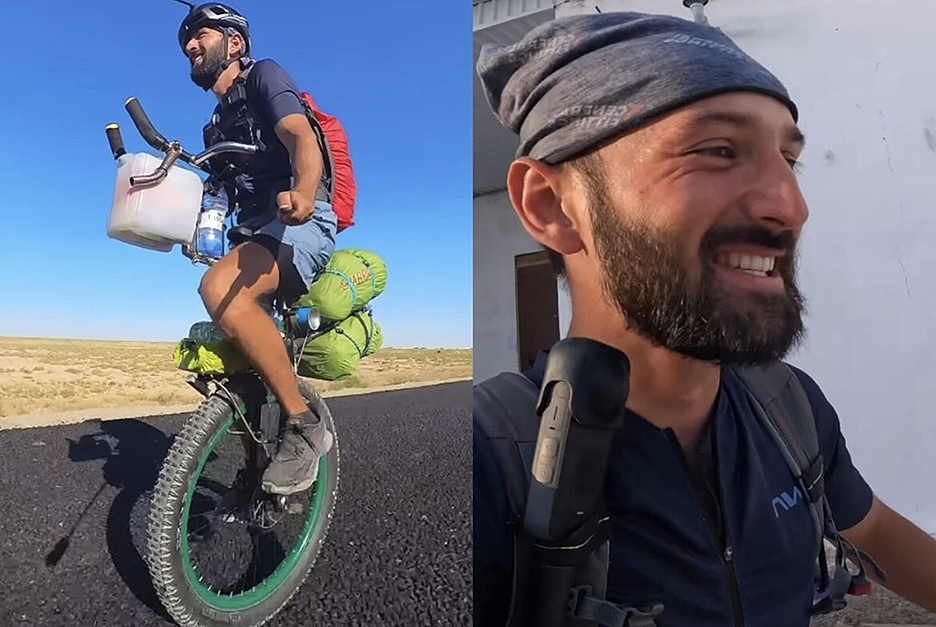
Shakhriyer Azizov, a Tajik national, departed from the historic city of Istanbul in November 2024, embarking on an unconventional and grueling expedition to circle the globe. Nearly two years into his journey, Azizov is currently navigating the vast landscapes of China, a feat that would be demanding for any seasoned cyclist. However, Azizov’s expedition is defined by a singular, striking constraint: he is completing his world tour on a 27.5-inch unicycle. While standard long-distance cyclists often utilize optimized touring bikes with multiple gears and aerodynamic frames, Azizov has opted for the mechanical minimalism of a single wheel, transforming a standard mode of transport into a test of physical endurance and psychological fortitude.
The Mechanics of a One-Wheeled Expedition
The choice of a 27.5-inch wheel is a deliberate compromise between performance and practicality. In the realm of cycling, larger wheels—typically 29 inches or 700c—are preferred for their ability to maintain momentum and roll over obstacles with greater efficiency. However, Azizov’s selection prioritizes the global availability of parts. By choosing a standard mountain-bike-compatible wheel size, he ensures that replacement tires, rims, and spokes can be sourced in almost any major town along his route.
The trade-off, however, is significant. Azizov noted in interviews with regional media that the smaller radius necessitates a higher cadence and more revolutions to cover the same distance as a larger wheel. Mathematically, a larger wheel covers roughly 30 percent more ground per rotation than his chosen size. Under optimal conditions, Azizov averages approximately 13 kilometers per hour, resulting in a daily output of 60 kilometers. Given that he has already traversed over 6,000 kilometers since departing Istanbul, his progress represents a monumental output of kinetic energy, sustained entirely through balance and leg strength.
A Chronology of the Route
Azizov’s path since November 2024 has been a complex, multi-national trajectory spanning Eurasia. His initial departure from Istanbul took him through the rugged terrains of the Caucasus, including Georgia and Armenia. From there, he navigated the diverse climates of Iran, Afghanistan, Uzbekistan, Tajikistan, and Kazakhstan. His arrival in China marks the most recent leg of this ongoing saga.
The timeline of his journey—now approaching its 600-day mark—highlights the extreme nature of his pace. While many transcontinental cyclists aim for consistent daily mileage to beat seasonal weather windows, Azizov’s progress is dictated by the limitations of the unicycle and the sheer physical toll of 6,000 kilometers of balancing. His route planning is fluid, with future legs expected to take him southward into Southeast Asia. Following this, he intends to tackle the logistical challenges of crossing Australia and the United States, followed by a final European leg that will bring him back to his starting point in Istanbul.
Hospitality and the Cultural Experience
Despite carrying professional-grade camping equipment, Azizov’s records indicate that his reliance on outdoor shelter has been minimal. In a striking testament to the culture of hospitality he has encountered, Azizov reported that, over the course of 579 days, he has only utilized his tent 12 times.
This statistic provides a rare glimpse into the social dynamics of long-distance solo travel. In regions like Kazakhstan and Central Asia, Azizov has been frequently welcomed into private homes. This support network has not only provided him with physical safety and nourishment but has likely been a critical factor in his ability to maintain his mental health during a journey that is, by its nature, isolating. Such encounters often serve as the primary fuel for endurance athletes who spend months at a time on the road, turning a solitary challenge into a series of community-based cultural exchanges.
The Origin of a Singular Ambition
The background of the traveler adds a layer of intrigue to the feat. Azizov, who was raised in Russia, lacked a professional background in extreme sports or expedition cycling prior to this endeavor. His former career as a trader offers little in the way of preparation for the physical rigor of transcontinental travel.
Perhaps most surprising is the speed at which he prepared for the journey. Reports suggest that Azizov achieved proficiency on the unicycle in a mere three days before departing Istanbul. This accelerated learning curve underscores a high degree of natural aptitude, yet it also highlights the "trial by fire" nature of his expedition. Rather than spending years in training, Azizov chose to treat the journey itself as his training ground, a high-stakes approach that has seen him navigate international borders and diverse climate zones with limited prior experience.
Philosophical Motivations and Strategic Visibility
When asked why he chose the hardest possible method for a global tour, Azizov cites a philosophy borrowed from the world of video games: the preference for "hard mode." He argues that playing or living at an easy difficulty level minimizes the depth of the experience. By stripping away the efficiency of a two-wheeled bicycle, he forces himself to engage more deeply with the environment and the physical reality of the road.
Furthermore, there is a clear strategic element to his choice. In an era where "adventure travel" is a crowded digital space, the unicycle serves as a powerful visual hook. Azizov utilizes YouTube and Instagram to document his progress, acknowledging that a standard cycling expedition would likely garner significantly less attention. By choosing an absurdly difficult vehicle, he has successfully cultivated an audience, transforming his personal journey into a piece of digital performance art that sustains interest across global platforms.
Analysis of Implications
From a logistics perspective, Azizov’s journey represents an outlier in the world of long-distance cycling. Most modern expeditions focus on weight reduction and mechanical optimization to increase safety margins. Azizov, conversely, has embraced mechanical vulnerability. The risks associated with this are clear: chronic injury, physical exhaustion, and the high probability of mechanical failure in remote areas.
However, the impact of his journey extends beyond the physical. His successful transit through eight countries on a single wheel challenges perceptions of what constitutes "viable" transport. By relying on local communities for housing and support, he is also participating in a form of soft diplomacy, where his unique presence acts as a catalyst for human interaction in areas that might otherwise see little interaction with international travelers.
Conclusion and Future Outlook
As Shakhriyer Azizov moves further into the interior of China, the challenges ahead remain substantial. The geography of Southeast Asia, the logistics of trans-oceanic travel, and the eventual traverse of the North American continent will demand a level of resilience that far exceeds his initial trek through Central Asia.
While the scientific community might categorize his journey as a feat of extreme human endurance, for Azizov, it remains an experiment in possibility. He has effectively turned the world into a vast, high-stakes game, and for now, the 27.5-inch wheel continues to turn. Whether he completes the circuit remains to be seen, but his journey has already secured a place as one of the most eccentric and determined endurance projects of the decade, proving that with enough persistence, even the most impractical methods can bridge continents.