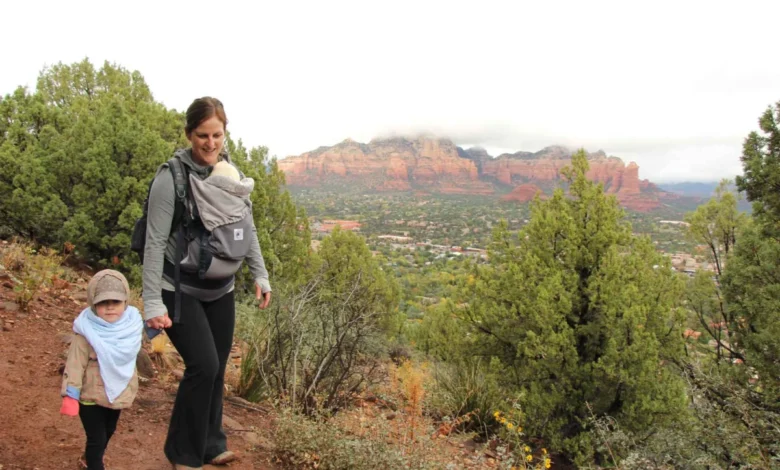
Sedona, Arizona, has long been established as a premier destination for outdoor enthusiasts, but in recent years, it has seen a marked shift in demographics. Data from the Sedona Chamber of Commerce indicates that family travel has become one of the fastest-growing segments of the local tourism industry. While the region is world-renowned for its rugged, high-intensity mountain biking and challenging terrain, the city has increasingly invested in infrastructure that accommodates families with young children, specifically by highlighting accessible, lower-elevation hiking trails that showcase the iconic red rock formations without the hazards of technical mountaineering.

The rise in family-oriented tourism is supported by the geography of the Coconino National Forest, which surrounds the city. The area is home to over 400 miles of trails, yet for parents with infants or toddlers, the challenge lies in identifying routes that balance scenic reward with safety and accessibility. According to regional tourism assessments, the demand for "low-impact" outdoor experiences has surged by approximately 30% over the last five years, prompting local authorities to prioritize the maintenance of designated "family corridors."

Navigating the Terrain: Safety and Logistics
For families planning a visit, understanding the distinction between stroller-friendly paths and carrier-required terrain is critical. While some trails feature compacted gravel that can support specialized all-terrain strollers, a significant portion of Sedona’s topography is dominated by red shale and sandstone steps.

Local park officials and tourism experts emphasize that preparation is the primary factor in a successful outing. The high-desert climate, characterized by intense ultraviolet exposure and rapid temperature fluctuations, necessitates a specific approach to timing. Most seasoned guides recommend hitting the trails before 9:00 AM to avoid peak heat and to mitigate the risk of dehydration, which is the most frequent medical concern reported among child hikers in the region.

A Curated Selection of Accessible Trails
The following selection of trails represents the gold standard for families seeking to experience the geological grandeur of the Southwest without overextending younger participants.

1. Bell Rock Pathway
The Bell Rock Pathway stands as the primary choice for families utilizing strollers. This trail offers a unique combination of ease of access and panoramic views of two of the region’s most iconic formations: Bell Rock and Courthouse Butte. The pathway is largely flat and consists of well-maintained surfaces that are generally navigable for high-quality, large-wheel strollers. The route spans roughly 2.7 miles if completed in its entirety, though shorter, out-and-back segments are common. This trail serves as a perfect introduction to the Red Rock Scenic Byway, a federally designated "All-American Road" that provides a stunning drive through the Coconino National Forest.

2. West Fork Trail
For families looking to escape the heat, the West Fork Trail provides a natural solution. Located within a canyon, this trail is heavily shaded by a canopy of trees and flanked by towering canyon walls that offer significant protection from direct sun. Unlike the Bell Rock Pathway, the West Fork Trail is not suitable for strollers due to multiple crossings of Oak Creek. These crossings require navigating stepping stones, which makes it an engaging adventure for older children, though parents of infants will require a structured baby carrier. The trail runs approximately 3.4 miles one-way, but even a truncated version of the hike provides a high-value experience.

3. Baldwin Trail
Situated near the Village of Oak Creek, the Baldwin Trail offers a more intimate look at Cathedral Rock. This loop is approximately 2.7 miles and features minimal elevation gain, making it physically manageable for families with young children. However, the presence of rock steps and uneven ground necessitates the use of a baby carrier rather than a stroller. The trail’s proximity to the shores of Oak Creek adds an educational component, as families can observe local riparian ecosystems.
4. Fay Canyon Trail
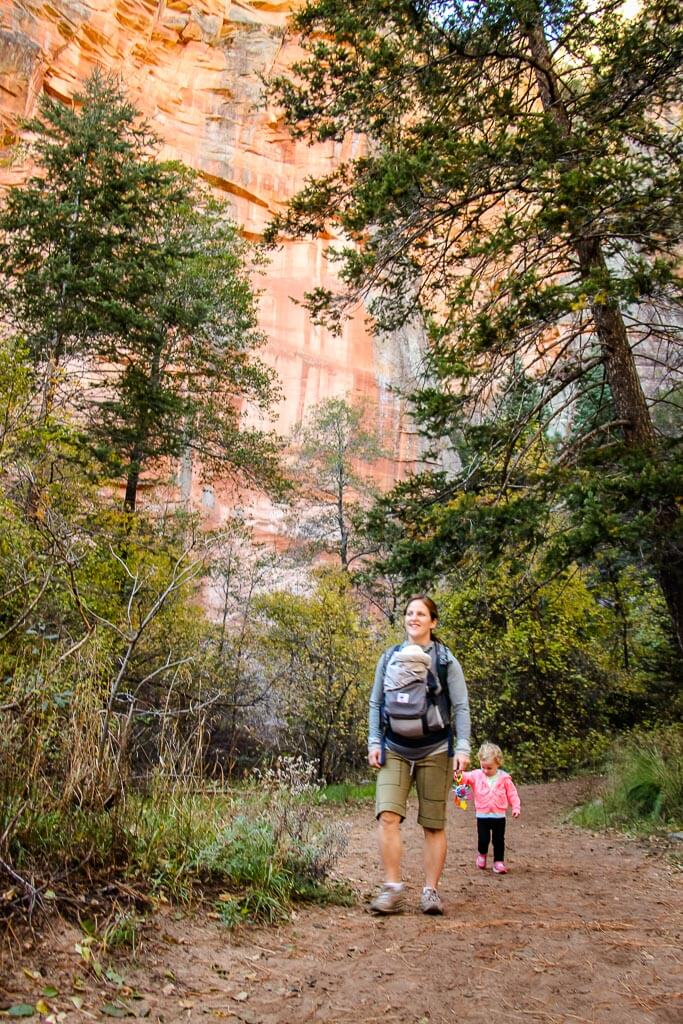
The Fay Canyon Trail is frequently cited as the premier alternative to more congested paths like West Fork. The trail leads into a quiet, narrow canyon that culminates in a natural stone arch. While the arch itself is reached via a steep, unofficial side trail—which many families opt to skip—the main path remains one of the most accessible and visually rewarding hikes in the area. The dense tree cover and canyon walls provide substantial cooling, making it a reliable option during the mid-day hours.

5. Huckaby Trail
For those seeking a direct view of the town’s skyline contrasted against the red rocks, the Huckaby Trail offers a strategic vantage point. Located on the edge of the city, this trail is rugged and uneven, ruling out strollers. It is a more moderate hike that requires parents to be comfortable carrying children over rocky terrain. The trail is partially sheltered, offering a moderate level of protection from the elements.

6. Airport View Trail
The Airport View Trail is highly regarded for its convenience, beginning directly from the local airport parking lot. It provides an elevated, 360-degree perspective of the town and the surrounding red rock peaks. It is a short, straightforward trail, though the path is narrow and rocky, making it better suited for carriers than wheeled equipment.

The Role of Technology in Modern Family Hiking
A significant trend in family travel to Sedona is the reliance on digital mapping and real-time trail data. Applications like AllTrails have become essential tools for parents, especially given that cellular service in the canyons can be highly unpredictable. The ability to download offline maps is now considered a best practice for safety, ensuring that even if a route becomes difficult to navigate, families can orient themselves without relying on a signal.

The Broader Impact of Sustainable Tourism
The increase in family hiking has brought a renewed focus on "Leave No Trace" principles. As more families frequent these trails, the local government has intensified efforts to preserve the integrity of the natural environment. Signage and educational outreach programs are now common at major trailheads, informing visitors about the fragile nature of the biological soil crusts and the importance of staying on marked paths.

From an economic standpoint, the growth of the family hiking sector has spurred a shift in local business models. Equipment rental shops have expanded their inventories to include high-end hiking carriers and rugged strollers, and local lodging providers are increasingly branding themselves as "adventure-ready," offering amenities like gear storage and proximity to trailheads.

Expert Recommendations for Families
For those planning an excursion, the consensus among local experts remains consistent: prioritize preparation. This includes:

- Sun Protection: The desert sun is significantly stronger than in many other regions. Hats, long sleeves, and high-SPF sunscreen are not optional.
- Hydration: Always pack more water than is calculated for the distance. Children often do not exhibit signs of dehydration until it is advanced.
- Gear Selection: Test carriers and strollers before the trip. A familiar piece of gear is significantly more comfortable for both the parent and the child.
- Planning: Use the "AllTrails" or similar resources to check current trail conditions. Seasonal rains can temporarily alter the accessibility of paths like the West Fork Trail.
As Sedona continues to evolve as a destination, the balance between preserving its natural serenity and welcoming a new generation of hikers remains a key objective for city planners. By providing a wide range of accessible, family-friendly trails, the region successfully bridges the gap between challenging wilderness exploration and inclusive, safe, and memorable family tourism. The success of this model is evidenced by the consistent rise in positive feedback from visiting families, who find that the red rocks of Arizona are just as accessible to a toddler in a carrier as they are to an experienced mountaineer.