The Nichupté Bridge Revolutionizing Connectivity and Tourism Infrastructure in the Mexican Caribbean

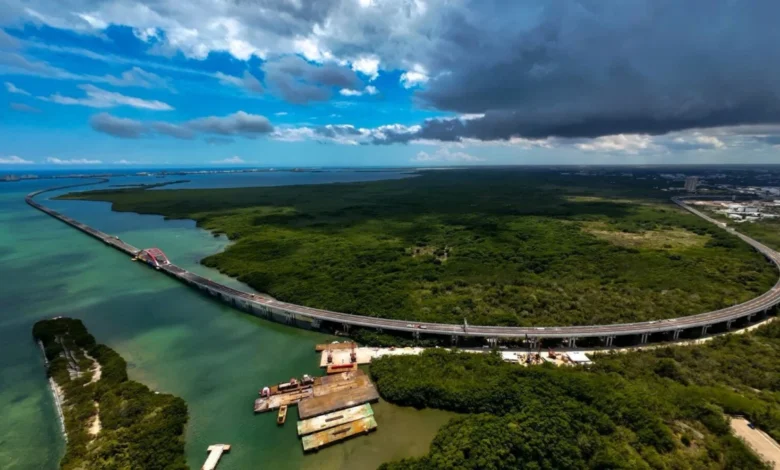
The completion and opening of the Nichupté Bridge in Cancún, Mexico, marks a pivotal shift in the infrastructure landscape of the state of Quintana Roo, addressing long-standing logistical challenges in one of the world’s most frequented tourism corridors. As a cornerstone of the federal government’s strategic investment in the Mexican Caribbean, the bridge serves as a vital link between the urban center of Cancún and the world-renowned Hotel Zone, effectively doubling the access points to a region that has historically relied on a single, frequently congested arterial road. This massive engineering undertaking is not merely a local transportation project but a signal of Mexico’s broader commitment to modernizing its tourism offering through enhanced mobility and sustainable urban planning.
A Modern Solution to a Decades-Old Logistical Challenge
For over forty years, the Cancún Hotel Zone—a narrow, 14-mile strip of land between the Nichupté Lagoon and the Caribbean Sea—has been serviced primarily by Kukulcan Boulevard. As the destination grew from a remote outpost into a global tourism powerhouse welcoming millions of visitors annually, the boulevard became a notorious bottleneck. Travelers arriving at Cancún International Airport (CUN) often faced grueling transit times to reach their resorts, sometimes spending upwards of 90 minutes in traffic for a journey that spanned less than ten miles.
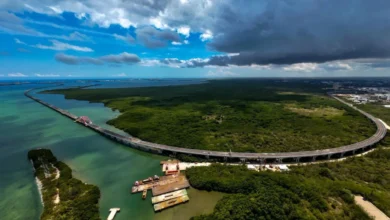
The Nichupté Bridge directly addresses this friction. Stretching approximately 8.8 kilometers (5.5 miles) across the lagoon, the bridge provides a direct connection from the intersection of Colosio Boulevard and Kabah Avenue in downtown Cancún to the heart of the Hotel Zone. By diverting a significant portion of daily traffic away from the traditional entry points, the bridge is projected to reduce travel times by as much as 40 to 60 percent during peak hours. This improvement is critical not only for tourists but also for the thousands of hospitality workers who commute daily from the mainland to the resorts, thereby improving the quality of life for the local workforce.
Technical Specifications and Engineering Excellence
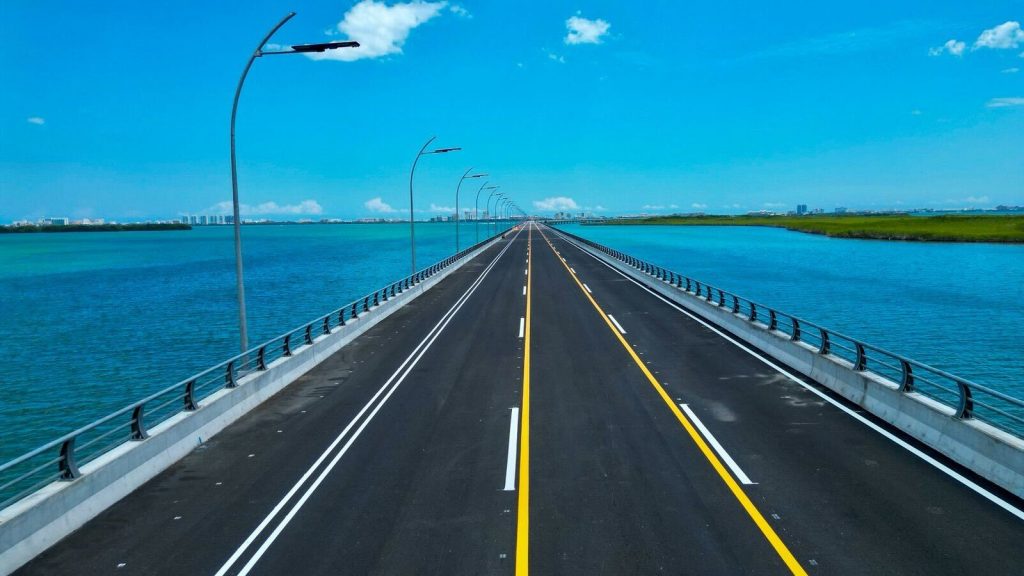
The construction of the Nichupté Bridge represents one of the most complex engineering feats in the history of the Yucatán Peninsula. The project involved a total investment exceeding 5.5 billion Mexican pesos (approximately $300 million USD). Designed as a toll-free facility, the bridge features three lanes: one for each direction of travel and a third "reversible" lane that shifts direction based on peak traffic flow to maximize efficiency. Additionally, the structure includes dedicated lanes for non-motorized transport, including a bicycle path and pedestrian walkways, reflecting a shift toward multi-modal urban design.
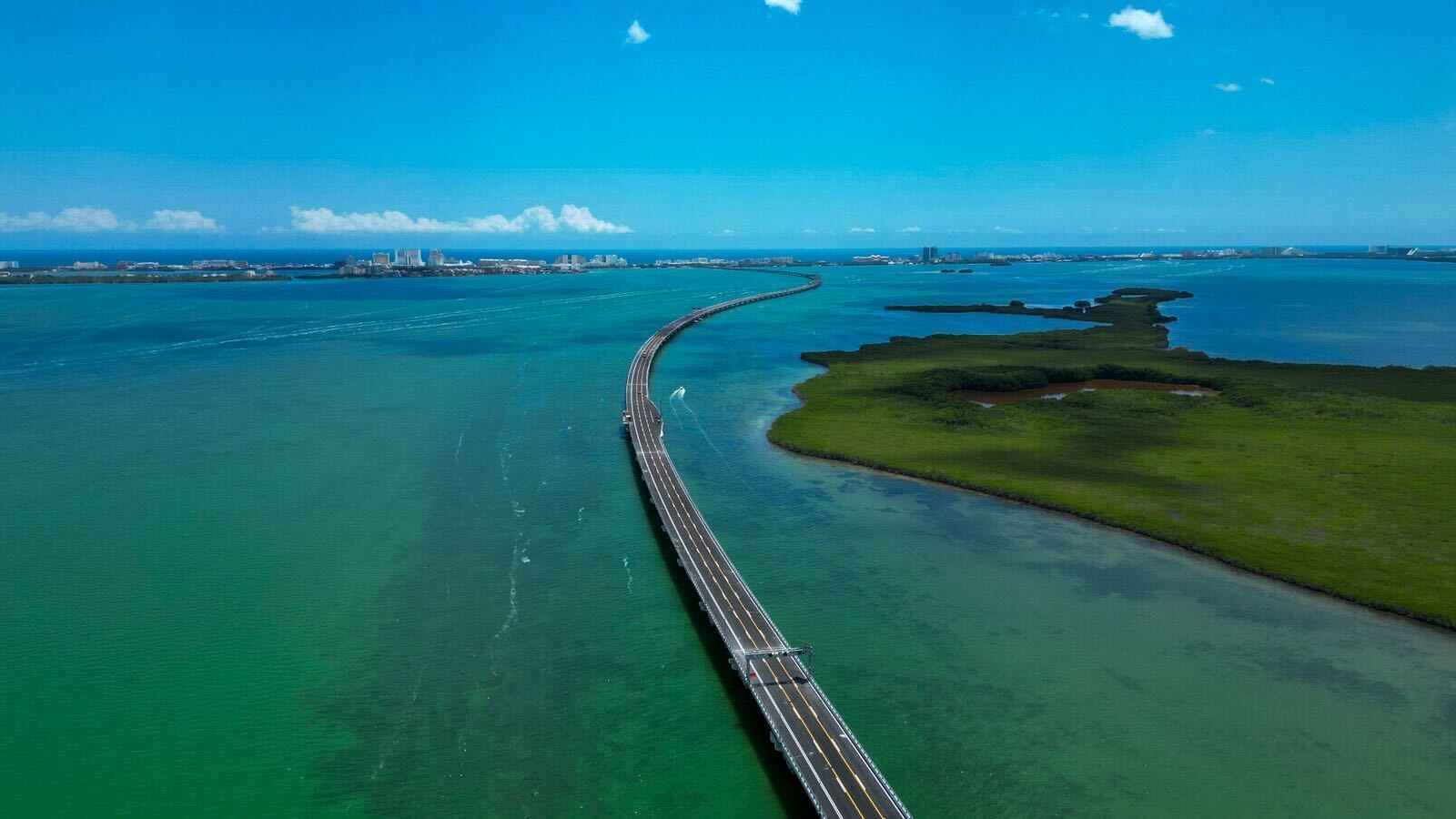
Engineers faced significant geographical challenges, as the bridge spans the sensitive ecosystem of the Nichupté Lagoon. To minimize the environmental footprint, the project utilized a "Top-Down" construction methodology. This technique involved the use of specialized launching gantry cranes that allowed the bridge segments to be installed from above, rather than using heavy machinery on the lagoon floor. This approach significantly reduced the impact on the seagrass beds and the underlying karst soil, which is characteristic of the region’s unique subterranean hydrology.
The bridge stands at a height that allows for the continued navigation of vessels within the lagoon, ensuring that local tour operators and private boaters can still access the waters that are central to Cancún’s recreational appeal. The structural integrity of the bridge was also designed to withstand the extreme weather conditions common in the Caribbean, including Category 5 hurricanes, utilizing high-performance reinforced concrete and deep-piling foundations.
Environmental Mitigation and Sustainable Development
The Nichupté Bridge project was initially met with scrutiny from environmental groups concerned about the potential degradation of the lagoon’s mangrove forests and water quality. In response, the Mexican Secretariat of Infrastructure, Communications, and Transportation (SICT), in collaboration with the Secretariat of Environment and Natural Resources (SEMARNAT), implemented an extensive environmental mitigation program.
This program included the reforestation of over 300 hectares of mangroves in surrounding areas, far exceeding the small percentage of vegetation displaced by the bridge’s support pillars. Furthermore, the bridge’s design incorporates specialized drainage systems to prevent runoff from vehicles—such as oils and heavy metals—from entering the lagoon waters. Instead, runoff is captured and filtered through treatment systems located at the bridge’s terrestrial terminals.
By reducing idling times for thousands of vehicles daily, the bridge also contributes to a reduction in carbon emissions. Factual analysis suggests that the decrease in traffic congestion will lead to a measurable drop in the local "heat island" effect along Kukulcan Boulevard, supporting the region’s broader climate resilience goals.
The Strategic Vision: Integrating the Mexican Caribbean
The Nichupté Bridge does not exist in a vacuum; it is part of a synchronized suite of infrastructure projects known as the "Strategic Projects for Cancún." These include the complete renovation of Colosio Boulevard, the modernization of the Airport Junction, and the construction of the Chac Mool Avenue extension. Collectively, these projects are designed to create a seamless transit loop connecting the airport, the city center, and the tourist district.
Furthermore, the bridge is a critical feeder for the Maya Train (Tren Maya), the 1,500-kilometer railway project connecting the five states of southeastern Mexico. With a station located near the Cancún airport, the train allows tourists to move deeper into the peninsula to visit archaeological sites like Chichén Itzá or the "Magical Town" of Valladolid. The Nichupté Bridge ensures that the "last mile" of a traveler’s journey—getting from the transit hub to their hotel—is as efficient as the high-speed rail experience.
Official Reactions and Global Tourism Implications
The significance of the bridge was underscored during the EDGE 2026 conference in San Diego, where leaders in the travel industry gathered to discuss the future of global tourism. It was during this event that the Mexican Caribbean Tourism Board officially announced that Cancún and the Riviera Maya would host EDGE 2027. The successful completion of the Nichupté Bridge was cited as a primary reason for the region’s ability to host such high-profile international events, proving its capacity to handle large-scale logistics.
Andrés Martínez Reynoso, CEO of the Mexican Caribbean Tourism Board, emphasized the bridge’s role in the destination’s evolution. "The Nichupté Bridge is more than just steel and concrete; it is a transformational project for Cancún," Martínez Reynoso stated. "It reflects our region’s continued evolution to meet the needs of modern tourism. We recognize that the luxury of the future is time and ease of movement. By removing the friction of travel, we allow our visitors to spend more time enjoying our culture, our gastronomy, and our natural beauty."
Industry analysts suggest that the bridge will also have a profound impact on the "MICE" (Meetings, Incentives, Conferences, and Exhibitions) sector. Traditionally, large-scale conventions in downtown Cancún faced challenges in transporting thousands of attendees to the Hotel Zone for evening events. The new connectivity makes the downtown area a more viable location for business travelers, potentially sparking a real estate boom in luxury condominiums and business hotels in the city center.
Economic Impact and Future Outlook
Economically, the Nichupté Bridge is expected to be a catalyst for long-term growth. By improving the efficiency of the supply chain for resorts—ranging from food deliveries to laundry services—operating costs for the hospitality sector may see a marginal decrease. More importantly, the bridge opens up new areas for "boutique" tourism development on the fringes of the lagoon that were previously inaccessible or too congested to be attractive.
As Cancún continues to compete with other global sun-and-sand destinations like Dubai, Punta Cana, and the Maldives, infrastructure becomes a key differentiator. The modern traveler increasingly prioritizes "frictionless" travel. The opening of the Tulum International Airport (TQO) earlier in 2024, combined with the Nichupté Bridge and the Maya Train, positions Quintana Roo as one of the most interconnected tourism hubs in the Western Hemisphere.
In the coming years, the bridge is expected to handle an average daily traffic volume of over 14,000 vehicles. While its primary function is utilitarian, its aesthetic design—offering sweeping views of the turquoise lagoon and the Caribbean horizon—is likely to make it an iconic landmark in its own right.
Conclusion: A New Rhythm for Quintana Roo
The Nichupté Bridge represents a transition from a "resort-centric" model of tourism to a "destination-wide" model. It acknowledges that the visitor’s experience begins the moment they land and continues through every transit point in between. By investing in the spaces between the destinations, Mexico is ensuring that Cancún remains a premier choice for a new generation of travelers who value efficiency, sustainability, and connectivity.
As the ribbon is cut and the first vehicles traverse the span, the message to the global travel community is clear: the Mexican Caribbean is thinking beyond the hotel gates. The bridge is a testament to the belief that infrastructure is the backbone of hospitality, and that the best way to welcome the world is to make the journey as beautiful and seamless as the destination itself. Through projects like the Nichupté Bridge, Cancún is not just maintaining its status—it is accelerating into the future.
Related posts: