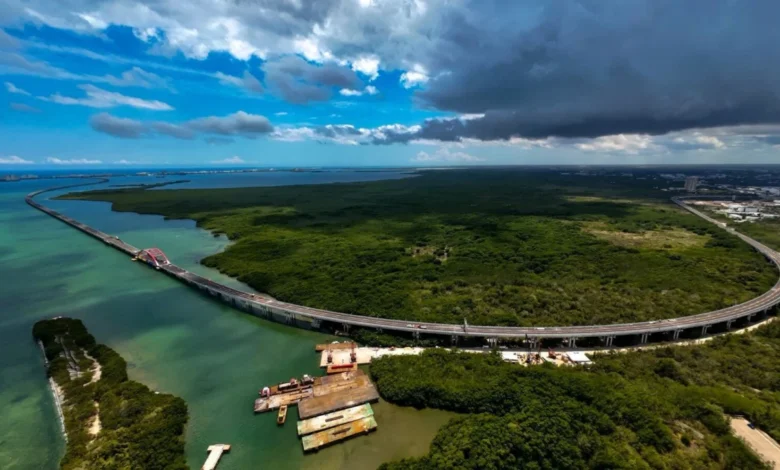
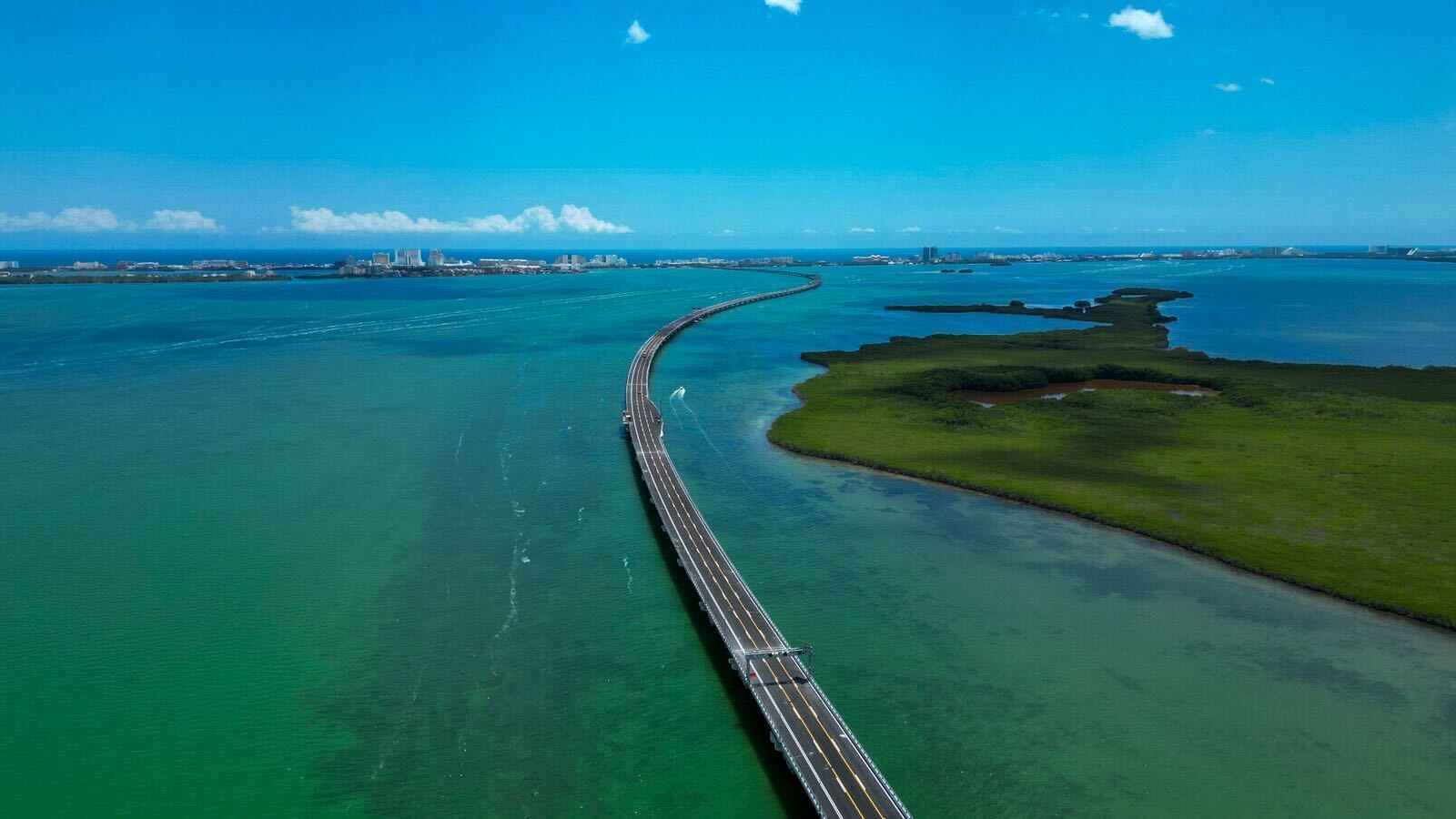
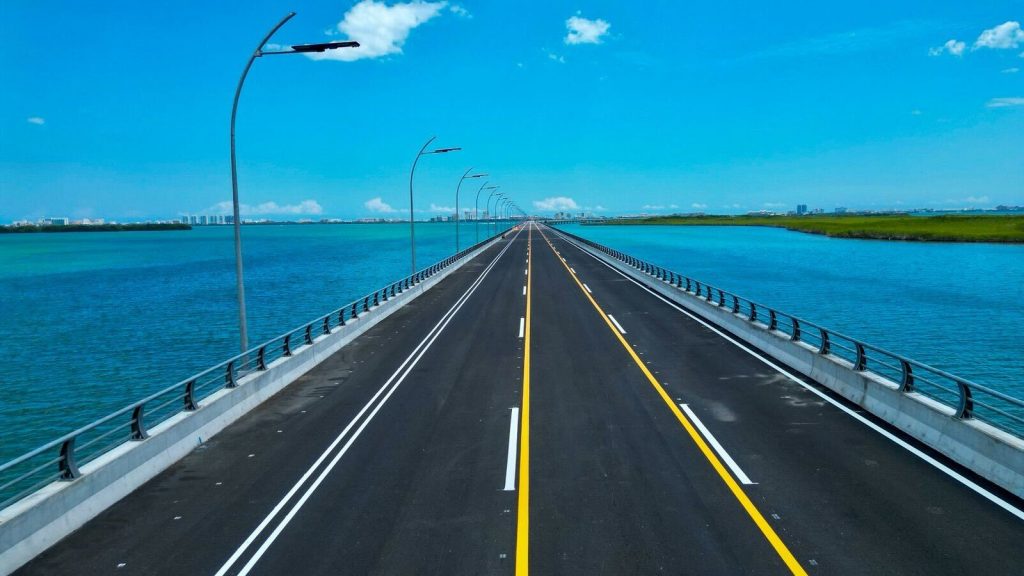
The Nichupté Bridge represents one of the most significant infrastructure milestones in the history of Cancún, serving as a critical artery designed to alleviate the chronic traffic congestion that has long defined the transit between the city’s urban center and its world-famous Hotel Zone. Spanning approximately 8.8 kilometers across the Nichupté Lagoon, this engineering marvel is not merely a shortcut for tourists seeking the white sands of the Caribbean; it is a strategic solution to a logistical bottleneck that has hindered the region’s efficiency for decades. By providing a direct link between the intersection of Bonampak and Colosio Avenues in downtown Cancún and Kukulcán Boulevard at the 13-kilometer mark of the Hotel Zone, the bridge fundamentally alters the movement of people, goods, and services in Mexico’s most visited destination.
Technical Specifications and Engineering Excellence
The construction of the Nichupté Bridge was overseen by the Secretariat of Infrastructure, Communications and Transportation (SICT) with an investment exceeding 5.5 billion pesos. The project features a total length of 8.8 kilometers, including a bridge structure of 8.4 kilometers and access ramps. It is designed with three lanes, one of which is a reversible lane to accommodate peak traffic flows in either direction depending on the time of day—into the Hotel Zone in the morning and toward the city in the evening.
One of the most notable aspects of the project is its commitment to environmental preservation. The bridge was constructed using the "Top Down" method, which involves building from the top of the structure downward to minimize the footprint on the lagoon’s delicate ecosystem. This technique significantly reduced the need for heavy machinery to enter the water, thereby protecting the mangroves and seagrass beds that are essential to the region’s biodiversity. Furthermore, the bridge includes a dedicated bicycle lane and pedestrian walkways, reflecting a shift toward multi-modal transportation and sustainable urban mobility.
A Timeline of Transformation
The journey toward the completion of the Nichupté Bridge began with decades of proposals and feasibility studies. For years, the only access to the 25-kilometer-long Hotel Zone was via two points: the northern entrance at the "Kilometer Zero" of Kukulcán Boulevard and the southern entrance near the airport. As the number of hotel rooms in Cancún grew to over 45,000 and the local population surged, these two access points became insufficient, often resulting in gridlock that could turn a 15-minute trip into a 90-minute ordeal.
Work officially commenced in 2022 as part of a broader federal and state initiative to modernize the infrastructure of Quintana Roo. This initiative also included the total renovation of Colosio Boulevard, the redesign of the airport cloverleaf interchange, and the construction of the Maya Train. The bridge was fast-tracked as a priority project to ensure that the region could continue to support the massive influx of international visitors, which surpassed 30 million arrivals at Cancún International Airport in 2023.
Economic Implications and the MICE Industry
The opening of the Nichupté Bridge has immediate implications for the tourism economy, particularly the Meetings, Incentives, Conferences, and Exhibitions (MICE) sector. The bridge was recently a focal point of discussion during the EDGE 2026 conference in San Diego. At this event, the Mexican Caribbean Tourism Board officially announced that the 2027 edition of the EDGE conference would be held in the Cancún-Riviera Maya region.
Hosting major international events requires more than just high-end resorts; it requires a seamless logistical framework. For event organizers, the reduced travel time between downtown business hotels and the beachfront convention centers makes Cancún a more competitive candidate for global summits. The ability to guarantee efficient transport for thousands of delegates is a decisive factor in securing multi-million-dollar contracts for the region.
Andrés Martínez Reynoso, CEO of the Mexican Caribbean Tourism Board, highlighted that the bridge is a "transformational project" that reflects the region’s evolution. "Modern travelers and professional organizations expect more than just natural beauty; they expect an infrastructure that respects their time and enhances their overall experience," Martínez Reynoso stated. He noted that the bridge allows for a more integrated experience, where tourists can easily explore the culinary and cultural offerings of downtown Cancún without the deterrent of heavy traffic.
Social Justice and Local Impact
While the bridge is often discussed in the context of tourism, its impact on the local workforce is perhaps its most profound legacy. Thousands of hospitality workers, who are the backbone of the region’s economy, commute daily from the residential areas of Cancún to the hotels on the coast. Before the bridge, these workers spent a significant portion of their day in transit.
By cutting commute times by up to 45 minutes each way, the bridge returns nearly an hour and a half of daily life to the local population. This "social justice" angle has been a recurring theme in statements from Governor Mara Lezama, who has emphasized that infrastructure projects in the state must benefit the people who live and work there, not just those who visit. The reduction in traffic on Kukulcán Boulevard also improves safety, providing a much-needed emergency evacuation route in the event of hurricanes or other natural disasters.
Data-Driven Benefits
The logistical benefits of the Nichupté Bridge can be quantified through several key metrics:
- Traffic Volume: The bridge is expected to divert approximately 35% of the daily traffic from the main entrance of the Hotel Zone, which currently sees upwards of 70,000 vehicles per day.
- Environmental Savings: Reduced idling time in traffic translates to a significant decrease in carbon emissions from vehicles. Preliminary estimates suggest a reduction of thousands of tons of CO2 annually.
- Real Estate Value: Property values in the southern part of downtown Cancún and along Bonampak Avenue have seen a steady increase as accessibility to the Hotel Zone improves.
- Operational Efficiency: For tour operators and transportation companies, the predictable travel times allow for better scheduling and reduced fuel costs.
Environmental Stewardship and Mitigation
The project was not without its critics, particularly regarding the potential impact on the Nichupté Lagoon, a protected area. In response, the Mexican government implemented a comprehensive environmental mitigation plan. This included the reforestation of mangrove areas and the installation of specialized drainage systems to prevent road runoff from entering the lagoon.
The bridge’s height was also carefully calculated to allow for the passage of boats beneath it, ensuring that the lagoon remains a functional space for nautical tourism and local wildlife. Periodic environmental audits are conducted to monitor water quality and the health of the surrounding flora, ensuring that the infrastructure exists in harmony with the natural environment that makes Cancún a desirable destination in the first place.
Broader Regional Connectivity
The Nichupté Bridge is one piece of a larger puzzle aimed at transforming the Mexican Caribbean into a fully integrated tourism corridor. The synergy between the bridge, the Maya Train, and the new Tulum International Airport creates a network that allows travelers to move effortlessly from the northern tip of the state down to the southern borders.
This "logistical friction" reduction is a key part of Mexico’s strategy to maintain its status as a top-five global tourism destination. By investing in the experience between destinations—the airports, the trains, and the bridges—the region is addressing the demands of the modern traveler who values efficiency and seamless transitions.
Future Outlook
As Cancún prepares to host the EDGE 2027 conference, the Nichupté Bridge stands as a symbol of the city’s maturity. It represents a shift from a destination that grew sporadically to one that is now planning for long-term sustainability and urban integration. The bridge is expected to stimulate further investment in downtown Cancún, encouraging the development of new boutique hotels, high-end dining, and cultural centers that were previously seen as too far from the "action" of the Hotel Zone.
In conclusion, the Nichupté Bridge is far more than a feat of civil engineering. It is a vital component of the Mexican Caribbean’s socio-economic strategy. By easing congestion, improving the quality of life for residents, and enhancing the visitor experience, it ensures that Cancún remains at the forefront of the global tourism industry. As the region continues to grow, this bridge will serve as the primary link between the city’s vibrant local heart and its world-renowned coastal luxury, fostering a more unified and efficient future for all who traverse it.