Navigating the Wilderness: How Rural and Sustainable Tourism Operators Adapted and Survived the COVID-19 Pandemic

The global tourism industry has faced unprecedented disruptions since the emergence of COVID-19 in early 2020. Across the globe, websites belonging to prominent tour operators, international travel agencies, and boutique excursion providers tell a uniform story of prolonged stagnation. For many businesses, the year 2020 was characterized by months of zero operational activity—a bleak reality that extended well into the first quarter of 2021. Yet, while urban centers, mass-market cruise lines, and crowded resorts suffered catastrophic revenue losses, a distinct segment of the travel economy found a way to endure: rural and ecotourism.
The Great Outdoors as a Sanctuary
As traditional tourism models collapsed under the weight of international border closures and strict public health mandates, the great outdoors emerged as a viable, low-risk alternative for travelers suffering from pandemic fatigue. Remote communities, vast wilderness areas, and sparsely populated regions presented an inherent advantage over metropolitan destinations. With wide-open spaces naturally facilitating social distancing, rural areas largely avoided the severe transmission spikes witnessed in dense urban environments during the early waves of the pandemic.
This dynamic suggested a potential lifeline for tour operators specializing in rural excursions, eco-lodges, and off-the-beaten-path expeditions. However, capturing this latent market demand required a delicate balance between welcoming desperate travelers and respecting the health vulnerabilities of remote populations. To understand how rural tourism businesses managed this tightrope walk, industry experts and travelers took to the field to assess operational realities firsthand.
A Firsthand Look at Pandemic-Era Travel
Among those who sought to document the state of rural tourism during the height of the crisis was Kirsi Hyvaerinen, a member of the Board of Directors at the Global Ecotourism Network. Between August and October 2020, Hyvaerinen undertook an extensive overland journey traveling from Montenegro to Finland and back again. Her observations provided critical ground-level insights into how resilient rural tourism enterprises managed to keep their doors open.
Hyvaerinen noted that businesses successfully navigating the pandemic shared specific operational tendencies. Chief among these was an aggressive adherence to hygiene protocols, transparent communication with clientele, flexible booking policies, and deep integration with local community health measures. Rather than attempting to drive mass tourism, surviving operators pivoted toward hyper-local, self-drive, and small-group itineraries that minimized interpersonal contact while maximizing guest reassurance.
Policy Hurdles and Consumer Confidence
Despite the operational resilience of individual businesses, the broader travel ecosystem remained hamstrung by top-down government policies and shifting regulatory frameworks. Vicky Smith, a sustainable tourism consultant and founder of Earth Changers—a curated collection of positive-impact travel initiatives—highlighted the profound systemic barriers facing the industry.
"The biggest challenges appear perhaps more at a policy level," Smith noted, pointing to the regulatory environment in the United Kingdom. During much of 2020 and 2021, the UK Foreign, Commonwealth & Development Office (FCDO) advised British nationals against all but essential international travel, barring a carefully vetted list of exempt countries and territories.
This government-imposed restriction triggered a cascading series of financial and logistical failures for travelers and operators alike. "This renders travel insurance null and void for destinations not on the exempt list, even if airlines were flying and COVID would otherwise be covered," Smith explained.
Compounding the insurance dilemma was the volatility of government lists. The criteria and composition of exempt destinations frequently shifted on a weekly basis. This unpredictability eroded consumer confidence, leaving prospective travelers fearful of sudden border closures, unexpected quarantine mandates upon return, and the financial ruin of unrecoverable trip expenses. Consequently, these regulatory disruptions placed severe downward pressure on forward bookings across all sectors of international travel.
The Fear of Introduction: Rural Communities and Health Infrastructure
Beyond state-level travel advisories, a significant barrier to rural tourism came from the destinations themselves. Ironically, while rural areas possessed lower infection rates than major cities, local populations and tourism suppliers often harbored deep-seated anxieties about welcoming outsiders.
As Smith observed, infection rates were frequently highest in major metropolitan hubs—the mandatory transit points through which international travelers had to pass to reach remote rural attractions. Rural communities feared that tourists would inadvertently act as vectors, introducing the virus into environments ill-equipped to handle outbreaks.
"They don’t want the infection being brought in, especially as rural environments might not have the hospital facilities or capacity to deal with cases," Smith concluded. This apprehension meant that rural operators had to actively build trust not only with anxious tourists, but equally, if not more so, with the local residents who shared their home regions.
Redefining Corporate Purpose: Community Support as a Survival Strategy
Faced with existential operational threats, forward-thinking tourism enterprises realized that long-term survival depended not on aggressive marketing campaigns, but on radical commitment to local community welfare. According to industry experts, the pandemic fundamentally transformed how companies demonstrated their core values.
Rather than cutting costs and abandoning local workforces, successful rural tourism businesses doubled down on community support initiatives. A prominent example highlighted by Smith is the Grootbos Private Nature Reserve in South Africa. Operating through its dedicated foundation, the reserve recognized the acute nutritional crisis facing local families—particularly children who depended on school meal programs that had been suspended due to pandemic lockdowns.
Grootbos dramatically expanded its free meals program, distributing thousands of meals daily to vulnerable residents. By June 18, 2020, the initiative had served 100,000 meals. Just weeks later, by July 7, that milestone surged to 125,502 meals provided. By embedding itself so deeply into the safety net of the local population, the reserve solidified its social license to operate.
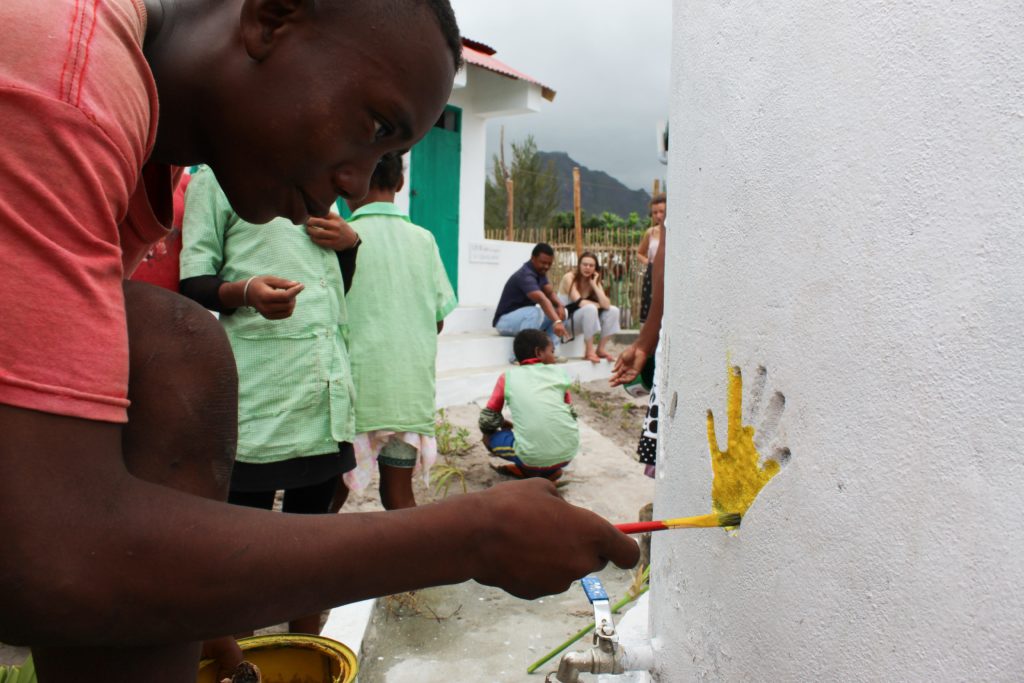
Similarly, NGO Seed Madagascar, which normally welcomes international tourism through conservation volunteer programs, pivoted its operational focus to public health support. Recognizing the vulnerabilities of the region, Seed Madagascar utilized its infrastructure to provide vital assistance to the local government. Their pandemic response included purchasing critical thermometers for local healthcare facilities, constructing 14 dedicated hand-washing stations in public areas, and manufacturing and distributing hundreds of protective face masks.
"The pandemic has magnified and clearly demonstrated company values and behavior," Smith stated. "We’ve all seen companies who have behaved irresponsibly in the pandemic, which will be remembered. Those who have stepped up will equally be remembered for their help. This isn’t a cynical PR play, it’s organizations staying true to their values of supporting local people and places, which they’ve always done, and now it’s virtually understood."
Perspectives on Sustainable Recovery
As the industry looked toward recovery, further strategic guidance emerged from sustainable tourism practitioners like Ariane Janer. Serving as the technical director of Instituto Homo Caballus—an NGO, equestrian center, and rural tourism business in Brazil that experienced forced closures and subsequent reopenings—Janer emphasized the necessity of structural adaptation.
Institutions like Instituto Homo Caballus demonstrated that survival required diversifying revenue streams, leaning on local domestic markets when international travel was paralyzed, and redesigning activities to comply strictly with sanitary guidelines without sacrificing the core guest experience.
Broader Implications and the Future of Travel
The COVID-19 pandemic served as a severe stress test for the global tourism economy, accelerating trends that were already bubbling beneath the surface. Mass, unregulated tourism took the heaviest blow, while niche sectors focusing on sustainability, conservation, and community integration demonstrated greater durability.
The crisis underscored a vital lesson for tour operators worldwide: tourism can no longer be viewed as an extractive industry operating in isolation from its host communities. The survival of rural and ecotourism businesses during 2020 and 2021 proved that deep community integration, transparent communication, and rigorous health protocols are not merely ethical choices, but essential business strategies for long-term viability.
While global health crises and macroeconomic shocks will continue to pose challenges to the travel sector, the adaptive strategies forged during the pandemic offer a blueprint for a more resilient, responsible, and community-centric future of tourism.
Related posts: