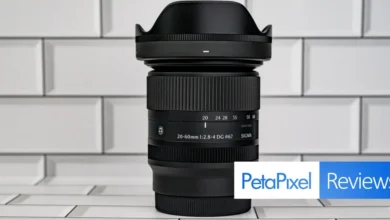
The evolution of professional sports photography has long been defined by a constant compromise between optical reach and aperture flexibility. For decades, sports photojournalists working under challenging stadium lighting conditions have had to choose between the versatility of a traditional zoom lens—such as a 70-200mm—and the unwavering, low-light performance of a heavy prime telephoto, like a 300mm or 400mm f/2.8. When Nikon introduced its ambitious 120-300mm f/2.8 telephoto zoom equipped with a built-in teleconverter, it aimed to bridge that gap. Recently, field testers put this heavy-duty glass through a rigorous real-world evaluation, pairing it with Nikon’s flagship mirrorless body, the Z9, during a professional Major League Soccer match featuring the Philadelphia Union.
Main Facts and Field Evaluation
The primary objective of the real-world test was to determine how the Nikon 120-300mm f/2.8 TC VR S performs outside of controlled laboratory environments, specifically under the fast-paced, high-stress conditions of a professional soccer match. Sports photography demands split-second autofocus acquisition, exceptional tracking capabilities, and sharp optical performance across the entire frame, especially when subject movement is erratic and lighting shifts as stadiums transition from daylight to floodlights.
During the match at Subaru Park, home of the Philadelphia Union, the lens was subjected to a battery of practical assessments. Evaluators closely monitored several critical performance indicators:
- Autofocus Speed and Tracking: How effectively the internal motors paired with the Nikon Z9’s deep-learning subject-detection algorithms to lock onto fast-moving athletes.
- Handling and Ergonomics: The physical toll and operational fluidity of managing a heavy professional telephoto zoom from the sidelines.
- Built-in Teleconverter Efficacy: An analysis of whether the integrated teleconverter mechanism introduces optical degradation or serves as a truly viable tool for extending reach on the fly.
- Low-Light Capabilities: Maintaining a consistent f/2.8 aperture (or f/4 when the internal teleconverter is engaged) while shooting at fast shutter speeds to freeze motion under stadium lights.
Background Context and Technological Evolution
To understand the significance of the 120-300mm f/2.8 focal range, one must look at the historical trajectory of professional sports optics. Traditionally, sports shooters operated with a two-camera setup: one body equipped with a 70-200mm f/2.8 for close-up action near the goal line or sideline, and a second body outfitted with a 400mm f/2.8 or 600mm f/4 prime for distant action across the pitch.
The introduction of high-end zoom lenses spanning unconventional focal lengths—such as 120-300mm—disrupts this traditional workflow. By offering a continuous f/2.8 maximum aperture throughout the 120mm to 300mm range, photographers gain the framing flexibility of a zoom without sacrificing the background separation and light-gathering power typically reserved for prime lenses. Furthermore, the inclusion of a built-in teleconverter—a feature popularized in professional sports lenses to allow instantaneous focal length extension without exposing the camera sensor to dust and moisture—represents a major engineering milestone for field shooters who need to adapt instantly to changing play on the field.
Chronology of the Testing Phase
The evaluation of the Nikon 120-300mm f/2.8 TC VR S followed a structured timeline designed to test every facet of its mechanical and optical design.
- Pre-Match Preparation and Setup: Prior to kickoff, the lens was mounted to the Nikon Z9. Technicians and photographers checked the seamless integration of the built-in teleconverter switch, evaluating its mechanical resistance and ease of operation while wearing gloves or working quickly in a fast-paced environment.
- First Half Action (Daylight and Panning): During the opening minutes of the Philadelphia Union match, the focus was on wide-angle tracking, capturing players moving laterally across the field. Testers assessed the lens’s weight distribution, vibration reduction (VR) modes, and how well the optical formula controlled chromatic aberration under harsh overhead sunlight.
- Second Half Action (Floodlight Conditions): As the sun set and stadium floodlights took over, the evaluation shifted to low-light tracking. ISO levels were raised, and shutter speeds were maximized to test the autofocus system’s reliability in contrast-heavy, shadowed pitch conditions.
- Teleconverter Stress Test: In the closing stages of the match, the built-in 1.4x teleconverter was engaged frequently to capture goalmouth scrambles and distant celebrations. This phase specifically tested whether the optical penalty—stepping down the maximum aperture from f/2.8 to f/4—hindered the camera’s ability to maintain rapid focus lock.
Supporting Data and Technical Specifications
While subjective field impressions provide vital context, professional gear choices are ultimately grounded in technical metrics. The Nikon 120-300mm f/2.8 TC VR S is engineered to meet the rigorous demands of working photojournalists, featuring robust weather-sealing, extensive fluorine coatings on front elements, and sophisticated lens-shift vibration reduction systems.
When paired with the Nikon Z9, the system benefits from a sensor readout speed fast enough to eliminate rolling shutter distortion entirely, allowing the autofocus system to execute continuous calculations at up to 120 frames per second (at lower resolution) or robust full-resolution RAW bursts at 20 frames per second. The integration of the teleconverter transforms the lens into a 168-420mm f/4 optic, providing substantial reach that rivals dedicated long-range primes while maintaining remarkable edge-to-edge sharpness.
Industry feedback from professional sports shooters highlights that while heavy glass can induce physical fatigue over a 90-minute match, the reduction in gear bag weight—carrying one versatile zoom instead of multiple heavy primes—often outweighs the ergonomic penalty.
Broader Market Impact and Industry Implications
The performance of specialized telephoto zoom lenses like the Nikon 120-300mm f/2.8 reflects broader shifts in the photographic equipment market. As mirrorless systems have matured, manufacturers have shifted their engineering focus toward eliminating the historical compromises between zooms and primes.
For working professionals covering sports, wildlife, and photojournalism, the financial and logistical implications are significant. Investing in a single, highly adaptable optical tool can reduce the overall footprint of field gear while maintaining the uncompromising image quality required for agency publication, print syndication, and high-end commercial use. As brands continue to refine internal teleconverter technologies and high-speed autofocus algorithms, lenses of this caliber are expected to become increasingly central to professional sports coverage worldwide.
Related posts: