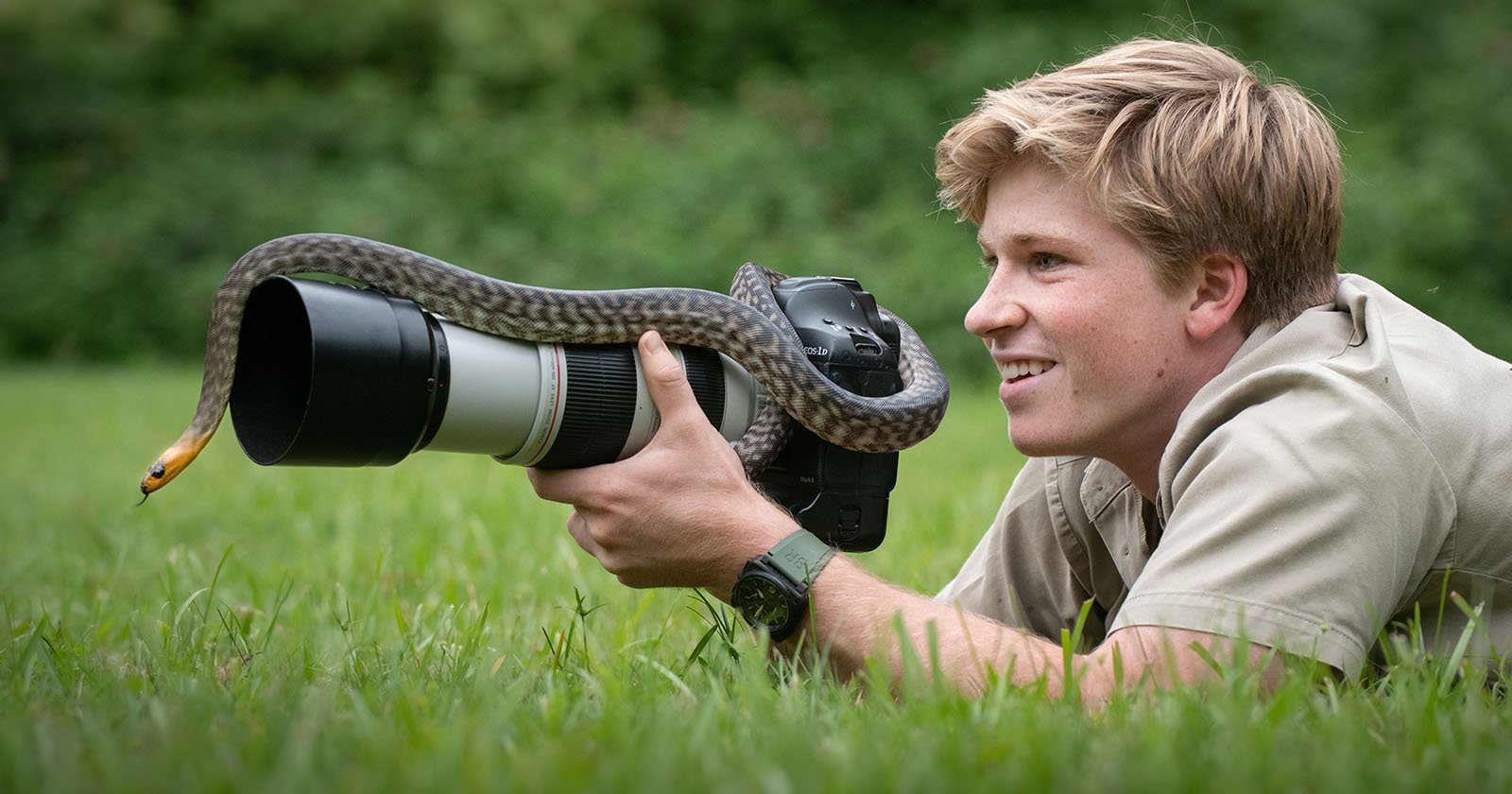
Conservationist, television presenter, and accomplished wildlife photographer Robert Irwin recently shared his perspectives on the evolving landscape of photography, particularly his concerns regarding the rise of Artificial Intelligence (AI) in the field. In an interview with Parade, Irwin, who has been a prominent figure in wildlife conservation and media since his youth, elaborated on his enduring passion for photography and its critical role in his life and advocacy. The conversation highlighted his commitment to capturing and sharing the raw beauty of the natural world, a mission he believes is increasingly challenged by AI-generated imagery.
Irwin, now 22, has significantly broadened his public profile since PetaPixel last spoke with him. His achievements extend beyond his conservation work and photography to include a successful run on Dancing With the Stars. Despite these diverse ventures, photography remains a foundational element of his identity. "This has been a passion project of mine and ours for a very long time," Irwin stated in the Parade interview, emphasizing photography’s formative influence. "A lot of people might not realize this, but there’s this part of my life that’s been really probably the most formative part of my life and really created the person I am today, which is photography."
The Artistry and Authenticity of Real Photography
Irwin’s deep connection to photography stems from its power to convey the essence of wildlife and inspire conservation. He views it not merely as a hobby but as a vital tool for communication and education. However, he expressed significant reservations about the proliferation of AI in photography. "As with any advancement in technology, I think we sometimes forget about the environmental destruction that it can cause," Irwin remarked, drawing a parallel between technological progress and its potential negative externalities. He then focused his critique through the lens of photography, stating, "With AI, I think not only does it take away from the artistry of photography, but it also dilutes what is impressive."
His concern is that the ease with which AI can generate fantastical images diminishes the appreciation for genuine, breathtaking photographs of real wildlife. "Because we’ve seen so many incredible things, we don’t realize that what is real and that’s more amazing because it’s real, you know?" he elaborated. Irwin pointed to the prevalence of digitally fabricated images, such as an "eagle riding the elephant," as examples of the confusion and devaluation of authentic imagery. He fears that this constant exposure to the unreal can desensitize audiences to the profound impact of actual, unadulterated moments captured in nature. "When you see the image of the, I don’t know, eagle riding the elephant or whatever ridiculousness it is that people genuinely think is real, when there is the actual real amazing photo, it almost dilutes it because we’ve seen so many incredible things."
A Lifelong Quest for Wildlife Encounters
Despite his extensive experience, Irwin acknowledged that the world of wildlife remains vast and full of undiscovered wonders for him. He mentioned that many people assume he has encountered every conceivable animal, but this is far from the truth. "Anyone who has a passion for wildlife will tell you they have a list that’s a mile of long of what they want to see next," Irwin explained. His personal bucket list includes destinations and creatures he dreams of photographing in their natural habitats.
South America is a continent he has yet to explore, and he expressed a strong desire to witness sloths in the wild. The Galapagos Islands hold a particular allure, as does the chance to photograph Komodo dragons, which he identifies as a top priority. "I have a love for Komodo dragons. I’ve never photographed them in the wild. That is absolutely top of my list." The elusive snow leopard is also a dream subject, described by Irwin as "the pinnacle" for any wildlife photographer. Furthermore, the majestic polar bear in its natural Arctic environment is another creature he yearns to see. "Polar bears! That’s another one that I’ve always wanted to see. A polar bear in the wild. I think I would just squeal with excitement if I saw one of them," he shared, conveying his unbridled enthusiasm for these iconic animals.
Photography as a Catalyst for Conservation
Irwin’s journey with photography began at a young age, transforming from a personal interest into a powerful advocacy tool. "So I picked up a camera, and I started looking at it from an artistic perspective. It just became the biggest part of my life from about age ten, all the way through my teenage years," he recalled. He now aims to share that same sense of wonder and connection with younger generations. "I’ve always got a camera with me. Now it’s about I know that feeling that it gave me as a kid, and I want to give other kids that feeling."
For many years, photography served as his primary method for disseminating his conservation message. "I’ve spent many, many years of my life capturing nature through photography. And growing up, [it] was my kind of individual way of spreading this conservation message that I’m so passionate about." This deep-seated belief in the power of authentic imagery to drive change is at the heart of his current initiatives.
The Crikey! Magazine Photography Competition: A Platform for Real Stories
In line with his commitment to promoting genuine wildlife photography, Robert Irwin and Australia Zoo are celebrating the 10th anniversary of the Crikey! Magazine Photography Competition. This global competition serves as a significant platform for showcasing conservation-minded and visually compelling photography. Entries for this year’s competition are open until August 31, 2026, inviting photographers of all levels to participate.
Irwin’s vision for the competition is clear: he seeks "storytelling that shows nature as it’s intended. You’re not meddling with anything. You’re letting nature take its course, and you’re photographing it in its true and raw state." He reiterated his strong stance against AI-generated content in this context. "I don’t care how many AI photos you see. When you see a real, true representation of nature, there is a visceral feeling that hits you in the heart; you just can’t deny it," he asserted. "I think storytelling and art has to be authentic, and that is just so important. In wildlife photography, we need a true and authentic representation of nature. In our competition at least, there is no room for AI, that’s for sure. It ain’t happening."
The Crikey! Magazine Photography Competition is designed to be inclusive, welcoming both budding photographers who are just beginning their journey, much like Irwin himself did over a decade ago, and seasoned professionals. "There’s a category for you to tell your story," Irwin encouraged potential entrants, emphasizing the competition’s role in elevating photographic work and fostering a deeper connection with the natural world. The competition aims to not only discover exceptional talent but also to reinforce the importance of ethical and authentic wildlife photography in an era increasingly dominated by digital manipulation. This initiative underscores Irwin’s dedication to preserving the integrity of photographic art and its crucial role in conservation efforts worldwide.
Related posts: