The Ethics of Encounter: How Social Media and Modern Tourism are Reshaping Indigenous Communities

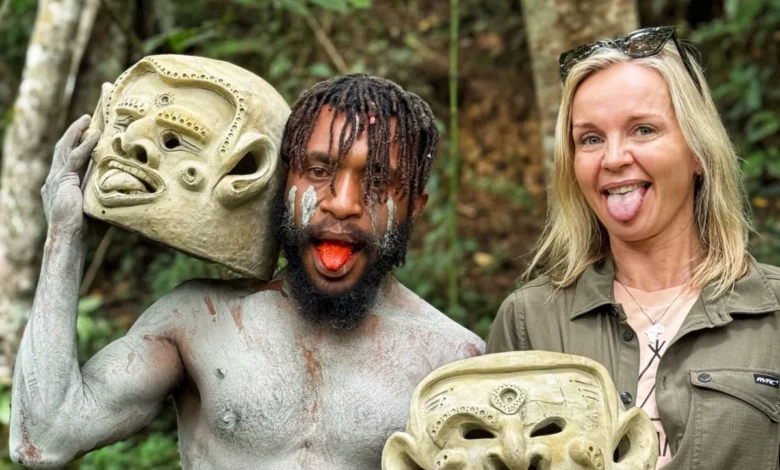
In an era defined by high-speed global connectivity, ubiquitous smartphone cameras, and the relentless pursuit of digital engagement, the intersection of modern travel and Indigenous communities has reached a critical crossroads. While the democratization of travel has opened up remote corners of the globe to curious explorers, it has also introduced a profound ethical dilemma. At the heart of this tension lies a troubling modern phenomenon: the commodification of human culture for viral content. When a visitor steps into an Indigenous village, where does the boundary lie between genuine cultural exchange and the reduction of an ancient society into a digital tourism product?
This question has increasingly occupied the attention of cultural anthropologists, ethical tourism advocates, and Indigenous leaders alike. Among them is Anniina Sandberg, a cultural anthropologist and the founder and CEO of Visit Natives, an organization dedicated to fostering authentic, community-led tourism. Drawing upon more than two decades of field experience working alongside vulnerable populations—including the Hadzabe and Maasai in Tanzania, Sãmi families in Norway, Berber communities in Morocco, and Indigenous groups in Papua New Guinea—Sandberg has witnessed firsthand the double-edged sword of global visibility. While tourism can provide vital economic lifelines and cultural pride, the modern obsession with social media metrics threatens to erode the dignity of the very people travelers journey so far to meet.
The Roots of the Crisis: From Ethical Tourism to Digital Exploitation
To understand the current crisis in Indigenous tourism, one must examine the evolution of global travel over the past several decades. Historically, cultural tourism was slow, deliberate, and largely educational. Travelers sought out remote communities through specialized operators, engaging in immersive experiences that required significant time and financial investment. However, the proliferation of low-cost aviation, coupled with the rise of social media platforms prioritizing visual shock value and algorithmic reach, has transformed remote tourism into an accessible, mass-market commodity.
Today, content creators, influencers, and casual travelers frequently venture into Indigenous territories armed not with a desire for mutual understanding, but with a mandate to capture attention-grabbing material. The repercussions of this shift became acutely clear to Sandberg following a recent visit with the Hadzabe hunter-gatherers in Tanzania. After sharing documentation of her journey online, she was unsettled to discover that a significant portion of the public response stripped the community of its humanity. Instead of expressing a desire to understand the complex socio-economic realities and rich traditions of the Hadzabe, commentators frequently reduced the community to an entertaining spectacle, exoticizing their daily lives for amusement.
“When we talk about sustainable tourism, we have focused on environmental issues and social issues, but we rarely talk about the impact of social media,” Sandberg noted. “I’ve seen that Indigenous people are very vulnerable. People can misuse the experience just to create content that is about getting clicks and views.”

This digital extraction relies heavily on the sensationalism of ancient lifestyles, packaging nuanced cultures into oversimplified, flattened narratives designed to trigger engagement algorithms. By framing Indigenous peoples as relics of the past rather than contemporary human beings navigating modern complexities, online content generation risks cementing harmful stereotypes that undermine decades of advocacy for indigenous rights and self-determination.
Redefining the Journey: Tourism Versus True Cultural Exchange
The divergence between conventional tourism and ethical engagement often hinges on structural intent. Standard tourism models are frequently engineered around consumer convenience: travelers arrive on tight schedules, participate in curated demonstrations, capture photographic evidence of their presence, and depart. In these transactional scenarios, cultural activities are frequently divorced from their natural context and modified to fit foreign itineraries, taking place entirely outside the host community’s normal daily rhythm.
In contrast, Sandberg advocates for an approach modeled on hospitality rather than consumption. She compares a truly meaningful cultural exchange to the simple act of inviting someone into one’s home. By sharing meals, engaging in prolonged conversations, and participating organically in everyday life, travelers transition from passive spectators to active participants in a shared human experience.
Organizations like Visit Natives attempt to operationalize this philosophy by eliminating rigid day trips and fixed itineraries in favor of multi-day homestays. These unhurried encounters allow relationships to develop naturally, fostering deep learning and mutual respect. Yet, scaling this model remains difficult in an industry dominated by rapid consumption and instant gratification.
The Complexities of Consent in a Hyper-Connected World
One of the most contentious battlegrounds in modern Indigenous tourism is the issue of consent. While contemporary travel etiquette generally dictates that visitors should ask permission before photographing a local resident, Sandberg emphasizes that the traditional framework of asking for a simple "yes" or "no" is drastically insufficient in cross-cultural settings.

The power asymmetry between global travelers and remote Indigenous communities often precludes truly informed consent. Many rural or traditionally living Indigenous populations possess little to no understanding of digital infrastructure, the mechanics of viral content, or the infinite, permanent reach of the internet. A community member may willingly grant permission for a photograph to be taken, under the assumption that the image will remain within a private family album or a localized context, entirely unaware that it could be broadcast to millions of users worldwide, monetized by third parties, or stripped of its original context to fuel online mockery.
“When communities don’t know their rights, or don’t fully understand how their images might be used, it becomes much more complicated,” Sandberg explains.
True informed consent, according to anthropological and ethical standards, requires complete transparency regarding the intended use of media, equitable financial compensation, mutual linguistic and cultural comprehension, and the absolute agency of the community to dictate the terms of their own representation. Without these safeguards, consent becomes a hollow formality masking exploitation.
Industry Responsibility and the Call for Codes of Conduct
While individual travelers bear personal responsibility for their actions, the burden of protecting vulnerable populations cannot rest solely on the shoulders of tourists. The broader tourism industry—including international agencies, local operators, and digital platforms—plays a pivotal role in shaping travel behaviors and establishing norms.
Many Indigenous communities face continuous, systemic pressures regarding land rights, economic marginalization, and cultural preservation. These vulnerabilities can make communities more susceptible to accepting poorly regulated tourism initiatives that provide short-term financial relief while compromising their long-term cultural and social well-being. Consequently, Sandberg argues that tourism providers have an ethical obligation to bridge this gap by educating travelers and enforcing strict codes of conduct.
An ethical framework for Indigenous tourism must be fundamentally community-led, prioritizing local autonomy, safeguarding cultural heritage, and measuring success by the sustained well-being of the host population. Proponents of this approach argue that tourism should serve as a tool for empowerment rather than extraction, ensuring that economic benefits flow directly back into community-determined projects.

The Core of Humanity: Reclaiming the Purpose of Travel
Ultimately, experts emphasize that the solution to the ethical crisis in Indigenous tourism is not the complete cessation of travel or the total prohibition of digital sharing. Rather, the challenge lies in radically transforming the underlying ethos of these interactions. When grounded in dignity, reciprocity, and a genuine curiosity about the human condition, cross-cultural encounters have the power to dismantle prejudice and foster global solidarity.
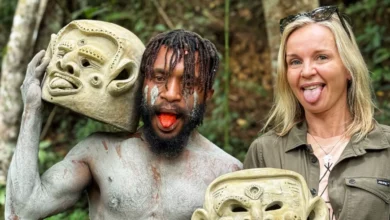
Reflecting on her decades of fieldwork—from sleeping under the same roof with a Maasai family in a traditional boma to engaging with the Asaro Mudmen in the Papua New Guinea Highlands—Sandberg maintains an optimistic view of travel’s potential. She encourages individuals to approach the world not as a catalog of destinations to be conquered or content farms to be harvested, but as a rich, diverse mosaic of human perspectives.
True travel, in its most valuable form, rarely stems from luxury accommodations or meticulously curated digital feeds. Instead, it emerges from the unglamorous, deeply human act of sharing space, time, and daily routines with others.
“It’s very human,” Sandberg concludes. “The core of humanity is just spending time with each other.”