Skylum is killing its AI Portrait Editor Aperty this week despite promising five years of updates when it launched the app in 2024.

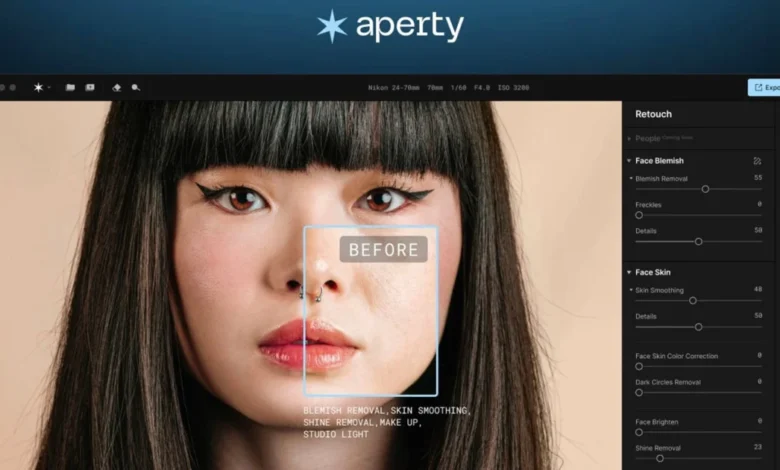
The sudden discontinuation of Aperty marks a significant pivot for the software developer, which has faced mounting scrutiny regarding its product lifecycle management. Effective November 4, the standalone AI-driven portrait editing application will reach its end-of-life, leaving thousands of professional photographers and enthusiasts who invested in the platform with a product that will no longer receive technical support, security patches, or feature enhancements.
A Rapid Rise and Abrupt Fall
When Skylum introduced Aperty in late 2024, it was marketed as a revolutionary, AI-centric solution designed specifically for portrait photographers. The software promised to automate complex retouching tasks—ranging from skin texture refinement to facial feature adjustments—while maintaining a high degree of natural aesthetic quality. To incentivize early adoption, Skylum marketed "lifetime" licenses priced at $250, explicitly guaranteeing users a five-year roadmap of consistent updates and feature rollouts.
This promise of long-term development was a primary driver for the app’s initial uptake. Photographers, often weary of the recurring subscription models dominating the creative software industry, viewed the one-time $250 fee as a sound investment for a five-year professional tool. However, the software’s lifespan proved to be significantly shorter than the advertised commitment. Following an initial burst of activity in early 2025—which included updates in January and March—development momentum slowed to a halt. By September, users reported that the software had been quietly pulled from sale, and the company’s dedicated social media channels began to vanish.
Chronology of the Sunset
The timeline of Aperty’s decline highlights a disconnect between corporate communications and product sustainability:
- September 2024: Skylum officially launches Aperty, positioning it as a dedicated, specialized tool for portrait workflows. The marketing materials prominently feature the promise of five years of updates.
- January 2025: Initial feature updates are released, keeping the software in line with the promised development roadmap.
- March 2025: A second round of updates is pushed to users, representing the final meaningful development effort for the platform.
- Late Summer 2025: Development ceases entirely. No further updates are released, and the promised 2025 roadmap remains unpublished.
- September 20, 2026: Community members on social platforms observe that Aperty is no longer available for purchase. Customer support representatives confirm the unavailability, citing internal "official information" pending in the coming weeks.
- October 2026: Skylum confirms the official closure of the application, effective November 4, 2026.
The Corporate Rationale
In an official statement delivered via email to its user base, Skylum characterized the move as a strategic consolidation. "We know how valuable Aperty has been to you and thousands of other photographers. This was not an easy decision to make," the company stated. "But sometimes you have to let go of something good to build something genuinely special."
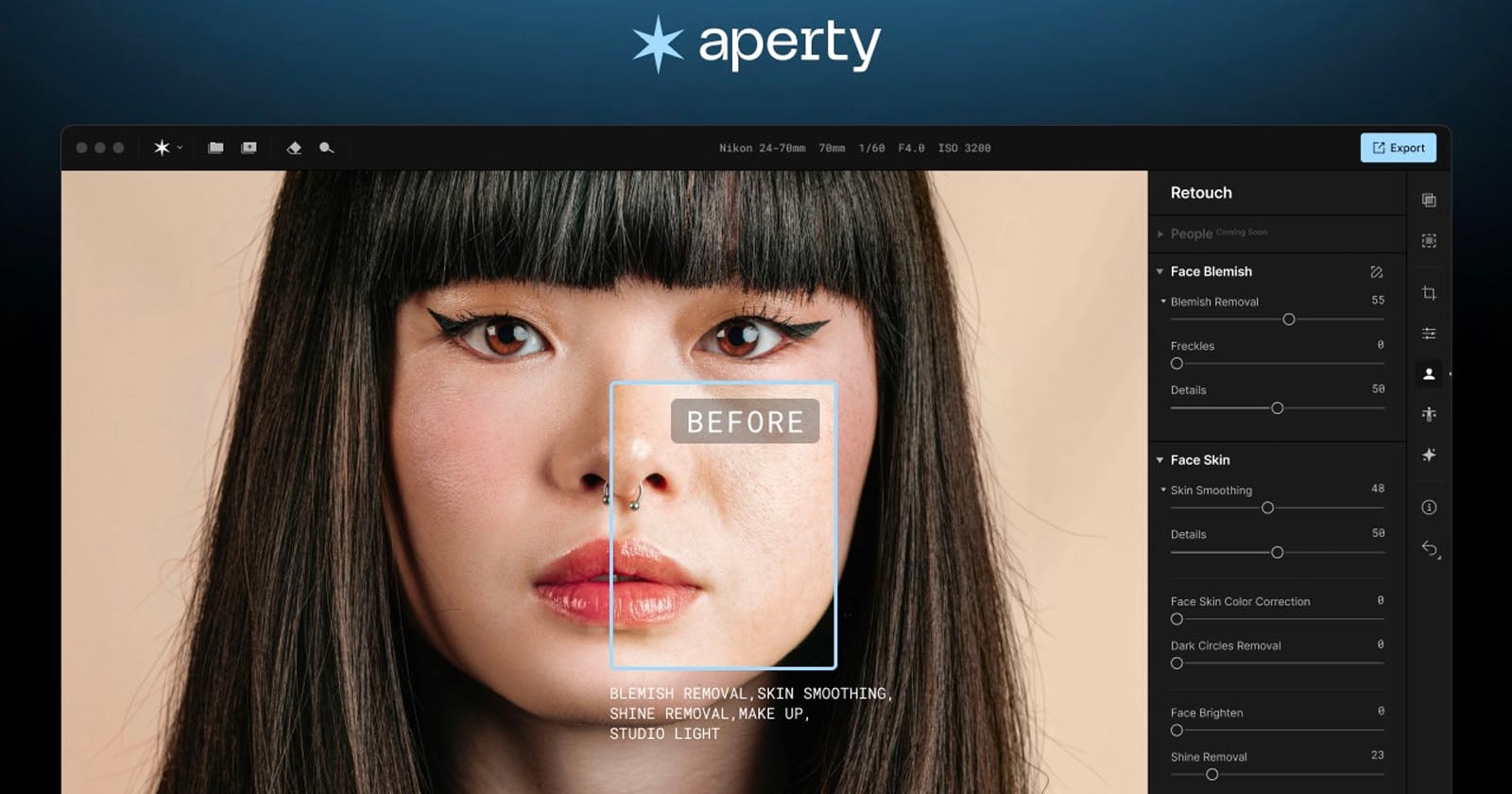
Skylum’s stated justification focuses on the optimization of its internal resources. The company intends to shift its development focus entirely toward its flagship software, Luminar. According to the company, the proprietary AI technology developed for Aperty has already been integrated into the current iteration of Luminar. By sunsetting the standalone Aperty app, Skylum claims it can better concentrate its engineering efforts on creating a more comprehensive "ultimate editing tool."
For existing users, the transition is largely one of stagnation. While the software will remain functional as a local application, it is effectively "abandonware." There will be no compatibility updates for future operating system versions, no new camera raw format support, and no further refinement of the AI models.
Historical Context and Market Implications
The decision to abandon Aperty is not an isolated incident for Skylum, formerly known as MacPhun. The company has a well-documented history of product churn that has, at times, alienated its core user base.
When Skylum transitioned from the MacPhun brand to its current identity, it signaled a shift toward more aggressive product development cycles. However, this has frequently come at the expense of legacy users. In 2021, the launch of "Luminar Neo" caused significant friction within the photography community. Existing users of "Luminar AI" and the previous "Luminar" versions were encouraged to migrate to the new platform, often without a seamless upgrade path that honored their previous investments. Similar transitions occurred during the shift from the Aurora HDR line to the integrated Luminar framework.
Analysts note that this strategy reflects a wider industry challenge: the "AI arms race" in creative software. As companies like Adobe, Topaz Labs, and Skylum compete to integrate generative AI, the cost of maintaining multiple, disparate software silos becomes prohibitive. Consolidating these features into a single, subscription-friendly, or flagship platform is often viewed by software companies as a necessary move to remain competitive against larger, deep-pocketed conglomerates.
Impact on Professional Workflow and Trust
The primary consequence of this decision is the erosion of consumer trust. For professional photographers, software is not just a tool; it is a foundational component of a business infrastructure. When a company sells a "lifetime" license predicated on five years of support and then terminates that support in less than two years, it creates a "sunk cost" scenario.
Furthermore, the lack of a clear migration path for Aperty users—other than the suggestion to use the broader Luminar suite—places an additional burden on professionals. If a photographer relied on Aperty’s specific workflow, they may now be forced to purchase or subscribe to an alternative software, effectively doubling their costs.
The legal and ethical implications of selling a product with a promised update schedule that is subsequently reneged upon remain a point of contention. While end-user license agreements (EULAs) typically protect software companies from liability regarding product longevity, the reputational damage can be substantial. In the digital age, where social media allows for the rapid mobilization of dissatisfied users, the loss of brand equity can far outweigh the cost savings of canceling a project.
The Path Forward
As of November 4, 2026, the Aperty era concludes. Skylum’s path forward is clear: they are doubling down on Luminar. Whether this strategy will yield the "genuinely special" results the company promises remains to be seen. If the integration of Aperty’s AI features into Luminar provides a superior, more stable, and more frequent update cycle, the company may eventually recover the trust of its user base.
However, the case of Aperty serves as a cautionary tale for both software developers and consumers. For developers, it highlights the risks of over-promising on roadmaps in a volatile technological landscape. For consumers, it underscores the inherent risks of investing in "lifetime" software licenses for specialized tools, particularly in an era where AI development moves faster than traditional business models can sustain.
For now, the thousands of photographers who invested in Aperty are left with a functional but static tool, a reminder of the volatility inherent in modern creative software ecosystems. The industry will be watching to see how Skylum manages the transition of these users into the Luminar ecosystem and whether the company can establish a more sustainable, long-term relationship with its customers moving forward.