Sigma Teases Major October 24 Announcement While Canon Macro Rumors And Sony Registration Speculation Stir The Industry


The global digital imaging market is once again experiencing a surge of speculation as major optics and camera manufacturers prepare for a wave of autumn product releases and strategic announcements. Industry observers, professional photographers, and gear enthusiasts are closely monitoring developments from three of the sector’s most influential brands: Sigma, Canon, and Sony. At the center of the current news cycle is an upcoming October 24 product launch event hosted by Sigma, alongside growing disappointment within the Canon community over leaked specifications regarding an anticipated macro lens, and renewed debate surrounding the status of an unreleased Sony full-frame mirrorless camera body. As competition intensifies within the hybrid creator market, these developments highlight the shifting priorities of camera manufacturers as they balance high-end professional performance with accessible consumer pricing and compact engineering.
Sigma Corporation October 24 Announcement Anticipation
The most immediate focal point for the photographic community is Sigma Corporation’s officially teased product announcement, scheduled for October 24. Sigma has established a reputation for disrupting the optical market through its high-performance Art, Contemporary, and Sports lens lineups, as well as its unique foray into compact full-frame mirrorless camera bodies utilizing the L-Mount system, such as the Sigma fp and fp L.
As the October 24 date approaches, online forums and industry analysts are fiercely debating the nature of the impending reveal. The primary question driving speculation is whether the Japanese manufacturer intends to introduce a brand-new interchangeable camera body, a groundbreaking high-speed optical lens, a combination of both, or an entirely unexpected piece of imaging technology. In recent years, Sigma has expanded its manufacturing footprint to support multiple mount systems, including Sony E-mount, Leica L-mount, Canon RF-mount, and Fujifilm X-mount, making any new lens announcement significant across multiple camera ecosystems.
Background Context on Sigma Product Cycles
To understand the weight of the upcoming October 24 event, it is necessary to examine Sigma’s recent product release cadence. Over the past twenty-four months, the company has heavily concentrated on expanding its portfolio of prime and zoom lenses designed specifically for mirrorless architectures. By leveraging the shorter flange focal distances enabled by mirrorless designs, Sigma engineers have successfully delivered lenses that rival—and occasionally surpass—first-party manufacturers in optical sharpness, chromatic aberration control, and build quality, all while maintaining a more competitive price point.
However, the possibility of a new camera body remains an enticing prospect for fans of the brand. The original Sigma fp, introduced in 2019, captivated videographers and minimalists with its modular, pocket-sized full-frame design. Despite its innovative form factor, subsequent updates have been incremental, leaving a distinct market gap for a dedicated, high-performance hybrid camera from Sigma that addresses user feedback regarding electronic shutter limitations and autofocus tracking performance. Whether the October 24 announcement will satisfy those hoping for a next-generation L-Mount flagship or focus strictly on advanced optical engineering remains one of the most closely guarded secrets in the photographic industry.
Canon Macro Lens Rumors Spark Debate Over STM Technology
Parallel to the excitement surrounding Sigma, the Canon ecosystem is currently navigating a wave of frustration among its dedicated user base. Recent intelligence leaked by prominent industry monitors, including Canon Rumors, indicates that an anticipated macro lens currently in development will utilize a stepping motor (STM) drive mechanism rather than the higher-tier Nano USM (Ultrasonic Motor) technology typically reserved for Canon’s professional L-series optics.
This rumor has ignited widespread debate across photography forums and creator platforms regarding Canon’s design philosophy for its RF-mount ecosystem. While Canon’s RF lens lineup has garnered universal acclaim for its stellar optical performance—exemplified by lenses such as the RF 100mm f/2.8L Macro IS USM—the integration of an STM drive in a potentially specialized or high-end macro configuration has left certain segments of the professional community underwhelmed.
Implications of STM Versus USM in Macro Photography
The distinction between STM and USM technologies carries significant practical implications for macro photography and professional video production. Ultrasonic motors, particularly Canon’s Nano USM systems, are engineered to deliver lightning-fast, highly accurate, and near-silent autofocus performance, which is essential for tracking erratic subjects in close-up scenarios, such as insects or botanical details stirred by wind.
Conversely, stepping motors (STM) have traditionally been associated with entry-level to mid-range lenses. While modern STM implementations have advanced significantly, offering smooth and quiet focus transitions that are advantageous for video recording, they often lack the instantaneous snap and rugged endurance demanded by working professionals operating in challenging field conditions. Critics of the rumored specification argue that a macro lens commanding a professional price point should feature top-tier mechanical and electrical components. Conversely, defenders of the rumored approach suggest that an STM-driven macro lens could indicate a lighter, more compact, and more affordably priced option designed for travel photographers and casual macro enthusiasts rather than studio-bound professionals.
Sony a7S IV Registration Speculation and Reality Check
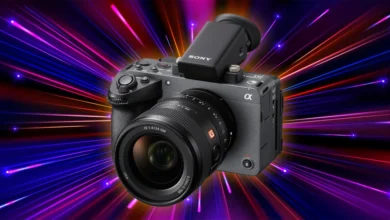
Rounding out the current trio of major industry talking points is the persistent rumor mill surrounding the hypothetical Sony a7S IV. As one of the most successful video-centric mirrorless camera lines in history, the Sony a7S series has defined low-light videography and cinematic production standards since the release of the a7S II and the critically acclaimed a7S III. Consequently, any whisper of a successor naturally generates immense excitement and speculation across digital media platforms.
Recent online discussions suggested that a new Sony camera body bearing identifiers consistent with an a7S IV had been registered with international telecommunication certification agencies—a frequent precursor to an official product launch. However, a closer examination of registration data and supply chain intelligence reveals a more nuanced reality. Industry analysts tracking regulatory filings have clarified that the newly registered device is not, in fact, the long-awaited a7S IV, dampening immediate expectations for a high-megapixel or 8K-capable iteration of the low-light specialist body.
Chronology of the Sony a7S Lineup
To contextualize the ongoing speculation, it is helpful to review the timeline of the Sony a7S franchise. The original a7S debuted in 2014, introducing the concept of a full-frame sensor optimized for extreme low-light performance through a modest 12-megapixel resolution that maximized pixel pitch. This was followed in 2015 by the a7S II, which added internal 4K recording and 5-axis in-body image stabilization.
The most significant leap occurred in September 2020 with the launch of the a7S III, a camera that underwent a five-year gestation period and addressed nearly every structural critique of its predecessor by introducing a brand-new 12.1-megapixel back-illuminated stacked CMOS sensor, a vastly improved menu system, robust thermal management without a cooling fan, and comprehensive 4K 120p internal recording capabilities. Given that the a7S III remains a dominant force in professional video production, industry experts note that Sony is under minimal commercial pressure to rush an a7S IV to market, especially as its flagship FX line and hybrid a1 series cater to overlapping high-end cinema demands.
Broader Impact and Market Implications
The convergence of Sigma’s upcoming October 24 event, Canon’s lens design choices, and Sony’s regulatory status updates underscores the fiercely competitive nature of the modern mirrorless camera market. As manufacturers navigate global supply chain complexities, fluctuating component costs, and shifting consumer demands, product strategy has become increasingly nuanced.
For consumers and working professionals, these developments signal a period of critical evaluation. The potential introduction of new optical solutions from Sigma could offer compelling alternatives to first-party lenses, challenging Canon and Sony to maintain competitive pricing and performance standards. Meanwhile, consumer reactions to Canon’s rumored STM macro lens highlight a growing demand for transparency and uncompromising professional specifications in high-end product tiers. As the industry moves toward the final quarter of the year, all eyes remain fixed on corporate announcements, trade exhibitions, and official regulatory filings to determine how these major brands will shape the future of digital imaging and content creation.