Greece has firmly established itself as a premier global destination for family tourism, successfully leveraging its geographical diversity—ranging from the rugged mainland to the iconic Aegean and Ionian islands—to create a robust hospitality ecosystem. Over the past two decades, the Greek tourism sector has undergone a strategic shift, pivoting from a reliance on seasonal beach tourism toward high-end, integrated resort models that cater specifically to multi-generational travelers. This evolution is supported by national tourism data, which indicates that family-oriented travel now accounts for a significant share of Greece’s annual visitor expenditure, with a growing demand for properties that provide seamless infrastructure for both infants and teenagers.

The current landscape of Greek luxury hospitality is defined by a move toward "self-contained" destinations. These properties function as micro-cities, reducing the logistical stress often associated with international travel for families. By offering on-site medical support, curated children’s clubs, and comprehensive, nutritionally-focused dining programs, these resorts have minimized the friction points that typically plague family vacations.

Strategic Infrastructure and Growth in Family Hospitality
The shift toward family-focused luxury began in earnest as major developers recognized the potential of combining Mediterranean aesthetics with international service standards. According to reports from the Greek National Tourism Organization (GNTO), the increase in family arrivals has been directly correlated with the expansion of facilities like the Sani Resort in Halkidiki and the Costa Navarino development in the Peloponnese. These locations have invested millions into specialized programming, such as partnerships with renowned sports academies and survival training centers, effectively diversifying the "sun and sea" experience into an educational and recreational retreat.

1. Sani Resort, Halkidiki: The Integrated Model
Located on the Kassandra peninsula, the Sani Resort is a benchmark for the integrated cluster model. By managing a series of interconnected hotels—Sani Beach, Sani Club, Porto Sani, and Sani Dunes—the property allows guests to traverse a variety of environments within a single gated, secure ecosystem. The resort’s operational philosophy focuses on "stress-free" transitions, offering comprehensive baby-gear amenities that allow families to travel light. Its strategic proximity to Thessaloniki Airport, coupled with a private transfer network that includes mandatory child-safety seating, addresses critical logistical hurdles. Furthermore, the inclusion of the Rafael Nadal Tennis Centre and the Bear Grylls Survival Academy demonstrates a commitment to catering to older demographics, ensuring that the resort remains relevant to teenagers as well as toddlers.

2. Costa Navarino, Peloponnese: Luxury Sustainability
Costa Navarino serves as a case study in sustainable, large-scale luxury. Spanning the Messinia region, the resort complex includes four distinct five-star properties: The Westin, The Romanos, the W Costa Navarino, and the Mandarin Oriental. The development is notable for its commitment to environmental stewardship, which is integrated into the children’s programming. By focusing on the natural heritage of the Peloponnese, the resort provides a curriculum of activities that engage younger guests with local ecology, providing a depth of experience often missing from standard all-inclusive models.

3. Atlantica Eleon Grand Resort, Zakynthos: The Premium All-Rounder
While many top-tier Greek resorts lean toward exclusive, high-budget pricing, the Atlantica Eleon Grand Resort in Zakynthos represents a shift toward the "premium all-rounder" market. It targets the mid-to-high income demographic that requires robust water-park facilities and accessible beach access. Located on the eastern side of Zakynthos, the resort’s geographical positioning is strategic; the waters are calmer, and the terrain is flatter than the island’s mountainous west, facilitating easier movement for families with strollers and young children.

4. Amanzoe, Peloponnese: The Retreat Aesthetic
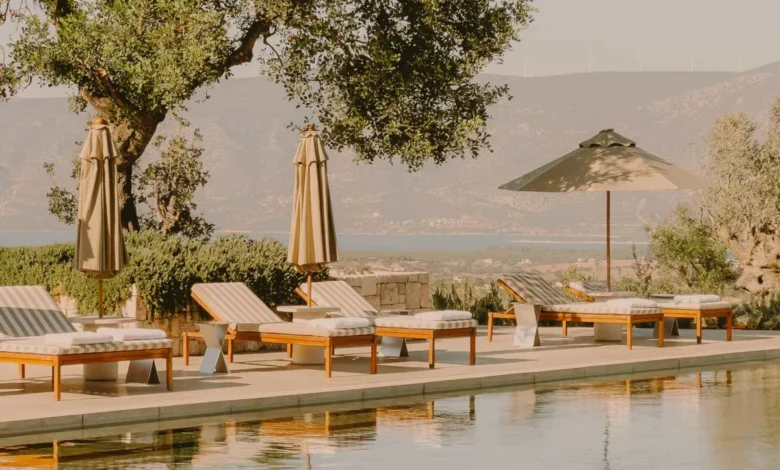
Amanzoe represents the upper echelon of the Greek hospitality market. Although not explicitly marketed as a family-centric resort in the traditional sense, its infrastructure is uniquely suited to the needs of modern, privacy-conscious families. By offering individual villas with private pools, the property provides a controlled environment that minimizes the potential for social friction between groups of guests. This model of "secluded luxury" has proven increasingly popular with high-net-worth families seeking a retreat-style vacation that avoids the typical high-density crowds of more commercialized Mediterranean resorts.

5. Four Seasons Astir Palace, Athens: Urban and Coastal Integration
The Four Seasons Astir Palace occupies a unique niche: the "City-Beach" hybrid. Located in the Athenian Riviera, roughly 25 minutes from the historic center of Athens, it addresses the desire for a multi-faceted holiday. Families can spend mornings exploring the Acropolis or the Plaka district, and afternoons utilizing the resort’s three private beaches. This model mitigates the "urban fatigue" associated with city travel, providing a high-security, high-comfort buffer between the bustling capital and the tranquil Aegean coast.

6. Stella Palace and Stella Island, Crete: The Multi-Generational Approach
Crete, the largest of the Greek islands, features the dual-property approach at the Stella complex. Stella Palace serves as the family-oriented hub, complete with extensive water parks and kid-centric programming, while the adjacent Stella Island caters to an older demographic. This structure is highly efficient for extended families traveling together, as it allows for a balance between communal family time and individual adult relaxation. The ability to share the grounds while maintaining separate lodging standards is a trend that analysts suggest will continue to grow in the coming years.

7. Thermae Sylla Spa & Wellness Hotel, Evia
Evia’s Thermae Sylla represents a departure from the "kids club" model. Instead, it offers a "family-inclusive" experience where the wellness culture of the thermal springs is the primary draw. While it lacks the high-octane entertainment centers of the larger resorts, it attracts families who prioritize a shared experience of relaxation. This hotel caters to parents who want to expose their children to the thermal spa traditions of Greece in a setting that remains sophisticated and calm.

8. Kontokali Bay Resort and Spa, Corfu
In the Ionian Sea, Kontokali Bay focuses on the refined elegance of Corfu. The resort has successfully maintained a reputation for high-end service without the excessive ornamentation found in some of its competitors. By offering a range of activities that include water sports and traditional children’s clubs, it provides a stable environment for families. Its focus on culinary excellence, with menus designed to bridge the gap between adult gourmet preferences and child-friendly nutritional requirements, remains a key driver of its consistent ratings.

9. Ikos Aria, Kos: The All-Inclusive Standard
Ikos Aria has revolutionized the luxury all-inclusive segment. By removing the transactional nature of holiday spending—covering everything from high-end dining to premium beverages—it has created a predictable financial model for families. The resort’s partnership with local establishments for off-site dining experiences and included car rentals for exploration reflects a broader trend in the Greek market: the desire to encourage guests to experience the wider island while maintaining the security of an all-inclusive base.

10. Porto Zante, Zakynthos: The Boutique Luxury Experience
Porto Zante rounds out the list as a premier choice for those prioritizing privacy and personalized service. With a limited number of villas, the level of attention to detail is significantly higher than at larger resorts. The inclusion of Japanese fusion dining (MAYA) highlights the resort’s commitment to providing a global, rather than exclusively local, culinary experience. It is the preferred choice for families looking for an intimate, high-service environment that feels less like a large resort and more like a private estate.

Economic and Operational Implications
The growth of these family-friendly hotels has had a profound impact on the Greek economy. By extending the tourism season and attracting repeat visitors, these resorts provide year-round employment in local communities and encourage the development of local infrastructure. However, the reliance on high-end, all-inclusive, or "contained" resort models also presents challenges. Critics note that such resorts can sometimes result in "tourist leakage," where the economic benefits are kept within the resort walls rather than filtering into the surrounding towns.

Despite this, the trajectory of the Greek hospitality sector is clear: the focus remains on enhancing the "family-value" proposition. As global travel trends favor experiences that reduce the administrative and physical burden of parenting while on holiday, Greece’s investment in specialized staff, child-safe infrastructure, and integrated logistical services ensures its position at the forefront of the global family travel market. The future of this sector will likely depend on maintaining the balance between luxury service and the authentic, cultural immersion that remains the hallmark of the Greek experience.