The Ultimate Culinary Expedition: A Comprehensive Guide to Melaka’s Premier Gastronomic Destinations

Nestled along the southwestern coast of Peninsular Malaysia, the historic coastal town of Melaka stands as a monumental crossroads of maritime trade, colonial heritage, and multicultural exchange. Long recognized by UNESCO for its architectural and cultural significance, the city is equally celebrated by culinary historians and international travelers for its vibrant gastronomy. Melaka’s food culture is a living archive of Peranakan (Straits Chinese), Malay, and Chinese influences, characterized by bold herbaceous notes, fiery chili profiles, and meticulous preparation techniques. For culinary tourists navigating the diverse landscape of Malaysian cuisine, Melaka offers an exceptionally dense concentration of distinct regional specialties that cannot be replicated elsewhere in the federation.
The Historical and Cultural Tapestry of Melakan Cuisine
To understand the culinary significance of Melaka, one must examine its position as a historic entrepôt. From the 15th-century Melaka Sultanate through periods of Portuguese, Dutch, and British colonial rule, the city attracted traders from China, India, the Middle East, and the Indonesian archipelago. This convergence of global trade routes fostered an unprecedented cross-pollination of ingredients. Local indigenous produce—such as lemongrass, galangal, kaffir lime leaves, and wild bird’s eye chilies—was married with Chinese wok-cooking techniques, Indian spice blends, and European baking methods.
The resulting Peranakan (or Nyonya) cuisine, alongside distinct localized adaptations of Hainanese, Malay, and Portuguese-Eurasian dishes, forms the backbone of Melaka’s contemporary food economy. Culinary researchers note that regional dishes in Melaka rely heavily on complex rempah (spice pastes), fermented seafood products like belacan, and the strategic use of local souring agents such as assam (tamarind and gelugur fruit). This rich heritage has transformed the city into a primary domestic and international tourism driver, generating substantial economic activity centered around food-and-beverage enterprises.

Historic Downtown Core: The Legacy of Hainanese Chicken Rice Balls
The gastronomic exploration of Melaka frequently begins in the colonial heart of the city, centered around Jonker Street (Jalan Hang Jebat). Among the myriad culinary institutions operating in this historic district, Kedai Kopi Chung Wah represents a foundational pillar of Hainanese culinary tradition adapted to the local Straits environment.
Kedai Kopi Chung Wah
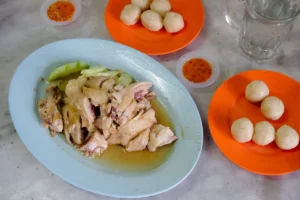
Operating within a traditional Malay-Chinese coffee shop setting, Kedai Kopi Chung Wah specializes in Hainanese chicken rice—specifically presented in the distinctive regional format of compressed rice balls. Unlike the loose-grain chicken rice common across Singapore and other parts of Malaysia, Melaka’s iteration compresses seasoned, garlic-infused rice into spherical portions. This preparation method traces its origins to early Hainanese laborers who shaped the rice into compact balls to keep it warm and portable during long working hours on the rubber estates and docks.

The establishment’s operational model is remarkably efficient, reflecting decades of refinement. Patrons calculate their requirements based on whole or half-chicken portions and the number of rice balls desired, accompanied by traditional Hainanese beverages such as Nanyang-style roasted coffee, sweetened condensed milk teas, and Chinese infusions.
- Culinary Profile: The poached chicken features tender, gelatinous skin and taut, succulent meat, accompanied by a heavy-handed garlic and chili vinegar dipping sauce that provides a sharp, acidic counterpoint to the rich poultry fat.
- Location: Jonker Street corner, Melaka.
- Operating Hours: 9:00 AM to 3:00 PM (Weekdays); 9:00 AM to 4:00 PM (Weekends).
- Pricing: Average meals range approximately from 28 RM, offering high value for portion size and historical authenticity.
The Acid Test: Mastering Asam Pedas
Moving away from the immediate colonial core toward local residential and commercial arteries reveals the profound influence of Malay-Minangkabau culinary traditions, most notably encapsulated in the dish known as asam pedas.

Asam Pedas Pak Man
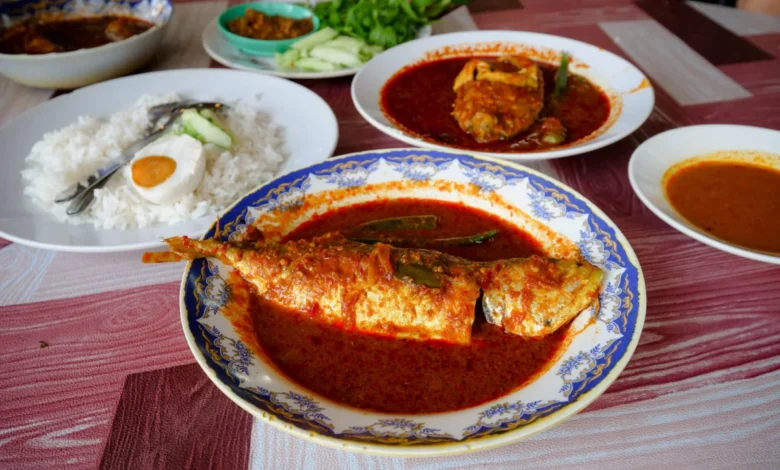
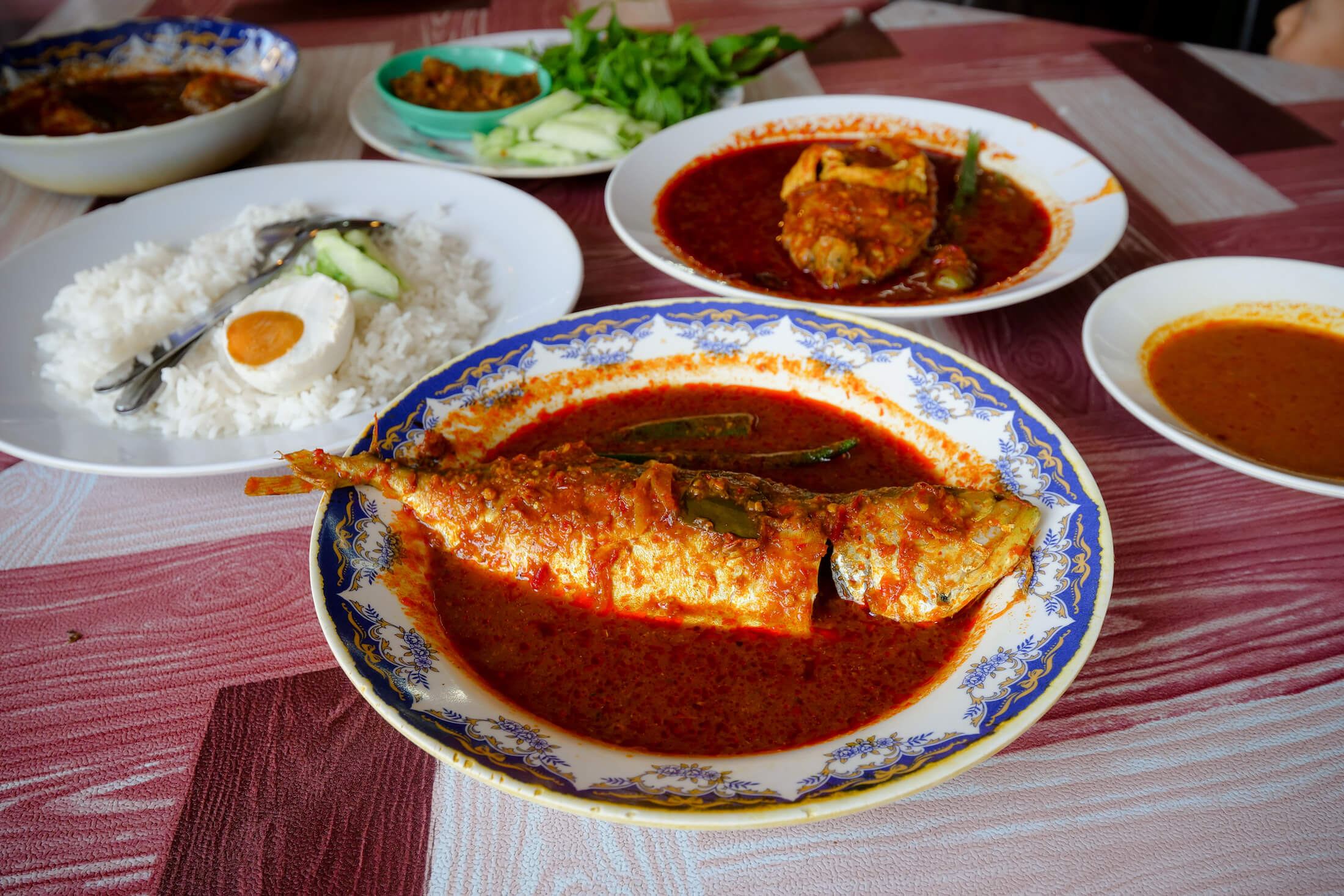
Asam pedas, translating literally to "sour spicy," is a fiery, tamarind-based curry soup enriched with chili paste, lemongrass, and aromatic herbs. While variations of the dish exist throughout the Malay Archipelago, Melaka’s version is distinguished by its deep crimson hue, profound pungency, and the integration of fresh marine catches sourced directly from the Straits of Malacca.
Asam Pedas Pak Man operates as a cornerstone of this tradition. The establishment requires extensive morning preparation hours to build the complex base broth, which combines tamarind juice, rempah, and torch ginger flower. While the signature fish dishes are typically ready by mid-morning, the restaurant serves traditional breakfast items such as roti canai and Peranakan coconut-based snacks known as kuih, which frequently sell out within hours of opening.

- Culinary Profile: Local catches—such as baramundi (ikan tenggiri) or skipjack tuna—are simmered directly in the acidic, spicy broth, allowing the marine fats to emulsify with the tamarind and chili base. The dish is traditionally served with white rice and fresh local herbs, paired with house-made sambal belacan that elevates the dish’s flavor profile through intense fermentation and toasted shrimp paste notes.
- Location: Accessible via primary transit routes in Melaka (referenced via regional mapping data).
- Operating Hours: Open daily from 8:00 AM to 7:00 PM.
- Pricing: Comprehensive family-style meals average approximately 73 RM.
Coastal Innovations and Modern Street Food Culture
As Melaka’s tourism sector expanded into the late 20th and early 21st centuries, suburban vendors introduced innovative street food formats designed to combat the tropical climate while utilizing abundant local agricultural yields.
Klebang Original Coconut Shake
Situated slightly outside the densely packed urban center near the coastal fringe of Klebang, the Klebang Original Coconut Shake enterprise exemplifies the evolution of modern Malaysian refreshment culture. Established to serve tourists and locals navigating the high ambient temperatures of the tropical latitude, the business processes thousands of fresh coconuts daily.

- Preparation Method: Young coconut water and scraped white flesh are blended directly with crushed ice and standardized portions of vanilla ice cream, with premium "Special" variants topped by an additional scoop of ice cream.
- Ecosystem: Beyond beverages, the adjacent stalls offer rapid-service local staples including nasi lemak and fried fish crackers (keropok), creating an informal dining hub that attracts heavy vehicular and pedestrian traffic.
- Location: Klebang coastal road, Melaka.
- Operating Hours: Daily from 11:00 AM to 6:30 PM (restricted afternoon hours on Fridays).
- Pricing: Highly economical, with standard shakes priced around 2.40 RM and special editions at 2.95 RM.
Communal Dining: The Evolution of Satay Celup
No culinary survey of Melaka is complete without examining communal dining phenomena that bridge traditional hawker practices with interactive preparation.
Ban Lee Siang Satay Celup
Operating within the downtown commercial district, Ban Lee Siang specializes in satay celup—a regional variation of hot pot where patrons select raw or semi-cooked skewers of meat, seafood, vegetables, and tofu products from communal display chillers, subsequently cooking them in a boiling communal vat of spiced peanut and satay sauce.

- Operational Mechanics: Diners manage their own cooking time, dipping individual bamboo skewers into a rich, sweet, and moderately spicy peanut gravy that thickens and absorbs flavors from the various ingredients over the course of the meal. The final bill is calculated simply by counting the discarded wooden skewers remaining at the table.
- Cultural Significance: This dining style reflects the multicultural adaptability of Melaka’s food vendors, merging Chinese steamboat mechanics with Malay satay sauce flavor profiles.
- Location: Downtown Melaka.
- Operating Hours: Open daily from 4:00 PM to 12:30 AM.
- Pricing: Skewers are typically priced at approximately 1 RM per stick, encouraging high-volume, shared dining experiences.
The Charcoal Grill Tradition: Ikan Bakar
The culinary tour culminates along the coastal peripheries where open-air seafood operations utilize high-heat charcoal combustion to prepare marine proteins.
Ikan Bakar Hj Musa
Renowned among regional epicures as a premier destination for grilled seafood (ikan bakar), this establishment employs a weighted-pricing model per 100 grams, allowing consumers to hand-select individual fish, squid, and crustaceans from chilled display trays before dictating the preferred preparation method.

- Signature Technique: The distinguishing characteristic of the establishment’s output is its application of a proprietary chili sambal paste. Applied immediately as the seafood is removed from high-heat charcoal grills, the residual heat partially cooks the outer layer of the cold sambal, transforming the condiment into a viscous, jam-like glaze infused with shallots, aromatics, and chili heat.
- Location: Coastal districts of Melaka.
- Operating Hours: Open daily from 5:00 PM to 12:00 AM.
- Pricing: Comprehensive seafood spreads for small groups average approximately 99 RM, varying based on market rates for specialized catches such as stingray (ikan pari).
Economic and Tourism Implications
The culinary ecosystem of Melaka functions as a vital economic engine for the state, supporting micro-enterprises, agricultural supply chains, and hospitality employment. According to regional tourism boards, food-and-beverage tourism accounts for a substantial percentage of visitor expenditures in Melaka, driving extended hotel stays and cross-border travel from Singapore and Kuala Lumpur.
Local municipal authorities and tourism planners continue to leverage these legacy eateries in international marketing campaigns, emphasizing food safety standards, historical preservation of coffee shop architectures, and the formalization of hawker sanitation protocols. As global interest in Southeast Asian heritage cuisine intensifies, establishments such as those anchored in Melaka’s historic quarters remain essential guardians of intangible cultural heritage, ensuring that historical migration patterns and trade exchanges continue to be tasted, preserved, and celebrated through modern gastronomy.
Related posts: