The Evolution of Travel Journalism and the Rise of Intentional Tourism Following the Recovery of Industry Veteran Michael Huxley

Michael Huxley, a prominent figure in the global independent travel sector and the founder of the influential travel platform Bemused Backpacker, has announced a fundamental shift in his approach to international exploration following a period of critical illness and subsequent rehabilitation. Huxley, whose career spans nearly three decades and encompasses travel to over 150 countries, is transitioning away from the high-intensity, content-driven model of travel that has dominated the digital landscape for the past decade. This shift marks a significant moment in travel journalism, reflecting a broader industry trend toward "slow travel" and intentional tourism—a movement that prioritizes deep cultural immersion and personal well-being over the rapid accumulation of destinations and social media metrics.
The Foundations of a Three-Decade Career in Exploration
To understand the weight of Huxley’s transition, it is necessary to examine the trajectory of his career, which began in the late 1990s. As a teenager, Huxley entered the world of independent travel at a time when the industry was defined by physical guidebooks and analog navigation. Over the ensuing 30 years, he built a reputation as a specialist in rugged, high-endurance travel, including trekking through jungles, crossing deserts, and summiting volcanoes.
Huxley’s professional background as a nurse, with specializations in emergency medicine and tropical travel medicine, provided a unique lens through which he viewed the world. This clinical perspective often informed his advocacy for travel, as he frequently cited the "regret of the dying"—a phenomenon documented by palliative care professionals—as a primary motivator for encouraging others to see the world. For over 16 years, his platform, Bemused Backpacker, served as a bridge between professional medical advice and the adventurous spirit of the independent traveler.

Chronology of a Professional and Personal Reckoning
The timeline of Huxley’s recent transition is marked by a sudden and severe medical event that halted a career defined by constant motion. While the specific nature of the illness remains private, the impact on his professional output and physical capabilities was immediate.
- The Professional Era (2008–2023): For 16 years, Huxley operated at the intersection of passion and profession. During this period, travel was increasingly viewed through the lens of "content creation." Every destination was analyzed for its utility to search engines, its photographic potential, and its narrative value for his audience.
- The Medical Crisis: A sudden, unpredicted illness forced a total cessation of travel and professional activities. This period served as a "reckoning," forcing Huxley to evaluate whether he had lived by the advice he had dispensed to his readers for decades regarding the urgency of life.
- The Recovery Phase: This stage was characterized by a slow physical and mental recalibration. Huxley noted that recovery did not return him to his former self but instead created a "new normal," involving changes in physical stamina, energy management, and risk assessment.
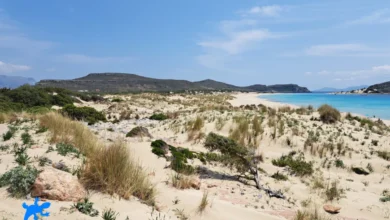
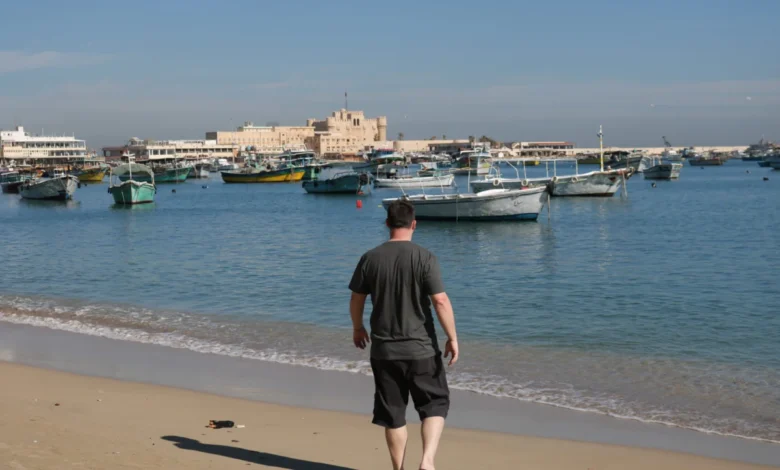
- The Return to Travel (Present): Huxley’s return to the field has been defined by "slower" journeys, such as extended stays in Seville, Spain, and various regions of Greece. These trips have focused on "ordinary magic"—the unscripted, non-commercialized moments of daily life in foreign cultures.
The Professionalization of Travel and the "Content Trap"
Huxley’s experience highlights a growing concern within the travel journalism industry: the "content trap." As digital platforms have become the primary medium for travel information, the act of traveling has, for many professionals, become secondary to the act of documenting it.
Data from industry analysts suggest that the pressure to maintain "engagement" on social media and meet the requirements of search engine optimization (SEO) has led to a homogenization of travel experiences. Travelers often visit the same "Instagrammable" locations, following a rigid schedule that prioritizes the visual over the experiential. Huxley’s recent reflections serve as a critique of this model, suggesting that the professionalization of travel can inadvertently lead to the loss of the very curiosity and spontaneity that drive people to travel in the first place.
Supporting Data: The Rise of the Slow Travel Movement
Huxley’s shift toward a slower, more deliberate pace aligns with global tourism data indicating a rise in "Slow Travel." According to a 2023 report by TravelPerk, approximately 38% of travelers expressed a desire to travel more sustainably and slowly in the post-pandemic era.

Slow travel is defined by several key metrics:
- Length of Stay: Increasing the duration of time spent in a single location rather than visiting multiple cities in a short window.
- Local Economic Impact: Prioritizing locally owned accommodations and eateries over international chains.
- Cultural Exchange: Focusing on learning local languages or participating in traditional customs, such as the Greek coffee culture cited by Huxley.
In Greece, for example, coffee culture is a multi-billion euro industry, but its cultural value lies in the concept of kefi—a spirit of joy and passion—and the practice of spending hours in a kafenio (traditional café). Analysts suggest that travelers who engage in these slower cultural practices report higher levels of satisfaction and lower levels of "travel burnout."
Clinical Perspectives and the Psychology of Regret
Huxley’s background as a nurse adds a layer of empirical weight to his philosophy. Research in the field of positive psychology suggests that "experiential purchases" (like travel) provide more long-lasting happiness than material purchases. However, when these experiences are treated as "work tasks," the psychological benefits can be diminished.
Furthermore, the "Five Regrets of the Dying," a study popularized by Bronnie Ware, identifies "I wish I had let myself be happier" and "I wish I had stayed in touch with my friends" as recurring themes. Huxley’s assertion that "no one wishes they travelled less when they die" is a reflection of his clinical experience witnessing the end-of-life process. His recent health crisis reinforced the idea that travel should not be a task to be completed or a piece of content to be produced, but a fundamental engagement with life.

Broader Implications for the Travel Industry
The transition of a high-profile figure like Huxley has several implications for the future of travel journalism and independent tourism:
1. The De-Stigmatization of "Easy" Travel
For years, the independent travel community has often prioritized "hard" travel—extreme environments, difficult logistics, and physical endurance. Huxley’s move toward European cities and "ordinary" act of walking through a city suggests a broadening definition of what constitutes a "valid" travel experience.
2. A Shift in Content Strategy
Travel publishers may begin to move away from "Top 10" lists and high-speed itineraries in favor of narrative-driven pieces that focus on a single location’s atmosphere and local interactions. This mirrors the "Slow Journalism" movement, which emphasizes depth over speed.
3. Health and Accessibility in Travel
Huxley’s openness about his physical limitations post-illness brings much-needed attention to the reality of traveling with health considerations. As the global population ages, the travel industry must adapt to provide meaningful experiences for those who may not be able to "trek through a jungle" but still possess a "hunger" for the world.

Official Responses and Industry Sentiment
While there has been no formal statement from international tourism boards regarding Huxley’s specific recovery, the sentiment within the travel blogging community has been one of support and reflection. Many long-term creators have expressed similar feelings of "burnout" and a desire to return to the roots of why they began traveling.
Tourism experts in regions like Seville and the Greek islands have long advocated for the "Slow Travel" model as a solution to over-tourism. By encouraging travelers to stay longer and explore less-frequented neighborhoods (like Triana in Seville), local authorities hope to distribute the economic benefits of tourism more equitably while preserving the cultural integrity of their cities.
Conclusion: Finding the Way Back
Michael Huxley’s journey from a high-speed professional traveler to a deliberate, slow-paced explorer serves as a case study for the evolving nature of modern tourism. His recovery has not only been a physical process but a philosophical one, leading to a rejection of "travel as content" in favor of "travel as a real experience."
As the travel industry continues to navigate the complexities of the digital age, the "Bemused Backpacker" model of intentional, safety-conscious, and deeply personal travel offers a roadmap for a more sustainable and fulfilling way to see the world. Huxley’s return to travel—not as the person he was, but as a traveller who has learned the value of presence—reflects a maturing industry that is finally beginning to value the journey as much as the destination. For the modern traveler, the lesson is clear: the world does not need to be conquered or documented to be understood; it simply needs to be felt.