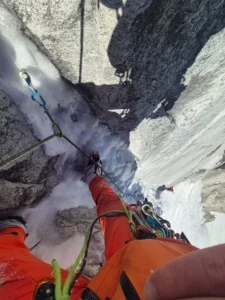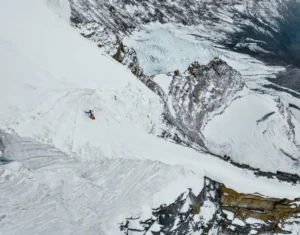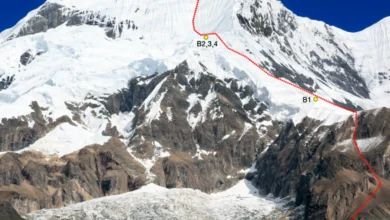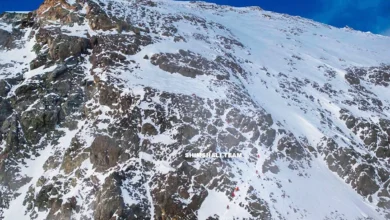
In a significant display of modern alpine prowess, a team of three Polish climbers has successfully established a new route on the formidable north face of Free Korea Peak, one of the most iconic summits in Kyrgyzstan’s Ala-Archa National Park. The climbers, Michal Makowski, Robert Paluch, and Rafal Zajac, spent 11 hours navigating the 850-meter line before completing an arduous 11-hour descent back to the safety of their base camp. This feat serves as a powerful reminder that even in regions once considered “tapped out” by the mountaineering community, technical innovation and meticulous route research can still uncover virgin terrain.
The route, which the team has christened The Polish Barber, pays homage to the legendary American climber Henry Barber. In 1976, Barber made a historic solo ascent of the north wall, cementing the mountain’s status as a premier destination for high-altitude technical climbing. The Polish team’s line mirrors the initial 250 to 300 meters of Barber’s original path, after which the trio diverged into previously untouched territory, pushing upward for an additional 600 to 650 meters to reach the summit ridge.

Geographic and Historical Context of Free Korea Peak
Free Korea Peak, known in Russian as Pik Svobodnaya Koreya, rises to an elevation of 4,777 meters. It has long been regarded as a crucible for Soviet and international alpinism, particularly due to its imposing 900-meter north face. Throughout the late 20th century, the wall served as a testing ground for climbers seeking to hone their skills in steep ice and mixed terrain.
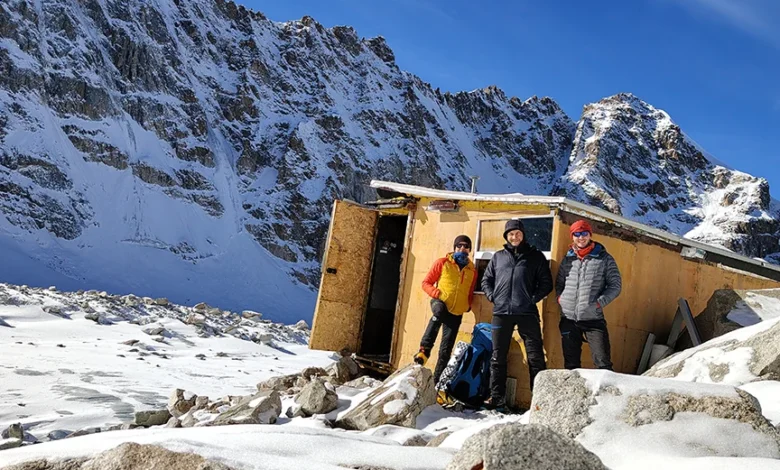
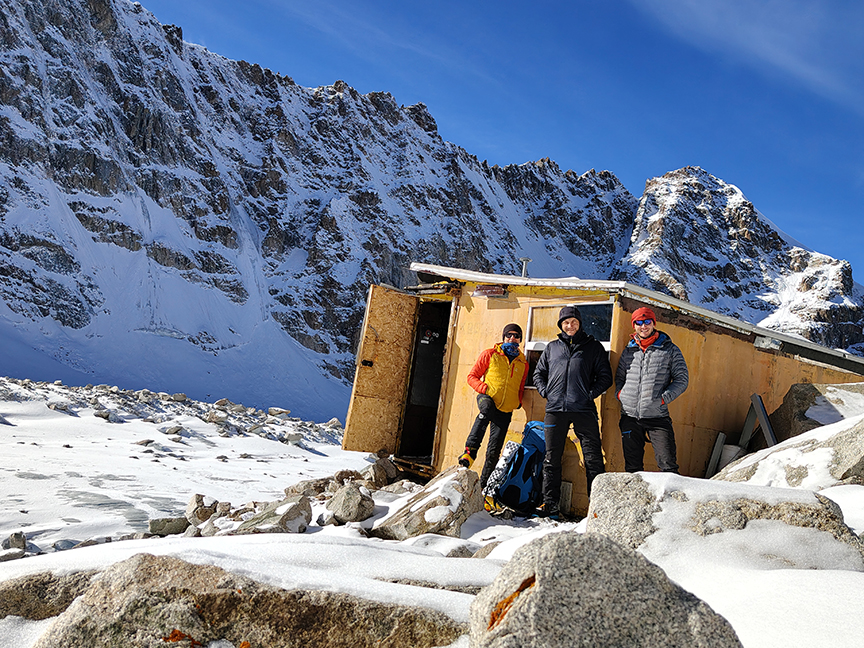
The Ala-Archa region, where the peak is situated, remains the spiritual home of Kyrgyz mountaineering. The proximity of the Corona Hut—the base camp used by the Polish team—to the massive north faces of the surrounding peaks makes it an ideal location for alpine-style expeditions. Despite its accessibility, the area demands respect; the combination of high altitude, rapid weather shifts, and the technical nature of the climbing requires a level of competence that often discourages casual mountaineers.
The assertion by Russian climber Valery Balesin in 2018—that the north face had been fully explored and offered no further potential for new lines—had become a widely accepted narrative within the climbing community. However, the success of Makowski, Paluch, and Zajac challenges this assumption, illustrating how evolving climbing techniques, particularly in the realm of vertical ice, allow modern athletes to perceive lines that were previously deemed inaccessible or non-existent.

The Anatomy of the Ascent
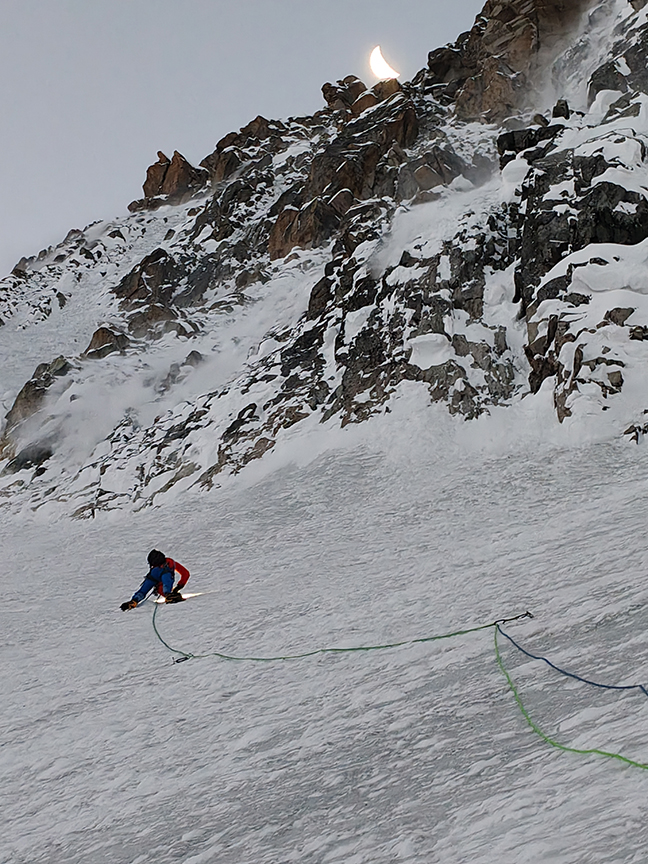
The Polish team’s expedition was characterized by a high degree of technical difficulty. The route is predominantly an ice climb, requiring consistent precision and energy management. The primary crux of the route was encountered midway up the face, where the team navigated a steep, vertical section of ice graded at Alpine Ice 4+. The remainder of the ascent fluctuated between grades 3 and 3+.
According to lead climber Michal Makowski, the protection—the gear placed in the ice to catch a potential fall—was exceptionally reliable throughout the majority of the climb. This reliability provided a psychological buffer, allowing the team to maintain their pace on the more technical sections. However, the final 150 meters of the climb presented a stark shift in conditions. The ice here was described as "thin and crusty," forcing the climbers to navigate with extreme caution as they approached the summit ridge.
The logistical challenge of the ascent was compounded by the descent. Rappelling from the summit ridge back to the base of the wall is a time-consuming and energy-draining endeavor. The 11-hour descent, equaling the time spent on the ascent, highlights the sheer physical toll of the expedition. Such long days are indicative of the "alpine style" of climbing, where teams carry all their supplies and move rapidly to minimize exposure to hazards such as rockfall and avalanches.
Chronology of the Expedition
The Polish team spent approximately one week in the Ala-Archa valley, a period that allowed them to acclimatize and scout the north face effectively. The relatively sparse occupancy of the valley during their stay—save for a small group of Russian trekkers on the neighboring Corona Peak—offered the climbers a rare sense of isolation.
- Days 1-3: Arrival in Ala-Archa National Park, transport to the Corona Hut, and initial reconnaissance of the north face to identify potential unclimbed lines.
- Day 4: Final preparation and rest to ensure physical readiness for the 850-meter vertical push.
- Day 5 (The Ascent): The team departed base camp, merging onto the lower section of the historic Henry Barber route. After 300 meters, they transitioned onto their new line, climbing for 11 hours to reach the summit ridge.
- Day 5 (The Descent): Immediately following the summit, the team began the process of rappelling down the face, requiring an additional 11 hours to reach the safety of the base camp.
- Days 6-7: Recovery and packing of equipment before departing the valley.
Technical Analysis and Implications
The success of The Polish Barber route carries several implications for the future of mountaineering in the Tien Shan range. First, it underscores the importance of ground-level observation. While satellite imagery and digital maps have revolutionized route planning, the "Polish Barber" project proves that there is no substitute for physical presence on the ground. By spending time at the base of the wall, the team was able to identify variations in ice formation that are invisible from a distance.
Second, the route serves as a case study in the longevity of classic climbing regions. The notion that a mountain face can be "finished" is increasingly viewed as an outdated concept. As climbing equipment becomes lighter and more specialized, and as training methodologies improve, what was once considered impossible becomes a new standard. The ability to climb "crusty" or thin ice safely suggests that the margins for success have widened, provided the climbers possess the requisite technical skill.

Furthermore, the team’s success highlights the enduring allure of "Alpine Style" mountaineering. In an era where commercial expeditions often dominate the high peaks of the Himalayas, the independent, lightweight approach favored by Makowski, Paluch, and Zajac represents the core ethos of traditional mountaineering. By relying on their own strength, ingenuity, and teamwork rather than fixed ropes or high-altitude porters, they have honored the traditions established by pioneers like Henry Barber.
Broader Impact on the Climbing Community
The documentation of The Polish Barber has already begun to generate interest within the international climbing community. For those who view Kyrgyzstan as a frontier for technical climbing, this ascent provides a blueprint for further exploration. The detailed reports and photographic evidence provided by the Polish Mountaineering Association (Polski Związek Alpinizmu) offer a valuable resource for future expeditions looking to replicate or build upon this success.
From a safety perspective, the report serves as a reminder of the volatility of high-altitude environments. The team’s emphasis on the thin, unpredictable ice at the top of the route serves as a cautionary note for any future climbers. As temperatures fluctuate, the structural integrity of these ice lines changes, making the "Polish Barber" a route that may only be viable under specific, narrow conditions.
In conclusion, the establishment of The Polish Barber is more than just a successful climb; it is a significant contribution to the historical record of the Tien Shan Mountains. It demonstrates that with the right combination of research, technical skill, and a respect for the pioneers of the past, there is still plenty of room for innovation in the world’s most iconic ranges. The Polish team has successfully expanded the map of the north face of Free Korea Peak, leaving a legacy that will undoubtedly invite future generations of climbers to test their mettle against the ice of Kyrgyzstan.