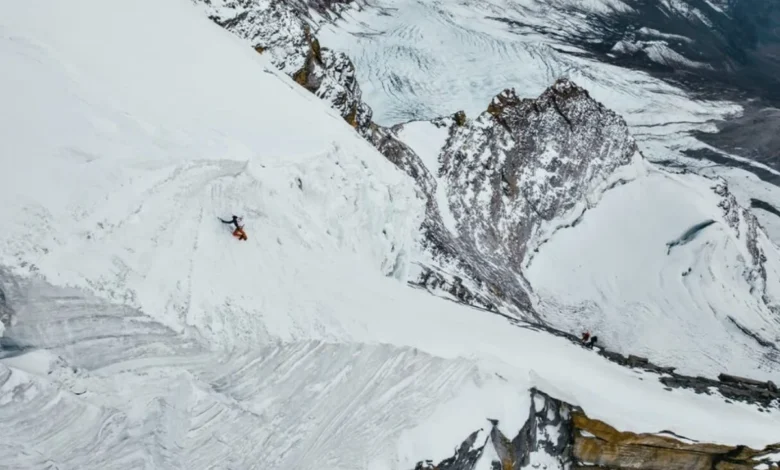
A high-stakes expedition in India’s Kishtwar region has culminated in the establishment of a significant new route on Mount Shiva (6,142m), a peak known locally as Bahai Jar. A Swiss team consisting of veteran mountaineer Stefan Siegrist, along with Benjamin Bosshard and Philippo Sala, successfully navigated the mountain’s challenging northwest ridge under extreme time constraints and adverse physiological conditions. The ascent, completed in early October 2026, represents a notable feat of alpine-style climbing, characterized by the team’s ability to capitalize on a fleeting weather window despite their lack of prior high-altitude acclimatization.
The Kishtwar massif, situated in the Indian Himalaya, remains one of the more remote and technically demanding climbing theaters in the world. Expeditions here are often conducted under a veil of silence, as local regulations restrict the use of satellite communication devices, including InReach and satellite phones, for security and administrative reasons. Consequently, the details of the ascent only emerged upon the team’s return to Switzerland, bolstered by documentation provided by the expedition’s photographer, Christoph Detschmann.
A Chronology of the Ascent
The expedition began in late September 2026, when the trio arrived at the base camp of the Kishtwar massif. Stefan Siegrist, a seasoned Himalayan climber who had previously summited Shiva in 2018 alongside Jonas Schild, targeted the unclimbed northwest ridge as the primary objective. The team arrived expecting a standard period of base camp residency required for physiological adaptation to altitudes exceeding 6,000 meters. However, meteorologists predicted a sudden, narrow window of clear weather that threatened to vanish as quickly as it appeared.
Faced with a “now or never” scenario, the team elected to commence their ascent on October 3. The decision was not made lightly; for Bosshard and Sala, this expedition marked their maiden experience above the 6,000-meter threshold. During the initial ascent, the psychological burden of the weather forecast was compounded by physical distress, as Sala suffered from altitude-induced headaches.
By the second night, the team had reached 5,250 meters at the base of the northwest ridge. This was the definitive juncture of the expedition. The climbers were required to assess their physical readiness to commit to the highly technical terrain that lay ahead—a point from which a retreat would be increasingly hazardous. Despite the looming threat of a season-ending storm, the team opted to continue. They reached 5,700 meters on the third night, a precarious altitude for climbers who had bypassed the typical multi-week acclimatization process.

On the final morning, the trio departed at 4:00 a.m. under clear skies. Traversing the final 300 meters of the technical slope, they reached the summit of Mount Shiva at 7:44 a.m. Their success was underscored by the timing of their descent; they navigated the 1985 Japanese route back to the base, arriving at their tents just as the predicted storm system began to dump snow on the region.
The Role of Technology and the Drone Controversy
A unique aspect of the Shiva expedition was the logistical use of drone technology, which became a decisive factor in the team’s success. Midway through the climb, the team realized they had inadvertently left their essential cooking stove at base camp. In a departure from traditional alpine-style ethics, which emphasize self-reliance, the expedition photographer utilized a drone to transport the stove up to the climbers’ position on the mountain face.
This incident has reignited a broader debate within the international mountaineering community regarding the definition of “fair means.” The Piolets d’Or, the prestigious awards body for alpinism, has recently grappled with the integration of technology in high-altitude environments. While the use of drones for reconnaissance—scouting routes or assessing conditions—has gained a degree of acceptance, the use of drones to deliver equipment directly to climbers on a route remains a contentious issue. Critics argue that such intervention compromises the purity of the ascent, effectively acting as an external support mechanism. Siegrist, however, defended the action, stating that the delivery of the stove was essential to the mission’s survival and ultimate success, framing it as a pragmatic solution to a potentially fatal oversight rather than an attempt to bypass technical difficulty.
Physiological Implications and Alpine Strategy
The success of the Swiss team invites analysis into the risks associated with rapid, high-altitude exposure. Medical experts generally advise a gradual ascent profile for mountaineers to prevent Acute Mountain Sickness (AMS), High Altitude Pulmonary Edema (HAPE), or High Altitude Cerebral Edema (HACE). By climbing from base camp to over 6,000 meters in a truncated window, Bosshard and Sala operated well outside the standard safety margins.
The team’s approach was defined by a shift in mindset: rather than pushing for a summit at any cost, they initially reframed the climb as an “acclimatization push.” By removing the psychological pressure of the summit, they were able to maintain a level of focus that allowed them to monitor their physical symptoms more effectively. Siegrist noted that once the initial tension of the first night subsided, the team’s collective focus narrowed entirely to the technical movement required on the rock and ice. This psychological regulation, combined with the favorable, albeit short, weather window, allowed them to overcome the physiological limitations that typically require extended residency at higher altitudes.
Contextualizing the Kishtwar Region
Mount Shiva is a centerpiece of the Kishtwar Himalaya, a region defined by its rugged, glaciated terrain and unpredictable weather patterns. The mountain’s northwest ridge has long been a subject of interest for elite mountaineers due to its steep, aesthetic profile.

The successful ascent by Siegrist, Bosshard, and Sala adds a new, permanent feature to the local climbing history. The use of the 1985 Japanese route for the descent also highlights the importance of historical infrastructure in the region. That route, established decades ago, remains a vital artery for climbers navigating the descent from the summit, illustrating the interconnectedness of modern alpine efforts with the pioneering work of previous generations.
Broader Impact on Modern Alpinism
The Shiva expedition serves as a case study for the evolution of Himalayan mountaineering. The trend toward “fast and light” alpine-style climbing continues to grow, as teams seek to minimize their exposure to objective hazards like rockfall and avalanches, which are often exacerbated by climate change-induced warming in high-mountain environments.
However, the reliance on advanced support technologies like drones raises questions about the future of the sport. If the "alpine style" standard—traditionally defined as climbing without supplemental oxygen, fixed ropes, or high-altitude porters—is to be maintained, the mountaineering community will likely need to establish clearer guidelines regarding the use of aerial logistics.
For the Swiss trio, the summit of Mount Shiva was not merely a technical achievement; it was a testament to the unpredictable nature of Himalayan climbing. Their ability to balance the rigid requirements of safety with the fluid, often chaotic reality of mountain weather has cemented their place in the recent history of the Kishtwar range. As the season concludes and the storms settle over the Indian Himalaya, the implications of their rapid ascent and the innovative, if controversial, use of support technology will undoubtedly remain a topic of discussion in mountaineering circles for the foreseeable future.