A Comprehensive Guide to Trekking in Bhutan: The Druk Path, Winter Adventures, and the Historic Trans Bhutan Trail

Bhutan, the sovereign Himalayan kingdom renowned for its philosophy of Gross National Happiness and rigorous environmental conservation, has steadily established itself as one of the world’s most exclusive and sought-after trekking destinations. Bounded by majestic snow-capped peaks, ancient Buddhist monasteries, and pristine alpine ecosystems, the nation offers hikers an unfiltered glimpse into a landscape largely untouched by mass tourism. Following a landmark nationwide vaccination campaign that saw approximately 85% of its adult population immunized against COVID-19 within a single week in April 2021, and the subsequent reopening of its borders to international tourists without quarantine requirements, Bhutan has reinforced its status as a model for public health and sustainable travel management.
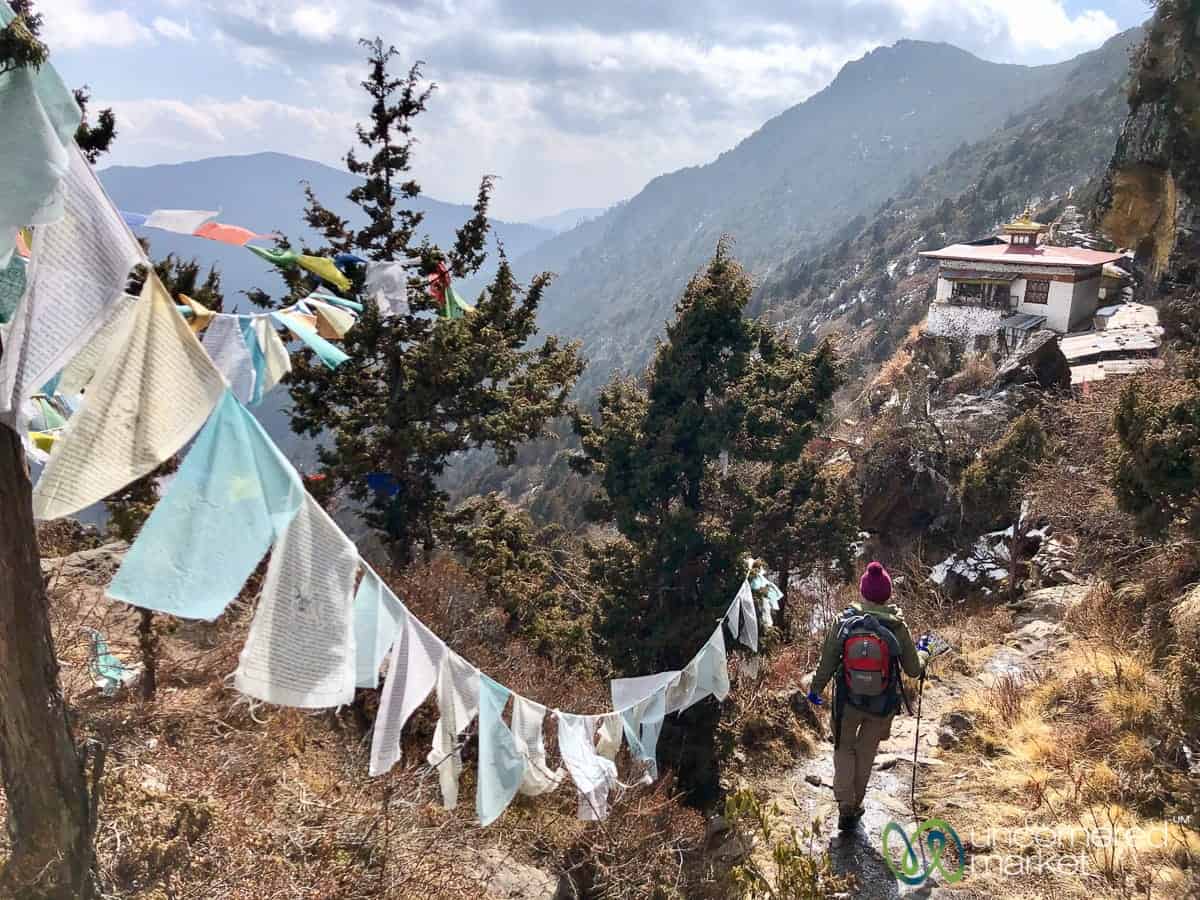
For adventure travelers seeking a high-altitude Himalayan excursion, the Druk Path Trek remains one of the country’s most popular itineraries. Spanning a distance of approximately 36 to 45 kilometers (22 to 28 miles) between the historic towns of Paro and Thimphu, the route traces an ancient mule path across alpine lakes, rhododendron forests, and wind-swept ridges. Concurrently, the April 2022 public opening of the legendary Trans Bhutan Trail—restored after nearly six decades of disuse—has expanded the kingdom’s trekking infrastructure, offering a 403-kilometer (250-mile) corridor bridging Haa in the west to Trashigang in the east.
The Historic Resurgence of the Trans Bhutan Trail
The history of the Trans Bhutan Trail stretches back thousands of years, functioning historically as a vital trade and pilgrimage route connecting the kingdom with Tibet. Beyond facilitating commerce, the path linked remote fortresses known as dzongs and provided spiritual passage for Buddhist pilgrims journeying to sacred monasteries and shrines.
Despite its centuries-long prominence as the sole overland transit network traversing Bhutan’s rugged terrain, the trail fell into disuse and severe disrepair during the 1960s following the construction of modern national roadways. Restoration efforts commenced in earnest in 2018 and accelerated significantly during the COVID-19 pandemic, employing a workforce of 900 furloughed citizens to rebuild suspension bridges, clear footpaths, and restore stone staircases across hundreds of miles.

Reopened officially in April 2022, the 403-kilometer route prioritizes community-based tourism. By integrating village homestays, utilizing locally sourced agricultural produce, and mandating a strict zero-plastics policy, the initiative ensures that rural communities economically benefit from inbound tourism. Furthermore, sustainable practices such as the planting of a native tree for every international visitor underscore the kingdom’s constitutional mandate to maintain at least 60% forest cover in perpetuity. Selected group adventure operators, including G Adventures, have since integrated segments of the Trans Bhutan Trail into curated multi-day itineraries, combining backcountry camping and guesthouse stays with cultural heritage excursions.
Day-by-Day Chronology of the Druk Path Trek
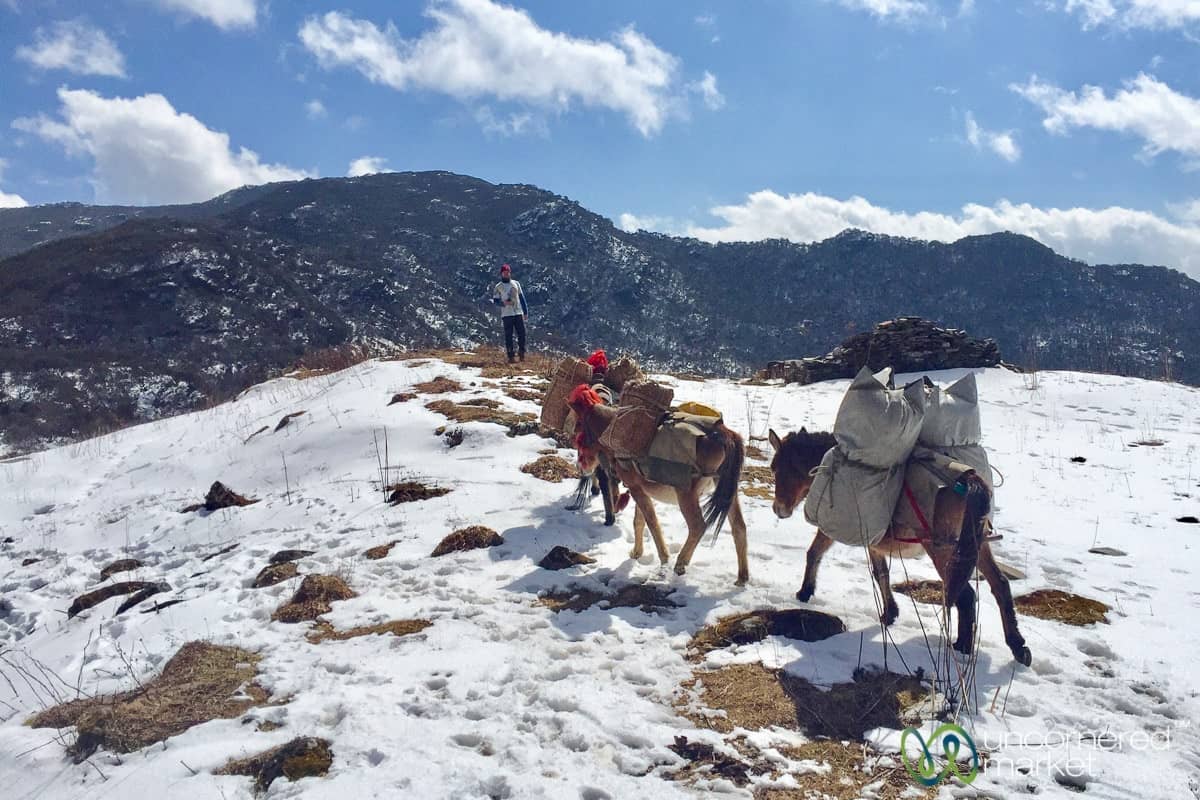
The four-day Druk Path Trek presents an optimal medium-difficulty itinerary for travelers acclimatized to high altitudes. The route’s highest elevation point is the Labana Pass, situated at 4,200 meters (13,800 feet). While traditional itineraries often span five to six days, a four-day duration is typically well-suited for trekkers maintaining reasonable physical conditioning.
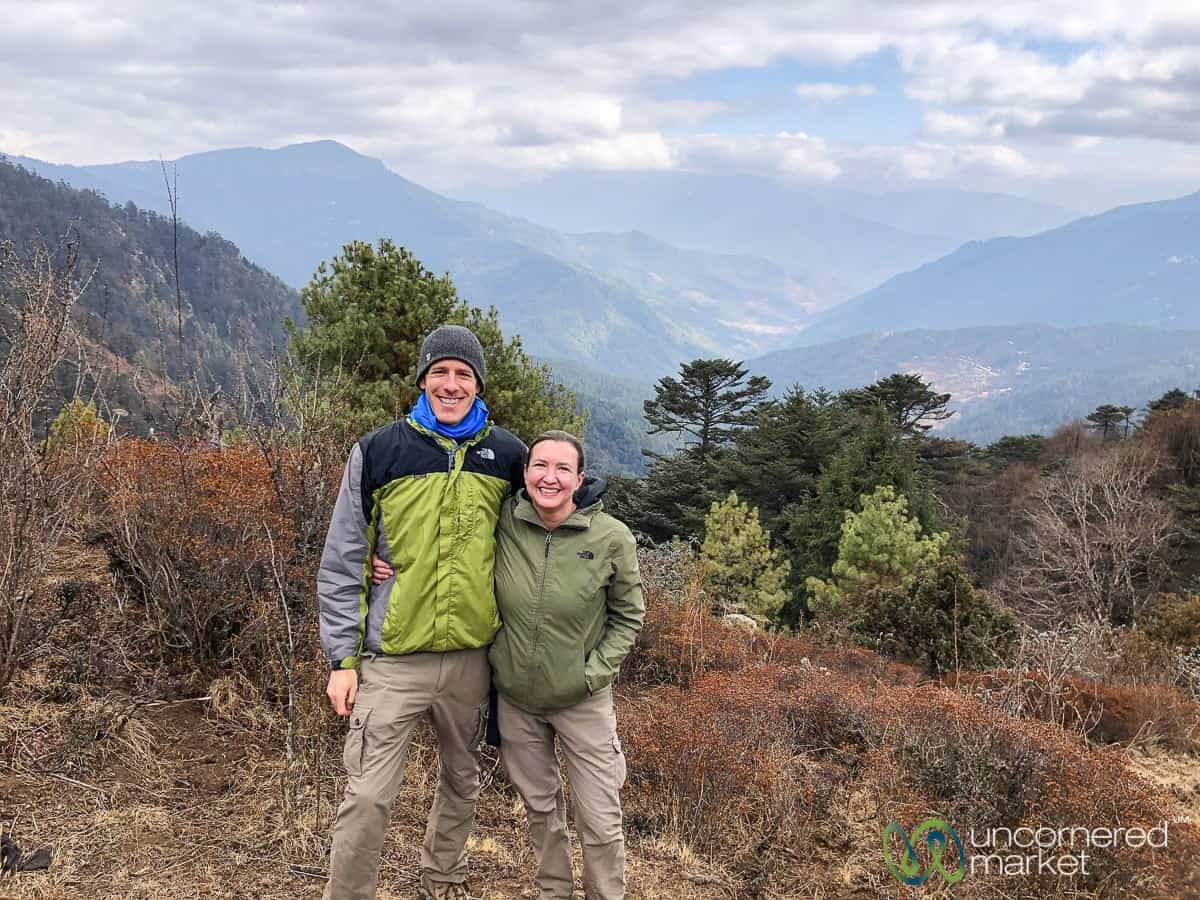
Day 1: Ta Dzong to Jele Dzong and Tshokam
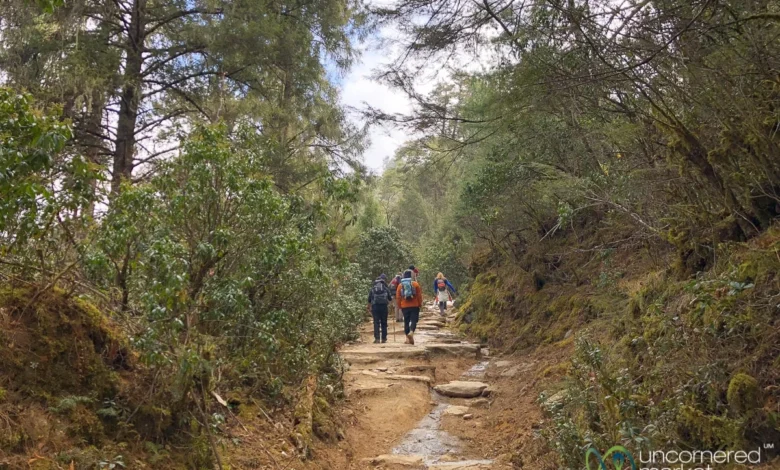
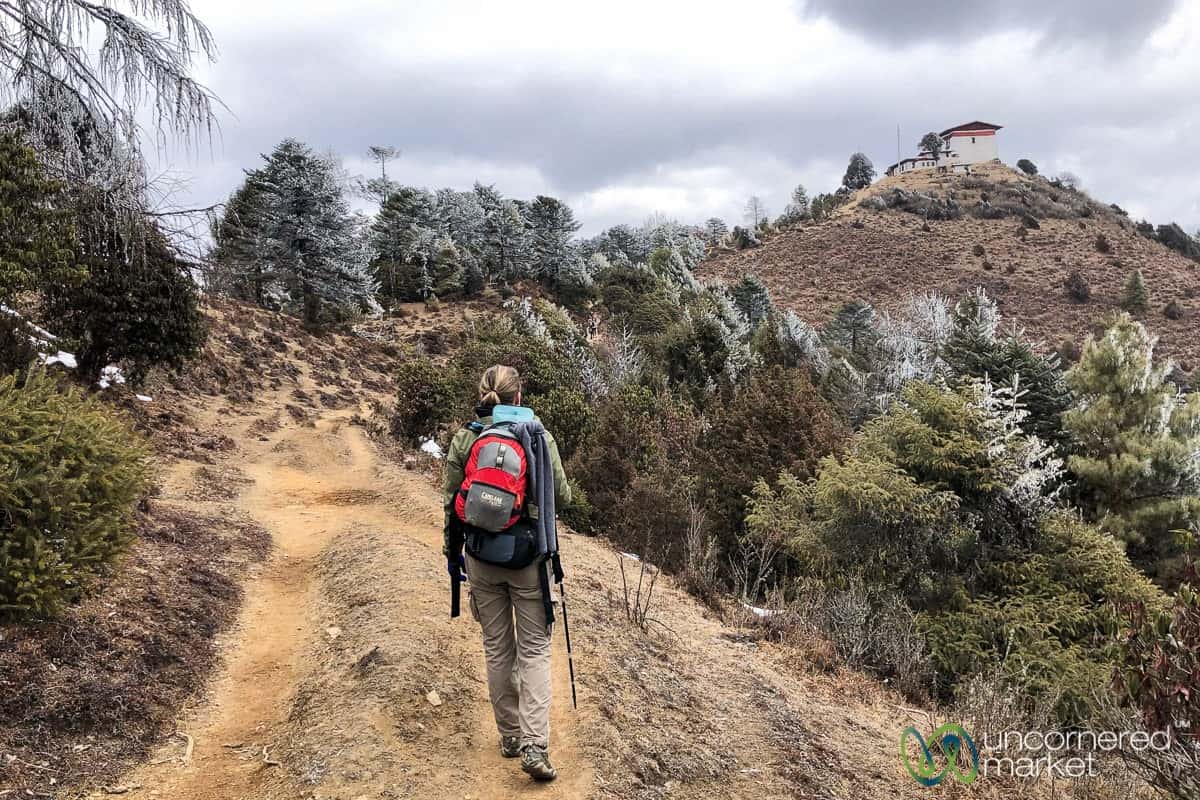
The journey typically initiates with a brief van transfer from Paro into the surrounding hills, where travelers rendezvous with a dedicated support crew consisting of a expedition cook, kitchen assistants, mule handlers, and pack animals. The initial ascent winds through mid-alpine woods before transitioning into a steeper, 45-minute climb above the valley floor. Trekkers arrive at the 15th-century Jele Dzong temple for an initial rest before traversing alternating forest tracks and ridge trails. The day concludes at the Tshokam (Dry Lake) campsite, situated at an altitude of 3,800 meters (12,500 feet), where support teams erect sleeping quarters and dining tents prior to the group’s arrival.
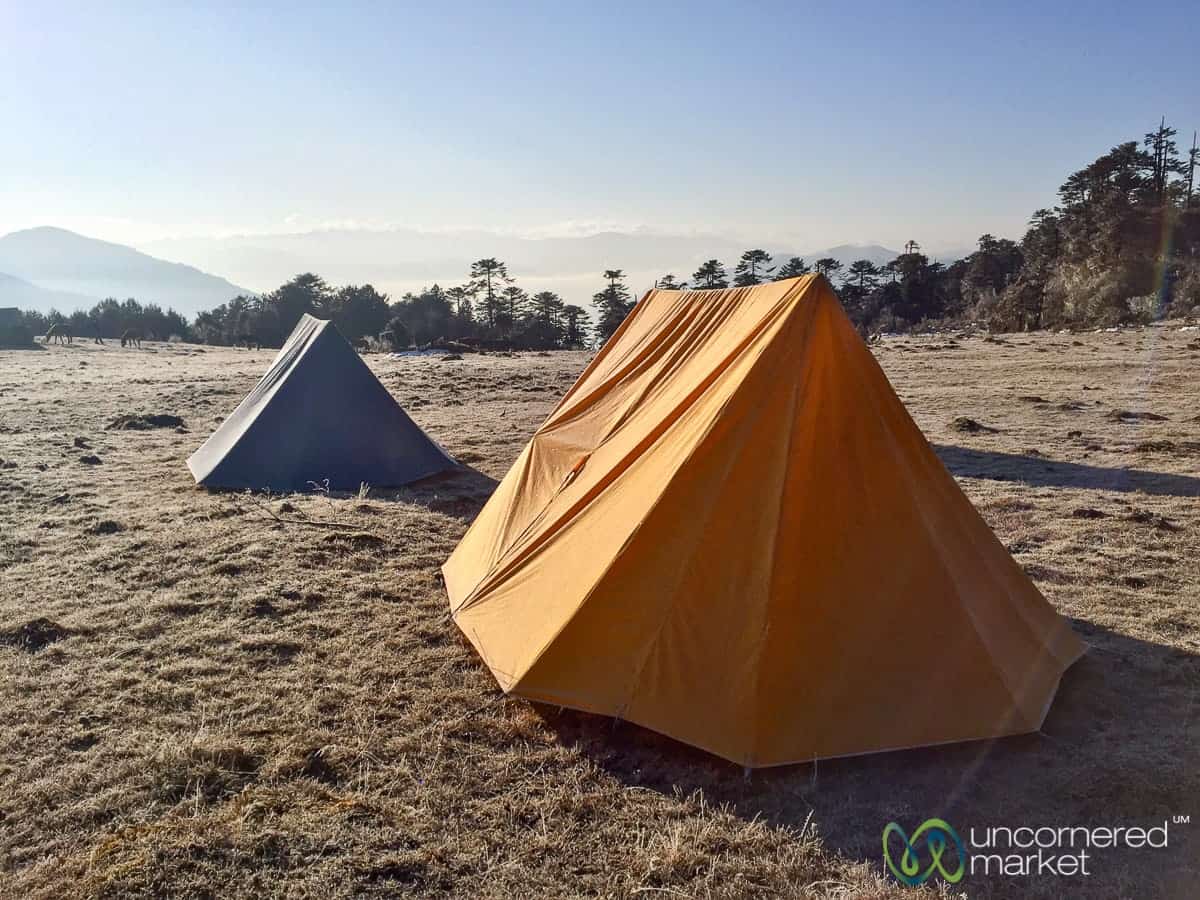
Day 2: Tshokam to Janytscho and Simkotra Lake
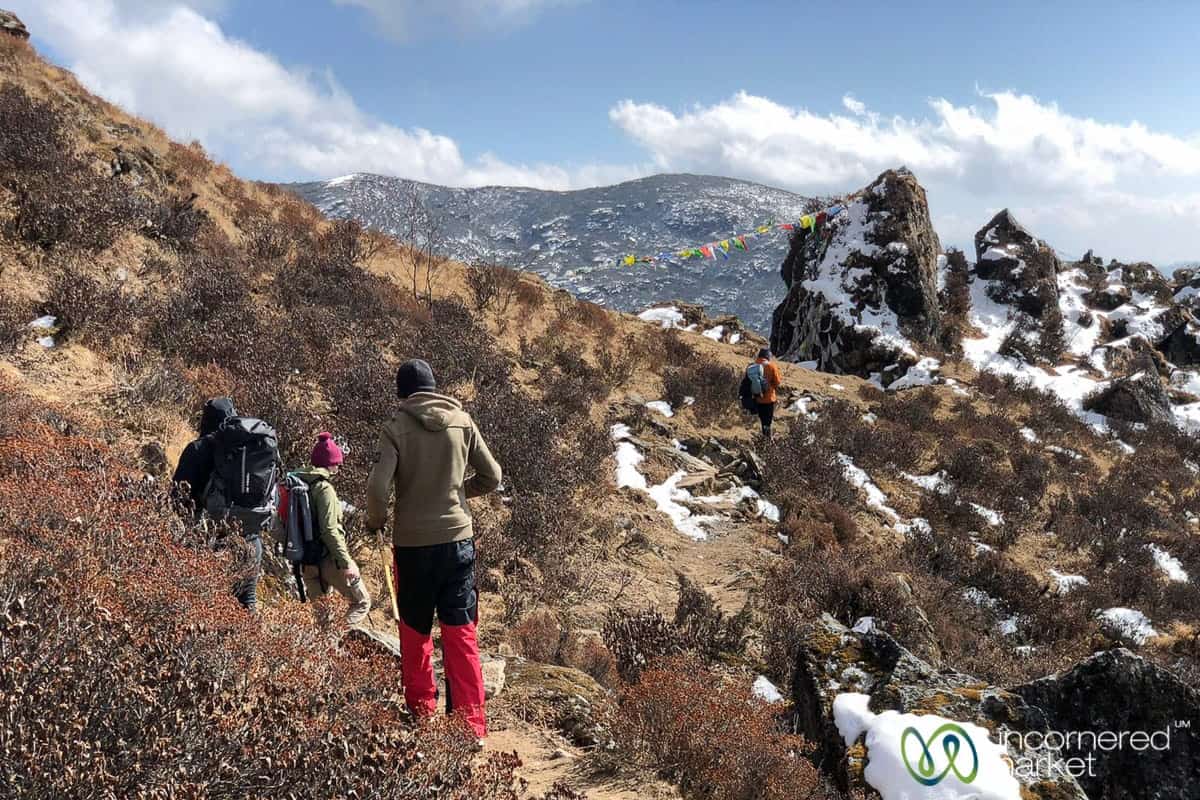
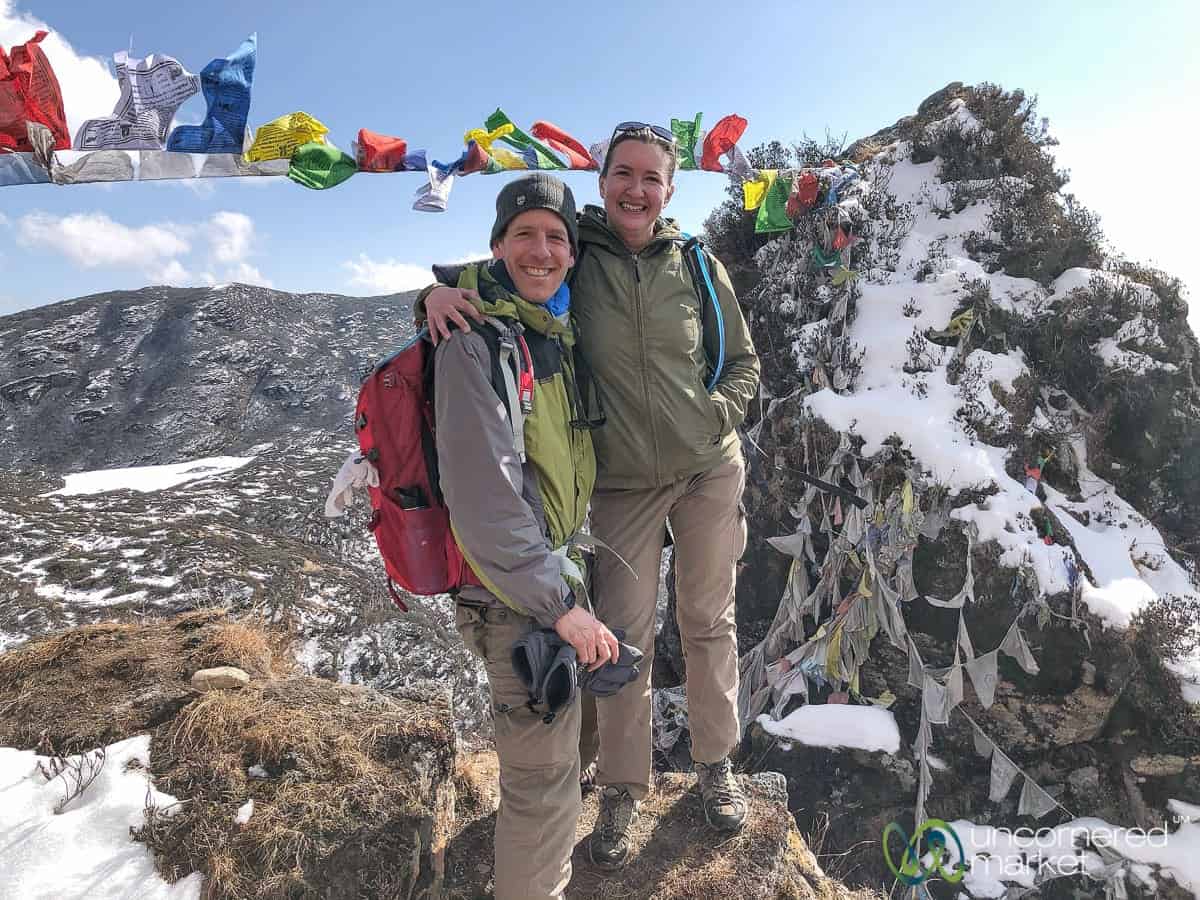
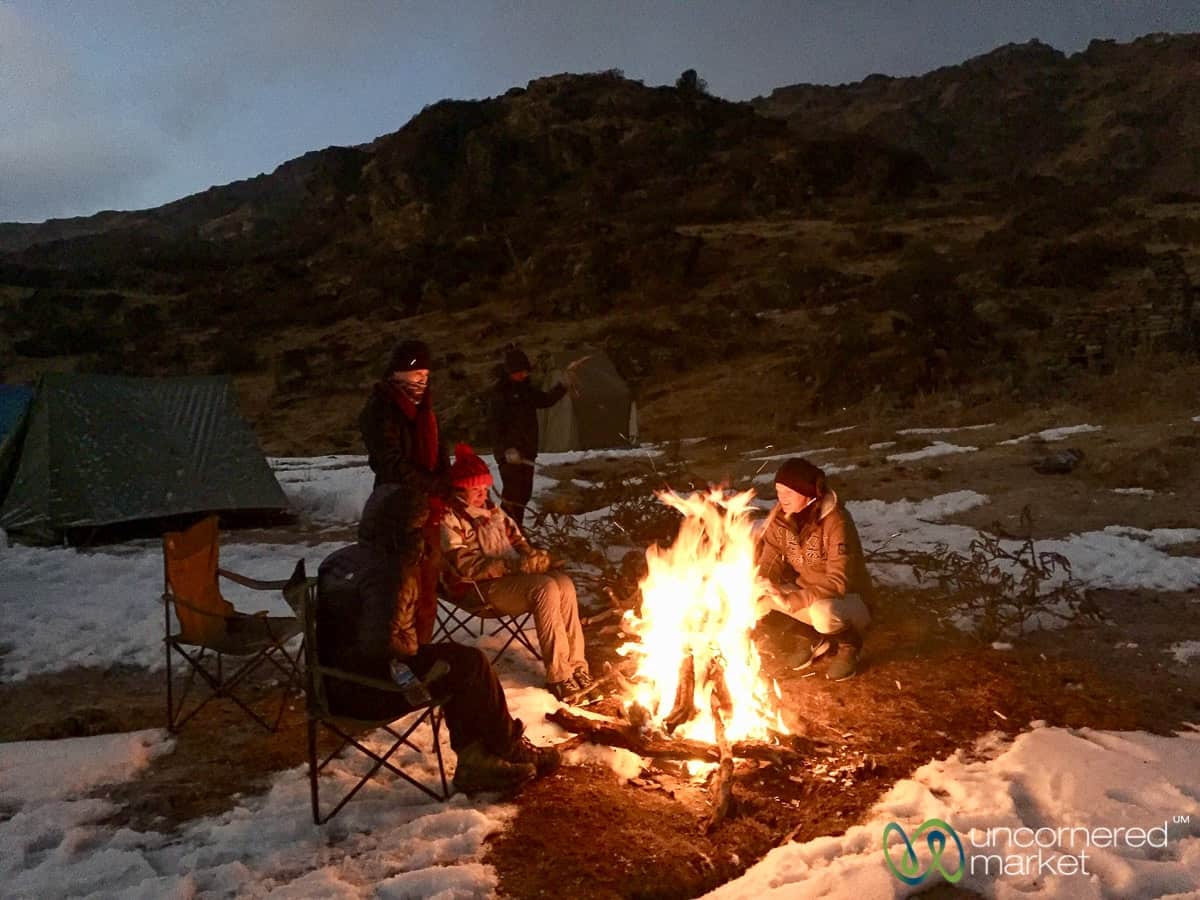
The second leg features steady, prolonged inclines through dense rhododendron thickets and forest streams. Navigating past the Narithang clearing, the trail ascends steeply toward Janytscho before tracking along an exposed rocky ridge draped with traditional Buddhist prayer flags. The day terminates at Simkotra Lake campsite at 4,000 meters (13,100 feet). As the highest elevation camp on the itinerary, nighttime temperatures drop significantly, requiring extensive thermal layering and insulated sleeping gear.
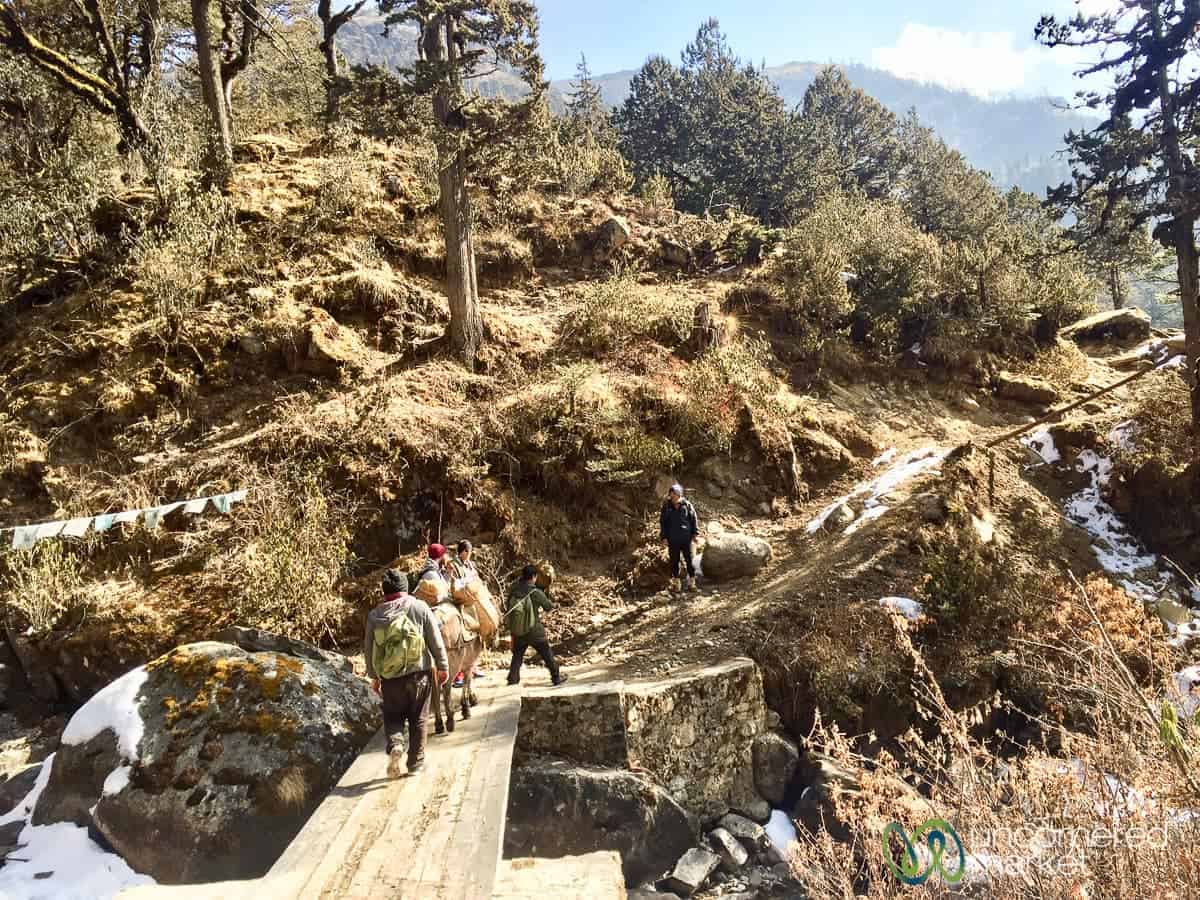
Day 3: Simkotra Lake to Labana Pass and Phajoding Monastery
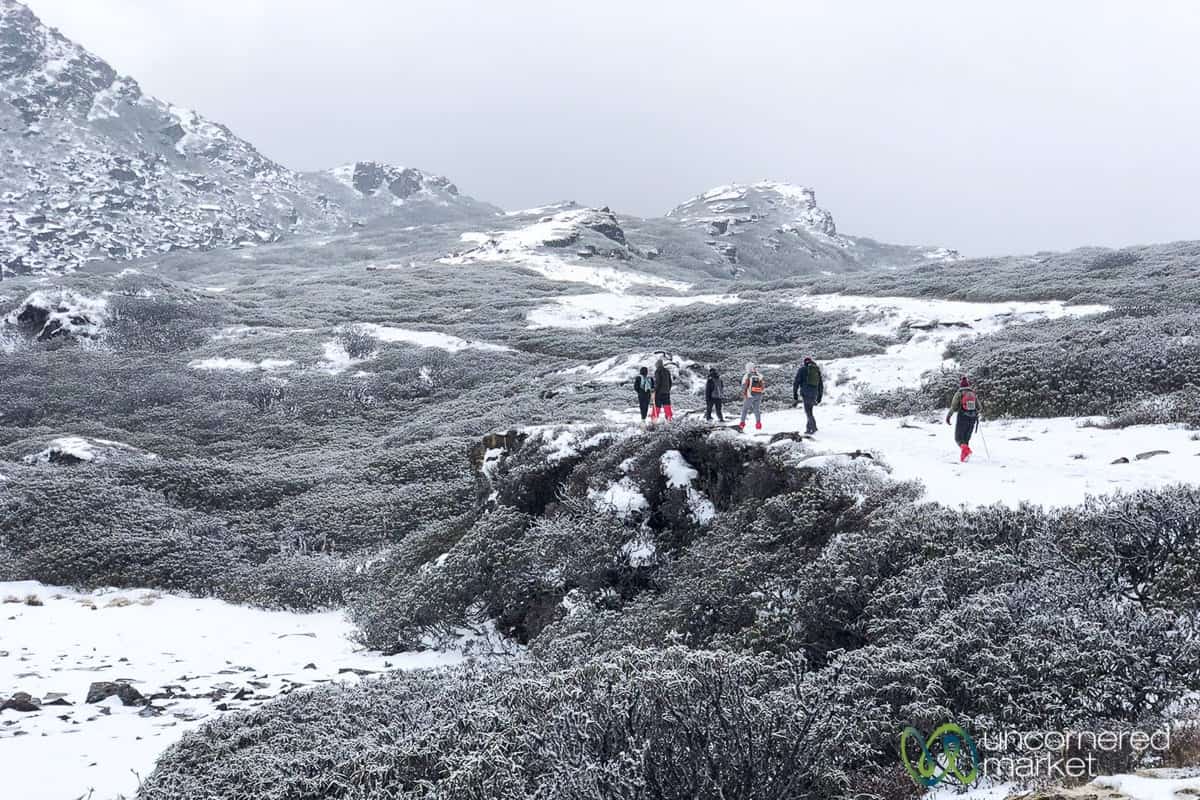
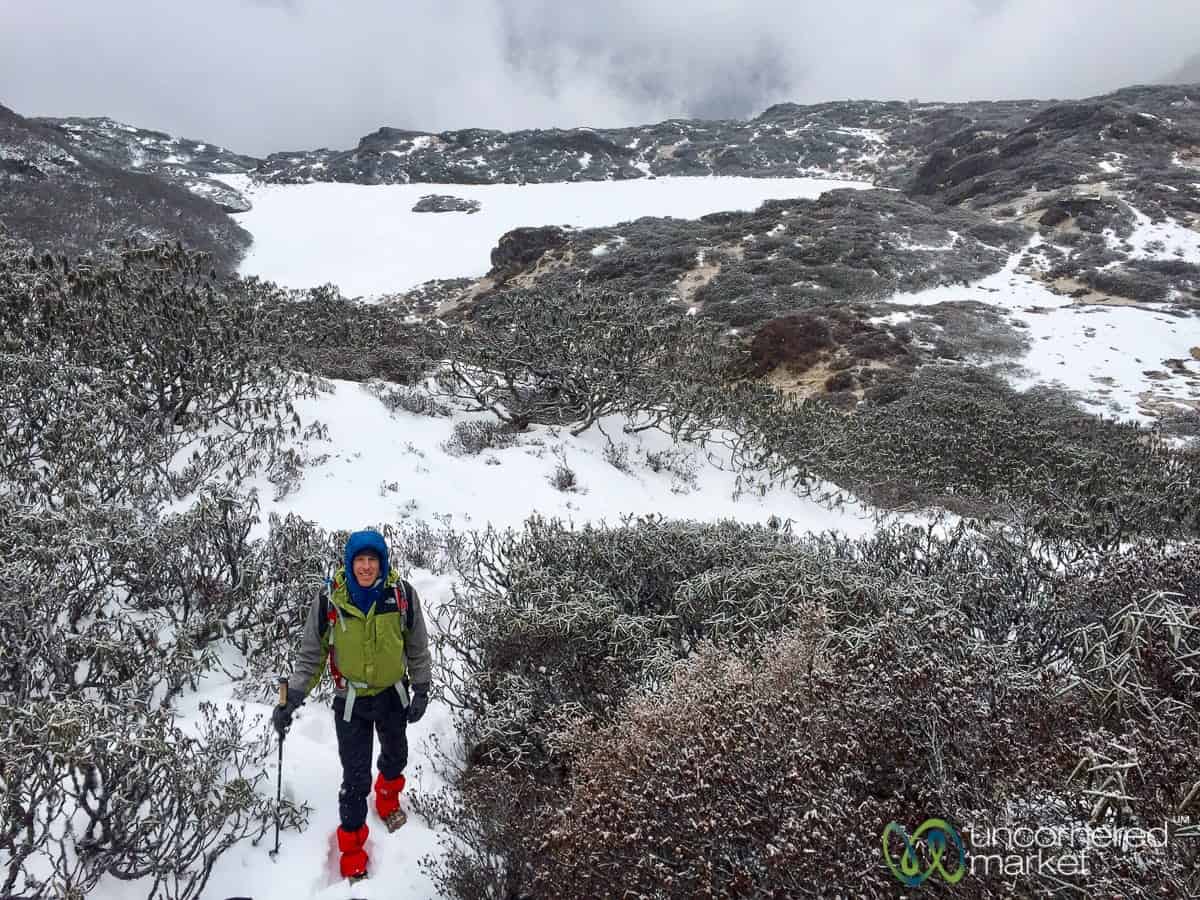
Widely regarded as the visual highlight of the route, Day 3 commands the push to the apex of the trek at Labana Pass (4,200 meters / 13,800 feet). Meteorological conditions in the Himalayas frequently introduce morning cloud cover or seasonal snowfall, which transforms the alpine landscape into a silent winterscape. The descent from the pass winds through rocky ridge paths, passing a prominent chorten overlooking the Thimphu Valley, before reaching the 14th-century Thujidrak Goemba meditation center. The day concludes near the historic Phajoding Monastery, offering sweeping panoramas of the nation’s capital.
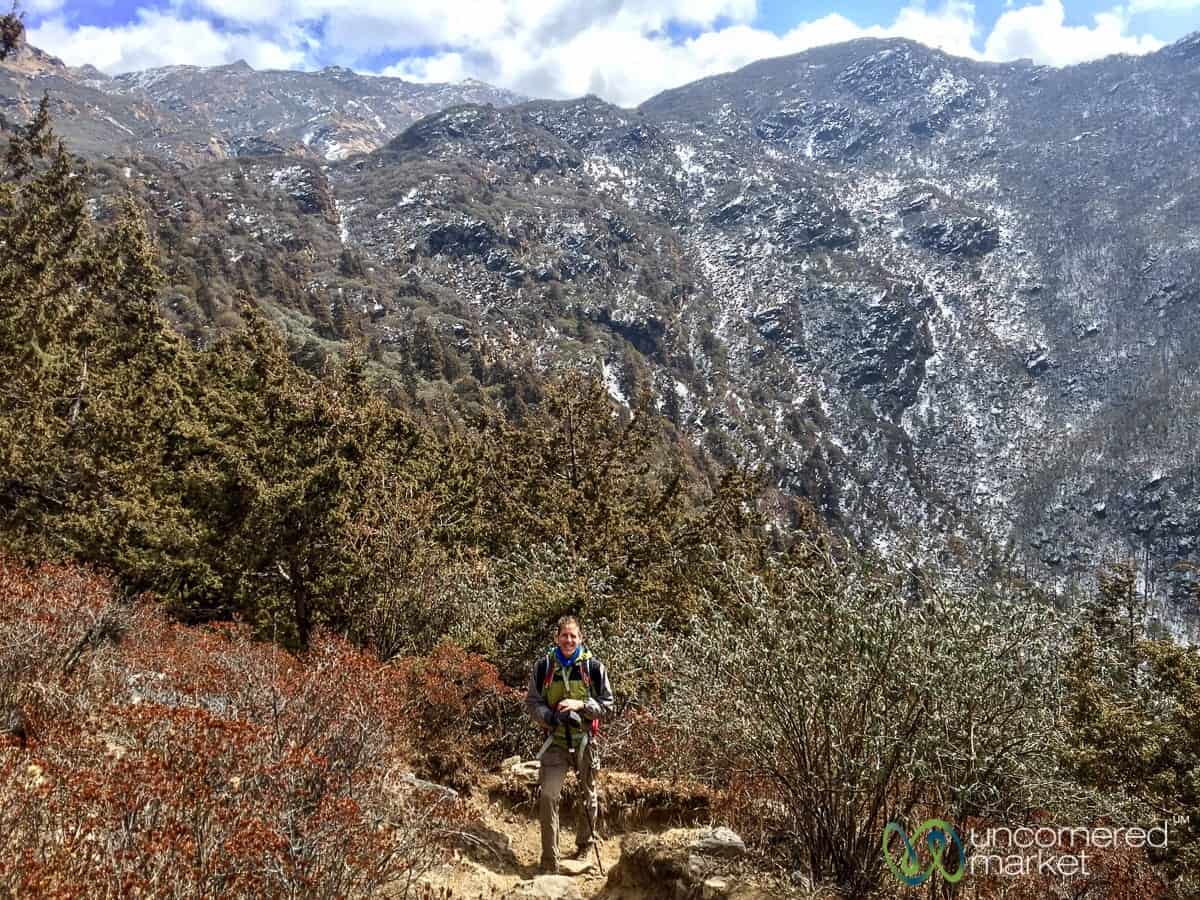
Day 4: Phajoding Monastery to Thimphu
The final leg requires a relatively brief, downhill descent through forested terrain. As altitude diminishes, the alpine flora gives way to dense pine woodlands, eventually culminating at the edge of the forest near Thimphu, where logistics teams greet arriving trekkers with refreshments and coordinate ground transfers to urban hotels.
Trekking Difficulty, Altitude Management, and Seasonal Conditions
Industry assessments categorize the Druk Path Trek as moderately challenging, primarily due to sustained uphill gradients and high-altitude exposure rather than technical mountaineering requirements. Climbers are not required to utilize specialized technical equipment such as ropes or crampons under standard weather conditions; however, physical preparation through cardiovascular endurance training and long-distance day hikes is strongly advised.
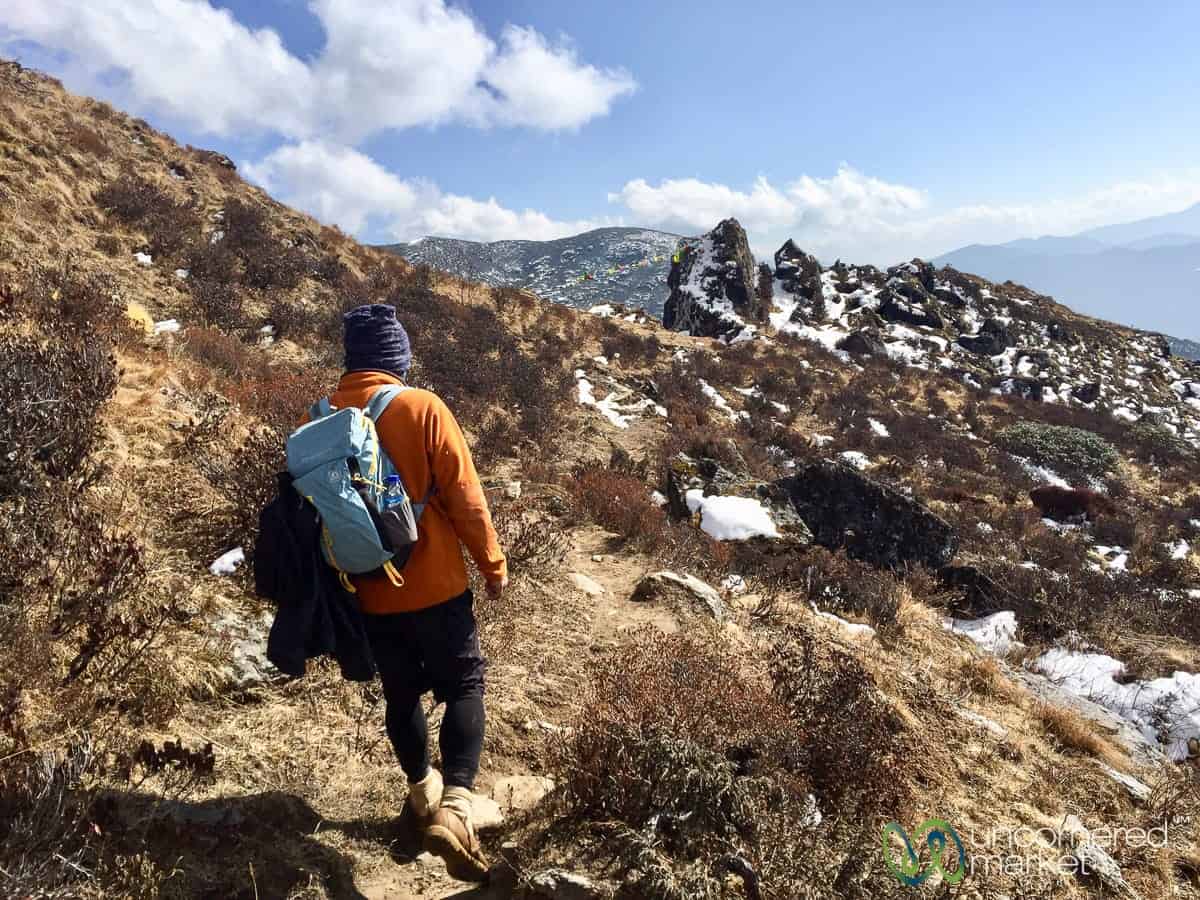
Altitude sickness remains a primary operational risk. Medical and trekking experts emphasize adherence to several preventative protocols:
- Pacing: Maintaining a slow, consistent stride on ascents prevents rapid physical exhaustion and facilitates physiological acclimatization.
- Hydration: Consuming multiple liters of water daily significantly lowers the incidence of acute mountain sickness. The use of accessible hydration bladders is frequently recommended over standard water bottles to encourage continuous fluid intake.
- Acclimatization: Pre-trek excursions, such as day hikes to regional shrines like Kila Goempa near Paro, serve to evaluate individual responses to thin air before multi-day ascents commence.
Seasonal timing heavily dictates trail conditions. The official peak seasons occur during spring (April to early May), characterized by blooming rhododendron forests, and autumn (September to early November), marked by dry weather and clear visibility. Conversely, summer months bring monsoon rains and dense cloud cover, limiting mountain vistas.
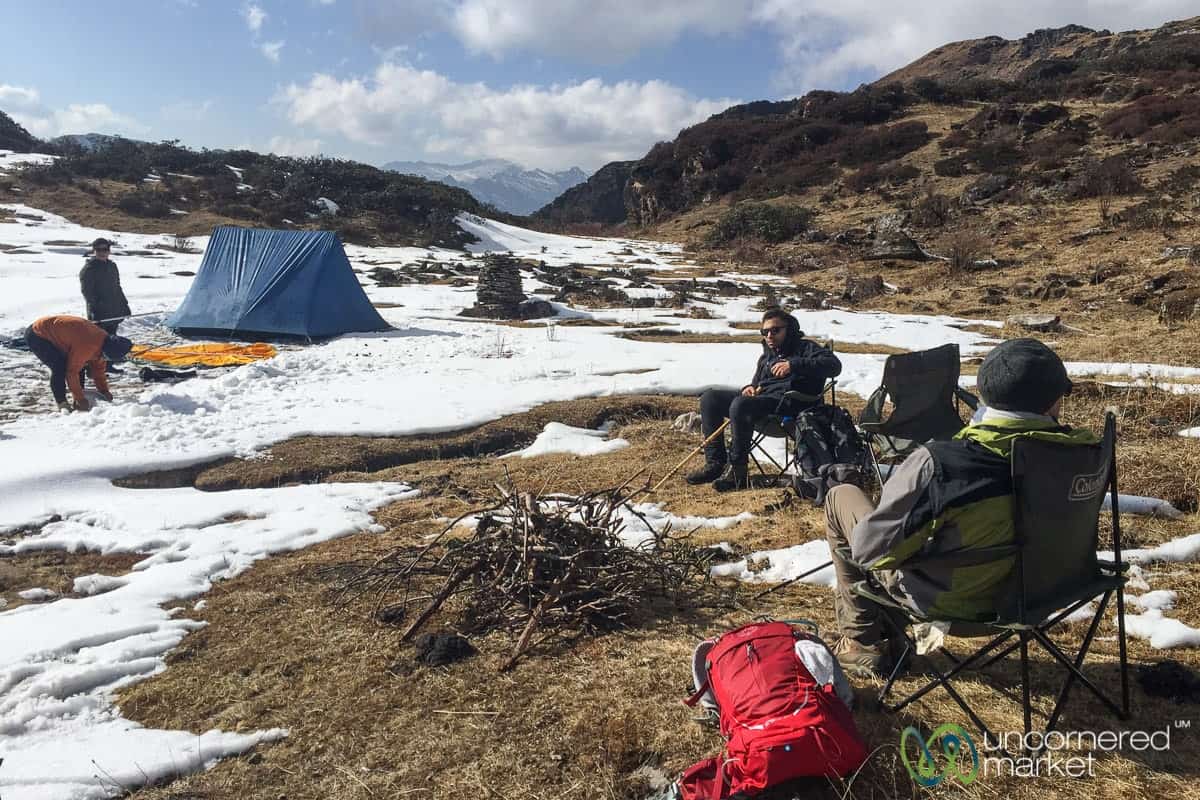
Winter expeditions—undertaken in January and February—offer a distinct logistical experience. While sub-zero nighttime temperatures dropping to -10°C (14°F) and occasional snow trails require robust cold-weather gear (including waterproof gaiters and comfort-rated winter sleeping bags), winter treks reward travelers with empty trails, profound silence, and unobstructed morning atmospheres.
Regulatory Framework and Infrastructure
Independent trekking is strictly prohibited under Bhutanese tourism regulations. All visitors must book itineraries through authorized local operators, ensuring adherence to standardized operational frameworks. This mandatory guided structure ensures that local support staff—including certified guides, cooks, and pack-animal handlers—are employed under regulated conditions, reinforcing the nation’s commitment to equitable community benefit distribution.
Logistical support on standard group tours typically includes the provision of two-person sleeping tents, mess tents, portable latrines, and baggage transportation via pack animals, restricted to a maximum threshold of 7.5 kilograms per person for overnight gear. Unutilized urban luggage remains securely stored with tour drivers until the conclusion of the trek. Through strict adherence to sustainable tourism caps, rigorous public health protocols, and the preservation of ancient trading routes, Bhutan continues to offer an exemplary model of low-impact, high-value Himalayan wilderness exploration.