Antarctica 2026-2027 Expedition Roundup: A Season of Unprecedented Ambition and Endurance

The 2026-2027 Antarctic season is poised to be one of the most significant chapters in the history of polar exploration, characterized by a mix of traditional endurance skiing, pioneering technological feats, and high-stakes logistical maneuvers. As the austral summer approaches, a diverse cohort of adventurers, researchers, and endurance athletes are converging on the frozen continent. With costs for standard "last degree" excursions approaching $100,000 and full-continent traverse attempts requiring astronomical funding and years of preparation, the barrier to entry remains formidable. Despite these fiscal and physical hurdles, the season features an array of expeditions that push the boundaries of human capacity in one of the world’s most inhospitable environments.
The Evolution of the Hercules Inlet Route
The path from Hercules Inlet to the South Pole remains the gold standard for solo, unsupported polar expeditions. Covering a distance of approximately 1,130 kilometers, the route demands an average daily progress of 20 kilometers, a grueling pace considering the erratic weather patterns and treacherous sastrugi—sharp, wind-eroded snow ridges—that define the terrain.
This year, the route sees several notable attempts. British explorer Nathan Lumb, originally harboring ambitions for a fully unsupported round-trip, has recalibrated his strategy. Citing the harsh realities of expedition logistics and the immense funding requirements of modern polar travel, Lumb will now focus on a solo, unsupported push from the inlet to the South Pole. His preparation, bolstered by training with the esteemed Ousland Colliard guiding company, reflects a growing trend of professionalization in polar logistics.

Joining him is Indian explorer Neeraj Choudhary, who enters the fray with a pedigree of high-latitude endurance, having crossed the Greenland Ice Sheet in 2024. Choudhary aims to solidify his place in his nation’s history by becoming the second Indian national to complete a solo, unsupported trek to the Pole, following in the footsteps of Satish Gogineni.
The digital age of exploration is also making its mark. American adventurer Lucas Czarnecki has announced the "South Signal" expedition, an ambitious endeavor to livestream his daily progress directly from the ice. By documenting the raw, unvarnished reality of polar life, Czarnecki intends to provide a window into the psychological and physical toll of the journey. He is joined in the field by fellow American Meghan Buchanan and German explorer Dirk Langer, both of whom are undertaking the classic Hercules Inlet route.
High-Stakes Traversals and Historical Legacies
For those seeking greater challenges, the Berkner Island start offers an additional 270 kilometers of terrain, bringing the total distance to approximately 1,400 kilometers. Among those tackling this route are Max Worsley of the United Kingdom and Martin Nesse of Norway. Worsley’s participation carries significant historical weight, as he intends to follow the final route of his father, the legendary Henry Worsley, who tragically passed away during an Antarctic expedition in 2016. His journey is viewed by many in the polar community as both a physical challenge and a symbolic act of closure.
Further shortening the distance but increasing the intensity, James Garnett and Marius Rehn have opted for the "Messner" start, a 911-kilometer route that bypasses the coastal ice shelf navigation in favor of a direct line to the Pole.

The Frontier of Long-Distance Endurance
The most ambitious project of the 2026-2027 season is undeniably the planned traverse by Satish Gogineni. Having successfully reached the South Pole in the 2024-2025 season, Gogineni is returning with a target of 2,000 kilometers, spanning from the outer edge of the Filchner-Ronne Ice Shelf to the interior of the Ross Ice Shelf via the South Pole.
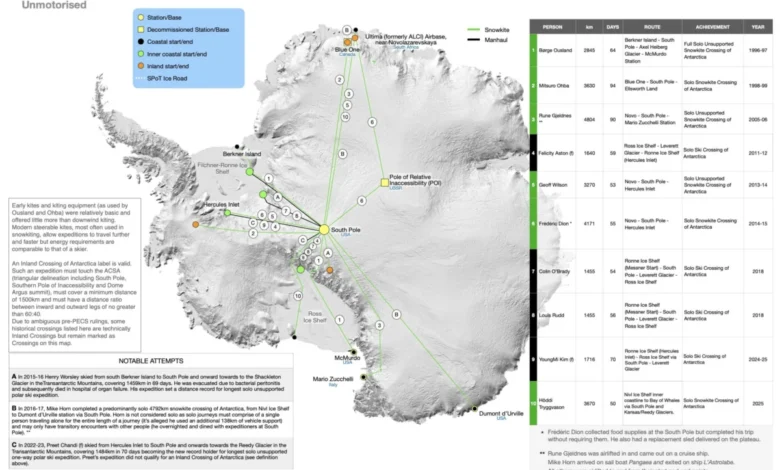
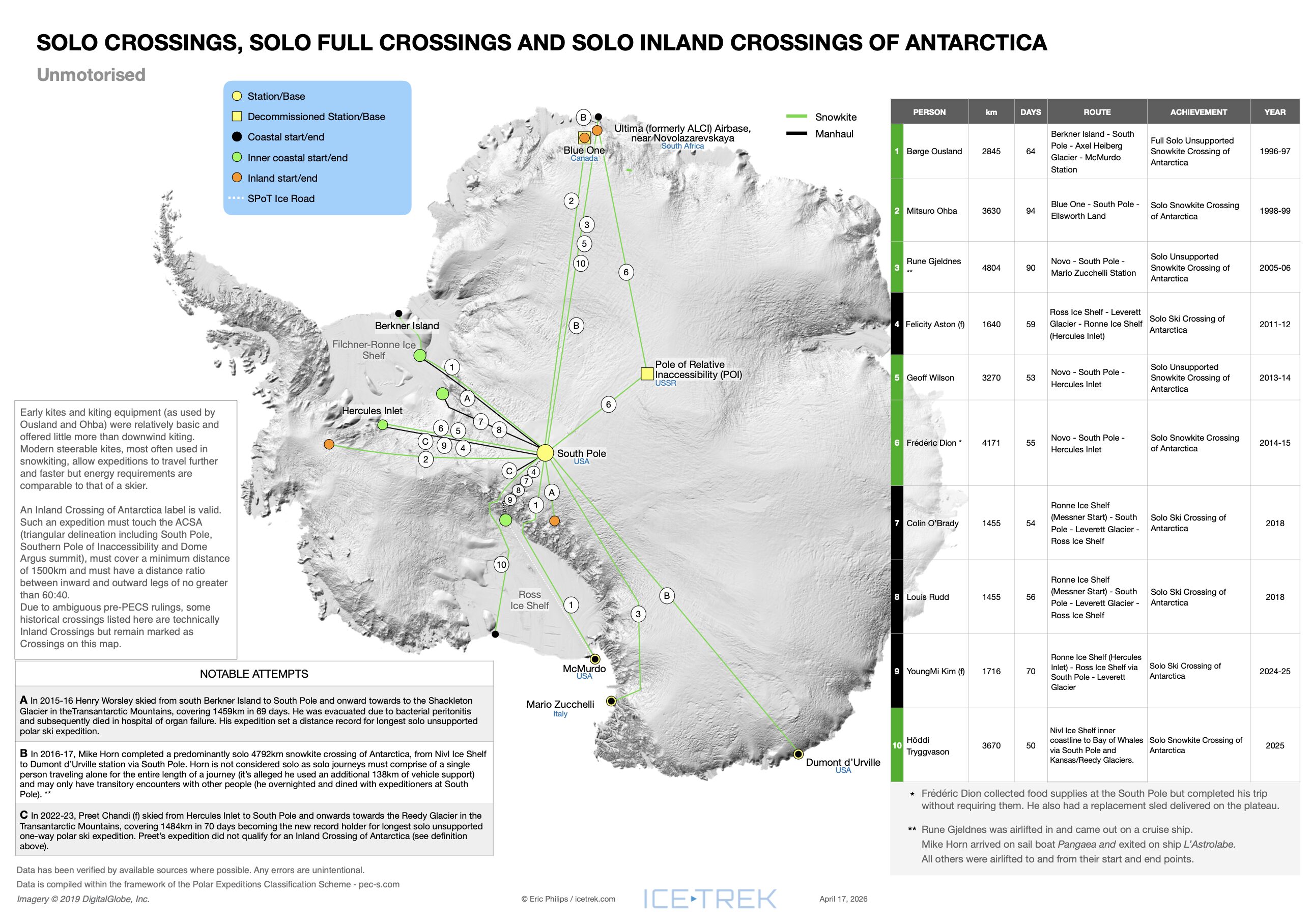
Gogineni faces a formidable logistical adversary: weight. Attempting to manage a 181-kilogram sled load, he faces the constant risk of "double carrying"—the process of shuttling gear in segments, which effectively triples the distance traveled for every kilometer of progress. This phenomenon was a primary factor in the partial abandonment of Colin O’Brady’s 2025 traverse attempt, where soft, deep snow conditions rendered heavy sleds nearly impossible to haul in a single trip. If successful, Gogineni’s journey would rank among the longest solo traverses in history, though it remains shorter than Borge Ousland’s historic 2,845-kilometer, 65-day trek in 1997, which remains the gold standard for solo, unsupported long-distance polar travel.
Scientific and Technological Innovation
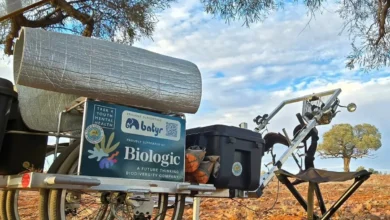
Innovation in Antarctica is no longer limited to the individual skier. A Spanish scientific team is set to deploy a "wind-sled," a 15-meter, modular vehicle propelled by a sophisticated array of twenty kites. The largest of these kites spans 150 square meters, designed to harvest the relentless Antarctic katabatic winds. The team intends to complete a 3,400-kilometer circuit from the vicinity of the Novolazarevskaya Station to the Dome C research plateau. This expedition serves as a dual-purpose endeavor: testing wind-propulsion technology in extreme environments and conducting vital research at one of the coldest inhabited spots on Earth.
Simultaneously, the Antarctic coastline will see the arrival of three Argentine kayakers: Diego Linares, Juan Tomaselli, and Javier Siede. Their mission to paddle 900 kilometers along the Antarctic Peninsula from Esperanza Base to San Martín Base represents a departure from traditional interior ice trekking. The expedition will focus on navigating the volatile marine environment of the Peninsula, a region increasingly impacted by shifting ice shelves and unpredictable sea currents.
The "Antarctic Valkyries" and the Pole of Inaccessibility
Perhaps the most tactically complex expedition of the year is the "Antarctic Valkyries" project, consisting of Mardi Philips, Ida Olsson, and Nia Owens. The trio aims to become the first all-female team to reach the Pole of Inaccessibility, the most remote point on the Antarctic continent. Their 2,500-kilometer route begins at Thorshammer Station and utilizes kite-skiing to navigate the interior plateau. By targeting the Pole of Inaccessibility before turning toward the South Pole, the Valkyries are attempting a high-risk, high-reward navigation strategy that requires mastery of both kite-handling and traditional crevasse navigation.
Broader Implications and Context
The current state of Antarctic exploration reflects a maturation of the field. The Polar Expeditions Classification Scheme (PECS) has become an essential framework for verifying the legitimacy of these claims, ensuring that the distinctions between "supported" (using kites, supply drops, or mechanical aid) and "unsupported" (human-powered only) are strictly maintained.
However, the season is not without its controversies. The rising costs of entry have sparked a debate regarding the accessibility of the continent. As charter flights become more expensive and the logistical requirements for safety continue to tighten, there is a concern that only those with significant corporate sponsorship or private wealth can participate. Yet, as demonstrated by the diverse backgrounds of this year’s explorers—ranging from scientific researchers to endurance athletes—the passion for the "Great White South" continues to draw individuals who view the ice as the ultimate testing ground for human resolve.
As the first groups depart in mid-November, the global community of polar enthusiasts remains in a state of anticipation. The 2026-2027 season is not merely a collection of individual journeys, but a collective effort to define the limits of human endurance. Whether it is the rhythmic slide of skis across the polar plateau or the billowing of a 150-square-meter kite, each expedition contributes to the evolving narrative of Antarctic exploration. The success or failure of these endeavors will, as always, depend on the cooperation of the weather, the integrity of the equipment, and the psychological fortitude of those who have chosen to test themselves against the most unforgiving landscape on the planet.