AJ 42 Recommended Reading Explores Indigenous Stewardship, Ecological Recovery, and the Human Connection to the Natural World

The latest edition of AJ 42 brings forward a meticulously curated selection of recommended reading, highlighting six distinct literary works that examine humanity’s complex relationship with the natural world. Among the focal points of this literary roundup is a profound look at Indigenous land management, environmental conservation, ecological histories, and localized narratives of survival and connection. At the forefront of this collection is Kiliii Yüyan’s photographic and journalistic exploration, Guardians of Life, which serves as a springboard for a broader discussion on global conservation strategies, historical legal battles, and the undeniable success of traditional ecological knowledge.
Guardians of Life and the Resurgence of Indigenous Stewardship
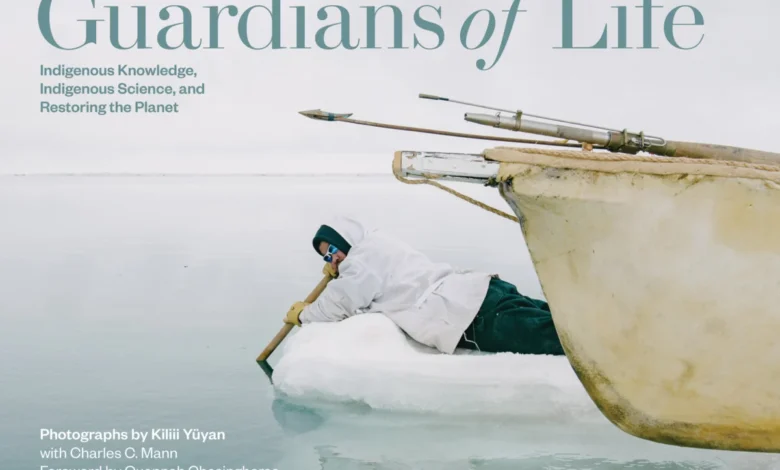
Published by Braided River in 2026, Guardians of Life stands as a visual and analytical testament to the efficacy of Indigenous land stewardship. Authored and photographed by acclaimed National Geographic contributor Kiliii Yüyan, the volume presents nearly two hundred striking images captured across nine distinct Native communities. These photographs do not merely document landscapes; they capture an intimate, reciprocal relationship between human populations and their ancestral environments—a dynamic where community survival is inextricably linked to the biological health of surrounding ecosystems.
At the heart of Yüyan’s narrative is a compelling historical case study regarding the Iñupiat people of the Arctic and their centuries-old traditions of bowhead whale hunting. The turning point in modern regulatory history occurred in 1977, when the International Whaling Commission (IWC) instituted a ban on bowhead whale hunting by the Iñupiat. This ruling directly threatened a subsistence practice that had sustained the community for millennia, embodying both physical nourishment and cultural identity.
Rather than accepting the external restriction without recourse, the Iñupiat challenged the ruling through the United States legal system. In a landmark vindication of traditional governance and scientific observation, the community successfully won the legal right to self-manage the bowhead whale population. The results of this Indigenous-led management strategy stunned mainstream conservationists: over the course of the subsequent thirty years, the bowhead whale population under Iñupiat stewardship tripled. This empirical success provides the backbone for Yüyan’s central thesis—that modern conservation efforts would achieve significantly higher success rates by deferring to the traditional ecological knowledge of Indigenous peoples.
Global Data and Environmental Implications
To contextualize the arguments presented in Guardians of Life, the volume highlights stark geographical and ecological data regarding global land distribution. According to environmental data cited within the work, Indigenous territories currently comprise approximately thirty-seven percent of all remaining natural, unfragmented lands on Earth. Furthermore, these same lands harbor an astonishing eighty percent of the planet’s remaining terrestrial biodiversity.
This statistical overlap between Indigenous boundaries and global biodiversity hotspots is not accidental. For generations, traditional management practices have prioritized sustainable harvesting, controlled burns, rotational use of resources, and the preservation of apex species. Modern climate science increasingly validates these traditional methods, noting that corporate and state-led conservation models frequently fail due to top-down bureaucracy and a fundamental disconnect from local ecological feedback loops. By granting legal title and management autonomy back to Indigenous populations, governments can potentially secure carbon sinks and protect endangered species far more effectively than through conventional national park designations, which have historically sometimes involved the displacement of native inhabitants.
A Chronology of Indigenous Environmental Governance
To understand the weight of contemporary works like Guardians of Life, it is essential to examine the historical timeline of Indigenous rights, environmental litigation, and conservation policy over the past century:
- 1920s–1960s: State and federal conservation policies across North America and globally frequently adopt a "fortress conservation" model, which seeks to protect nature by excluding human populations, leading to the systemic displacement of Indigenous groups from their traditional homelands.
- 1977: The International Whaling Commission issues a ban on bowhead whale hunting, setting off a direct conflict between international regulators and the subsistence rights of the Iñupiat people.
- Late 1970s–1980s: The Iñupiat mount a coordinated legal and scientific defense, demonstrating through traditional knowledge and modern marine biology that regulated hunting is sustainable and culturally vital, eventually reclaiming management authority.
- 1990s–2000s: The United Nations and various international bodies begin recognizing the vital role of Indigenous peoples in biodiversity conservation, leading to the drafting of the UN Declaration on the Rights of Indigenous Peoples (UNDRIP).
- 2010s: Climate research increasingly confirms that lands managed by Indigenous communities suffer lower rates of deforestation and degradation compared to state- or privately-owned lands.
- 2026: The publication of works such as Kiliii Yüyan’s Guardians of Life synthesizes decades of ecological data and photographic evidence, pushing the conversation from localized success stories to a global blueprint for environmental policy.
Official Responses and Institutional Perspectives
While independent environmental scientists and conservation organizations have increasingly embraced the findings presented in modern literature regarding Indigenous land rights, governmental and corporate reactions remain mixed. Representatives from various international conservation bodies have noted a growing shift toward "co-management" agreements, where state agencies share jurisdiction with Native tribes.
Proponents of co-management argue that blending Western scientific monitoring with Indigenous generational knowledge creates a resilient framework for combating climate change and habitat loss. However, critics within certain industrial and political sectors continue to lobby against the expansion of autonomous Indigenous territories, citing concerns over resource access, mineral extraction rights, and national sovereignty. Despite these political hurdles, the empirical track record—such as the tripling of the bowhead whale population under Iñupiat care—continues to provide legal and moral ammunition for Indigenous advocates worldwide.
Broader Literary Context: The AJ 42 Recommended Reading Selection
Guardians of Life is but one pillar supporting the broader thematic architecture of the AJ 42 reading list, which aims to challenge readers to rethink their relationship with the physical environment. The six featured titles in the collection explore radically different geographies and historical epochs, yet they share a cohesive underlying inquiry into how humans inhabit, alter, and understand the natural world.
- Indigenous Stewardship: Represented by Yüyan’s photographic documentation of Native communities, emphasizing human integration with local ecosystems and the preservation of global biodiversity.
- The Case for Bogs: Examining the often-overlooked ecological importance of peatlands and wetlands as critical carbon sinks and ancient archives of natural history.
- Yosemite Reckoned With: A critical reappraisal of one of America’s most iconic national parks, looking past the romanticized mythos of wilderness to confront complex histories of displacement and modern visitor pressures.
- A Reindeer-Herding Elegy: A poignant literary journey into the sub-arctic traditions of pastoralists facing the existential threats of climate change, industrial encroachment, and shifting government policies.
- A Sixteenth-Century Castaway: A historical narrative chronicling human survival, cross-cultural encounters, and adaptation in unfamiliar, hostile wilderness environments during the early eras of global exploration.
- The World Seen as a Tree: A philosophical and ecological exploration that reimagines the interconnectedness of all living systems through the metaphor of arboreal networks, challenging anthropocentric worldviews.
Analysis of Implications for Future Conservation Policy
The inclusion of these works in the AJ 42 recommendations highlights a significant cultural and intellectual pivot within outdoor journalism and environmental discourse. For decades, mainstream nature writing and conservation policy operated under the assumption that pristine wilderness could only exist in the absence of human presence. Works like Guardians of Life dismantle this false dichotomy, proving that human beings can act as keystone species within a healthy ecosystem.
As global policymakers grapple with accelerating climate change, biodiversity loss, and the degradation of natural carbon sinks, the economic and ecological arguments for returning land management authority to Indigenous peoples are becoming impossible to ignore. The data gathered from Arctic whale management to Amazonian rainforest preservation consistently points to a singular conclusion: the most effective way to protect the future of the planet is to listen to those who have successfully sustained it for millennia. Through rigorous documentation, compelling imagery, and vital storytelling, contemporary literature is ensuring that these lessons are brought from the margins to the center of global environmental strategy.