Faithful Basset Hound Leads Rescuers to 69-Year-Old Hiker with Dementia Surviving Freezing Adirondack Night

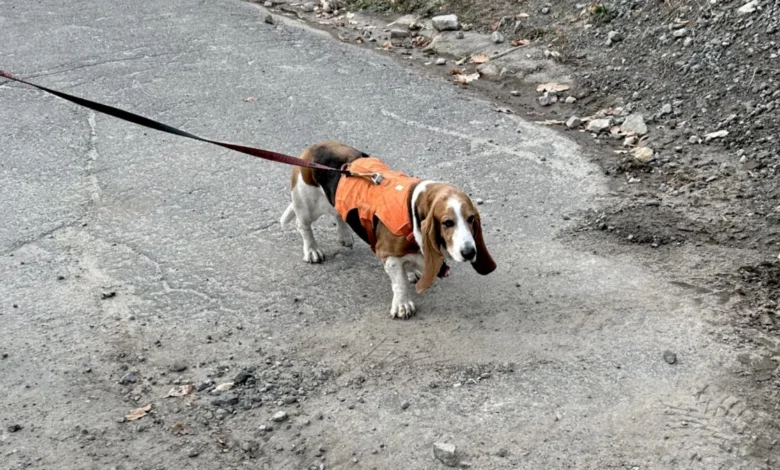
The dense and unforgiving wilderness of New York State’s Adirondack Mountains became the stage for a miraculous rescue last November, when a 69-year-old hiker suffering from dementia was successfully located after enduring a perilous night in sub-freezing temperatures. The operation, which mobilized local authorities, forest rangers, state police aviation, and specialized tracking teams, ultimately owed its life-saving breakthrough to an unexpected and fiercely loyal companion: a Basset Hound named Becky.
The incident highlights not only the critical role of swift emergency reporting in wilderness survival but also the escalating challenges faced by search and rescue (SAR) organizations as they confront a growing national trend of missing individuals with cognitive impairments. As climate volatility and rugged geography continue to complicate backcountry operations, the convergence of canine instinct, modern tracking technology, and human endurance proved decisive in averting a tragedy on the slopes of Whiteface Mountain.
The Disappearance and the Alarm: November 12, 2026
The sequence of events began on the afternoon of November 12, 2026, when Becky appeared alone at the base of Whiteface Mountain without her owner. Mountain resort and trail staff immediately recognized the dog, knowing she belonged to a 69-year-old local regular who lived with dementia. Recognizing the immediate danger posed by the owner’s absence and his cognitive condition, staff did not hesitate; they contacted 911 to report him missing.
New York State Police officers responded rapidly to the call, driving to the vicinity of the mountain where they soon located the missing hiker’s abandoned vehicle parked near a trailhead. Initial search efforts commenced immediately, with several patrol officers sweeping the immediate trail networks and the nearby branches of the Ausable River. However, these preliminary ground sweeps yielded no signs of the man.
As daylight began to wane, the magnitude of the operation escalated. Four forest rangers joined the search, deploying advanced tactical tools, including a thermal-capable drone and a specialized bloodhound, to pick up the hiker’s scent. Despite their best efforts, night fell over the High Peaks region without any contact with the missing man.
The situation grew increasingly critical as nighttime temperatures plummeted. According to data from the New York State Department of Environmental Conservation (DEC), temperatures around Whiteface Mountain dropped precipitously overnight, hovering between 25 and 30 degrees Fahrenheit (-4 to -1 celestial degrees). For an elderly individual lacking adequate winter gear, exposure to such freezing conditions for upwards of twelve hours presented a severe, life-threatening risk of hypothermia and frostbite.
The Overnight Crisis and Morning Renewal: November 13, 2026
With safety protocols dictating that large-scale ground searches pause during peak darkness in treacherous terrain, organizers called off the primary search teams overnight, scheduling an aggressive redeployment for first light.
When the sun broke on the morning of November 13, the search operation expanded dramatically. Fourteen forest rangers, bolstered by New York State Police aviation units, resumed combing the rugged topography of Whiteface Mountain. Concurrently, technical teams utilized digital forensics, analyzing cell phone data to triangulate the last known electronic ping from the hiker’s mobile device.
Searchers successfully located the abandoned cellular phone, along with the hiker’s discarded backpack, providing a vital geographic marker that helped narrow the expansive search grid. Yet, the hiker himself remained elusive until mid-morning.
At approximately 10:00 a.m., a breakthrough occurred. A civilian hunter navigating the dense woods heard a faint cry for help echoing through the trees. The hunter quickly alerted authorities, prompting a nearby forest ranger to sweep the designated sector. The ranger located the missing 69-year-old in an open meadow, shivering, disoriented, and suffering from severe environmental exposure.
Medical Condition and the Basset Hound’s Crucial Contribution
Upon discovery, the man was in a highly vulnerable state. According to Charlie Foutch, a forest ranger who participated in the rescue operation, the victim was found without essential cold-weather protection.
"This gentleman didn’t have shoes on when we found him in the morning, or mittens or gloves," Foutch recounted to regional media. "Sometimes when you keep moving in that situation, you generate enough heat to do OK, and he was still alive."
Medical evaluations performed on-site revealed that the hiker’s hands and feet had suffered severe frostbite, necessitating immediate and intensive medical intervention. A New York State Police aviation helicopter landed near the scene, airlifting the patient directly to a regional medical center for specialized trauma and cold-injury care.
Foutch emphasized that the timing of the discovery was razor-thin, attributing a significant portion of the operation’s success to Becky the Basset Hound. By returning to the trailhead alone, the dog had effectively raised an immediate alarm nearly 24 hours before the rescue occurred. Without that early notification, search teams would have lost critical hours before initiating protocols.
"It definitely would have been much harder to find him," Foutch stated. "He may not have survived the rest of the day, and probably not another night. The dog definitely contributed to him being saved so quickly."
The Broader Crisis: Wandering and Dementia in the Wilderness
While the rescue of the Adirondack hiker ended in survival, the incident mirrors a rapidly growing public health and safety crisis across North America. Individuals diagnosed with Alzheimer’s disease, dementia, and other cognitive disorders frequently exhibit "exit-seeking" or wandering behaviors. When these incidents occur near rural or wilderness interfaces, they often translate into complex, high-stakes search and rescue (SAR) missions.
Data from organizations specializing in cognitive-disorder safety underscores the scale of the issue. Kimberly Kelly, an international rescue specialist interviewed by the Fisher Center for Alzheimer’s Research Foundation, notes that approximately 125,000 SAR operations involving missing Alzheimer’s subjects are launched annually in the United States—a figure that continues to climb steadily.
"In most categories, SAR missions are going down, or declining, for a variety of reasons," Kelly explains. "However, SAR missions for the missing at-risk, wandering Alzheimer’s patients are increasing dramatically, and that is expected to continue to increase exponentially over the coming years as the population ages."
This trend is corroborated by field experts like Wes Cooper, a volunteer field leader with Seattle Mountain Rescue (SMR). Cooper points out that roughly one-third of all operations undertaken by SMR involve individuals coping with dementia or Alzheimer’s. While a majority of these events unfold in suburban or urban environments, backcountry wilderness responses to cognitively impaired wanderers present unique operational hurdles.
Modern Search Tactics and Technological Integration
The unique nature of missing persons with dementia has forced SAR agencies to adapt their operational strategies. Unlike traditional mountaineering accidents—where subjects typically remain stationary, stay on established trails, or carry proper emergency gear—individuals experiencing cognitive regression often abandon equipment, move unpredictably, and seek out obscure terrain features driven by disorientation or past memories.
To combat these variables, agencies increasingly integrate advanced technology into traditional tracking methods. According to Cooper, modern wilderness rescue leverages a diverse toolkit to maximize coverage and minimize response times:
- Electric Bicycles (E-Bikes): Deployed extensively in backcountry and trail-adjacent environments, e-bikes allow responders to expand their operational reach while maintaining high deployment speeds compared to walking teams.
- Aerial Drones: Equipped with optical and thermal imaging payloads, drones enable search coordinators to scan large swaths of dense canopy or open meadows from above, reducing the physical strain on ground units.
- Predictive Behavioral Algorithms: SAR planners utilize statistical models based on historical lost-person behavior, factoring in age, medical diagnosis, weather, and terrain to project how far and in what direction a wandering subject is likely to travel.
Despite these technological advancements, time remains the single most critical determinant of survival. Research consistently demonstrates that subjects with Alzheimer’s or dementia who are not located within the first 24 hours face a staggering 46 percent mortality rate. In harsh geographical environments like the Adirondacks—where sub-freezing temperatures, rugged elevation changes, and dense wilderness compound environmental stress—that mortality rate increases exponentially.
Recommendations for Caregivers and Communities
Emergency management officials and search coordinators stress that public awareness and prompt reporting are the most effective defenses against tragedy in wandering incidents.
Cooper emphasizes a vital rule for families, caregivers, and community members: "Don’t hesitate to call 911 and get the agencies going." Premature hesitation—such as spending hours searching a neighborhood or local trails independently before notifying authorities—often squanders the critical window of opportunity needed to track a vulnerable individual.
The case of Becky and her owner serves as a powerful testament to this principle. Because trail staff immediately recognized the implications of an unaccompanied dog belonging to a vulnerable resident, emergency services were mobilized before nightfall on the first day, establishing a geographic baseline that ultimately enabled rescuers to locate the hiker alive the following morning.
As communities grapple with an aging demographic, the intersection of canine loyalty, professional search-and-rescue expertise, and rapid technological deployment will continue to serve as a vital lifeline for those who wander into the wild.
Related posts: