The global travel and tourism sector has increasingly pivoted toward immersive, culturally intensive itineraries, moving away from hyper-accelerated sightseeing toward slower, context-driven journeys. Nowhere is this trend more evident than along the Nile River in Egypt, where historic cruise routes between Aswan and Luxor have experienced a sustained surge in popularity. While long stereotyped as a passive, overly sanitized mode of travel designed exclusively for comfort-seekers, the modern Nile cruise is undergoing a critical re-evaluation by travel analysts, historians, and independent explorers alike. Rather than serving merely as a floating hotel, the traditional waterways of Upper Egypt are increasingly recognized as an essential, chronological gateway to understanding the geopolitical and architectural genius of the ancient world.
Historical Context and the Lifeline of Antiquity
To understand the enduring allure of a Nile voyage, one must examine the fundamental geography that birthed one of human history’s most enduring civilizations. For millennia, the Nile River served as ancient Egypt’s ultimate highway, economic lifeline, and primary source of sovereign wealth. Flowing northward over 6,600 kilometers from East Africa into the Mediterranean Sea, the river carved a narrow, fertile green strip through an otherwise unrelenting expanse of arid desert.
Unlike modern land-based transit, which often isolates archaeological monuments into disconnected tourist stops, a journey along the Nile restores the original spatial relationship between these ancient structures. The temples, administrative centers, and royal necropolises were never intended to exist in isolation; they were strategically positioned along the banks to project power, regulate trade, and honor deities tied directly to the annual inundation of the river. Traveling by boat aligns the modern visitor with the historical transit routes utilized by pharaohs, merchants, and priests thousands of years ago.
Main Facts and Chronology of the Route
The classic cruising corridor—spanning approximately 200 kilometers between the southern hub of Aswan and the open-air museum city of Luxor—concentrates the vast majority of Egypt’s premier Pharaonic antiquities. Typically operating on three-, four-, or seven-night schedules, modern vessel itineraries balance early-morning land excursions with afternoon river navigation, allowing passengers to witness a living landscape that has changed remarkably little in its rhythms over the centuries.

A typical voyage chronology begins in Aswan, situated near Egypt’s southern border. Historically a gateway of trade and military defense, modern Aswan offers access to the Philae Temple complex. Originally located on an island periodically flooded by the construction of the Aswan Low Dam in the early 20th century, the entire complex was meticulously relocated stone by stone to Agilkia Island in an international UNESCO rescue campaign between 1972 and 1980. Dedicated to the goddess Isis, the temple is approached exclusively by water, offering visitors an architectural introduction to the river that mirrors antiquity.
Moving northward, the route typically includes a stop at Kom Ombo. Constructed during the Ptolemaic dynasty (with later Roman additions), this unique double temple is symmetrically dedicated to two distinct deities: Sobek, the crocodile god associated with the Nile’s fertility, and Horus the Elder, the falcon-headed sky god. This dual architectural layout provides direct insight into the complex theological syncretism of the period.
Further downriver lies the Temple of Edfu, dedicated to Horus. Widely cited by preservationists and historians as the most intact ancient temple surviving in Egypt, Edfu was constructed largely during the Ptolemaic Kingdom between 237 and 57 BC. Because it remained buried beneath centuries of desert sand and silt—protecting it from environmental erosion and stone-robbing—its soaring pylons, expansive courtyards, and hypostyle halls offer an exceptionally accurate representation of classical Egyptian temple architecture.
The journey culminates in Luxor, historically known as Thebes, the capital of the New Kingdom. Here, the sheer scale of ancient monumental architecture becomes fully realized. On the East Bank stand the vast temple complexes of Karnak and Luxor, dominated by the Great Hypostyle Hall at Karnak, which features 134 massive sandstone columns arranged in 16 rows. Across the river on the West Bank lies the Valley of the Kings, where pharaohs such as Ramesses II and Tutankhamun were interred within deep, elaborately painted subterranean tombs cut directly into the limestone cliffs.
Integration of Capital Infrastructure and Modern Itineraries
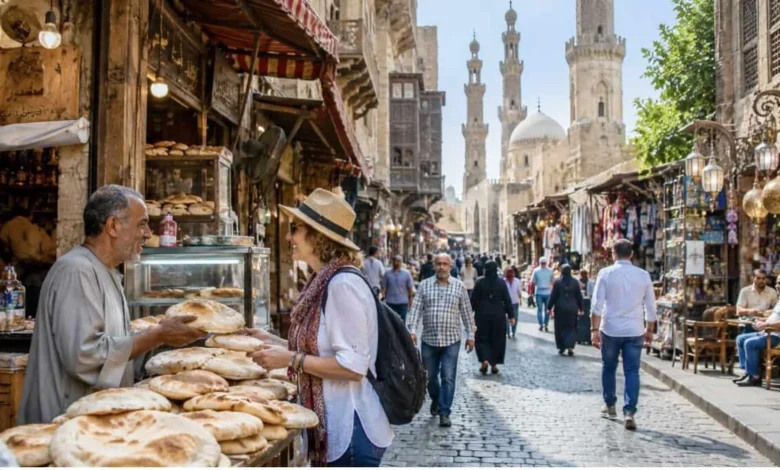
Contemporary tourism infrastructure has streamlined the logistical hurdles that once complicated multi-destination travel in Egypt. The integration of domestic aviation routes linking Cairo International Airport with regional hubs in Aswan and Luxor has reduced transit times, enabling travelers to pair the chaotic, high-density metropolitan energy of Cairo—home to the Giza Pyramids, the Grand Egyptian Museum, and historic Islamic Cairo—with the tranquil, agrarian pace of Upper Egypt.
Tour operators and travel economists note that multi-modal packages, such as combined six-day capital and river itineraries, have become the industry standard. These packages address a historical friction point in Egyptian tourism: the vast geographic distances between archaeological sites, which previously required exhaustive coach travel or complex private charters. By utilizing the river as the primary transit corridor, travelers bypass the infrastructural bottlenecks of highway transport while gaining uninterrupted access to the country’s most densely concentrated historical assets.

Socioeconomic Impact and Expert Perspectives
From an economic perspective, river tourism plays a vital role in the financial ecosystem of Upper Egypt, supporting local hospitality labor, agrarian markets, and site preservation funds managed by the Ministry of Tourism and Antiquities. Industry analysts emphasize that heritage tourism serves as a primary engine for regional employment, sustaining communities situated along the riverbanks.
However, travel experts and logistics specialists frequently debate the operational trade-offs inherent to cruise-based travel. While fixed-schedule vessels liberate tourists from the complexities of daily hotel bookings, regional transport planning, and guide procurement, they inherently limit spontaneity. Scheduled departures dictate strict shore excursion windows, precluding the extended, independent wandering favored by off-the-beaten-path explorers.
To mitigate these constraints, a growing segment of international travelers adopts a hybrid travel methodology: spending several days in independent urban exploration within Cairo, transitioning to a structured river cruise for the Aswan-to-Luxor transit, and concluding with an extended, unguided stay in Luxor to thoroughly investigate the West Bank necropolis and peripheral historical sites.
Broader Implications for Global Cultural Tourism
As the global tourism market continues its post-pandemic maturation, the demand for educational, low-impact, and culturally deep travel experiences is expected to rise. The enduring appeal of the Nile cruise demonstrates that comfort and historical education are not mutually exclusive. By embedding travelers directly within the landscape that fostered the pharaohs, the Nile transit corridor bridges the gap between passive vacationing and active archaeological scholarship.
Ultimately, the revitalization of Nile river travel underscores a broader shift in modern exploration: destinations are frequently best understood not through rapid fragmentation, but by following the natural historic arteries that shaped human civilization from its inception.