Curacao, a constituent country of the Kingdom of the Netherlands, serves as a poignant intersection of Caribbean geography and European colonial history. While the island is geographically small—encompassing roughly 171 square miles—its cultural and historical footprint is vast, shaped by centuries of trade, migration, and artistic evolution. From its inception as a strategic maritime hub to its modern identity as a vibrant, multicultural enclave, Curacao offers a unique lens through which to view the development of the Southern Caribbean. Understanding the island requires an exploration of its institutional landscape, where history is not merely preserved in archives but is actively lived through street art, architectural restoration, and maritime heritage.
A Chronology of Influence: From Indigenous Roots to Colonial Hub
The historical trajectory of Curacao began long before the arrival of European powers. The original inhabitants, the Caquetio people of the Arawak group, arrived by canoe from the South American mainland, establishing a presence that would be irrevocably altered by the arrival of Spanish explorers in 1499. The subsequent Dutch conquest in 1634 transformed the island into a critical economic node. The Dutch West India Company recognized the potential of the deep-water natural harbor, known as St. Anna Bay, which would eventually become the lifeblood of the island’s economy.
The economic history of the island can be divided into distinct eras:
- 1499–1634: Spanish exploration and the eventual decline of the indigenous population.
- 1634–1795: The Dutch era, characterized by the establishment of Willemstad as a primary slave-trading depot and plantation-based economy.
- 1795–1863: The period of social unrest leading to the Slave Revolt of 1795 and the eventual abolition of slavery in 1863.
- 1915–Present: The transition to an industrial economy sparked by the discovery of oil in Venezuela and the subsequent establishment of the Isla refinery.
Maritime Prosperity and the Scharloo District
The Curacao Maritime Museum, housed within a restored 17th-century building in the Scharloo district, serves as the definitive repository for the island’s nautical narrative. The museum’s three-story permanent exhibition provides a granular look at the economic machinery that propelled the island to regional prominence. By displaying original nautical charts, intricate ship models, and sophisticated navigational instruments, the museum documents the transition from simple canoe-based transport to the large-scale merchant shipping that currently defines the Port of Willemstad.
Maritime experts note that the port’s sheltered nature—protected from the volatile weather patterns often seen elsewhere in the Caribbean—was the primary driver of its success. Today, the Port of Willemstad remains one of the busiest in the region, serving as a critical transshipment point. The implications of this are significant; the constant influx of international vessels has necessitated a multi-lingual, highly skilled labor force, which has, in turn, fostered the cosmopolitan atmosphere that modern visitors experience today.
The Evolution of the Plantation Landscape: Savonet Museum
To understand the social stratification of Curacao, one must visit the Savonet Museum, situated at the entrance of Christoffel National Park. Built in 1662, the plantation house (landhuis) stands as a monument to the island’s agricultural past. The museum is not merely a display of architecture; it is a pedagogical institution that details the life cycle of the plantation system.
Curatorial focus at Savonet has shifted in recent years toward a more holistic interpretation of history. Rather than focusing solely on the owners of the estates, the exhibits provide significant space for the narratives of the enslaved population. By utilizing archaeological findings and oral histories, the museum charts the socio-economic evolution of the island, including the challenges faced by emancipated laborers in the late 19th century. This institutional transparency is part of a broader trend in Caribbean heritage management, where colonial structures are being repurposed to facilitate a more inclusive dialogue regarding national identity.
Urban Renaissance in Otrobanda
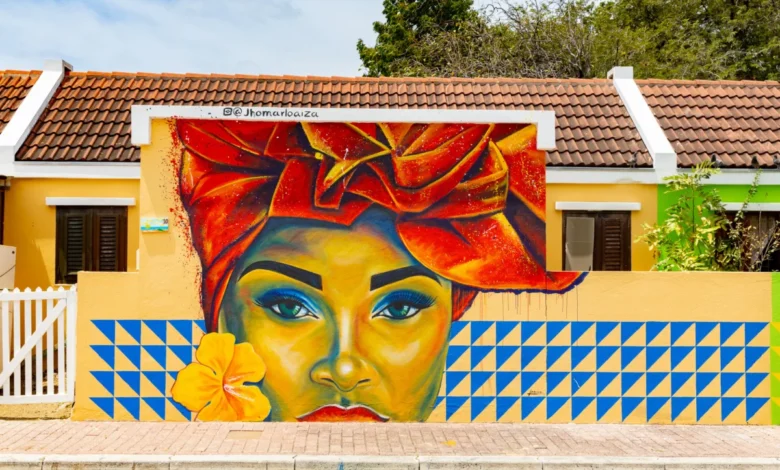
The district of Otrobanda, which literally translates to "the other side" in Papiamentu, represents the contemporary spirit of Curacao. Historically, this area was the working-class counterpart to the wealthier Punda district. In the 21st century, it has become a center for urban renewal driven by the arts. The transformation of Otrobanda is a case study in how public art can catalyze economic revitalization.
The vibrant murals that now cover the district’s alleyways—including the notable works of Avita Damberg—serve as a visual record of local folklore and modern social commentary. Local initiatives, such as the Kaya Kaya Street Party, demonstrate the impact of community-led development. By integrating music, gastronomy, and visual arts, these events draw significant foot traffic to the district, creating sustainable revenue streams for local entrepreneurs. The Bario Hotel + Bar, which facilitates walking tours of these installations, acts as a bridge between the historical architecture of the district and its current, creative resurgence.
The Blue Bay Sculpture Garden: Integrating Nature and Art
The Blue Bay Sculpture Garden provides a distinct example of how land use can be optimized for cultural enrichment. Located within the Blue Bay Golf & Beach Resort, the garden features over 40 sculptures by 29 artists, including significant contributions from Yubi Kirindongo and Ellen Spijkstra. The decision to commission works using local materials—such as limestone, coral, and driftwood—underscores the island’s commitment to ecological and aesthetic cohesion.
Analysis of the sculpture garden suggests that it serves as an open-air laboratory for Caribbean contemporary art. By placing these works along the path leading to a historic manor house, the resort has effectively synthesized the island’s colonial architectural heritage with the modern artistic output of its residents. This marriage of environments allows for a non-traditional educational experience, where the visitor engages with historical context while simultaneously observing the evolution of local artistic techniques.
Economic and Societal Implications
The development of these cultural institutions has profound implications for the island’s long-term sustainability. Statistics indicate that "heritage tourism" is a growing sector, with travelers increasingly seeking destinations that offer authentic historical education rather than purely recreational activities. For Curacao, this shift is vital. By professionalizing the presentation of its history—from the maritime exhibits in Scharloo to the sociological focus at Savonet—the island creates a compelling value proposition for global tourists.
Furthermore, the preservation of these sites serves a domestic purpose: it reinforces a sense of national pride and continuity among the local population. As global climate and economic trends shift, the ability of a nation to define its own narrative through its institutions becomes a form of "soft power." Curacao’s ongoing investment in the arts and historical preservation demonstrates a strategic approach to nation-building, ensuring that the legacy of the Caquetio, the influence of the Dutch, and the resilience of the local population are not lost to time.
Conclusion: A Destination of Substance
Curacao’s charm lies in its density of experience. It is a place where one can walk from a 17th-century plantation house into a 21st-century art installation within the span of a single afternoon. The institutions mentioned—the Maritime Museum, the Savonet Museum, the mural-rich streets of Otrobanda, and the Blue Bay Sculpture Garden—are essential for anyone seeking to comprehend the multifaceted identity of this Caribbean nation. Through the careful curation of its history and the enthusiastic promotion of its current creative class, Curacao has successfully transitioned from a mere trading post to a vibrant center of cultural education. As the island continues to navigate the complexities of the 21st-century global market, its dedication to preserving and presenting its heritage will undoubtedly remain its most enduring asset.