The Ultimate Holiday Curator’s Guide to Fine Spirits, Vintage Wines and Bespoke Entertaining

As the holiday season approaches, the intersection of luxury consumption and artisanal craftsmanship has become a primary focus for collectors and connoisseurs. This year, market trends indicate a distinct shift away from long-term cellaring, with consumers increasingly seeking immediate gratification through mature vintages and prestige cuvées. Simultaneously, the demand for non-alcoholic sophistication and functional, designer-led glassware has reached a record high, reflecting a broader evolution in social entertaining habits.
The Evolution of Prestige Champagne and Rare Spirits
The current market for prestige Champagne is defined by a pursuit of precision and consistency. Laurent-Perrier’s Grand Siècle Cuvée No. 27 serves as a benchmark for this trend. Unlike vintage Champagnes that rely on the characteristics of a single year, the Grand Siècle is blended annually from three complementary harvests. The 27th edition draws from the 2015, 2013, and 2012 vintages, representing a strategic decision by the house to prioritize structural balance over single-year expression. Data from industry analysts suggest that such multi-vintage prestige cuvées are outperforming single-vintage releases in the secondary market due to their reliable flavor profiles and aging potential.
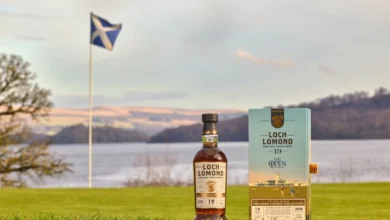
In the realm of brown spirits, the "vaulted" luxury segment is seeing a resurgence. Johnnie Walker’s recently unveiled Vault blend highlights the industry’s move toward "ghost distillery" stocks—whiskies from distilleries that have long ceased operations. The inclusion of Brora spirit, distilled prior to its 1983 closure, alongside current production, represents a bridge between heritage and modernity. This strategic marrying of stocks is a response to the scarcity of aged malts, providing a value proposition for collectors who seek historical liquid assets.
The Rise of Artisanal Barware and Bespoke Experiences
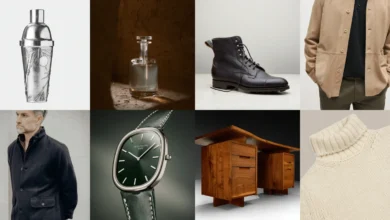
The utility of high-end barware has expanded to incorporate design-led, ergonomic principles. Recent collaborations, such as the Sophie Lou Jacobsen Fritter Tumblers paired with Justine Clenquet cocktail picks, illustrate a move toward "jewelry for the home." These items, characterized by mismatched aesthetic elements and artisanal glass-blowing techniques, cater to a demographic that views hosting as an extension of personal style.
Similarly, the focus on technical expertise is reflected in the design of Ford’s Gin. Developed with input from professional bartenders, the bottle’s ridged geometry is engineered for grip and efficiency in high-pressure service environments. This emphasis on functionality—moving beyond mere aesthetics—indicates a maturation in the home-bartending market, where consumers are increasingly adopting the standards of professional hospitality.

Non-Alcoholic Innovation and the Rare Tea Segment
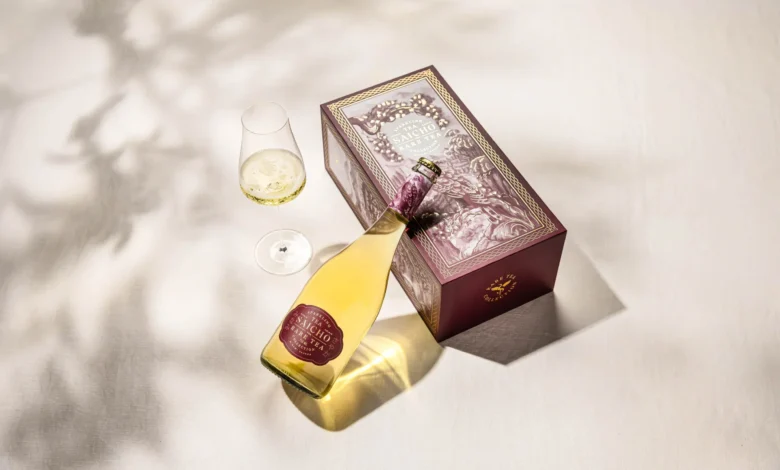
The non-alcoholic beverage category has transitioned from a niche interest to a significant sector of the luxury market. Saicho’s Rare Tea Collection, particularly the Minami Sayaka sparkling oolong, exemplifies this shift. Sourced from the Miyazaki family highlands in Japan, this beverage utilizes cold-brewing techniques to extract a flavor profile characterized by floral notes and astringency, mirroring the complexity of fine sparkling wine.
Market research into consumer behavior reveals that the "sober-curious" demographic is driving a 15% year-over-year growth in the premium non-alcoholic space. By presenting these drinks in traditional wine glassware, producers are successfully positioning their products within the established rituals of fine dining and holiday celebration, rather than as mere alternatives.
Professional Curation and Subscription Models
The professionalization of home consumption is further facilitated by curated wine programs. Victoria James, a former Michelin Sommelier of the Year and partner at Gracious Hospitality, has leveraged her industry standing to launch the Anna & Willie wine club. This model addresses a common friction point for consumers: the overwhelming breadth of the global wine market. By combining iconic, blue-chip bottles with selections from emerging viticulturists, such platforms provide a risk-mitigated entry point for high-net-worth individuals to expand their personal collections.
The Institutional Appeal of Vertical Tastings
The prestige of historical vintages remains anchored by exclusive, institutional-level events. The 1996 Chateau d’Yquem Sauternes serves as a focal point for this demand. During recent exclusive events, such as the Les Résidences d’Yquem pop-up, the focus shifted toward "aperitif pairings," an unconventional approach for a sweet, late-harvest wine.
The economic implications of these events are substantial. With tickets for such experiences priced at $1,200 per person and limited to 150 guests, the event creates a high-barrier-to-entry environment that reinforces brand exclusivity. The sell-out nature of these events suggests that the demand for "experience-based luxury"—where the product is consumed within its historical provenance—is currently outpacing the availability of physical stock.
Craft and Context: The Future of Home Distilling
Smaller, estate-based distilleries are beginning to challenge the dominance of global conglomerates. Klocke Estate Distillery, based in the Hudson Valley, is gaining traction by emphasizing regenerative farming and traditional distillation methods. Their orange curaçao, for example, represents a return to "old-school" ingredient profiles that are often absent in mass-market liqueurs. This trend toward "field-to-glass" production mirrors the farm-to-table movement that has dominated the culinary world for the past two decades.

Furthermore, the integration of literature into the spirits industry is gaining momentum. Natsuki Kikuya’s The Little Book of Sake provides a clear example of how educational content drives market interest. By demystifying the production and cultural history of sake, the work functions as a catalyst for consumption, transforming an "oft-recondite" subject into a social asset.
Global Impact and Market Outlook
The overarching trend across these categories is the prioritization of provenance, personal narrative, and technical utility. Whether through the hand-engraved, personalized decanters of Casa Dragones Joven tequila or the mouth-blown crystal of the Absolut Bobo Boobette project, consumers are increasingly seeking objects that offer a sense of ownership over the production story.
As of the current fiscal quarter, the luxury beverage market remains resilient despite broader economic volatility. The shift toward high-end, smaller-batch products suggests that while volume consumption may fluctuate, the demand for high-value, story-driven products remains stable. The holiday season of 2026 is expected to be a peak period for these items, as the hospitality industry continues to emphasize the integration of professional-grade tools into the residential environment.
In conclusion, the holiday party season is no longer just about the procurement of alcohol; it is about the acquisition of experiences and the curation of a professional-grade atmosphere. From the "Southern Clarity" of Japanese oolong to the ghost-distillery whiskies of Scotland, the focus has firmly shifted toward the intersection of historical integrity and modern, design-forward innovation. Consumers are no longer passive recipients of mass-market luxury; they are active curators of their own personal bar programs, seeking out the same quality, technique, and narrative depth found in the world’s most exclusive establishments.