FAA Lifts Nationwide Ground Stop Following Massive Air Traffic Control Communication Failure

The Federal Aviation Administration (FAA) officially rescinded a nationwide ground stop on Friday evening, bringing a conclusion to one of the most significant domestic aviation disruptions in recent memory. The order, which paralyzed air travel across the United States for over four hours, was prompted by a critical communication malfunction within the Air Route Traffic Control Centers (ARTCCs). These high-altitude facilities serve as the backbone of the National Airspace System, managing the complex flow of aircraft between major hubs and regional airports. While the system began a gradual restoration at approximately 8:15 p.m. ET, the cascading effects of the outage have created a logistical bottleneck that experts warn will plague airport operations and passenger schedules well into the coming week.
Chronology of the Aviation Crisis
The crisis began to unfold during the early afternoon hours on Friday, a period typically characterized by high-volume traffic as domestic flights navigate cross-country corridors. At approximately 3:36 p.m. ET, Transportation Secretary Sean Duffy provided the first official acknowledgment of the instability. According to Secretary Duffy, the FAA identified systemic anomalies within the radar and communication architecture of both ARTCCs and Terminal Radar Approach Controls (TRACONs).
At the moment of the failure, approximately 3,500 commercial and private aircraft were actively traversing the domestic airspace. The immediate priority for air traffic controllers shifted from navigation to the systematic containment of these flights. The FAA implemented a "ground stop," a severe regulatory measure that prevents aircraft from departing from any airport in the country, while simultaneously instructing those already airborne to maintain their current altitude or divert to the nearest suitable landing facility.
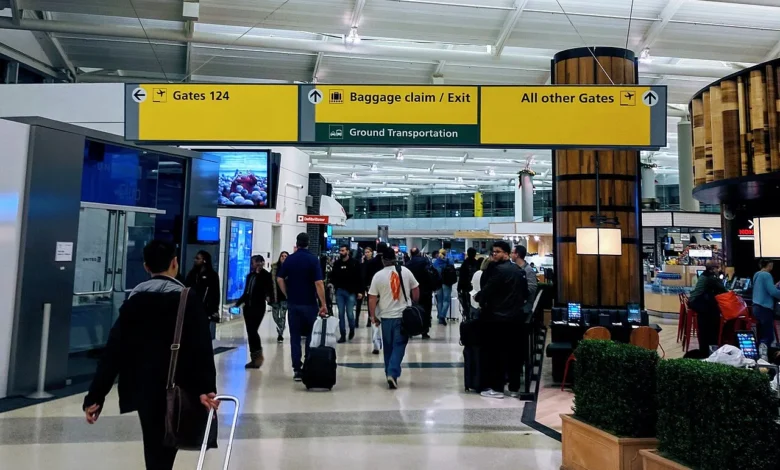
By 5:00 p.m. ET, the disruption had reached a critical mass. Major airports, including Newark Liberty International, Hartsfield-Jackson Atlanta, and O’Hare International, reported scenes of total gridlock. Gate areas were overwhelmed by passengers as thousands of flights were grounded in place. Throughout the late afternoon, technical teams worked to stabilize the “switchers and routers” that Secretary Duffy identified as the primary points of failure, noting that the infrastructure had been overwhelmed by a surge in data processing demands.
Statistical Impact and Operational Fallout
The sheer scale of the disruption is reflected in the data provided by flight tracking services. According to FlightAware, Friday concluded with a staggering total of over 9,000 flight cancellations across the U.S. network. By the dawn of Saturday morning, an additional 4,000 flights had been scrubbed from the schedules as airlines scrambled to reposition aircraft and crews that were left stranded in the wrong locations during the chaos.
This event marks one of the highest-volume cancellation days in the post-pandemic era. Unlike weather-related delays, which are often localized or regional, the technical failure of the ARTCCs meant that the entire national grid was effectively neutralized. The economic impact remains to be fully calculated, but industry analysts suggest that the cost to airlines—encompassing fuel, crew overtime, passenger compensation, and lost revenue—will run into the hundreds of millions of dollars.
For the traveling public, the implications are severe. Because airlines operate on highly optimized, "just-in-time" schedules, the loss of a single day’s capacity creates a domino effect. When aircraft are stuck at the wrong terminals, they cannot operate their scheduled flights for the following day, leading to secondary and tertiary cancellations. Travelers are being advised to expect limited rebooking options throughout the weekend as carriers prioritize high-traffic routes and the restoration of crew duty limits.
Government Response and Security Implications
During a televised briefing held late Friday evening, Homeland Security Secretary Markwayne Mullin addressed the nation to clarify the nature of the incident. Amid growing public concern regarding the cause of the failure, Secretary Mullin explicitly stated that there was no indication of a cyberattack or malicious interference.
"We have conducted a preliminary forensic sweep of the infrastructure involved," Mullin stated. "All evidence points toward an internal system saturation issue rather than an external breach."
The distinction is vital, as the vulnerability of critical national infrastructure remains a top priority for federal authorities. Secretary Duffy, echoing these sentiments, emphasized that the FAA’s priority remains the modernization of the legacy systems that underpin the National Airspace System. The incident has already sparked calls from lawmakers for an immediate, comprehensive audit of the FAA’s technical backbone, specifically focusing on the aging hardware that manages inter-facility communication.
Analysis: The Fragility of Modern Air Travel
The Friday outage serves as a stark reminder of the fragile nature of modern aviation infrastructure. While the FAA has made significant strides in implementing NextGen—a multi-billion dollar initiative to transition from radar-based to satellite-based navigation—the core communication nodes remain highly integrated and, as evidenced by this failure, prone to systemic collapse when faced with extreme data loads.
Aviation experts suggest that the "instability" described by officials likely refers to a failure in the communication handshakes between regional centers. When these centers lose the ability to "talk" to one another, the separation between aircraft cannot be safely maintained. The decision to ground the fleet was, in the words of former FAA officials, the only responsible course of action, even if it caused widespread economic disruption.
"The safety of the flying public is non-negotiable," noted one aviation consultant. "When you lose the ability to track and communicate with 3,500 aircraft in real-time, you have no choice but to stop the clock. The challenge moving forward is not whether the system is safe—it is whether it is resilient enough to handle the increasing volume of modern air travel without these single points of failure."
Broader Implications and Future Oversight
As the recovery phase begins, the aviation industry faces a period of intense scrutiny. The Department of Transportation is expected to open a formal investigation into the root cause of the router and switcher overload. This inquiry will likely focus on whether the systems were operating at capacity or if a specific software update or hardware degradation triggered the collapse.
Furthermore, the event has reignited debates regarding the staffing levels of air traffic controllers. While the current issue was technical, the industry has been vocal about the stress placed on human controllers who are already working mandatory overtime due to chronic understaffing. The intersection of technical fragility and human resource constraints is a narrative that Congress is expected to explore in upcoming hearings.
For passengers, the weekend ahead will be one of significant patience. Airlines have issued broad travel waivers, allowing passengers to rebook flights without penalty, but the availability of seats will be constrained by the sheer volume of stranded travelers. Airports have been advised to maintain enhanced staffing levels to manage the influx of passengers seeking assistance at customer service desks.
The FAA has promised a "full and transparent" review of the events leading up to the Friday ground stop. Until that report is finalized, the aviation community remains on high alert, assessing the integrity of the restored systems and working to ensure that the backbone of the American transportation network remains robust enough to withstand the demands of a globalized economy. As air traffic slowly returns to normal levels, the focus shifts from crisis management to long-term prevention, ensuring that the skies above the United States remain both safe and operational.