
When it comes to the high-stakes world of glassware, Zalto has long occupied a position analogous to the Ferrari of the viticulture industry: it is fine-tuned, prohibitively expensive, visually distinctive, and notoriously high-maintenance. For years, the brand’s feather-light, mouth-blown Universal glass stood as the gold standard for oenophiles, becoming a staple in Michelin-starred restaurants and a subtle, aspirational signifier in prestige television dramas. However, a recent strategic pivot by the Austrian manufacturer raises a compelling question for the spirits industry: Can the aesthetic and functional rigor that redefined wine appreciation translate to the nuanced, often rugged world of single malt whisky and cognac?
The introduction of the Zalto Denk’Art CASK, a $76 tasting glass specifically engineered for aged spirits, marks a significant departure from the brand’s wine-centric heritage. While the luxury spirits market has historically relied on a trio of stalwarts—the stubby, utilitarian Glencairn; the stemmed, elegant Elixir Glass; and the traditional tulip-shaped copita—the arrival of the CASK suggests a growing demand for a more sophisticated, "fine-dining" approach to whisky consumption.
The Evolution of Spirits Glassware: A Chronology of Utility
The history of spirit-tasting vessels is one defined by the friction between laboratory precision and field practicality. In the early 20th century, the ISO (International Standards Organization) glass—or copita—became the industry standard for professional sensory evaluation. Its shape was designed specifically to minimize alcohol vapor interference while maximizing the detection of volatile organic compounds.
By the early 2000s, the Glencairn glass revolutionized the consumer market. Its design prioritized portability and durability, allowing distillers to conduct tastings in remote, drafty dunnage warehouses or on the uneven terrain of peat bogs without the fear of immediate breakage. The glass’s heavy base and short, tapered bowl made it the quintessential tool for the Scotch whisky boom.
However, as the global whisky market has matured—with luxury labels and ultra-aged expressions commanding five-figure prices at auction—a segment of the industry has begun to challenge the adequacy of the "standard" glass. For experts like Jonny Fowle, Sotheby’s Global Head of Spirits, the current disparity between how fine wine is served and how vintage whisky is consumed is glaring. Fowle argues that if a single malt has been aged for 40 or 50 years, the vessel from which it is consumed should reflect that level of prestige and sensory potential.

Technical Specifications and Design Philosophy
The development of the Zalto Denk’Art CASK was an arduous process, spanning five years and resulting in over 100 distinct prototypes. Christoph Hinterleitner, CEO of Zalto, emphasizes that the glass was not merely designed to look "expensive," but to manipulate the physics of liquid-to-air interaction at a microscopic level.
Standing at 18.5 centimeters—three centimeters taller than the Elixir glass—the CASK features an exceptionally long, chimney-like neck and an angled bowl. The weight distribution is calculated to provide a tactile sense of fragility, intended to force the drinker to slow down, handle the vessel with deliberation, and engage in a more meditative consumption process. This shift in ergonomics is central to Zalto’s philosophy: by changing how the drinker moves, they change how the spirit is perceived.
Expert Perspectives on Sensory Mechanics
To evaluate the efficacy of the CASK, industry professionals point to the delicate balance between oxygenation and aroma concentration. Dave Broom, the acclaimed author of The World Atlas of Whisky, suggests that the Elixir glass remains a superior choice for many due to its "tapered mouth" which concentrates aroma without overwhelming the olfactory system with ethanol vapors. According to Broom, the thin, flared lip of the Elixir serves a specific purpose: it delivers the spirit across the tongue in a way that optimizes the perception of flavor complexity.
Dawn Davies MW, Buying Director for The Whisky Exchange and Chair of the IWSC Whisky judging panel, echoes the importance of a stem. "You want a little bit of air going in, so a rounder, fuller bottom is crucial," Davies notes. "But it shouldn’t be like a brandy snifter, which allows for too much air, effectively muting the focus of the flavor." Davies identifies the ability to swirl the liquid—a technique deeply ingrained in wine culture—as a primary reason why she prefers stemmed glassware over the traditional, stemless Glencairn.
Conversely, production-side experts prioritize stability and structural integrity. Emma Walker, Chief Blender at Johnnie Walker, points out that in a blending room, a glass must withstand the rigors of multiple daily washes and the handling of a large team. "We need a glass with a good center of gravity," Walker explains. "It must be available in both clear and blue options for blind testing, and it must withstand elevated temperatures during cleaning without developing ‘off’ notes or risking breakage." From this perspective, the "fine-gauge" nature of Zalto’s luxury glassware is inherently incompatible with the high-volume requirements of a distillery’s sensory lab.
Comparative Performance Analysis
In a controlled side-by-side comparison between the CASK, the copita, the Elixir, and the Glencairn, the differences in sensory performance become evident. The Glencairn, while excellent for portability, often fails to provide the depth of aromatic separation required for highly complex, older malts. The copita offers a reliable "snapshot" of the spirit, yet it lacks the dynamic evolution that a wider bowl can provide.
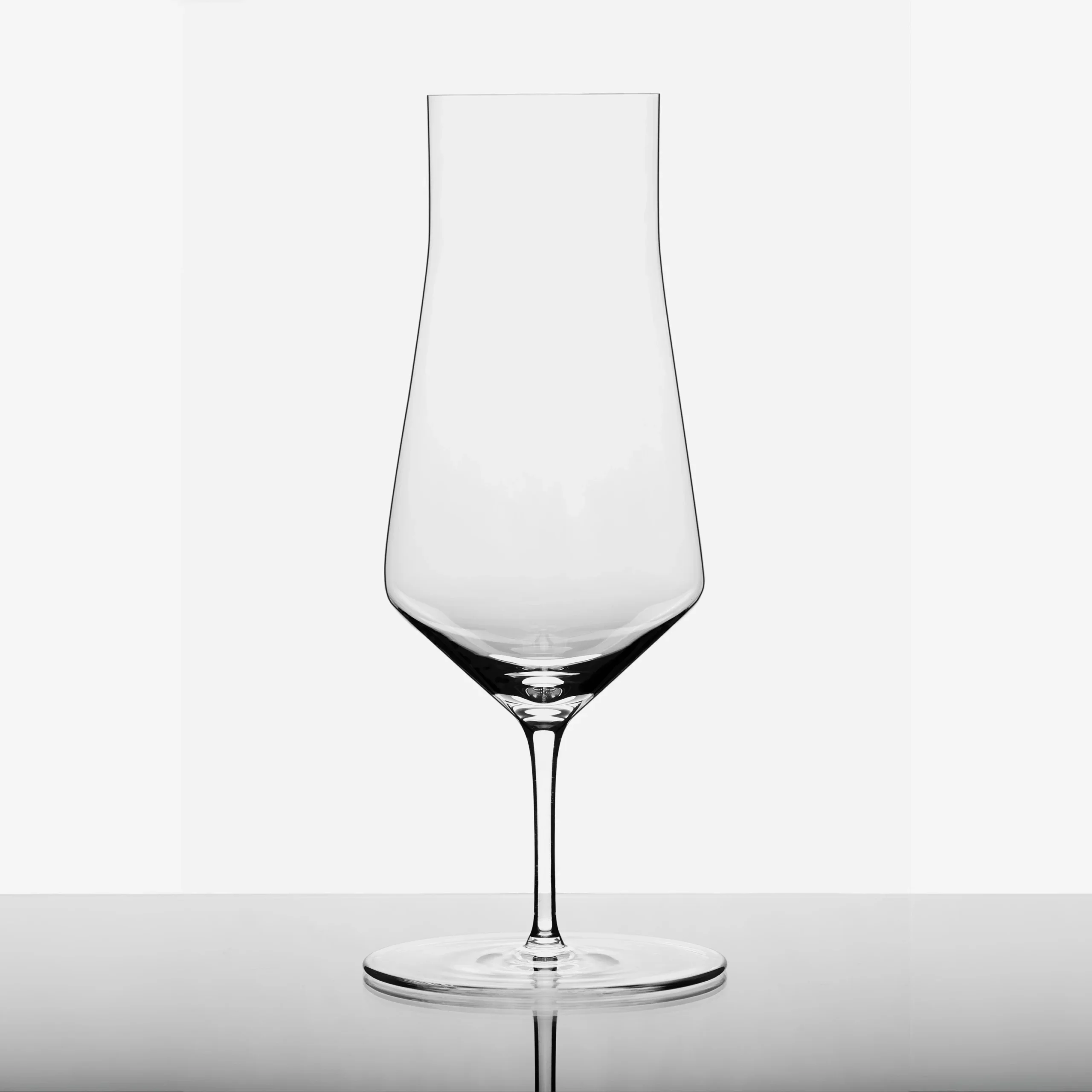
The Zalto CASK demonstrates a distinct "ethereal" quality. In testing, it effectively teased apart individual threads of a complex 18-year-old Highland Park, highlighting high-toned, perfumed notes and unexpected fruit characteristics—such as a subtle peachiness—that were obscured in the more compact glasses. However, the CASK’s performance was less consistent when water was added. The Elixir glass maintained the integrity of the spirit’s structure more effectively upon dilution, whereas the CASK’s expansive design sometimes caused the aromas to disperse too rapidly.
Broader Market Implications
The emergence of the Zalto CASK is emblematic of a broader trend: the "premiumization" of the spirits industry. As whisky moves further away from its image as a rugged, blue-collar drink and toward its status as a luxury asset class, the ancillary goods associated with it—glassware, decanters, and tasting mats—are undergoing a similar transformation.
However, the market reality remains bifurcated. While there is a clear appetite for "elevated" drinking experiences among collectors and high-end hospitality venues, the practicalities of the industry—the "peat bog and warehouse" reality mentioned by veteran distillers—ensure that the utilitarian glasses will remain dominant in the production and casual consumption spheres.
Ultimately, the Zalto CASK occupies a niche, albeit a significant one. It is not a tool for the distillery floor or the casual dram after a long day; it is a specialized instrument for the appreciation of superannuated, frail, or particularly delicate whiskies that require gentle coaxing to reveal their full profile. As the industry continues to debate the merits of form versus function, the CASK serves as a reminder that in the world of luxury spirits, the vessel is not just a container—it is a frame through which the entire sensory experience is curated. Whether that frame is worth a $76 investment remains a matter of personal preference, but it undeniably signals that the dialogue surrounding spirits appreciation has reached a new level of sophistication.