Italy, a nation defined by its profound obsession with aesthetic beauty, remains a global crucible for strong and often conflicting sentiments regarding style, society, and the shifting tides of the luxury industry. The most recent iteration of Milan Fashion Week, which showcased Spring/Summer 2027 collections across a sprawling itinerary of more than 200 events, served as a microcosm of these tensions. The week began with an opulent gala dinner held at the Palazzo Reale, which convened top-tier luxury CEOs and celebrated designers alongside Prime Minister Giorgia Meloni, underscoring the vital link between the Italian government and its most successful export sector. Yet, the week concluded with a jarring visual counterpoint: a mass anti-fur demonstration organized by the animal-rights movement CAFT, which marched through the city center, past the historic Duomo, signaling the growing public pressure on traditional luxury practices.

The dichotomy between the industry’s economic power and its social responsibilities permeated the runways, where designers grappled with questions of gender, autonomy, and historical legacy.

The Politics of the Runway: Prada and the Skirt Debate
In what was arguably the season’s most discussed collection, Miuccia Prada and co-creative director Raf Simons transformed the runway into a platform for gendered discourse. Presenting over 60 variations of the skirt—ranging from Re-Nylon pleated pieces fastened with industrial Velcro to pencil-thin silhouettes adorned with delicate crystals and fabric flowers—the designers offered a visual retort to recent political discourse in Italy.

The collection arrived on the heels of controversial remarks made by Italian Foreign Minister Antonio Tajani, who suggested that a woman wearing "longer skirts" demonstrated a more "serious" and "reliable" character. While the political establishment sought to define feminine virtue through hemline length, Miuccia Prada’s rebuttal was both succinct and profound: "The skirt is like a T-shirt; you can put any idea you want on it."

The industry reaction was immediate. The Corriere della Sera captured the sentiment with a headline invoking literary gravity, "Prada, Clothes, and Prejudice," while industry figures, including Ariana Alessi, wife of fashion entrepreneur Renzo Rosso, voiced sharp opposition to the rhetoric of the political class. "Patriarchy must be resisted," Alessi stated, reflecting a broader movement within the Milanese fashion establishment to distance itself from regressive social framing.

The Economic Engine: Fashion’s Role in Italy’s Industrial Future
Beneath the theatrics of the runway, the economic stakes of the week were immense. A McKinsey & Company study commissioned by the Camera della Moda provided the necessary context for why the government remains deeply invested in the success of the week. The data confirms that the fashion industry accounts for approximately 5 percent of Italy’s total industrial production. When the entire supply chain is factored in—from textile manufacturers in the north to artisanal leather workshops in Tuscany—the sector employs more than one million people.

Furthermore, the study, The State of Fashion, highlighted Italy’s role as an educational and commercial magnet. Despite ongoing concerns regarding supply chain ethics and reports of unauthorized labor practices, Italy continues to attract global talent, with 70 percent of students enrolled in the country’s top five fashion institutions coming from abroad. Tax-free spending figures remain robust, with Italy ranking second globally, as 68 percent of international visitors cite fashion as a primary driver for their travel, ensuring that Milan remains an essential node in the global luxury economy.

Shifting Creative Directions: From Diesel to Fendi
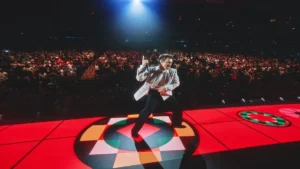
The week served as a transition point for several major houses. At Diesel, creative director Glenn Martens concluded his tenure with a spectacle that stood in stark contrast to the traditional gala culture. Collaborating with the Marseille-based performance troupe La Horde, the show featured 200 performers interspersed among 1,500 guests. The choreography, set to the rhythmic pulse of Donna Summer’s "Love to Love You Baby," included acts of stripping and physical intimacy, symbolizing a "farewell to the bordello" aesthetic. The collection itself, characterized by moth-eaten textures, eroded necklines, and wax-coated denim, emphasized a move toward raw, tactile luxury.

In total opposition to Diesel’s grunge-influenced party atmosphere, Fendi looked toward the nostalgia of 1980s Italian television. Creative director Maria Grazia Chiuri drew inspiration from the late showgirl and LGBTQ+ icon Raffaella Carrà. The collection was a study in fluid geometry: black trousers, body-con shorts, and bloomers layered with sheer gilets and accented by fox and mink furs. Chiuri described the synthesis as "punk and bourgeois," bridging the gap between the rebellious spirit of the youth and the refined elegance expected of a Roman couture house.

The Persistence of Minimalism and Heritage
While some houses experimented with subversion, others reaffirmed the strength of minimalist design. Jil Sander, under the creative direction of Simone Bellotti, presented a collection that treated tailoring as a form of psychological inquiry. "Creating a collection is like going to therapy," Bellotti remarked, explaining his process of deconstructing seams and darts to create a "new tailoring concept." The result was an aesthetic of effortless wealth—a wardrobe designed for the high-achieving individual who eschews logos in favor of impeccable construction.

Simultaneously, the House of Armani navigated its own structural evolution. With the 2027 deadline for the sale of a 15 percent stake in the company—as dictated by the late Giorgio Armani’s will—the runway served as an indicator of stability. Under the stewardship of Silvana Armani, the signature collection focused on graphic zig-zags and classic menswear tailoring. The inclusion of a black crepe pantsuit, a direct homage to Giorgio Armani’s 1942 Holy Communion attire, signaled a desire to maintain the house’s core identity even as it prepares for a new chapter under incoming Emporio designer Dario Vitale.

Artisanship as the New Luxury
A recurring theme throughout the week was the emphasis on the "hand of the maker." At Loro Piana, the design team—who continue to work anonymously—delivered a masterclass in quiet luxury, utilizing suede, cashmere, and gabardine to create garments that prioritized utility and understated prestige.

Similarly, Tod’s utilized the Padiglione d’Arte Contemporanea to highlight the importance of the gommino. By stationing artisans at the entrance to manually sew loafers, the brand made a clear statement about the value of the human touch in an era increasingly dominated by virtual boutiques and digital marketing. This focus on craftsmanship extended to smaller labels like Capasa Milano, where Ennio Capasa showcased hand-beaded leathers and manually shaded boots, reaffirming that for the discerning consumer, the process is as valuable as the product.

Surrealism and the Future of Italian Design
The week concluded with a nod to the intellectual and the surreal. The Dalí et la Moda exhibition at the Palazzo Reale provided a historical backdrop for the week’s more avant-garde offerings. The influence of surrealism was visible in the work of emerging designers supported by the Kering group, where creators like Nathalie Chebou-Moth and Srushti Patil experimented with recycled materials and enzymatic design processes.

Gucci’s "The Store Show," conceptualized by Demna, further bridged the gap between commerce and art. By building a virtual boutique for 800 guests, the brand attempted to recapture a consumer base that has become increasingly fragmented. By categorizing the collection into "The Rebellious Aristocrat," "The Snob," and "The Eccentric," Demna provided a blueprint for how legacy brands can attempt to remain relevant by addressing specific archetypes rather than a generic demographic.

As the tents were dismantled and the international press departed, the implications of Milan Fashion Week SS27 were clear: the industry is entering a period of necessary recalibration. While the economic metrics remain strong, the pressure to balance traditional heritage with contemporary social concerns—ranging from sustainability and animal rights to gender identity and political representation—has never been higher. The Italian fashion industry, with its unique blend of industrial might and artisanal soul, remains the primary arbiter of how these global tensions will be resolved, both on and off the runway.