For travelers embarking on their third or fourth visit to Los Angeles, the conventional tourist itinerary—comprising the Hollywood Walk of Fame, Universal Studios, and the Santa Monica Pier—frequently gives way to a desire for a more authentic urban experience. Defining a "non-touristy" destination in a metropolis of nearly four million residents does not necessarily imply absolute seclusion or empty spaces; rather, it points to locations where the prevailing demographic consists of local residents engaging in everyday cultural, recreational, and culinary life. However, navigating the city’s alternative landscape requires an awareness of recent logistical disruptions, notably the devastating impacts of the January 2025 Palisades Fire, which fundamentally altered several beloved institutions in the coastal and canyon districts.
![16 Non-touristy Things To Do In Los Angeles [Updated 2026]](https://www.ytravelblog.com/wp-content/uploads/2015/10/griffith-park-hiking-trail-views.jpg)
Urban Exploration and Historical Green Spaces
![16 Non-touristy Things To Do In Los Angeles [Updated 2026]](https://www.ytravelblog.com/wp-content/uploads/2024/09/23139574_hollywood-forever-cemetery-2-1024x768.jpg)
Escaping the congested pathways of Runyon Canyon leads urban hikers to Griffith Park, a sprawling 4,200-acre municipal park that serves as a primary green lung for the city. Encompassing over 50 miles of trails, the four-mile Mount Hollywood Trail offers panoramic vistas stretching from the iconic Hollywood Sign across the Los Angeles basin. Within the park, Bronson Canyon features the historic Bronson Caves—a man-made rock quarry tunnel that has functioned as a ubiquitous filming location since the mid-20th century, most famously recognized as the entrance to the Batcave in the 1960s television series Batman.
![16 Non-touristy Things To Do In Los Angeles [Updated 2026]](https://www.ytravelblog.com/wp-content/uploads/2024/05/Rosenthal-Wine-patio-malibu-1024x768.jpg)
For those seeking alternative vantage points of historical neighborhoods, Los Angeles’s network of over 400 public staircases provides a unique glimpse into the city’s pre-freeway transit history. Originally constructed in the 1920s to connect hillside residential communities to streetcar lines, markets, and schools, pathways such as the Beachwood Canyon Stairs and the steps near the Hightower Elevator in Hollywood offer pedestrian access and distinct perspectives of the cityscape largely untouched by commercial tour buses.
![16 Non-touristy Things To Do In Los Angeles [Updated 2026]](https://www.ytravelblog.com/wp-content/uploads/2024/09/hiking-the-hollywood-trail-los-angeles.jpg)
Cultural Institutions and Post-Disaster Recovery
![16 Non-touristy Things To Do In Los Angeles [Updated 2026]](https://www.ytravelblog.com/wp-content/uploads/2015/10/01.jpg)
The city’s cultural calendar frequently merges history with entertainment, exemplified by the Hollywood Forever Cemetery. During the summer and autumn months, the grounds host Cinespia outdoor film screenings on the Fairbanks Lawn, projecting classic cinema against the facade of a historic mausoleum. Operating as a community tradition where attendees traditionally assemble elaborate picnics, the events remain among the most sought-after seasonal tickets in the region.
![16 Non-touristy Things To Do In Los Angeles [Updated 2026]](https://www.ytravelblog.com/wp-content/uploads/2015/10/breweries.jpg)
Conversely, institutions situated closer to the Santa Monica Mountains have faced significant infrastructural hurdles following the January 2025 Palisades Fire. The Rosenthal Wine estate, previously celebrated as a coastal tasting room along the Pacific Coast Highway, was forced to relocate operations inland following the disaster. The winery now operates by reservation within its 28-acre vineyard situated 1,450 feet up in the Santa Monica Mountains off Kanan Dume Road, offering visitors an agricultural wine-tasting experience directly tied to the terroir of the Santa Monica Mountains American Viticultural Area (AVA).
![16 Non-touristy Things To Do In Los Angeles [Updated 2026]](https://www.ytravelblog.com/wp-content/uploads/2015/10/Speakeasy.jpg)
Similarly, the Getty Villa Museum in Pacific Palisades—a dedicated institution housing Greek, Roman, and Etruscan antiquities within a recreation of the ancient Villa dei Papiri—experienced a six-month closure following the January 2025 fires. While the museum’s priceless collection remained entirely unharmed, the surrounding grounds underwent extensive ecological remediation, resulting in the removal of more than 1,300 damaged trees. Reopening in late June 2025 under strict operating constraints, the museum now limits daily capacity to 500 visitors, restricts access exclusively via the Pacific Coast Highway, and operates four days a week from Friday through Monday.
![16 Non-touristy Things To Do In Los Angeles [Updated 2026]](https://www.ytravelblog.com/wp-content/uploads/2024/05/Getty-Villa-Museum-LA.jpg)
Alternative Recreation: From the LA River to Architectural Landmarks
![16 Non-touristy Things To Do In Los Angeles [Updated 2026]](https://www.ytravelblog.com/wp-content/uploads/2024/05/koreatown-sign-in-la-lit-at-night-2-1024x768.jpg)
Recreational opportunities in Los Angeles frequently challenge conventional urban perceptions. The Los Angeles River, widely characterized in popular culture by its concrete-lined flood control channels featured in cinematic car chases, harbors soft-bottom restoration zones. During the warmer months, seasonal guided kayak expeditions navigate these ecological stretches, where participants encounter native bird species such as herons and cormorants while observing ongoing municipal watershed restoration initiatives.
![16 Non-touristy Things To Do In Los Angeles [Updated 2026]](https://www.ytravelblog.com/wp-content/uploads/2024/05/24147818_japanese-garden-at-the-huntington-botanical-gardens.jpg)
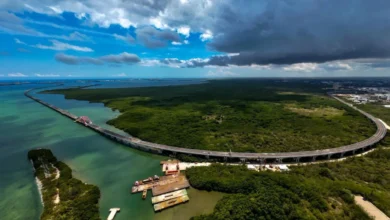
Downtown Los Angeles and its surrounding districts continue to anchor major infrastructure and culinary shifts. The Sixth Street Viaduct, which replaced an aging 1928 structure and officially opened in July 2022, has rapidly evolved from a standard civil engineering project into a prominent public gathering space. Featuring paired arches spanning the Los Angeles River and adjacent rail yards, the bridge includes dedicated pedestrian and cyclist pathways that attract locals nightly to observe the downtown skyline.
![16 Non-touristy Things To Do In Los Angeles [Updated 2026]](https://www.ytravelblog.com/wp-content/uploads/2024/05/33188318_echo-park-in-los-angeles-with-view-of-downtown-skyline-and-foggy-polluted-smog-air-in-big-urban-city-2-1024x768.jpg)
Gastronomic Culture and Nightlife Evolution
![16 Non-touristy Things To Do In Los Angeles [Updated 2026]](https://www.ytravelblog.com/wp-content/uploads/2024/05/Los-Angeles-County-Museum-of-Art.jpg)
The culinary and beverage landscape of Los Angeles reflects a decentralized network of specialized hubs rather than a single unified district. The South Bay region has emerged as a premier craft brewing cluster, anchored by producers such as Smog City, Monkish, and El Segundo Brewing Company, where taprooms function as community gathering spaces.
![16 Non-touristy Things To Do In Los Angeles [Updated 2026]](https://www.ytravelblog.com/wp-content/uploads/2019/03/venice-beach-los-angeles-2.jpg)
In the historical domain, establishments operating continuously through the Prohibition era maintain a direct link to the city’s past. The Townhouse and the Del Monte Speakeasy in Venice, established in 1915, continues to operate its basement lounge—once accessed via a service elevator during the 1920s—as a live music and performance venue, having recently marked over a century of continuous operation amid shifting neighborhood demographics.
![16 Non-touristy Things To Do In Los Angeles [Updated 2026]](https://www.ytravelblog.com/wp-content/uploads/2024/05/Sixth-Street-Viaduct-1024x683.jpg)
For culinary enthusiasts, Sunday markets at ROW DTLA host Smorgasburg Los Angeles, functioning as a vital incubator for independent food vendors. Showcasing regional specialties spanning Mexican, Filipino, Thai, and Salvadoran cuisines, the market allows nascent culinary concepts to test menus before establishing permanent brick-and-mortar restaurants. Meanwhile, cultural districts like Koreatown sustain nocturnal economies centered on private-room karaoke venues and late-night street food vendors, offering visitors a window into the multifaceted immigrant communities that define the contemporary demographic fabric of Southern California.
Related posts: