Hope Lodge marks a new era in Scottish luxury conservation and the evolution of sustainable hospitality in the Highlands

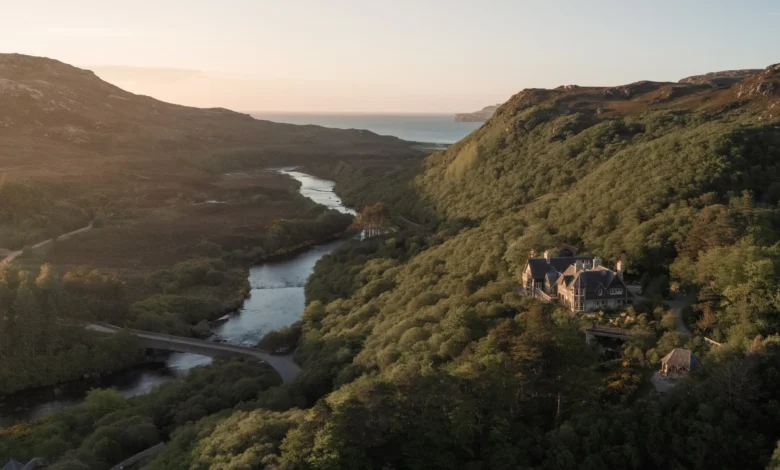
The unveiling of Hope Lodge in the remote reaches of Sutherland represents the culmination of a fifteen-year architectural and ecological odyssey. Situated at the mouth of Loch Hope and shadowed by the imposing silhouette of Ben Hope, the property serves as the flagship hospitality venture for WildLand, a conservation-focused organization established by Danish billionaire Anders Holch Povlsen and his wife, Anne. This project is not merely an addition to the luxury travel market; it is the physical manifestation of a 200-year plan to rewild and revitalize the ecological integrity of the Scottish Highlands.
The Vision: A 200-Year Ecological Mandate
The WildLand project, spearheaded by the Povlsens, encompasses approximately 89,000 hectares of land across the Cairngorms, the Loch Ness basin, and Sutherland. The core objective of the organization is to reverse the environmental degradation resulting from centuries of intensive land management, overgrazing, and the depletion of native woodland. By integrating high-end hospitality with land stewardship, WildLand seeks to prove that luxury tourism can function as a primary engine for environmental restoration.
The acquisition and subsequent restoration of Hope Lodge—a Victorian-era shooting lodge originally constructed in 1867—serve as a microcosm of this broader strategy. The site has been stripped of the artificial infrastructure that often characterizes modern development. Telephone wires have been removed, and fencing has been eliminated to allow the landscape to reclaim its natural state, fostering biodiversity and facilitating the reforestation of native flora.

Architectural Chronology and Design Philosophy
The transformation of Hope Lodge was a multi-year collaborative effort involving the South African-based design studio Cécile & Boyd and the Edinburgh-based architecture firm GRAS. The project began with a fundamental question posed by the design team: how to honor the site’s history while stripping away the stereotypical "Gothic" and "tartan-clad" aesthetic often forced upon Scottish country houses.
The design team, led by Paul van den Berg, spent eight years meticulously researching the site’s historical context. The restoration prioritized the preservation of original architectural elements, including ironmongery, intricate skirting boards, and pine flooring that dates back to the 19th century. To avoid the homogenization of luxury design, the team sourced materials from independent Scottish artisans and utilized a palette inspired directly by the surrounding geography—hand-stitched hessian, natural timber, and buttery tan leathers.
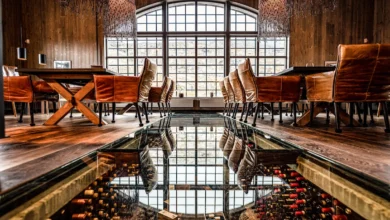
The installation phase, which spanned four months, saw a collective of joiners, seamstresses, and artists residing on-site to ensure the authenticity of the craftsmanship. A notable structural addition is the subterranean lounge designed by GRAS, which is carved directly into the bedrock. This space features glass walls that provide an unobstructed view of the forest, an iron-and-stone hearth, and a custom sculptural chandelier, creating a bridge between the Victorian heritage of the lodge and contemporary structural engineering.
Operational Model and Seasonal Utility
Hope Lodge functions under a bifurcated operational model designed to maximize both exclusivity and accessibility. From November through April, the estate operates as an exclusive-use property, catering to private groups seeking complete seclusion. From May through August, the property transitions into a boutique hotel model, allowing a broader range of guests to experience the rewilding efforts firsthand.

The accommodation extends beyond the main lodge to include "An Cala," a series of timber-and-glass cabins situated on the footprints of former agricultural barns. These structures represent a modern interpretation of the estate’s functional history. The interior design of An Cala utilizes repurposed elements—such as stone troughs converted into bathroom basins and wooden buckets repurposed as bathtubs—to maintain a narrative link to the land’s past as a working farm.
Culinary Integration and Local Sourcing
The dining experience at Hope Lodge is deliberately fluid, designed to mirror the informal yet high-end nature of the estate. The culinary program relies heavily on the "hyper-local" movement, sourcing produce, dairy, and livestock from the neighboring farms and the surrounding waters.
The kitchen’s philosophy is one of adaptive service. Rather than adhering to a rigid menu, the culinary team adjusts offerings based on the weather and the guests’ daily excursions. This includes outdoor dining initiatives—such as catered luncheons served at remote waterfalls or beachside tea services—which utilize traditional preservation methods to maintain quality in the volatile Highland climate. The inclusion of folk musicians and regional performers during evening meals serves to immerse guests in the cultural fabric of Sutherland, reinforcing the estate’s identity as a Scottish institution rather than a generic luxury hotel.
Ecological and Economic Implications
The broader implications of the WildLand project are significant for the Scottish tourism and conservation sectors. By investing in the restoration of native woodland and the preservation of historic properties, the Povlsens are effectively creating a template for land-based tourism that prioritizes long-term ecological outcomes over short-term financial yield.

Economic analysts observe that the project provides a necessary boost to the Sutherland economy, which has historically struggled with depopulation and a lack of high-skilled employment opportunities. The intensive, multi-year renovation process alone provided steady employment for local contractors, while the ongoing operation of the lodge requires a diverse staff ranging from ecologists and conservationists to hospitality professionals and local guides.
Furthermore, the project challenges the traditional narrative of the Scottish estate. By removing boundaries and focusing on rewilding, WildLand is facilitating a shift in how the public perceives the Highlands—moving away from the view of the landscape as a managed commodity and toward its recognition as a fragile ecosystem in need of protection.
Challenges of the Highland Environment
While the luxury aspect of Hope Lodge is evident, the project remains subject to the realities of the Scottish climate. The architects and operators maintain that the extreme weather—the high winds, heavy rain, and dramatic seasonal shifts—is not a liability to be mitigated, but a fundamental component of the guest experience.
Gunnar Groves-Raines of GRAS has noted that the architecture was specifically designed to withstand these conditions while allowing occupants to witness the raw power of the landscape. The durability of the buildings, combined with the focus on natural materials, ensures that the lodge feels like a permanent fixture of the hillside rather than a transient structure.

Looking Toward the Future
As WildLand continues to implement its 200-year management plan, Hope Lodge will likely serve as the primary site for public engagement and education regarding the importance of rewilding. The success of this property will be measured not only by its occupancy rates or its standing in the luxury travel market, but by the visible recovery of the local flora and fauna.
For the modern traveler, Hope Lodge offers a rare combination: a high-end, comfortable base of operations that is simultaneously committed to the restoration of the wilderness. As the project evolves, it stands as a testament to the potential for wealthy private investment to align with environmental imperatives, setting a new standard for how luxury hospitality can serve the interests of both the traveler and the natural world.