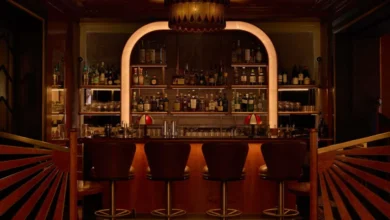
The Evolution of London’s Private Members Club Scene: From St. James’s Sanctuaries to Global Lifestyle Brands

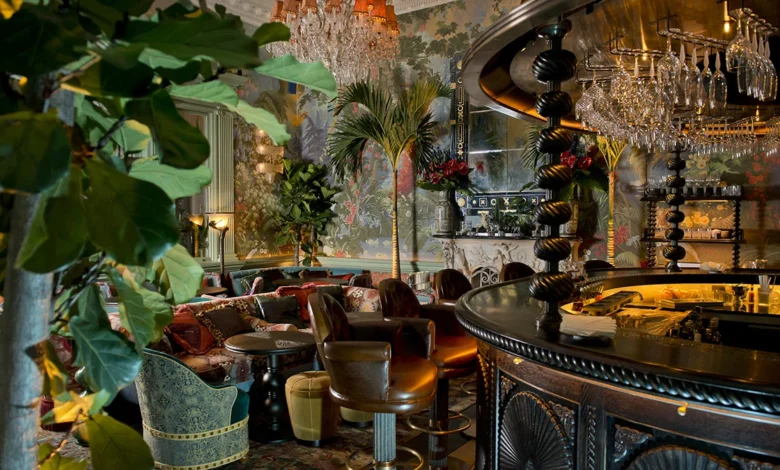
The origins of London’s private members’ club culture can be traced back to the 18th century, a period defined by the Enlightenment and the rapid expansion of the British Empire. Initially conceived as coffee houses and gaming dens, these establishments evolved into the formal, architectural landmarks that characterize the St. James’s district today. Situated in the prestigious corridor between Piccadilly and Buckingham Palace, these grand, limestone-clad structures were designed to provide a sanctuary for the political, social, and intellectual elite. By the early 20th century, the landscape of St. James’s was effectively solidified, with institutions such as the Carlton Club, White’s, the Athenaeum, and Boodle’s serving as the nerve centers of British influence.
These "gentleman’s clubs," as they were historically designated, functioned as a parallel governing infrastructure. Within their mahogany-paneled walls, legislation was debated, political careers were brokered, and the upper echelons of society maintained a rigid, exclusive hierarchy. Despite the democratization of British society throughout the 20th century, these institutions have demonstrated remarkable structural and financial resilience. Their survival is largely attributed to a combination of landed assets and a deep-seated commitment to tradition, which acts as both a barrier to entry and a mark of prestige.
A Chronology of Club Culture Evolution
The trajectory of the London club scene can be categorized into three distinct eras, each reflecting the changing demographics and cultural values of the city.
The Era of Tradition (1700s–1950s): The foundational era focused on exclusivity, political alignment, and strict codes of conduct. Membership was largely hereditary or gained through intense social vetting. The primary objective was privacy for the landed gentry and political class.
The Era of Social Innovation (1960s–1980s): The 1963 opening of Annabel’s, founded by Mark Birley, marked a tectonic shift. Recognizing that a new generation of post-war wealth did not wish to occupy the "fusty" rooms of their forebears, Birley introduced a model that prioritized glamour, nightlife, and hospitality. This era saw the introduction of restaurants like Harry’s Bar and Mark’s Club, which balanced the exclusivity of the old guard with a more contemporary, service-oriented atmosphere.
The Era of Cultural Entrepreneurship (1990s–Present): Initiated by the Groucho Club in 1985 and refined by Nick Jones’s Soho House in 1995, this period marked the arrival of the "lifestyle" club. These spaces cater to the creative class, media professionals, and tech entrepreneurs. The formality of ties and banking-sector dominance was replaced by a more casual, "cool" aesthetic that prioritized networking and amenities over pedigree.

Data and Membership Logistics
For the modern traveler, the barrier to entry remains a common point of confusion. While the "archaic" nature of application processes—often involving letters of recommendation and years-long waiting lists—remains, the reality is that these clubs are increasingly internationalized.
Many London clubs maintain "reciprocal arrangements" with prominent university and social clubs in major American cities such as Boston, Philadelphia, and Chicago. For a member of a qualifying U.S. institution, the red carpet is often rolled out. Data from industry analysts suggests that membership turnover in these elite circles is relatively low, typically hovering between 2% and 5% annually, ensuring that even with the expansion of the sector, demand consistently outstrips supply.
The financial barrier is equally significant. While initiation fees for traditional clubs remain shielded from public disclosure, industry estimates for the most exclusive clubs place initiation fees in the range of £2,000 to £10,000, with annual dues following suit. For the new, high-end "lifestyle" clubs like Maison Estelle or the Arts Club, these figures are often higher, justified by the inclusion of premium wellness facilities, spas, and bespoke event programming.
The Rise of the Country Retreat
A critical development in the last 25 years is the expansion of the "urban" club into the rural landscape. The 1998 opening of Babington House in Somerset by Soho House served as a proof-of-concept for the "country club 2.0." These establishments, such as Soho Farmhouse, The Newt, and the more recent Manor Estelle, cater to the burnout of the urban professional.
The strategy here is to provide a comprehensive ecosystem: the facility functions as a co-working space during the day, a high-end restaurant in the evening, and a resort-style retreat on weekends. By integrating daycares, yoga studios, and high-tech fitness suites alongside late-night bars, these clubs have successfully captured the entire life cycle of their members, effectively turning a social membership into a necessity of modern, high-functioning life.
The Hurlingham Exception: An Analysis of Scarcity
Despite the proliferation of new clubs, The Hurlingham Club remains the outlier. Occupying 42 acres of prime real estate in southwest London, it operates as a private, members-only sports and social club that functions more like a country estate within the city limits. Unlike its contemporaries, which are driven by commercial expansion and membership growth, the Hurlingham is effectively closed.
The policy of restricting new membership to the children of existing members has created an artificial scarcity that only bolsters its status. Economically, this is a classic example of a positional good; the utility of the membership is derived entirely from the inability of others to attain it. There is little indication that this stance will soften, regardless of external pressure or economic incentives.

Global Expansion and the "English Sensibility"
The export of the London club model is currently in a state of rapid acceleration. Soho House’s global footprint is the most visible example, but the influence of traditionalists remains. Robin Birley’s expansion into the New York market with Maxime’s is indicative of a broader trend: the "English" club, with its emphasis on discretion, traditional service, and curated interiors, is viewed as a premium commodity in the American market.
Market analysts observe that as these clubs move into international markets like New York, Palm Beach, and beyond, the membership criteria often shift to reflect the local power dynamics. In these new locales, initiation fees are often adjusted to reflect the higher cost of living and the market’s willingness to pay for social cachet.
Implications for the Future of Private Spaces
The proliferation of these clubs poses an interesting question regarding the future of public versus private space in major cities. As more of the urban experience is walled off into private members-only enclaves, critics have noted the potential for social stratification. However, supporters argue that these clubs provide a necessary "third space" that exists between the home and the workplace—a space where, ironically, the rules of business are often suspended in favor of community building.
For the international traveler, the message is clear: the London club scene is not as impenetrable as it appears. While it requires a level of diligence—a phone call to a home-club secretary or a formal introduction from a current member—the "English" institutions are, on the whole, highly receptive to American visitors. They remain the best way to experience the city from the inside, providing a lens into a society that, while evolving, remains deeply attached to its history and the comfort of its own private sanctuaries.
As the market continues to fragment into specialized niches—ranging from the high-tech, wellness-focused rural retreats to the quiet, tradition-bound corners of St. James’s—the prospective member has more choice than ever before. Whether one is looking for a library to nap in after lunch, a place to store a private wine collection, or a weekend getaway with childcare and late-night house music, the London club ecosystem has adapted to meet the demands of the modern era. The challenge for the future will be maintaining the sense of exclusivity and "home" that made these spaces valuable in the first place, even as they scale to meet the demands of an increasingly globalized, mobile, and wealthy membership base.