Morocco serves as the primary gateway between Africa and Europe, a geographic reality that has defined the region’s strategic importance for centuries. In the modern era, the mobility of tourists, expatriates, and cross-border commuters relies on a sophisticated, albeit occasionally complex, network of maritime, aerial, and terrestrial routes. For the international traveler, Morocco functions as a logistical anchor, allowing for seamless transitions into the European Union via Spain, the British Overseas Territory of Gibraltar, or southward into the expansive territories of Western Sahara and the Islamic Republic of Mauritania.
The Maritime Corridor: Bridging the Strait of Gibraltar
The Strait of Gibraltar remains one of the world’s most vital maritime arteries. Separating the Iberian Peninsula from the African continent by just 14 kilometers (roughly nine miles) at its narrowest point, this passage has been formalized by a robust ferry infrastructure.
Data from the Port of Tangier Med and the Port of Algeciras indicates that millions of passengers transit this route annually, particularly during the Operation Crossing the Strait (Operación Paso del Estrecho), a massive seasonal migration event where thousands of Moroccan expatriates return home from Europe during the summer months.
Major ferry operators, including FRS (now under the DFDS banner), Baleària, and Trasmediterránea, facilitate the movement of vehicles and foot passengers. Key routes include:

- Tangier Med to Algeciras: The primary conduit for commercial freight and heavy passenger traffic.
- Tangier Ville to Tarifa: A high-speed connection favored by tourists, reducing travel time to approximately 60 minutes.
- Nador to Almería: An essential link for travelers heading to eastern Spain and the Mediterranean coast.
From a regulatory perspective, citizens of the European Union, the United States, the United Kingdom, and Canada typically benefit from visa-free entry for tourism, provided they hold a passport valid for at least six months. This bureaucratic simplicity masks the underlying geopolitical complexity of the region, where customs and border security protocols are strictly enforced to manage migration flows and contraband.
The Geopolitical Status of Ceuta and Melilla
A unique feature of the Morocco-Spain border is the presence of the Spanish autonomous cities of Ceuta and Melilla on the North African coast. These territories represent the only land borders between the European Union and the African continent.
These enclaves carry significant historical weight, having been under Spanish administration for centuries. For the traveler, crossing these borders—whether walking or driving—requires full Schengen-zone immigration clearance. Recent years have seen significant investments in "smart border" technology, including advanced biometric scanners and physical barrier reinforcements, to manage the high volume of daily border crossings while maintaining regional security. Tourists are advised that while these cities are part of the EU, they operate under specific tax regimes, creating unique retail environments that differ from both mainland Spain and Morocco.
Aviation Connectivity: The Modern Transit Hub
While maritime routes offer a traditional experience, aviation has revolutionized regional mobility. Casablanca’s Mohammed V International Airport acts as the primary hub, offering direct, budget-friendly connections to Madrid, Barcelona, Málaga, and Seville.
The expansion of low-cost carriers like Ryanair and Vueling has significantly altered the price point for intra-regional travel. Market analysis suggests that the liberalization of air transport agreements between Morocco and the European Union has resulted in a 15% increase in passenger throughput over the last decade. Travelers can now effectively bridge the gap between a morning in a Marrakech souk and an evening on the Spanish coast for a fraction of the cost historically required.

The British Influence: Gibraltar
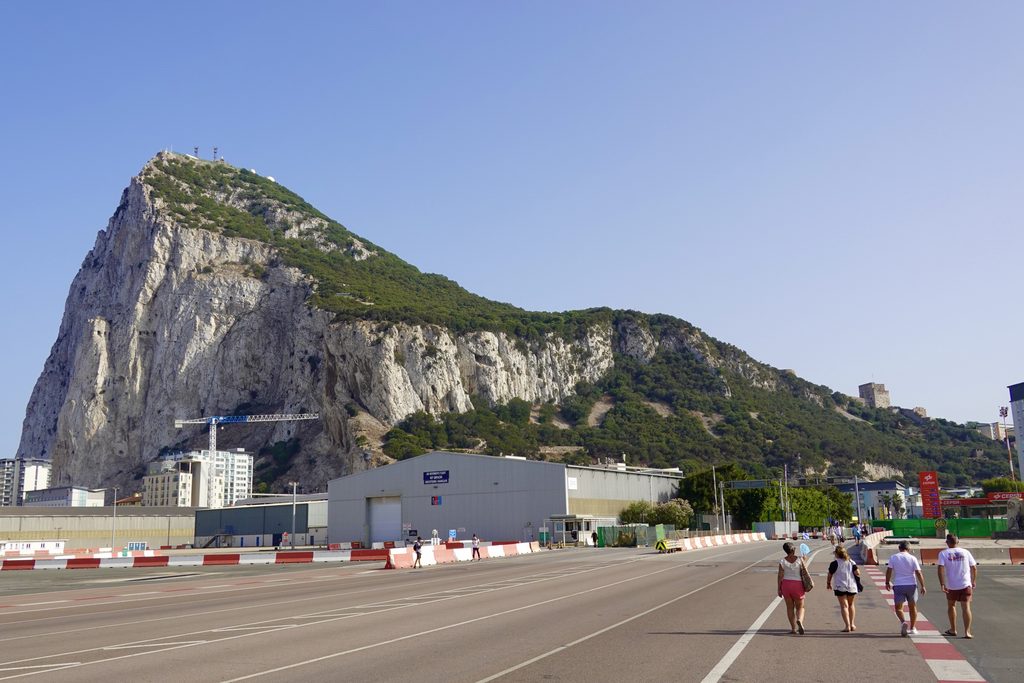
The British Overseas Territory of Gibraltar offers a distinct geopolitical contrast to its surroundings. Positioned at the mouth of the Mediterranean, the "Rock" is a self-governing territory with a unique status in the post-Brexit landscape.
Travelers entering from Morocco typically arrive via the Spanish border at La Línea de la Concepción. It is essential to note that while Gibraltar is not in the Schengen Area, its proximity to Spain necessitates careful attention to visa requirements. The territory is a hub for high-end tourism and international finance, and its infrastructure, including the famous runway that intersects the main thoroughfare into the city, remains a testament to its limited landmass and strategic utility.
Southward Bound: Western Sahara and Mauritania
For the adventurous, the journey south from Morocco into the Western Sahara and toward Mauritania presents a different set of logistical and security considerations.
The Western Sahara region is a territory with a complex legal and political status, administered largely by Morocco. Coastal cities such as Laayoune and Dakhla have seen significant infrastructure development, particularly in the renewable energy and tourism sectors. Dakhla, in particular, has emerged as a world-class destination for kitesurfing and water sports, attracting a global demographic of athletes.
Travel to Mauritania, however, requires a high level of preparedness. The border crossing at Guerguerat represents the final checkpoint before entering the Mauritanian frontier. Unlike the high-frequency crossings of the Mediterranean, this route is remote. Travelers must possess a valid visa for Mauritania, often secured in advance, and must be aware of the harsh environmental conditions of the Sahara Desert. Diplomatic advisories frequently cite the need for extreme caution regarding political stability in remote border regions.
The Morocco-Algeria Border: A Diplomatic Stalemate
A critical component of any regional travel itinerary is the understanding of regional constraints. The land border between Morocco and Algeria has been officially closed since 1994. The closure, stemming from regional political tensions and security concerns, remains absolute.
Furthermore, all direct commercial flights between the two nations are suspended. For the traveler, this means that any movement between the two countries must be routed through a third-party hub, most commonly Tunis, Paris, or Istanbul. It is a vital fact for planners to note: there is no overland route currently available, and attempts to traverse the border are strictly prohibited by both authorities.
Strategic Implications for the Regional Traveler
The ability to move seamlessly between Morocco, the Spanish territories, and beyond is not merely a convenience for the tourist; it is a reflection of the interconnected nature of the Mediterranean basin.
From an economic standpoint, the integration of these transport corridors supports a thriving tourism sector that contributes significantly to the GDP of the Maghreb region. However, the reliance on these routes requires an awareness of the shifting regulatory environment. Border protocols, particularly in the post-pandemic era, are subject to rapid change based on health regulations or shifting diplomatic relations.
For the modern traveler, the "Beyond Morocco" itinerary represents a bridge between distinct cultural spheres—the Islamic heritage of North Africa, the Latin influence of the Iberian Peninsula, and the unique British colonial legacy in Gibraltar. Whether one chooses the ferry route for the panoramic views of the Strait or the speed of an aerial connection, the key to a successful journey lies in the meticulous preparation of documentation and a grounded understanding of the regional political landscape.
As the region continues to invest in infrastructure—such as the planned high-speed rail expansions and port upgrades—the connectivity between these points will only deepen. Travelers who take the time to navigate these borders effectively will find themselves rewarded with a holistic view of a region that remains one of the most historically and culturally significant corridors on the planet. Careful planning remains the hallmark of the experienced voyager in this corner of the globe.