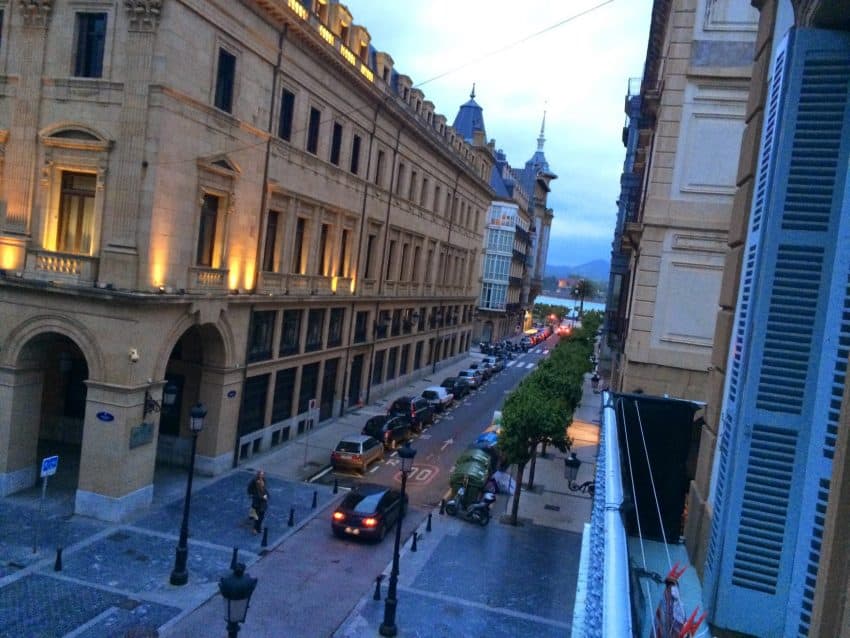
The physical architecture of modern leisure often conceals a surprising lineage, where municipal governance shares space with historical indulgence. In San Sebastián, Spain, visitors walking past the ornate, gold-adorned city hall at the edge of the Alderdi Eder gardens are rarely aware that the municipal chambers were originally constructed for an entirely different purpose. Opened in 1887 as the Gran Casino during an era when the Spanish royal family and European aristocracy summered in the region, the building reflects a continent-wide transformation of historic gaming venues. Following the Spanish government’s nationwide prohibition of gambling in 1924, the structure sat vacant before the local council repurposed the grand halls. Today, city officials debate local municipal logistics and waste management in a sprawling room originally engineered for high-stakes baccarat.
This architectural evolution mirrors the broader historical migration of table gaming across Europe—a trajectory that helped shape the urban design, tourism economies, and cultural milestones of several nations long before the industry found its modern anchor in Nevada.
The Origins of European Gaming Architecture
Long before the glittering lights of modern resort cities, European city-states grappled with unregulated wagering by institutionalizing the practice. The foundational blueprint for modern casino regulation was established in Venice in 1638 with the opening of the Ridotto. Situated in a wing of the Palazzo Dandolo near San Moisè and a short walk from Piazza San Marco, the institution was created by the Venetian Senate in response to rampant, disorderly gambling during the annual carnival season.
Rather than attempting to stamp out the practice entirely, the Venetian authorities decided that running the tables under strict state supervision was the tidiest administrative solution. The Ridotto operated under rigorous, highly formal regulations: patrons were required to wear masks, behavior was strictly policed, and stakes were maintained at exceptionally high levels to exclude ordinary citizens, thereby preserving social order among the nobility. For over a century, the venue generated substantial state revenue until the Venetian Senate ordered its permanent closure in 1774, concluding that the establishment was quietly bankrupting the local aristocracy. Today, the building stands as an understated historical landmark, blending seamlessly into the urban fabric of Venice.
Chronology of a Card Game: From Seville to Versailles
While physical casinos established the spatial parameters for European gaming, the card game most frequently associated with these venues—historically known as veintiuna or twenty-one—boasts a literary and cultural timeline that predates many of the grand establishments themselves.
Historical records and literary evidence trace the game’s roots to the Iberian Peninsula at the turn of the seventeenth century. Around 1602, Spanish author Miguel de Cervantes penned a novella featuring two card sharps operating along the docks of Seville, explicitly describing a game where players aimed to reach a target score of twenty-one using an ace that could function as either a one or an eleven.
By the eighteenth century, the pastime had migrated northward into the French royal courts, where it evolved into vingt-et-un. The game achieved significant fashionability at Versailles, demonstrating sufficient resilience to survive the political upheavals of the French Revolution before eventually crossing the English Channel. Despite centuries of evolution, industrial standardization, and the eventual transition to digital platforms and modern mathematical strategies, the foundational mechanical decision of the game has remained remarkably consistent. Whether played by pickpockets in Golden Age Seville or patrons in contemporary digital spaces, the core dilemma—evaluating whether the numeric value of a hand justifies the risk of drawing an additional card—has persisted across four centuries.
The Nineteenth-Century Spa Boom and the Cross-Rhine Migration
The nineteenth century marked a period of intense architectural and economic expansion for European gaming, largely driven by the spa tourism sector. In 1837, the French government enacted a strict prohibition on public gambling houses, prompting operators to relocate across the Rhine River into German territories.

Entrepreneur Jacques Bénazet assumed control of the gaming tables in Baden-Baden in 1838, and his son, Edouard, subsequently commissioned prominent Parisian designers to overhaul the local Kurhaus. This investment transformed a traditional German spa town into a lavish destination featuring salons directly inspired by the Palais Royal. The venue attracted international figures, including Russian novelist Fyodor Dostoevsky, whose financial ruin at the tables inspired his psychological fiction, and twentieth-century icon Marlene Dietrich, who famously characterized the Baden-Baden establishment as the most aesthetically impressive casino in the world.
While the gaming saloons have evolved into multi-use cultural and tourism hubs, the surrounding infrastructure—such as the historic Friedrichsbad thermal baths—continues to draw international visitors seeking nineteenth-century wellness traditions alongside architectural heritage.
Geopolitical Shifts and the Rise of Monaco
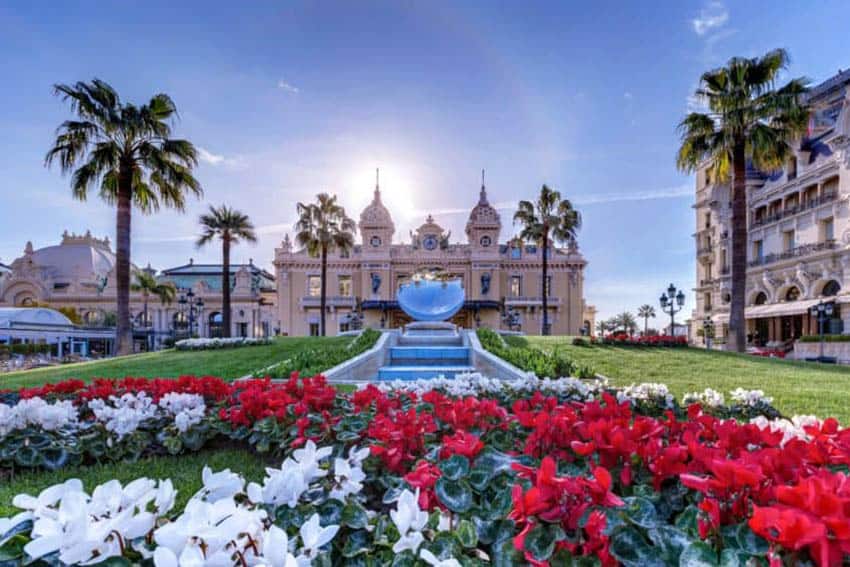
The geopolitical landscape of European gaming shifted dramatically in the latter half of the nineteenth century. In 1872, Chancellor Otto von Bismarck mandated the closure of German casinos, causing the industry’s capital to migrate southward to the Principality of Monaco. François Blanc had already begun developing the Monegasque tourism sector in 1863, and architect Charles Garnier—fresh from completing the Paris Opera—subsequently added the ornate Salle Garnier in 1879.

The economic model established in Monaco remains a unique case study in municipal taxation and tourism economics. By constitutional design, native Monegasque citizens are strictly prohibited from entering the gaming rooms. The entire operation was conceived to generate sufficient public revenue from international visitors to exempt local residents from paying personal income tax—a fiscal framework that remains operational today.
As the nineteenth century drew to a close, European operators and game variations increasingly looked westward. Following the legalization of gambling in Nevada in 1931, the European game of vingt-et-un intersected with American marketing innovations, eventually acquiring the moniker "blackjack"—reportedly derived from an early promotional payout for a hand containing an ace and a black jack.
Broader Economic and Cultural Implications
The preservation and repurposing of Europe’s historic gaming infrastructure highlight a broader trend in municipal asset management and cultural heritage tourism. Urban centers that once hosted the continent’s elite have had to reconcile nineteenth-century architectural opulence with twenty-first-century administrative realities.
Urban planners and cultural historians note that buildings originally designed for exclusivity—such as the Gran Casino in San Sebastián, the Ridotto in Venice, and the Kurhaus in Baden-Baden—now serve diverse civic and public functions. This adaptive reuse not only preserves significant architectural landmarks but also underscores the enduring legacy of historical leisure economies on modern European urban landscapes. As tourism authorities continue to market these historic routes to contemporary travelers, the physical remnants of Europe’s early gaming history serve as tangible links to an era when card tables helped finance the development of modern tourism.
Related posts: