The Digital Ghost Chamber: Why Your Modern Camera Is Still Run by Victorian Gears and Chemical Film

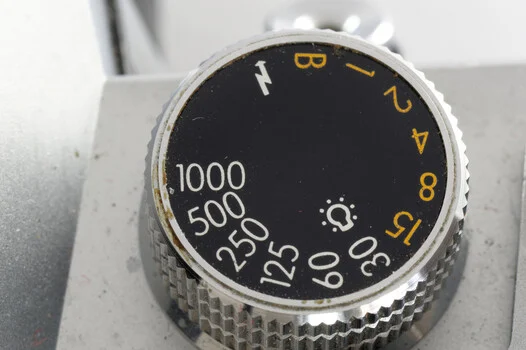
The 1/125 setting etched onto your digital camera’s shutter dial is, at its mathematical core, a historical rounding error that became an industry standard. True logarithmic progression would dictate a step at 1/128, a clumsy number to stamp into precision-milled metal. Instead, generations of engineers opted for clean integers, cementing a legacy born of brass gears, rubber bulbs, and gelatin-coated film. As photographic technology completed its massive migration from analog to digital sensors over the past three decades, these physical artifacts crossed the digital divide largely unexamined. Modern digital cameras—despite housing computerized image processors, millions of microscopic pixels, and advanced artificial intelligence algorithms—remain structurally beholden to the mechanical limitations of the nineteenth and twentieth centuries.
The Evolution of Exposure: Tracing Analog Relics in Modern Firmware
To understand why a modern mirrorless camera behaves the way it does, one must examine the hardware lineage of optical engineering. The historical timeline of photography is punctuated by inventions born of necessity that subsequently fossilized into permanent interface conventions.
Pneumatic shutter controls offer a prime example. Before modern electronic buttons governed exposures, the Letter B on a camera’s shutter speed dial stood for a rubber bulb connected via an air hose. Squeezing the bulb exerted pneumatic pressure on an internal piston, opening the shutter blades until the pressure subsided. Historical records from the era reveal divergent etymologies: a 1909 Sears Roebuck catalog explicitly details the pneumatic operation, while 1894 documentation from Munich-based C. A. Steinheil und Söhne utilized the marking B to denote beliebig, the German word for "any time." Concurrently, Eastman Kodak manuals frequently glossed the setting as "brief time."
Though modern sensors no longer rely on compressed air, the B setting endures as an open-ended duration control. While contemporary flagship bodies like the Nikon Z8 offer extended timed manual ranges up to 900 seconds, and Fujifilm cameras provide a designated T (Time) mode managed via command dials, the B setting remains unique. It commands the sensor to record light continuously for up to 60 minutes, constrained only by the physical endurance of the human finger holding down the shutter release—a limitation easily circumvented today by remote triggers and smartphone applications.
The Mathematics of Convenience: Rounded Shutter Speeds and International Standards
The sequence of fractions governing shutter speeds—1/8, 1/15, 1/30, 1/60, 1/125, 1/250, 1/500, and 1/1,000—represents a systematic departure from pure mathematics. Based on the fundamental law of exposure doubling, the actual series should read 1/8, 1/16, 1/32, 1/64, 1/128, 1/256, 1/512, and 1/1,024. Every doubling of light transmission is physically accurate, but every numerical marking above 1/8 is a concession to human readability. What photographers casually call a 30-second exposure is mathematically 32 seconds, and the 1/8,000 top speed on modern professional bodies rests at precisely 1/8,192 of a second.
This practice is codified under international manufacturing standards. ISO 516, currently in its 2019 revision, governs exposure-time markings and regulates the mechanical and electronic tolerances expected of camera shutters. The standard formally defines the underlying series via the formula (t_E = 1/2^n), explicitly listing out the true fractional values before instructing manufacturers to stamp shutters with "rounded-off values" for consumer ease.
Historical precursors utilized alternative rounding schemas, shifting between decimal-anchored series (such as 1/10, 1/25, 1/50, 1/100) and power-of-two progressions. While these rounded ladders have negligible impact on standard photographic exposures, they present critical challenges when shooting under artificial illumination. Fluorescent and LED lighting sources pulse rapidly—fluorescent tubes cycle at twice the local mains frequency (100 or 120 Hz), while modern LEDs introduce high-frequency driver-based flicker. To combat banding, camera manufacturers including Sony and Fujifilm have introduced specialized anti-flicker modes and variable shutter adjustments, essentially forcing digital shooters to step off the standardized, rounded speed ladder and onto customized increments matched precisely to the electrical frequency of the environment.
Mechanical Curtains and the Physics of Flash Synchronization
Flash sync speed remains an unyielding physical constraint dictated by the architecture of focal-plane shutters. Mechanically, a focal-plane shutter consists of two independent curtains traversing the sensor plane. At slower speeds, the first curtain completes its journey before the second begins, exposing the entire sensor simultaneously and allowing a strobe’s burst of light to illuminate the full frame. At speeds exceeding the designated sync threshold—such as 1/250 of a second on the Sony a7 IV—the second curtain launches before the first has fully cleared, creating a moving slit of light that sweeps across the sensor. Firing a full flash during this phase results in partial illumination, capturing a distinct horizontal stripe rather than a balanced exposure.
Even advanced sensor designs without physical curtains, such as the Nikon Z8, must respect flash synchronization limits due to the inherent reading time of their electronic sensors. Row-by-row sensor readout functions as an electronic traveling slit, maintaining the functional necessity of the 1/250 or 1/200 second threshold. While High-Speed Sync (HSS) bypasses this limitation by converting the flash unit into a rapid strobe pulse, it incurs a substantial cost in light output, driving professional operators to rely on neutral density filters or leaf-shutter systems instead.
The Emulsion Legacy: ISO, Film Speeds, and Sensor Amplification
The term ISO, which governs the sensitivity metrics of digital imaging, is an organizational framework inherited directly from chemical film emulsions. DIN 4512 was established in Germany in January 1934, followed by the American Standards Association (ASA) scale in 1943. A significant revision in 1960 eliminated embedded safety factors, effectively doubling the rated speed of black-and-white negative films overnight. These disparate systems were eventually consolidated under the International Organization for Standardization (ISO) starting in 1974, producing designations such as ISO 400/27°—pairing the arithmetic ASA figure with the logarithmic DIN degree.
When digital sensors replaced chemical film, the metrics required a complete redefinition. ISO 12232, first published in 1998 and updated through its 2019 revision, provides camera manufacturers with multiple pathways to calculate digital exposure indexes, including saturation-based speeds, standard output sensitivity tied to 18 percent gray, and recommended exposure indexes.
Unlike film, a digital sensor possesses a fixed baseline light-gathering capacity. The ISO dial on a modern digital camera controls analog amplification and, in advanced sensor designs, secondary conversion gain stages to optimize signal-to-noise ratios. Extended ISO values—often labeled as ‘L’ (Low) or ‘H’ (High)—operate outside formal ISO standards, typically representing underexposed base captures digitally pulled back or raw data multiplied post-capture. Consequently, digital cinematographers and photographers aiming for maximum dynamic range routinely anchor their work to the sensor’s native base ISOs, bypassing extended digital amplification.
Aperture Scales, Third-Stop Clicks, and the Waterhouse Stop
The granular control wheel that allows photographers to adjust exposures in precise third-stop increments is similarly rooted in analog history. The concept of the photographic "stop" predates modern standardization, originating in the mid-nineteenth century when exposure adjustments required physically swapping metal plates inserted into the lens barrel. John Waterhouse revolutionized this workflow in 1858 by introducing standardized perforated metal plates—known as Waterhouse stops—which were eventually superseded by the iris diaphragm.
The numerical scale governing apertures (f/1.4, f/2, f/2.8, f/4, f/5.6, f/8, f/11, f/16, f/22) is derived from powers of the square root of two, reflecting the geometric reality that halving the area of a circular aperture requires dividing its diameter by approximately 1.414. Like shutter speeds, these numbers are practical approximations; f/11 is mathematically 11.3137, and f/22 is 22.627.
The division of these stops into thirds mirrors the logarithmic steps of the DIN film speed scale, where a single degree represented one-third of a stop. While modern digital camera menus offer customizable step increments—allowing users to switch between third-stop and half-stop intervals—the underlying grid structure remains tied to century-old optical and chemical conventions.
Exposure Compensation and the Legacy of Film Cassettes
Exposure compensation dials are another structural carryover from the era of static photographic media. On a mechanical film camera, the ISO was locked for the duration of a 36-exposure roll. Photographers frequently manipulated exposure meters by manually altering the ASA input—intentionally rating an ISO 400 film at 200 to force an extra stop of exposure across every frame.
The dedicated exposure compensation dial gained widespread prominence in the mid-1970s, exemplified by the Olympus OM-2 in 1975. The introduction of DX-coding by Kodak on January 3, 1983, automated film speed detection via conductive patterns printed directly on film cassettes, inadvertently removing manual ISO overrides on many consumer bodies and cementing the exposure compensation dial as the primary physical mechanism to overrule automated internal metering.
In the digital domain, where ISO can be altered seamlessly between frames, exposure compensation survives as a manual bias applied to automated metering algorithms. While electronic viewfinders and live histograms allow real-time evaluation of highlights and shadows, physical exposure compensation dials remain prone to inadvertent shifts during transport. To mitigate this, manufacturers of retro-styled bodies like the Nikon Zf and Fujifilm X-T series allow physical dials to be assigned to command positions, integrating compensation controls into internal digital viewfinders where operators can monitor adjustments dynamically.
The Indestructible Thread: Mechanical Cable Releases and Modern Hardware
Perhaps the most tangible physical fossil remaining on contemporary cameras is the threaded mechanical shutter button. Originally designed to eliminate camera shake during long exposures, the system was revolutionized by Ernest Monnington Bowden’s 1896 patent for a flexible cable transmission—a stiff inner wire sliding within a protective sheath. Standardized globally by ISO 6053:1979, the tapered thread dimensions established over a century ago ensure that mechanical cable releases manufactured decades ago remain fully compatible with select modern equipment.
While modern bodies such as the Fujifilm X100VI and X-T5 retain functional threaded shutter sockets supporting traditional mechanical cable releases, other manufacturers have repurposed the architecture. On cameras like the Leica Q3, the threaded socket accepts decorative "soft release" buttons to alter ergonomics, while lacking an internal through-hole for mechanical cable actuation, rendering the port purely aesthetic. For electronic remote triggering, contemporary operators rely on dedicated 2.5mm auxiliary ports or wireless smartphone applications.
Industry Implications and Future Outlook
The persistence of these analog design elements highlights a fundamental reality of industrial design: ergonomic familiarity frequently supersedes purely mathematical optimization. Camera manufacturers understand that the tactile feedback of a physical shutter dial, the mechanical click of an aperture ring, and the standardized spacing of exposure values provide an intuitive interface for human operators.
As computational photography and sensor technologies continue to evolve, the underlying digital architecture will undoubtedly abstract further away from physical constraints. Yet, the enduring presence of nineteenth-century mechanics in twenty-first-century imaging tools demonstrates that while the medium has transitioned entirely from chemical reactions to binary data, the physical ritual of photography remains anchored to its historical roots.