Antigravity A1 Drone Redefines Aerial Cinematography with 360-Degree Capture and Gimbal-Free Design

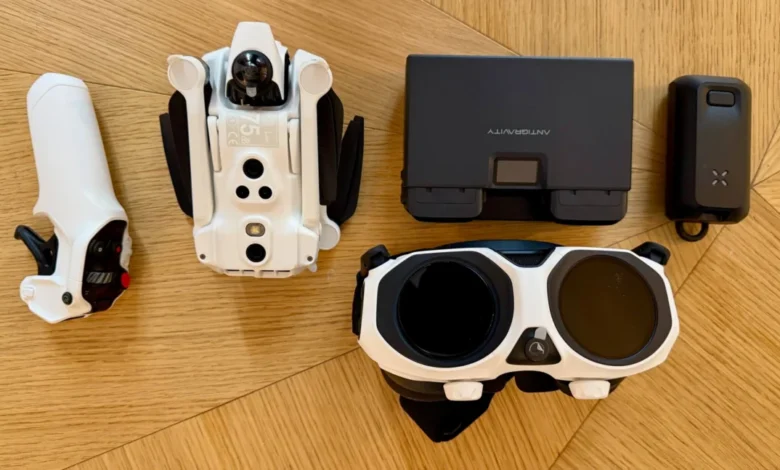
The Antigravity A1, released in late 2025, marks a significant paradigm shift in aerial photography and videography, aiming to render traditional camera gimbals obsolete for a substantial segment of content creators. By integrating a pioneering dual-lens 360-degree capture system, the A1 records an entire spherical environment simultaneously, offering users an unprecedented "fly now, frame later" experience. This innovative approach transforms drone piloting from a meticulous real-time framing exercise into a dynamic, immersive direction of a virtual camera within a pre-recorded digital world. This review delves into the features, performance, and broader implications of this groundbreaking device, based on hands-on experience and its position within the evolving drone market.
The Evolving Landscape of Drone Technology and Aerial Storytelling
The drone market has witnessed exponential growth over the past decade, evolving from niche hobbyist equipment to indispensable tools for professional filmmakers, photographers, and everyday travelers. Companies like DJI, Autel, and Skydio have consistently pushed the boundaries of flight stability, camera quality, and autonomous capabilities. However, a persistent challenge in aerial cinematography has been the inherent complexity of simultaneously piloting a drone, navigating its environment, and meticulously controlling a gimbal-stabilized camera to achieve the perfect shot. This often requires highly skilled pilots or even a two-person crew, one for flight and one for camera operation, increasing production costs and technical barriers.
Concurrently, 360-degree cameras have gained traction, offering immersive perspectives for virtual reality and unique narrative styles. Devices from Insta360 and GoPro have democratized spherical capture on the ground, but translating this technology effectively to aerial platforms has been problematic. Early attempts often suffered from small sensors, limited dynamic range, and the inescapable presence of the drone itself within the 360-degree stitch, breaking the illusion of a floating camera. The Antigravity A1 directly addresses these limitations, building on the strengths of both drone and 360-camera technologies while mitigating their respective weaknesses. Its introduction comes at a time when creators are constantly seeking novel ways to tell stories and engage audiences, making its "fly now, frame later" philosophy particularly compelling.
Antigravity A1: A Chronology of Innovation
The conceptualization of the Antigravity A1 began several years prior to its late 2025 release, driven by a vision to simplify aerial content creation and unlock new creative possibilities. The core challenge for its developers was to overcome the physical constraints of traditional drone design – primarily the need for a mechanical gimbal to stabilize and direct a single camera. Their solution involved embracing a fundamentally different approach: capturing everything, everywhere, all at once. This led to the development of a unique dual-lens system and advanced computational photography techniques.
Upon its unveiling, the A1 immediately garnered attention for its audacious claim of obsolescing the gimbal. Initial prototypes demonstrated the feasibility of its seamless 360-degree capture, with particular emphasis on the post-processing capabilities that digitally remove the drone from the final footage. The late 2025 launch marked the culmination of extensive research and development, bringing to market a device that promised to democratize complex aerial shots previously reserved for high-budget productions. The product’s strategic design choices, such as its sub-250-gram weight, indicate a deep understanding of not only technological innovation but also the practical regulatory landscape governing drone operation worldwide.
Dual-Lens System: Eliminating Blind Spots and Gimbals
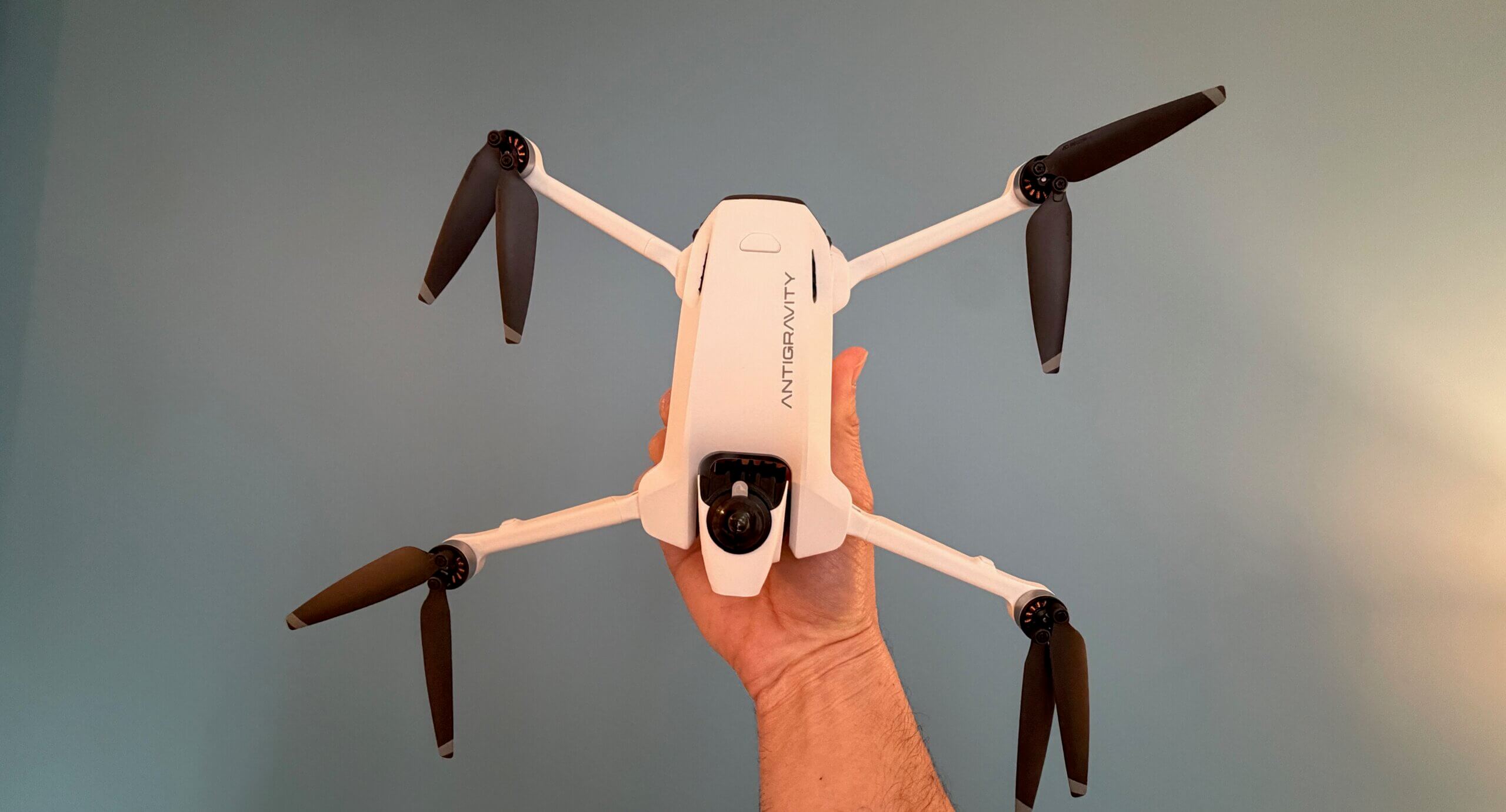
At the heart of the Antigravity A1’s revolutionary design is its dual-lens configuration. Unlike most drones that feature a single, forward-pointing camera, the A1 incorporates two ultra-wide-angle lenses. These are strategically positioned on the top and bottom of the central fuselage, each boasting an impressive 200-degree field of view. When the footage from these two lenses is meticulously combined through advanced stitching algorithms, they create a perfect, seamless 360-degree spherical image. This eliminates any blind spots and ensures that every angle is captured simultaneously, regardless of the drone’s orientation or flight path.
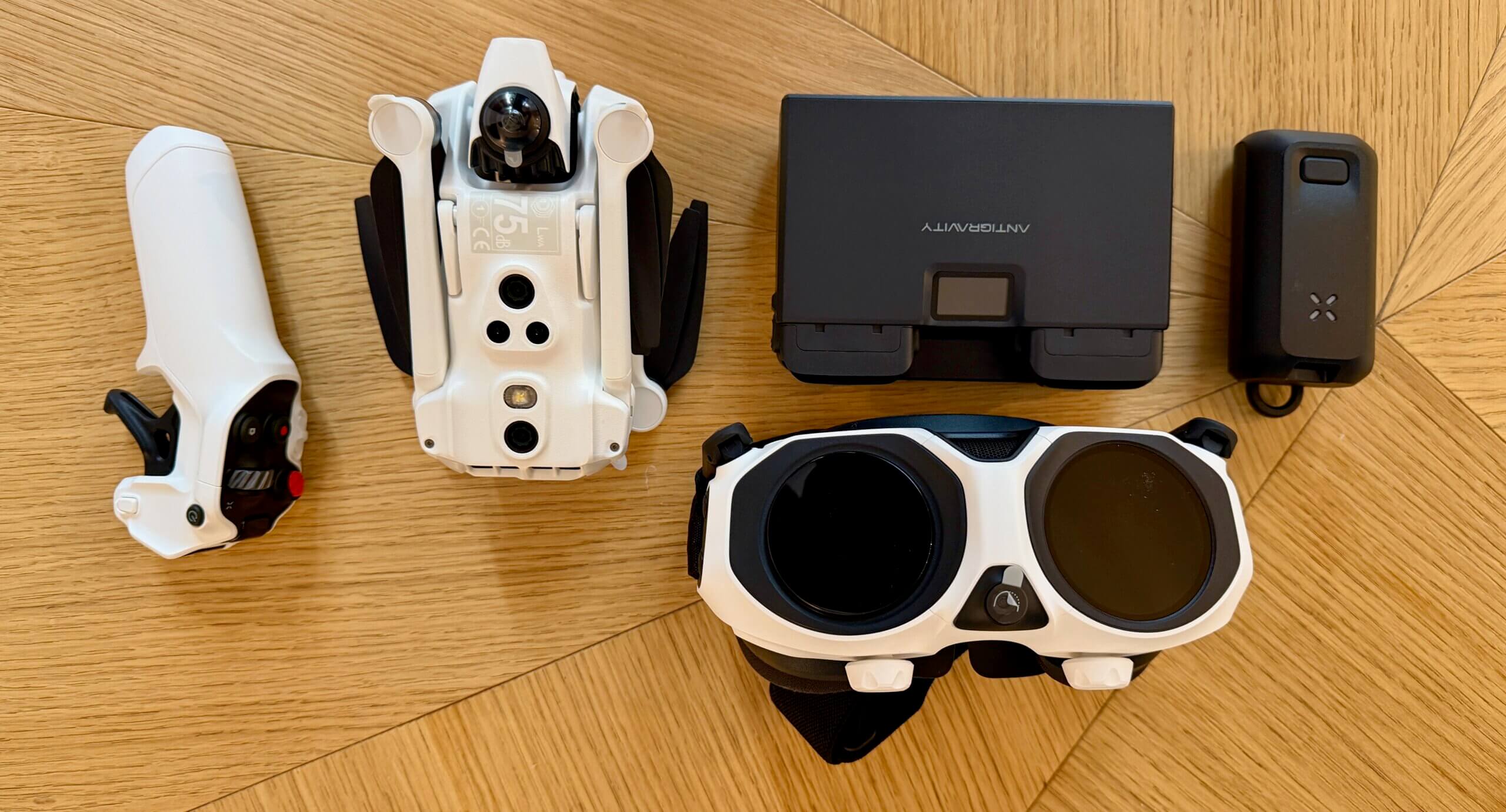
A key innovation accompanying this dual-lens system is the A1’s ability to digitally remove itself from the final exported footage. This sophisticated computational process, often referred to as "invisible drone" technology, creates the compelling illusion of a camera floating unassisted in mid-air. This not only enhances the visual storytelling by removing distracting elements but also reinforces the sense of creative freedom, allowing the pilot to focus purely on the flight dynamics rather than camera framing.
Advanced Sensor Technology and Robust Construction
The image quality delivered by the Antigravity A1 is underpinned by its choice of sensors. The drone features 1/1.28-inch CMOS units, a specification that positions it uniquely in the market. While these sensors are marginally smaller than the 1-inch sensors typically found in high-end "Pro" level photography drones (like certain DJI Mavic models), they are significantly larger than the sensors commonly used in typical 360-degree action cameras. This critical difference translates directly into superior image performance, particularly in challenging lighting conditions. The larger sensor size allows for significantly better low-light performance, capturing more detail and reducing noise in dim environments. Furthermore, it contributes to a higher dynamic range, enabling the A1 to preserve intricate details in both bright highlights and deep shadows, which are often lost in the harsh contrast of a midday sun. This ensures a richer, more cinematic look to the footage.
Beyond its optical capabilities, the A1 boasts a remarkably sturdy and portable physical design. Weighing precisely 249 grams with its standard battery, the Antigravity A1 strategically falls below the 250-gram threshold that mandates registration and stricter flight rules in numerous countries, including the United States (FAA) and those under European Union Aviation Safety Agency (EASA) regulations. This intentional design choice significantly lowers the barrier to entry for many users, making it a highly attractive option for travelers and casual creators who wish to avoid complex bureaucratic processes. The drone’s construction utilizes a high-grade carbon-fiber-reinforced polymer, a material known for offering a superior strength-to-weight ratio compared to the standard ABS plastic prevalent in many cheaper drone models. This choice contributes to the A1’s perceived durability and resilience. Its folding mechanism is engineered for precision, clicking into place with a satisfying tactile feedback that suggests long-term reliability. When folded, the drone is compact, roughly the size of a large smartphone, albeit about three times as thick, making it highly portable for travel.
Revolutionary Flight Experience: Immersive Control and Intuitive Piloting
The Antigravity A1 reimagines the drone piloting experience through a combination of innovative hardware and software. Central to this experience are the Vision Goggles, a sleek and lightweight head-mounted display unit. These goggles feature dual 4K micro-OLED displays with a fluid 120Hz refresh rate, delivering incredibly sharp and vibrant visuals directly to the pilot’s eyes. Crucially, the latency between the drone’s capture and the goggle feed is nearly non-existent, ensuring a real-time, highly responsive experience. The integrated head tracking further elevates immersion; because the drone is recording in 360 degrees, the pilot is not confined to a forward-facing view. Turning one’s head left pans the goggle feed to the left, while looking down reveals the ground passing beneath. This dynamic, immersive perspective provides an unparalleled sense of presence and spatial awareness that is simply unachievable with traditional fixed-camera drones.
Complementing the goggles is a revolutionary single-handed motion controller. This intuitive device simplifies flight control to an almost instinctive level. Pilots simply point the controller in the desired direction of travel and pull a trigger to accelerate. Tilting the wrist left or right banks the drone, while raising or lowering the nose of the controller adjusts altitude. This system allows even novice pilots to navigate complex environments with remarkable ease and confidence within minutes. For seasoned FPV (First Person View) pilots who prefer the granular precision of manual acrobatic flight, the A1 does retain support for a traditional "Mode 2" stick controller. However, the fluidity and responsiveness of the motion controls are so compelling that many users, even experienced ones, may find little reason to revert to traditional methods.
In terms of flight dynamics, the A1 is best described as a "cinewhoop" style flyer. This means it prioritizes stability and predictable movements over aggressive agility, making it ideal for smooth, cinematic shots. It achieves a respectable top speed of approximately 36 mph (around 58 km/h), which is more than sufficient for tracking subjects like bicycles or cars, though it is not designed to keep pace with dedicated professional racing drones. A practical feature that enhances its user-friendliness is "Turtle Mode." In the event of a crash that leaves the drone upside down, this ingenious function allows the A1 to use its propellers to flip itself upright, enabling immediate re-launch without the need for a physical recovery, thereby saving time and reducing potential damage.
Unlocking Creative Potential: Camera Performance and Post-Production Workflow
The Antigravity 360’s marketing prominently features "8K Resolution," a specification that requires careful interpretation in the context of 360-degree video. In traditional flat video, 8K signifies a densely packed pixel count within a standard 16:9 rectangular frame. However, in 360-degree video, these 8K pixels are distributed across a full spherical image. When a user subsequently "reframes" a standard flat video from this 8K sphere, they are essentially cropping a portion of the total image. While this still provides a high-resolution output for a reframed shot, it’s distinct from native 8K resolution on a fixed-lens camera.
A notable improvement in the A1 is its color science, which is significantly enhanced compared to previous generations of 360-degree cameras. It offers two distinct color profiles: a "Vivid" profile, designed for vibrant, punchy colors that are immediately ready for social media sharing, and a 10-bit "Log" profile. The Log profile is a crucial addition for professional editors, providing a flatter, desaturated image with maximum dynamic range, allowing for greater flexibility in post-production color grading and seamless matching with footage from other professional cameras. The drone’s stabilization, powered by Antigravity’s proprietary "FlowState" algorithms, is nothing short of miraculous. This advanced electronic image stabilization system can maintain footage as steady as if the camera were mounted on a tripod, even when the drone is battling challenging conditions like 20mph winds.
The post-production workflow is streamlined through the intuitive "Antigravity Studio" app. This application allows users to download footage wirelessly at impressive speeds of up to 80MB/s. The most innovative feature of the app is its ability to reframe video using the phone’s gyroscope. Users simply watch the captured 360-degree video and move their phone around in real-time to "film" the scene from any desired angle within the sphere. The app further enhances productivity with "Auto-Frame," an AI-powered tool that intelligently identifies subjects in the footage and automatically generates a compelling cut, ensuring that key elements remain in focus and compositionally sound. For solo creators, this effectively provides a virtual camera crew that dramatically reduces editing time and ensures no crucial moment is missed.
Battery Life and Efficiency
Battery technology remains a primary bottleneck for all small drones, and the Antigravity A1 is no exception. Its standard Intelligent Flight Battery offers a theoretical flight time of 24 minutes. In real-world conditions, factoring in moderate wind resistance and continuous recording, users can expect approximately 19 to 20 minutes of flight. While 20 minutes might seem brief on paper, the "work per minute" achieved with the A1 is significantly higher than with a traditional drone. Because the pilot does not need to re-fly a path multiple times to capture different angles, a single 20-minute flight can yield the same amount of usable and creatively diverse footage as three separate flights with a conventional drone like a Mavic. For creators requiring extended flight durations, Antigravity offers a "Pro Battery," which extends flight time to a staggering 39 minutes. However, it’s important to note that this larger battery pushes the drone’s weight over the 250-gram regulatory threshold, requiring registration in applicable jurisdictions and slightly compromising the drone’s agility due to the increased mass.
Broader Implications and Market Impact
The Antigravity A1 is more than just a new drone; it represents a significant step towards the future of aerial content creation. Its "fly now, frame later" paradigm liberates pilots from the dual cognitive load of flying and framing, allowing them to focus entirely on the narrative they wish to convey. This creative liberation is particularly impactful for solo creators, travel bloggers, and documentary filmmakers who often operate with limited resources. By simplifying the technical aspects of aerial cinematography, the A1 lowers the barrier to entry for achieving complex and dynamic shots, previously only attainable by highly skilled professionals or multi-person crews.
Industry analysts suggest that the A1 has the potential to carve out a substantial niche in the prosumer drone market, challenging established players to innovate further in areas of user experience and post-capture flexibility. While its image quality may not yet rival that of dedicated high-end cinema drones with larger sensors and interchangeable lenses, the A1’s unique workflow and immersive flight experience offer a compelling alternative for creators prioritizing efficiency, creative freedom, and unique perspectives. The delicate nature of its exposed ultra-wide-angle lenses is a minor consideration, but one that users will need to be mindful of.
The Antigravity A1 stands as the most exciting drone tested in recent memory. By removing the traditional constraints of gimbal-based framing and enabling an unparalleled immersive flight experience, it empowers pilots to focus on the storytelling aspect above all else. It successfully bridges the gap between conventional cinematography and the burgeoning world of immersive VR, offering a tool that feels both familiar and futuristic. For any creator tired of conventional drone shots and eager to explore the outer limits of aerial videography, the Antigravity A1 is not merely an accessory but an essential addition to their creative toolkit, poised to redefine what is possible from the skies.