For decades, international travelers navigating Europe faced a tedious ritual upon arrival: hunting down local storefronts to purchase physical SIM cards, fiddling with tiny SIM-ejector tools, and meticulously preserving their home-country SIM cards to avoid losing them. Today, the steady proliferation of embedded electronic SIM (eSIM) technology has fundamentally transformed how tourists and business travelers access high-speed mobile data abroad. By bypassing physical hardware entirely, modern smartphones equipped with eSIM capabilities allow users to connect to European mobile carriers digitally within minutes. As telecommunications infrastructure shifts further toward software-based activation, understanding the nuances of these digital plans has become a crucial aspect of international travel preparation.
Background and Context of European Telecommunications

The modern landscape of European mobile data is heavily shaped by regulatory milestones established by the European Union. Years ago, the EU officially outlawed mobile data roaming fees within member states. This single regulatory decision created a frictionless cross-border digital market for consumers. Consequently, a prepaid data plan purchased through a French carrier, for instance, functions seamlessly without additional roaming charges when the user crosses borders into Italy, Germany, Spain, or Poland.
However, this regulatory harmonization does not uniformly apply to every corner of the continent. Non-EU nations such as Switzerland and post-Brexit United Kingdom often fall outside standard EU roaming mandates. Travelers visiting these regions must carefully verify the coverage maps of their chosen eSIM providers to avoid unexpected service interruptions or exorbitant pay-as-you-go fees.
The Evolution from Physical SIM Cards to Digital eSIMs

The technological shift toward eSIMs mirrors a broader industry trend of hardware minimalism within consumer electronics. Traditional nano-SIM cards required physical slots that consumed valuable internal space within smartphones. Apple accelerated this transition when it removed the physical SIM tray entirely from United States models of the iPhone 14, relying completely on dual eSIM functionality. Similar hardware adaptations have been rapidly adopted across flagship Android devices manufactured by Google, Samsung, and other leading tech enterprises.
Beyond eliminating the need for physical card swaps, eSIM technology offers significant operational advantages. Travelers can pre-purchase and install an eSIM profile while still at home by scanning a QR code delivered via email. This allows them to land in Europe with an active, pre-configured data connection. Furthermore, dual-SIM configurations enable users to maintain their domestic phone numbers for essential security functions—such as receiving two-factor authentication codes from banks—while simultaneously utilizing a local or regional European data package.
Comparative Analysis: International Carrier Roaming Versus Prepaid eSIMs

For travelers originating in North America or Australia, relying on domestic mobile providers for international coverage has historically been the path of least resistance. Major carriers such as AT&T, Verizon, and T-Mobile offer international add-on packages, but these services frequently present considerable financial and operational drawbacks.
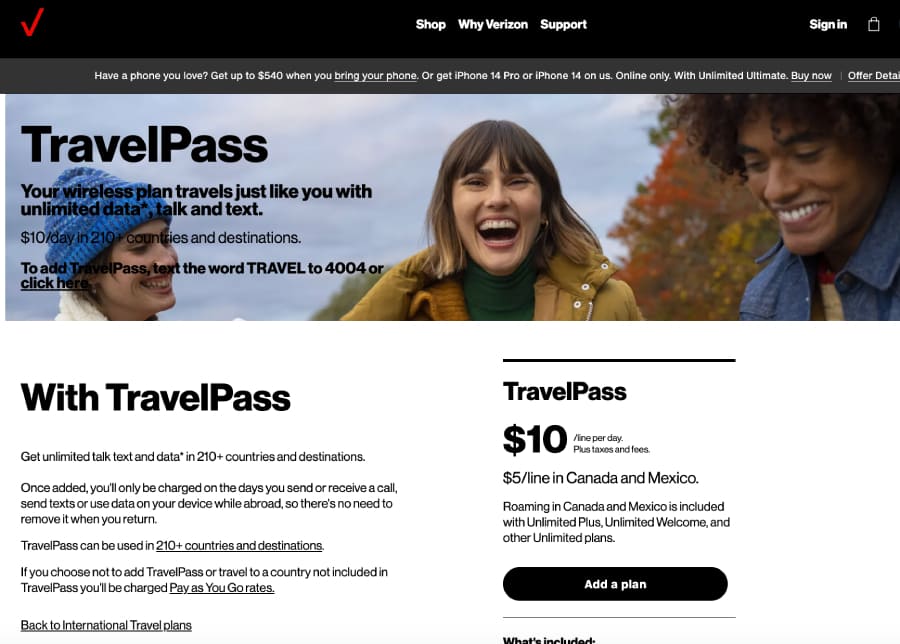
Daily international day passes offered by major US carriers typically cost approximately $10 per day, which accumulates rapidly over a standard two-week vacation. Furthermore, these plans often impose severe throttling limits. For example, some major providers reduce users to sluggish 3G speeds after consuming just 2GB of data in a single day. Other carriers offer complimentary international data, but restrict speeds to 2G after a designated threshold, rendering data-intensive tasks like navigation and real-time transit tracking nearly impossible.
In contrast, third-party prepaid eSIM providers offer significantly more economical alternatives. Specialized regional data providers and major European telecommunications companies offer eSIM packages that typically cost between $2 and $5 per day. These prepaid options generally provide full 4G LTE and 5G speeds without hidden daily throttling caps, representing a cost savings of up to 80 percent compared to traditional domestic roaming add-ons.
Leading European eSIM Providers and Plan Structures
The market for European eSIMs features a diverse array of providers, ranging from independent digital-first startups to established traditional telecommunications giants. Selecting the appropriate plan depends heavily on the traveler’s duration of stay, data consumption habits, and communication needs.
Orange Holiday Europe eSIM
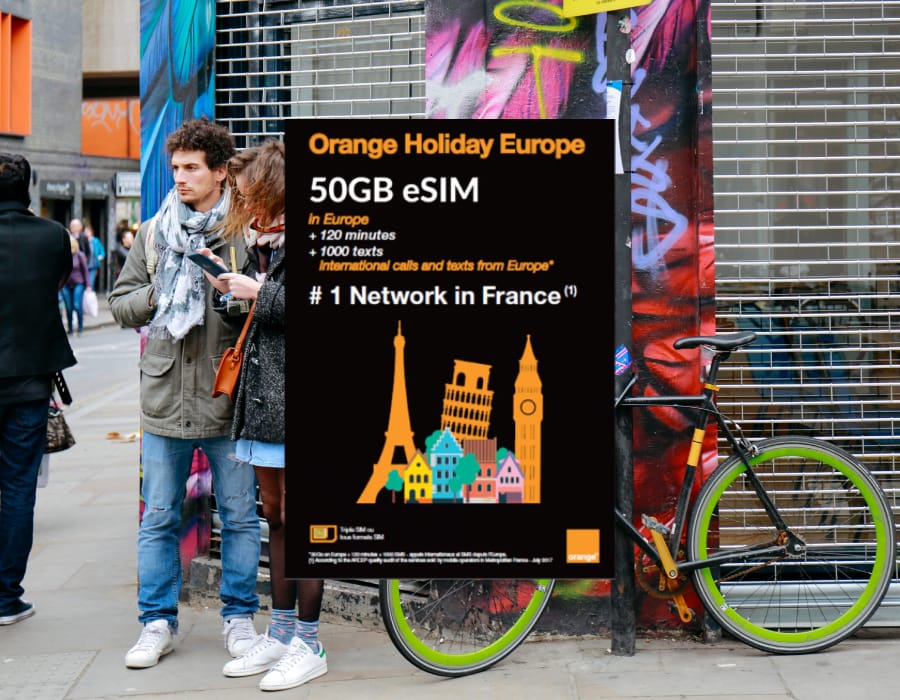
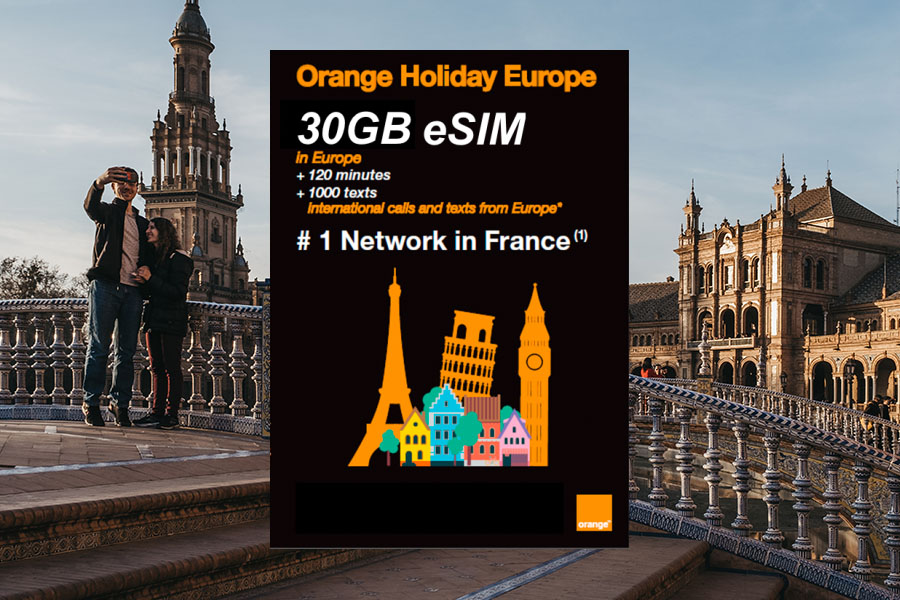
Orange, one of Europe’s largest telecommunications operators, offers comprehensive prepaid eSIM packages designed specifically for international visitors. Their flagship 30GB and 50GB plans operate on robust network infrastructure, ensuring optimal coverage and high data speeds across the continent. Notably, Orange plans include a legitimate French phone number, allowing users to make traditional voice calls and send SMS messages throughout Europe. These plans also fully support mobile hotspot usage, enabling users to share their connection with laptops or companion devices. While standard plans feature a 14-day validity period, expanded options extend availability to 28 days.

Holafly Unlimited Data eSIM
For heavy data consumers, Holafly provides customized regional and country-specific eSIM plans featuring unlimited data allotments. Operating on flexible subscription durations ranging from 1 to 90 days, Holafly’s model eliminates the risk of running out of data mid-trip. While these plans typically restrict mobile hotspot sharing to a strict daily allowance, they offer peace of mind for users who rely constantly on cloud storage, video streaming, and heavy social media navigation.
Bouygues Telecom My European eSIM
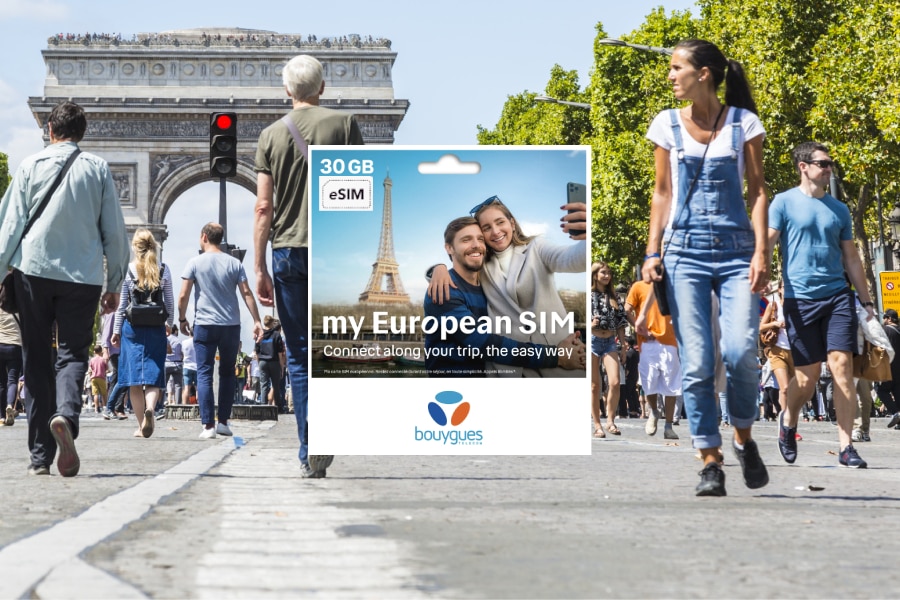
As another major French telecommunications provider, Bouygues offers competitive prepaid eSIM options tailored for extended itineraries. Their standard European eSIM package features a generous 30-day validity period, bundled with substantial data allowances and unlimited voice calls within the EU. This makes it an ideal choice for backpackers and long-term tourists seeking reliable coverage without frequent plan renewals.
Smart Comfort X and Regional Alternatives
Budget-conscious travelers with modest data requirements often turn to international data-only eSIM brokers such as SimOptions, which aggregate plans from various partner networks. Offerings like the Smart Comfort X plan provide smaller data blocks—such as 5GB—at minimal cost. Because these international eSIMs rely on agreements with multiple local carriers rather than a single parent network, they automatically route the user to optimized local partners, such as O2 in Germany or Movistar in Spain.
Practical Implications of Operating Digital Data Plans in Europe
Modern European infrastructure relies heavily on continuous mobile connectivity. Digital adoption has accelerated across transportation networks, hospitality sectors, and cultural institutions. High-speed mobile data is no longer merely a convenience for checking social media; it is an operational necessity for contemporary travel.
Physical paper train tickets have largely been replaced by digital barcodes scanned directly from smartphone screens. Restaurant menus are frequently accessible exclusively through quick response (QR) codes, and many dining establishments require mobile payment applications or digital banking authentication to settle bills. Furthermore, real-time public transportation schedules, rideshare platforms like Uber, and digital reservation systems for major tourist attractions mandate consistent, reliable internet access.

Step-by-Step Activation and Technical Requirements
Activating a European eSIM involves a straightforward digital procedure, though certain technical prerequisites must be met to ensure seamless integration.
Device Compatibility and Carrier Unlocking
Before purchasing an eSIM, travelers must verify that their smartphone is both eSIM-compatible and network-unlocked. Many smartphones purchased through domestic carriers in North America are software-locked to prevent usage on competing networks. Users must contact their home carrier prior to departure to request an official network unlock.
Procurement and Installation Chronology
- Purchase Selection: Travelers should purchase their chosen eSIM plan online via a reputable provider before leaving their home country. This ensures a stable internet connection is available to complete the initial setup.
- QR Code Delivery: Upon purchase, the provider delivers a confirmation email containing a digital QR code and installation instructions.
- Profile Installation: Users scan the QR code using their smartphone camera or input the activation details manually within their device’s cellular settings menu.
- Strategic Activation Timing: Industry experts strongly advise against fully activating the eSIM service prior to arrival in Europe. Because validity periods begin counting down the exact hour the profile connects to a foreign network, early activation wastes valuable days of service. Travelers should install the profile beforehand but enable the cellular data line only upon landing abroad.
Optimization Strategies for Managing Data Consumption
To maximize the efficiency of a prepaid eSIM plan, travelers should implement several device-level management techniques:
- Offline Mapping: Utilizing applications like Google Maps to download comprehensive regional offline maps minimizes continuous background data usage while preserving GPS functionality.
- Communication Apps: Installing messaging platforms such as WhatsApp facilitates voice calling and text communication with local service providers, hotels, and tour guides without consuming carrier-provided voice minutes.
- Background Data Restrictions: Users can manually toggle off cellular data access for non-essential applications within their device settings, reserving high-speed bandwidth strictly for navigation and translation tools.
- Portable Power Backups: Continuous utilization of GPS navigation, data streaming, and digital photography rapidly depletes smartphone batteries, making external portable battery chargers an indispensable accessory for modern travelers.
Conclusion
The widespread adoption of eSIM technology has permanently altered the economics and logistics of international travel. By eliminating physical SIM card logistics, bypassing exorbitant domestic carrier roaming fees, and offering flexible, high-speed data packages across European networks, digital SIM profiles empower modern travelers to navigate foreign environments with unprecedented confidence and efficiency. As telecommunications continue to digitize, prepaid eSIMs stand established as the definitive standard for global connectivity.