10 of the Most Notable Theme Parks and Entertainment Destinations in the United Kingdom

The United Kingdom’s amusement and theme park industry has evolved into a significant pillar of the nation’s domestic tourism sector. From the rolling hills of Staffordshire to the coastal promenades of the North West, these attractions draw millions of visitors annually, contributing substantially to local economies through job creation, hospitality spending, and infrastructure development. As the industry faces shifting consumer demands and a growing need for immersive, technology-driven experiences, the competitive landscape has seen a strategic pivot toward multi-day resort models, intellectual property integration, and complex digital ticketing systems.

The Evolution of the UK Theme Park Model
Historically, the British theme park market was defined by localized, family-owned fairgrounds. Over the past three decades, however, the industry has undergone significant consolidation, largely driven by major operators such as Merlin Entertainments. This shift has transitioned parks from mere collections of mechanical rides into "resort destinations."

The integration of on-site hotel accommodations, water parks, and themed retail experiences has allowed these venues to extend visitor stays from single-day excursions to multi-day vacations. This strategy has been essential in insulating parks from the volatility of British weather, as indoor attractions and themed lodging provide a buffer against seasonal fluctuations.

Alton Towers: A Case Study in Strategic Theming
Located in Staffordshire, Alton Towers stands as the flagship of the British theme park industry. Managed by the Merlin Entertainments group, the park is built upon the grounds of a historic estate, creating a unique juxtaposition between 19th-century architecture and modern engineering.

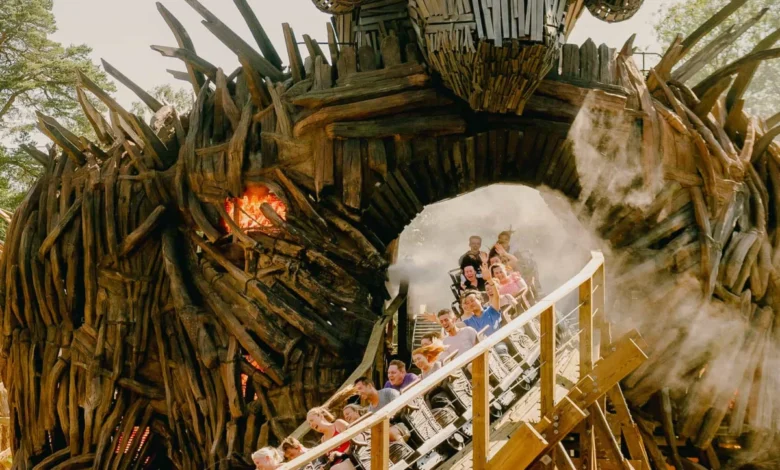
Alton Towers is notable for its commitment to "story-driven" attractions. Rather than installing generic roller coasters, the park invests in narrative-heavy experiences, such as the Wicker Man—the UK’s first wooden roller coaster built in over two decades, which integrates fire effects and a specific folkloric theme. Analysts note that this strategy increases visitor retention by creating a cohesive "world" rather than a series of disconnected mechanical rides.

However, the park faces unique regulatory constraints. Due to local planning permissions intended to preserve the visual integrity of the surrounding landscape, no structure can be built above the height of the tree line. This has forced the engineering team to design "subterranean" or terrain-hugging coasters, such as Nemesis Reborn, which utilizes the natural topography to create a sense of height and speed without violating skyline regulations.

Thorpe Park and the Rise of High-Thrill Infrastructure
Positioned within the Greater London metropolitan area, Thorpe Park represents the aggressive pursuit of the "thrill-seeker" demographic. The recent addition of Hyperia, which stands as the tallest and fastest roller coaster in the UK, signals a shift in the market toward record-breaking attractions.

The economic impact of such infrastructure is significant. Major capital investments in new roller coasters often correlate with a measurable spike in regional tourism and secondary spending. Thorpe Park’s proximity to Heathrow Airport and the capital makes it a key international gateway for tourism, with management reporting high engagement from both domestic weekend travelers and international visitors looking for high-intensity entertainment.

Demographic Segmentation and Family-Centric Parks
While thrill parks focus on high-velocity attractions, the market also serves a distinct family demographic through brands like Paultons Park and Legoland Windsor. Paultons Park, situated in the New Forest, gained national prominence through its strategic licensing of the Peppa Pig intellectual property.

The "Peppa Pig World" development served as a masterclass in brand integration. By securing the rights to one of the most recognizable children’s media properties in the world, the park transformed from a regional attraction into a national destination for families with toddlers. Similarly, Legoland Windsor leverages the global recognition of the LEGO brand to offer a blend of educational workshops and interactive rides, catering to a younger age bracket that is often overlooked by more aggressive, adrenaline-focused parks.

Operational Challenges and Digital Transformation
The modern theme park operator faces two primary challenges: capacity management and rising operational costs. The transition to advanced digital ticketing platforms has become a standard industry response. By incentivizing online pre-booking, operators can better predict daily attendance, manage staff allocation, and optimize queue times through dynamic pricing and "Fast-track" pass systems.

Despite these technological advancements, the industry remains vulnerable to supply chain issues and energy price volatility. Maintenance of complex machinery requires specialized global expertise, and the energy requirements for running major amusement parks are substantial. Industry reports suggest that operators are increasingly looking toward sustainable energy initiatives, including on-site solar arrays and improved waste management systems, to reduce long-term operational overheads.

Regional Economic Contributions
The distribution of these parks across the UK—from Blackpool Pleasure Beach in the North West to Dreamland in Margate—serves to distribute tourist expenditure beyond the major metropolitan hubs.

Blackpool Pleasure Beach, in particular, remains a historical site of importance. As a seaside institution, it serves as a reminder of the Victorian-era roots of British leisure. While the park has integrated modern, high-tech steel coasters like ICON, it retains its historical charm, acting as an anchor for the Blackpool tourism economy. The park’s ability to remain relevant despite the decline of traditional coastal tourism in other parts of the UK is attributed to its massive catalog of rides and its transition into a year-round entertainment hub.

The "Edutainment" Trend: Harry Potter and Beyond
A significant development in the UK entertainment market is the growth of "edutainment" and studio-based attractions. The Warner Bros. Studio Tour, located in Leavesden, is perhaps the most prominent example. While not a traditional theme park—it lacks mechanical rides—it serves as a massive cultural tourism draw.

The success of the studio tour demonstrates that modern consumers are increasingly interested in the "behind-the-scenes" mechanics of media. The tour provides an immersive experience that relies on physical sets, authentic props, and technical demonstrations. Industry analysts view this as a low-risk, high-reward alternative to the high maintenance and liability costs associated with operating traditional roller coasters.

Implications for Future Development
Looking forward, the UK theme park industry is expected to emphasize deeper immersion. Technologies such as augmented reality (AR) and virtual reality (VR) are being tested to supplement physical rides, allowing for changing themes without the need for total infrastructure replacement.

Furthermore, as the UK moves toward net-zero emissions targets, theme parks are under pressure to demonstrate environmental stewardship. The next decade will likely see a focus on carbon-neutral operations, with large-scale solar integration and sustainable construction practices becoming the industry standard.

In summary, the United Kingdom’s theme park sector remains a vital, albeit complex, component of the national economy. By balancing the need for record-breaking thrills with the demand for family-friendly, immersive, and sustainable entertainment, these destinations continue to adapt to the changing preferences of the modern visitor. Whether through the historic charm of a coastal fairground or the cutting-edge engineering of a flagship thrill park, the industry continues to play a central role in the nation’s cultural and economic landscape.
Related posts: