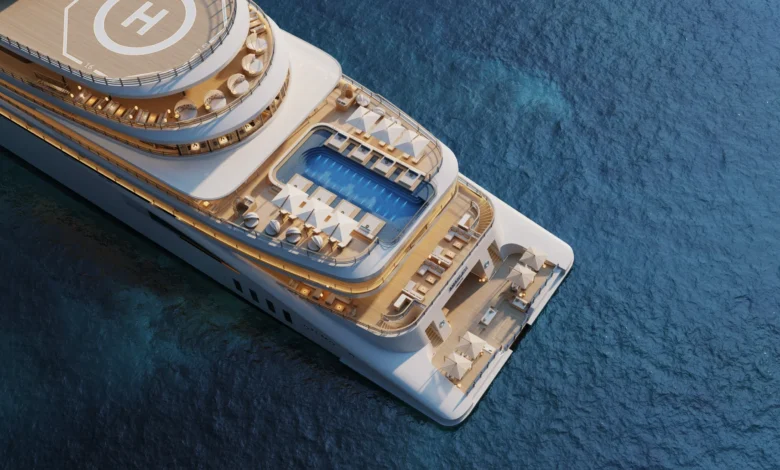
The hospitality landscape is poised for a significant evolution in spring 2027 with the launch of Amangati, the inaugural superyacht from the renowned Aman brand. Long celebrated for its land-based sanctuaries that emphasize minimalist aesthetics, privacy, and hyper-personalized service, the company is transitioning its philosophy from the shore to the open ocean. This 183-meter vessel represents a strategic pivot for the luxury hotel group, moving beyond the traditional resort model to offer a fluid, mobile environment that maintains the hallmark "Aman" sense of place, even while in transit.
A Chronology of Expansion: From 1988 to the Open Sea
Since its inception in 1988 with the opening of Amanpuri in Phuket, Thailand, the brand has maintained a rigorous standard for low-density, high-design retreats. For nearly four decades, the company has operated exclusively as a destination-based operator. The journey toward Amangati began in earnest following the 2022 announcement of a joint venture between Aman Group and Cruise Saudi. This partnership signaled the brand’s intent to enter the ultra-luxury maritime sector, a market segment currently seeing a surge in demand for "private yachting" experiences that prioritize exclusivity over traditional large-scale cruise ship amenities.
The development phase has been extensive. By collaborating with Sinot Yacht Architecture & Design—a firm globally recognized for its work on some of the world’s most sophisticated private vessels—Aman has sought to ensure that the transition to sea does not compromise the spatial integrity of their resorts. The construction, overseen with precision engineering, is designed to culminate in a maiden voyage departing from Palma de Mallorca on May 7, 2027, charting a course toward Nice and setting the tone for a inaugural Mediterranean season.
Design Philosophy and Spatial Engineering
The architectural challenge of Amangati lies in replicating the "ryokan-inspired" tranquility of an Aman resort within a moving steel structure. The vessel features a restricted capacity of only 94 guests across 47 suites. This deliberate limitation is a key data point in the vessel’s value proposition; in an industry where cruise vessels often maximize passenger volume, the Aman model prioritizes a high guest-to-staff ratio, ensuring that the service remains "unscripted" and deeply intuitive.
The flagship accommodation, the Aman Suite, covers 354 square meters, effectively acting as a floating villa. It includes a dedicated massage room and a private terrace equipped with a whirlpool bath, catering to the ultra-high-net-worth demographic that demands the same facilities at sea as they would expect in a five-star hotel suite. The interiors utilize natural timbers and neutral palettes to reduce visual noise, adhering to the brand’s signature minimalist design language.

Technological integration is another pillar of the onboard experience. While traditional luxury vessels often highlight overt tech, Amangati leans toward "invisible" comfort—intuitive systems that manage climate, lighting, and service requests without the intrusive presence of hardware.
Strategic Itineraries and Market Reach
The inaugural season of Amangati is geographically focused on two high-demand maritime corridors: the Mediterranean and the Caribbean. The decision to prioritize these regions is rooted in the yacht’s size. At 183 meters, the vessel possesses a draft and beam that allow it to access smaller, historic harbors in Corsica, Elba, and the Costa Smeralda—locations that are fundamentally inaccessible to the mega-cruise liners that dominate contemporary tourism.
Following the Mediterranean summer season, the vessel will undertake a transatlantic crossing to arrive in Saint John’s, Antigua, for the winter Caribbean season. The inclusion of Atlantic Passages, ranging from 11 to 13 nights, suggests that Aman is positioning the yacht not just as a transport vessel, but as a destination in itself. By offering overnight calls and late departures, the company is catering to a traveler who seeks to engage with local cultures rather than simply observing them from the deck.
Culinary and Wellness Infrastructure
The onboard experience is structured around four distinct culinary concepts, which serve to mirror the brand’s global footprint. Alira focuses on the Mediterranean basin, while Hiori and Akari bring the Japanese culinary discipline that has been a cornerstone of Aman’s brand identity since its founding. The Aman Grill completes the offering with a focus on provenance—aged meats and locally sourced seafood—a move that aligns with the growing demand for sustainable, high-quality sourcing in the luxury travel sector.
Wellness, however, remains the primary differentiator. The inclusion of a two-storey Japanese serenity garden is an architectural feat rarely achieved on a vessel of this size. With a banya, hammam, and dedicated meditation zones, the spa is not merely an amenity but a core operational component. The treatment menu, which integrates ancient healing rituals with clinical science, reflects the brand’s broader commitment to "Aman Wellness," a program that has seen significant investment across their hotel portfolio.
Analysis: Implications for the Ultra-Luxury Market
The launch of Amangati is indicative of a broader trend: the "yachtification" of luxury hospitality. As traditional ultra-luxury travelers seek more intimate and personalized experiences, the line between land-based hospitality and maritime travel is blurring.

Industry analysts observe that by entering the superyacht market, Aman is creating a closed-loop ecosystem. Guests who have historically frequented Aman resorts can now extend that experience to the ocean, effectively creating a loyalty-based circuit that spans the globe. This strategy mitigates the risks associated with the volatility of the cruise industry by positioning the vessel as a private yachting experience rather than a commercial cruise.
Furthermore, the emphasis on the "Marina"—a retractable platform that allows direct access to the sea for watersports—signals a shift toward active, experiential travel. This move captures a younger, more adventurous demographic of luxury travelers who equate luxury with autonomy and physical engagement with their surroundings, rather than passive consumption.
Official Stance and Future Outlook
While the company has remained quiet on specific financial projections, the investment in such a vessel reflects a high degree of confidence in the longevity of the luxury travel market. By defining their philosophy as "peaceful motion," the brand is framing the vessel as a logical extension of its existing ethos.
The success of Amangati will likely be measured not by guest throughput, but by the retention of the brand’s core values. In the highly competitive world of luxury travel, where service consistency is difficult to maintain at sea due to supply chain and staffing complexities, the ability of Aman to translate its land-based service standards to a shipboard environment will be the definitive test.
As of late 2026, the preparations for the May 2027 departure are in the final stages. Prospective guests and industry observers are closely monitoring the booking rollout, which is expected to be managed with the same level of discretion that characterizes the brand’s hotel reservation systems. As the maritime sector continues to recover and evolve, the arrival of Amangati may well set a new benchmark for what is expected of ultra-luxury travel in the late 2020s.
The integration of the "Aman Suite" and the curated destination programs suggest that the brand is not merely entering the yachting space—it is attempting to redefine the category. By focusing on the "unscripted" nature of the journey, Amangati offers a response to the hyper-scheduled nature of modern tourism, proposing instead a return to the concepts of rest, renewal, and the appreciation of the horizon. Whether this model can sustain the brand’s reputation for silence and solitude in the bustling waters of the Mediterranean remains a question for the inaugural season, but the architectural and service-oriented foundations suggest a high probability of success in the high-net-worth travel sector.