Historic Wild River Fire Sweeps Through White Mountain National Forest, Fuelled by Severe Drought and Unprecedented Dry Conditions

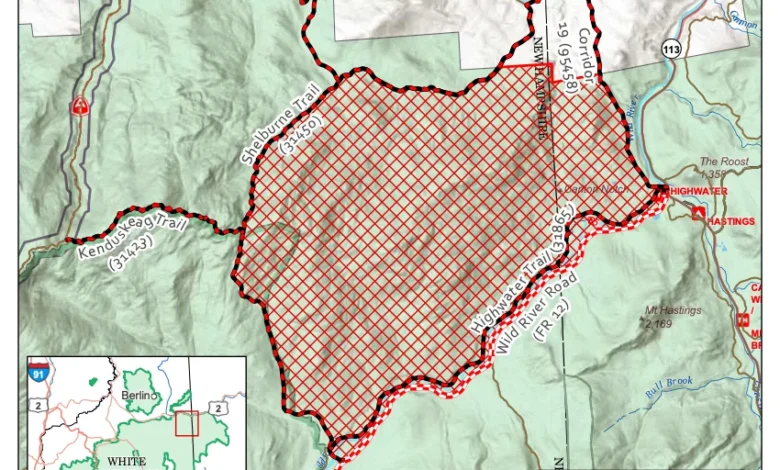
An unprecedented and aggressive wildfire is currently scorching the rugged terrain of the White Mountain National Forest in New Hampshire, defying typical regional weather patterns and testing the limits of local and federal firefighting infrastructure. Designated as the Wild River Fire, the blaze has consumed approximately 865 acres of dense timber, brush, and rocky slopes in Coos County. Forest officials have confirmed that this incident represents the largest wildfire in the modern history of the White Mountain National Forest, a stark anomaly in a region historically accustomed to small, easily manageable brush fires.
As emergency personnel battle both the flames and treacherous geography, the fire has sparked urgent conversations regarding the changing climate of New England, escalating drought conditions, and the persistent vulnerability of public lands to human-induced disasters. While the iconic Appalachian Trail currently remains open and approximately 10 miles west of the immediate danger zone, the blaze has triggered sweeping closures of regional arteries, vital connecting paths, and remote access points.
Chronology of the Wild River Fire
The unfolding emergency began during the first week of November, rapidly escalating from a localized spot fire into a massive incident requiring a multi-agency coordinated response.
On Tuesday, November 3, reports of smoke and flames emerged from a remote sector of Coos County within the White Mountain National Forest. Initial responders from local departments arrived to find a rapidly spreading fire moving through dry timber and fallen autumn foliage. By the close of its first full day, the fire had already established a significant footprint, capitalising on bone-dry forest floors and persistent regional winds.
By Wednesday, November 4, conditions deteriorated further as the fire swelled to an estimated 982 acres. The sudden expansion alarmed regional authorities, prompting the U.S. Forest Service (USFS) to escalate resource requests, bringing in specialized federal units such as the Cherokee Hotshot Crew and advanced smoke suppression modules. However, aggressive nocturnal firefighting and strategic containment lines yielded positive results. By the evening of November 4, crews managed to claw back acreage, reducing the calculated footprint to 865 acres through tactical suppression efforts.
By Thursday, November 5, the fire’s perimeter stabilized, holding steady at 865 acres with containment pegged at 11 percent. Although the rate of spread has temporarily decelerated, firefighting operations remain delicate. Forest officials caution that changing wind patterns, low humidity, and unseasonably dry soil profiles could easily reignite aggressive behavior within the burn scar.
Anatomy of an Unprecedented Forest Event
Wildfires of this magnitude are exceptionally rare in the White Mountain National Forest, a temperate, heavily forested expanse that typically receives substantial precipitation year-round. Small brush fires occasionally flare up during dry spring or autumn transitions, but they are traditionally contained swiftly before exceeding a fraction of an acre or, at most, a few dozen acres.
Local authorities have emphasized just how atypical the Wild River Fire is by historical standards. Gorham Fire Chief Philip Cloutier noted in regional briefings that the largest wildfire remembered in the immediate area prior to this event was just under 100 acres—a benchmark set more than twenty years ago. To see an incident eclipse 800 to 900 acres in early November represents a profound departure from historical norms.
The primary catalyst for this historic growth is a severe, prolonged drought that has gripped portions of New England throughout the late summer and autumn months. Extended periods of below-average rainfall have sapped moisture from deep soil layers, cured fallen timber, and turned the forest floor into a tinderbox. Fall conditions, typically characterized by morning frosts and damp leaf litter, have instead delivered desiccating winds and unseasonably warm temperatures, creating an environment where a spark can instantly ignite catastrophic damage.
Human Agency and the Investigation
While nature has provided the volatile fuel, federal investigators are increasingly pointing toward human activity as the ignition source of the Wild River Fire. Officials with the U.S. Forest Service have officially classified the origin as human-caused, though specific details regarding the exact mechanism—whether an abandoned campfire, discarded smoking materials, or equipment malfunction—are being withheld pending the conclusion of an active forensic investigation.
The revelation that the largest fire in modern park history likely stems from preventable human actions has renewed public friction regarding responsible recreation. Federal land managers continually issue fire bans and warnings during high-risk drought periods, yet compliance lapses frequently result in devastating ecological and financial consequences. If investigators definitively trace the fire to negligence, it could prompt further scrutiny over campfire regulations, seasonal bans, and public education campaigns across northeastern parks and wilderness areas.
Logistical Challenges and Tactical Suppression
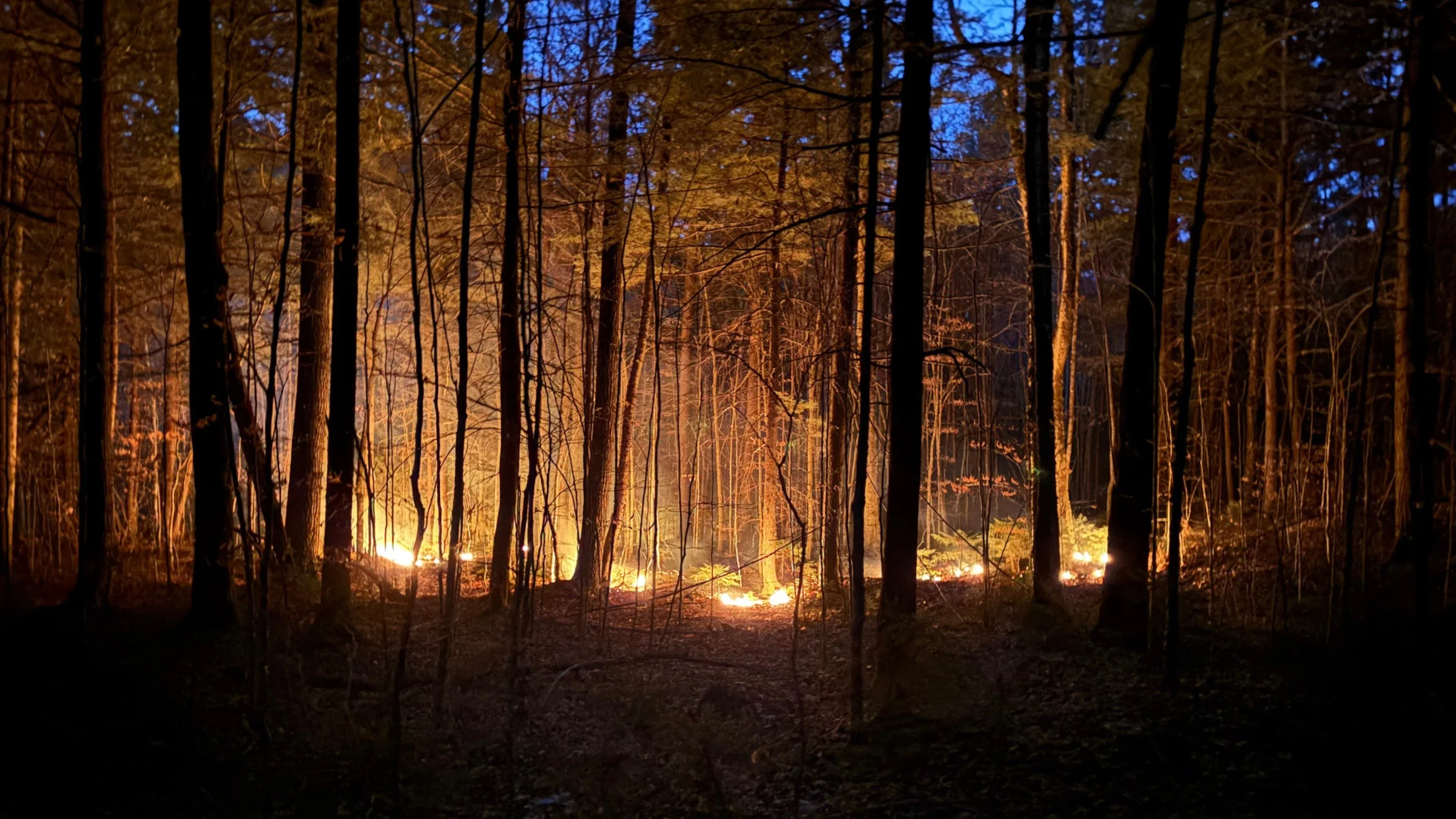
Suppressing a fire of this scale within the White Mountain National Forest presents formidable logistical hurdles. Unlike the expansive, uniform terrain found in many western forests, the White Mountains feature steep, highly irregular topography, dense second-growth timber, boulder-strewn slopes, and a labyrinth of fast-flowing waterways.
According to updates provided by the USFS, initial attacks were severely impeded by the remote nature of the terrain. Firefighters were forced to cross the churning waters of the Wild River on foot, carrying heavy gear, pumps, and hand tools to establish a direct line of defense against the advancing wall of flames. The lack of nearby roads capable of supporting heavy apparatus meant that aerial water drops and elite ground crews bore the brunt of the suppression workload.
The deployment of the Cherokee Hotshot Crew—a premier federal interagency handcrew specializing in complex, remote wildfire containment—underscores the gravity of the situation. Supported by specialized smoke suppression modules and local mutual aid partners, these personnel have spent days carving firelines through difficult terrain, utilizing natural barriers such as ridges and streams where possible to box in the perimeter.
Josh Sjostrom, District Ranger for the White Mountain National Forest’s Androscoggin Ranger District, praised the tenacity of the multi-agency response. In a public statement, Sjostrom expressed pride in the rapid mobilization of personnel who have worked tirelessly in adverse conditions to halt the fire’s expansion, while confirming ongoing collaboration with municipal, county, and state partners to secure the perimeter.
Trail Closures and Public Safety Measures
In response to the active blaze and the movement of heavy firefighting equipment, the U.S. Forest Service has enacted mandatory closures across significant portions of the eastern White Mountain National Forest.
The most prominent closure involves Wild River Road, which has been shut down in its entirety to prevent civilian traffic from interfering with emergency staging operations. Additionally, a wide array of backcountry trails intersecting the fire zone have been closed to the public until further notice. These restrictions impact numerous beloved regional routes, severing several connecting arteries used by day hikers and backpackers navigating the rugged backcountry.
Crucially, the Appalachian Trail—which tracks roughly 10 miles to the west of the fire’s current footprint—remains open and unaffected by direct evacuation orders or path closures. However, federal authorities continue to monitor atmospheric conditions, wind trajectories, and fire behavior closely. Should persistent drought conditions continue without a significant, soaking precipitation event, further closures or preemptive safety measures along adjacent trail networks remain a distinct possibility.
Recreationists and hikers planning trips to the White Mountain National Forest are strongly advised to check official USFS portals for real-time updates regarding trail statuses, fire bans, and air quality advisories before embarking into the backcountry.
Broader Implications for Regional Ecosystems and Climate Resilience
The Wild River Fire serves as an acute reminder of the shifting environmental pressures facing northeastern ecosystems. Historically, catastrophic crown fires and massive acreage losses were considered ecological threats unique to the arid American West, the boreal forests of Canada, or the chaparral country of California. However, changing climatic baselines, characterized by warmer winters, earlier snowmelts, and prolonged autumn droughts, are increasingly blurring geographic boundaries.
Forest ecologists note that a fire of this magnitude leaves lasting impacts on the local landscape. While fire is a natural and healthy component of many forest ecosystems—clearing underbrush and returning nutrients to the soil—unprecedented high-intensity burns in temperate hardwood and spruce-fir forests can damage delicate soils, alter native plant succession, and increase erosion risks along steep mountain watersheds. Furthermore, the smoke generated by the prolonged burn has intermittently impacted regional air quality, affecting communities downwind across New Hampshire and western Maine.
As climate projections point toward more frequent extremes in precipitation and temperature, resource managers across New England are re-evaluating their preparedness protocols. The ability of local fire departments, municipal volunteers, and federal wildland agencies to successfully halt the Wild River Fire demonstrates high operational competence, but it also underscores the growing strain placed on resources traditionally calibrated for minor, localized incidents.
For now, all eyes remain fixed on the containment lines along the Wild River. With crews holding the perimeter at 865 acres, the immediate priority remains full suppression and mop-up operations. Yet, the long-term legacy of the Wild River Fire will likely persist as a watershed moment for forest management in the White Mountains—a fiery harbinger of a new era of climate reality in the American Northeast.