Hyatt Hotels Corporation Leverages Luxury Leisure Surge to Drive Third Quarter Financial Outperformance


Hyatt Hotels Corporation has solidified its position as a dominant force in the premium hospitality sector, reporting robust third-quarter financial results that underscore the enduring strength of the affluent travel market. The Chicago-based hotel giant reported an 8.2% increase in revenue per available room (RevPAR) across its U.S. portfolio, a metric significantly bolstered by a combination of high-end leisure demand and the successful integration of major global events, including the FIFA World Cup. This performance has prompted the company to revise its full-year growth outlook, signaling sustained confidence in the premium segment despite broader macroeconomic uncertainties.
The financial results reflect a strategic pivot that Hyatt has been refining for several years: transitioning from a traditional hotel owner-operator to a leaner, asset-light model that focuses on high-margin luxury brands. By divesting legacy real estate assets and reinvesting in brand expansion—particularly in the all-inclusive and boutique segments—Hyatt has successfully insulated itself from the volatility that often impacts mid-market and economy lodging.
Financial Performance and Market Indicators
During the company’s third-quarter earnings call held this past Thursday, CEO Mark Hoplamazian articulated the core thesis driving the company’s current success. "Luxury leisure has just remained the juggernaut of growth for us," Hoplamazian stated, highlighting that the demand for high-end experiences has shown little sign of cooling.
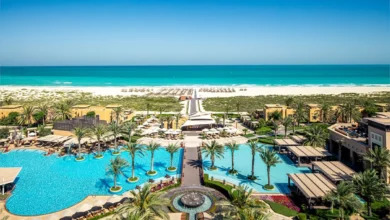
The financial data supports this assessment. Hyatt reported an adjusted EBITDA of $295 million, marking a 19% increase when adjusted for the disposition of hotels sold during the previous fiscal year. This growth is not merely a product of price inflation but rather a reflection of increased occupancy and a shift in product mix toward higher-rated suites and immersive vacation experiences, such as the Impression Isla Mujeres by Secrets, which has become a flagship example of the company’s high-value leisure strategy.
The 8.2% climb in U.S. RevPAR is particularly noteworthy when compared to industry peers, many of whom have struggled with slowing demand in the middle-market segment. The roughly 50-basis-point lift provided by the FIFA World Cup illustrates the company’s ability to capture demand from major international events, suggesting that Hyatt’s geographic distribution of properties is well-aligned with the high-spend travel circuit.
A Chronology of Strategic Transformation
The success of the third quarter is the culmination of a multi-year strategy initiated by Hyatt to pivot toward the "luxury, lifestyle, and leisure" categories.
- 2021: Hyatt announced the landmark acquisition of Apple Leisure Group (ALG) for $2.7 billion. This acquisition was a watershed moment, immediately making Hyatt one of the world’s largest operators of luxury all-inclusive resorts.
- 2022-2023: The company aggressively pursued an asset-disposition strategy, selling off owned real estate to pay down debt and fund further growth in its loyalty program, World of Hyatt.
- Early 2024: Hyatt shifted its focus toward organic growth and the integration of the Mr & Mrs Smith platform, further expanding its footprint in the luxury boutique space.
- Mid-2026: Throughout the first half of the year, Hyatt maintained a conservative outlook, initially projecting RevPAR growth in the 3.5% to 4.5% range.
- Q3 2026: Following sustained strength in summer travel and the surge during the World Cup, the company officially updated its full-year expectations.
This timeline reflects a disciplined approach to capital allocation. By shifting away from property ownership, Hyatt has reduced its exposure to capital-intensive renovations and property taxes, instead generating recurring revenue through management and franchise fees.
Market Implications and Analyst Projections
The decision to raise the full-year RevPAR growth forecast to a range of 5% to 5.5% represents a significant departure from the company’s July projections. This adjustment places Hyatt’s internal expectations above the consensus average of 4.7% held by Wall Street analysts as of late 2026.
Financial analysts generally view this upward revision as a sign of institutional confidence. The ability to forecast higher growth in a period characterized by interest rate fluctuations and inflationary pressure suggests that the luxury consumer remains the most resilient segment of the economy. Unlike the "bleisure" (business-leisure) traveler, whose demand can be impacted by corporate travel budget cuts, the ultra-high-net-worth traveler has continued to prioritize experiential spending.
Furthermore, the data suggests that Hyatt’s loyalty program is functioning as a critical retention tool. World of Hyatt members continue to account for a high percentage of direct bookings, which reduces the company’s reliance on third-party Online Travel Agencies (OTAs) and preserves margins. As the company continues to expand its footprint in international markets, the ability to leverage this member base becomes a key competitive advantage.
Operational Resilience and Brand Synergy
A key pillar of Hyatt’s growth is the successful branding of its "Impression" and "Secrets" lines. These properties cater to a specific segment of the market that demands personalized service, culinary excellence, and private, aesthetic-driven environments. The infinity pool at Impression Isla Mujeres is symbolic of the "Instagram-ready" luxury that attracts high-spending millennial and Gen-Z travelers, a demographic that Hyatt has courted with increasing success.
Operationally, the company has also benefited from its diversified portfolio. While the luxury segment drives the highest RevPAR, the breadth of the Hyatt portfolio—spanning from select-service Hyatt Place hotels to the ultra-luxury Park Hyatt brand—allows the company to capture different tiers of the travel market. During the third quarter, this provided a hedge against potential localized downturns in specific urban markets.
The Broader Hospitality Landscape
Hyatt’s performance stands in contrast to broader trends in the hospitality industry. While some competitors have reported plateauing growth due to a normalization of travel patterns following the post-pandemic surge, Hyatt has managed to sustain its upward trajectory through a focus on the "experience economy."
Experts point to the fact that luxury travel has decoupled from broader economic trends. While lower-income and middle-income consumers may be tightening their travel budgets in response to the cost of living, the top 10% of earners continue to allocate a larger share of their disposable income to travel. For Hyatt, this means that even if global economic growth slows, the specific segment they cater to remains robust.
However, the company faces potential headwinds. Labor costs remain a significant concern for the hotel industry, as the demand for high-touch service requires staffing levels that are difficult to maintain in a tight labor market. Additionally, the integration of global properties requires ongoing maintenance of standards, which can become more complex as the portfolio grows in scale.
Future Outlook: Navigating 2027 and Beyond
Looking toward the remainder of the year and into 2027, Hyatt’s leadership appears focused on maintaining this momentum through continued expansion. The strategy remains clear: increase the number of luxury rooms under management, deepen the loyalty program’s engagement, and maintain a lean balance sheet.
The company’s ability to outperform analyst expectations for the third quarter is not just a statistical win; it is a validation of the asset-light strategy. As Hyatt moves forward, the focus will likely remain on international expansion in emerging luxury markets and the further development of its all-inclusive offerings.
The resilience of the "premium traveler" has effectively created a floor for Hyatt’s financial performance. So long as the appetite for high-end, all-inclusive, and experiential travel remains, Hyatt is well-positioned to capitalize on this trend. By focusing on the high-margin end of the hospitality spectrum, the company has built a business model that is not only profitable but increasingly resistant to the cyclical pressures that have historically plagued the hotel industry.
As the industry looks toward the next fiscal year, Hyatt’s results serve as a benchmark for the sector. The company has demonstrated that in an era of uncertainty, the most reliable growth strategy is to cater to those who view luxury not as a discretionary luxury, but as an essential component of their lifestyle. The third quarter of 2026 will likely be remembered as the period where Hyatt transitioned from a major hotel player to the definitive leader in the premium hospitality space, setting a standard for growth and profitability that will be difficult for competitors to replicate in the near term.
Related posts: