Rotana CEO Philip Barnes warns that current reservation data may be misleading as Gulf booking windows tighten amid U.S.-Iran regional volatility

The hospitality sector in the Middle East is currently navigating a period of profound uncertainty as escalating geopolitical tensions between the United States and Iran reshape consumer behavior and travel logistics. Philip Barnes, the Chief Executive Officer of the Abu Dhabi-based hotel group Rotana, recently offered a nuanced assessment of the current landscape, cautioning industry analysts and stakeholders against interpreting "business on the books" as a definitive indicator of quarterly performance. As the region grapples with the fallout of sustained conflict, the traditional metrics used to forecast hotel occupancy and revenue have become increasingly unreliable.
According to Barnes, the current booking climate is defined by an extreme compression of lead times. While forward-looking data for the fourth quarter appears significantly lower than the corresponding period in the previous fiscal year, Barnes suggests that this trend is not necessarily indicative of a collapse in demand. Drawing on the performance of the preceding months, he noted that late-summer bookings for August and September were similarly thin, yet both months ultimately yielded strong occupancy rates. This shift suggests that travelers are increasingly adopting a "wait-and-see" approach, booking travel only when they are certain that regional conditions remain stable enough for their itineraries.
A Shifting Booking Landscape
The phenomenon of the "narrowing booking window" is a primary concern for revenue managers across the Gulf Cooperation Council (GCC) countries. In a pre-conflict environment, luxury and mid-scale hotels in hubs like Abu Dhabi and Dubai could typically rely on a booking horizon of several weeks or even months. Today, however, that window has shrunk to a matter of days.
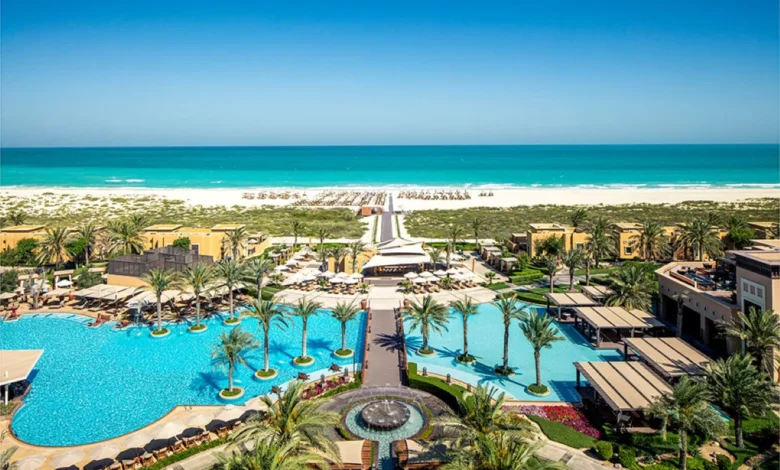
Illustrating this shift, Barnes highlighted a recent occurrence at one of the group’s flagship properties, the Saadiyat Rotana, which secured a booking for 45 German tourists with only 48 hours’ notice. This anecdote underscores the volatility of the current market: while demand exists, it is fragile, highly responsive to news cycles, and prone to rapid, last-minute decision-making. For hoteliers, this creates a significant operational challenge, as staffing, supply chain management, and food and beverage procurement must now be executed with far less lead time than traditional hospitality models dictate.
The Geopolitical Backdrop and Regional Impact
The U.S.-Iran tensions have introduced a layer of risk that permeates the broader travel ecosystem. While the Gulf remains largely insulated from direct kinetic conflict, the perception of risk in Western source markets—particularly Europe—has undoubtedly impacted sentiment.
The current instability follows a timeline of escalating regional friction that began in early 2024, characterized by increased naval activity in the Strait of Hormuz and heightened diplomatic posturing. By mid-2025, travel insurance premiums for regional transit began to fluctuate, further complicating the decision-making process for international leisure travelers. The hospitality industry, which serves as a bellwether for regional economic health, has felt the cumulative effect of these events through erratic flight bookings and a cooling of long-haul travel interest.
Despite these hurdles, Rotana remains focused on a diversified portfolio of source markets. Barnes identified Russia and Germany as critical regions currently showing signs of recovery. While the total volume of tourists from these nations has yet to reach the levels observed in the pre-conflict era, their return signals a resilient interest in the Gulf’s luxury tourism product. Furthermore, the group continues to leverage the growing economic influence of China and India, two markets that have become essential pillars for the stability of Middle Eastern tourism.
Economic Implications for the Hospitality Sector
From an economic perspective, the current environment presents a paradox. While hotels are struggling to predict occupancy, the underlying fundamentals of the GCC’s tourism strategy—massive investment in infrastructure, cultural projects like the Louvre Abu Dhabi, and the expansion of aviation hubs—remain robust.
Industry analysts point out that the "wait-and-see" behavior described by Barnes is not unique to the Middle East; it has been observed globally during periods of geopolitical strain. However, in the GCC, where hospitality is a pillar of economic diversification programs such as Saudi Arabia’s Vision 2030 or the UAE’s Tourism Strategy 2031, the implications are magnified. A consistent decline in forward-looking bookings can affect hotel valuations, asset management strategies, and the appetite for new capital investment in the sector.
The financial pressure on hotels is exacerbated by the rising costs of operations. When booking windows are short, hotels are unable to optimize room rates through dynamic pricing strategies that typically rely on long-range demand forecasting. This forces properties to maintain competitive rates at the last minute to ensure occupancy, which can erode profit margins even if the hotels appear "full" on paper.
Strategic Adjustments by Rotana
Rotana’s leadership has emphasized the need for operational agility. By maintaining a lean approach to inventory management and relying on strong regional partnerships, the group is attempting to mitigate the risks posed by the regional impasse. Barnes’s assessment—that the situation is "neither doom and gloom nor gangbuster business"—reflects a pragmatic acknowledgement that the industry is in a holding pattern.
The group is also focusing on local and regional staycations, a strategy that served many hotel chains well during the global pandemic. By pivoting toward domestic travelers, who are less sensitive to international geopolitical headlines, Rotana can maintain a baseline of occupancy that protects against the fluctuations of international arrivals.
Outlook for the Coming Quarters
Looking ahead, the recovery of the hospitality sector will be inextricably linked to the stabilization of regional diplomacy. Market observers suggest that if the U.S.-Iran situation remains in a state of "managed tension" without significant escalation, confidence in the region may gradually return, leading to a normalization of booking windows.
However, until such clarity emerges, the industry is bracing for a period of sustained volatility. For stakeholders, the primary takeaway from the current climate is the necessity of adaptability. The reliance on traditional, historical data models is no longer sufficient. As Barnes noted, the data "on the books" is currently an incomplete picture. Success in this environment requires a departure from legacy forecasting, favoring instead a focus on real-time agility and the cultivation of diverse, resilient source markets that remain committed to the region despite the prevailing uncertainties.
As the Gulf moves into the winter season—traditionally the peak period for tourism in the region—all eyes will be on whether the current trend of late-stage bookings evolves into a more sustainable pattern. While the geopolitical climate remains the single largest variable, the fundamental appeal of the region as a destination for leisure, business, and MICE (Meetings, Incentives, Conferences, and Exhibitions) travel continues to draw interest. The challenge for Rotana and its peers will be to navigate the gap between the perceived risk and the reality of the experience on the ground, ensuring that as travelers become more comfortable with the regional context, their hotels are ready to capture the returning demand.
In summary, the narrative currently being told by reservation software and forward-looking occupancy reports is one of caution, but not necessarily of decline. The underlying demand remains, but it is masked by the hesitation inherent in a world where global politics can shift the travel landscape overnight. For the time being, Rotana’s strategy is one of patience: waiting for the regional clouds to clear while ensuring that the infrastructure remains in place to welcome guests the moment they decide the time is right to travel.